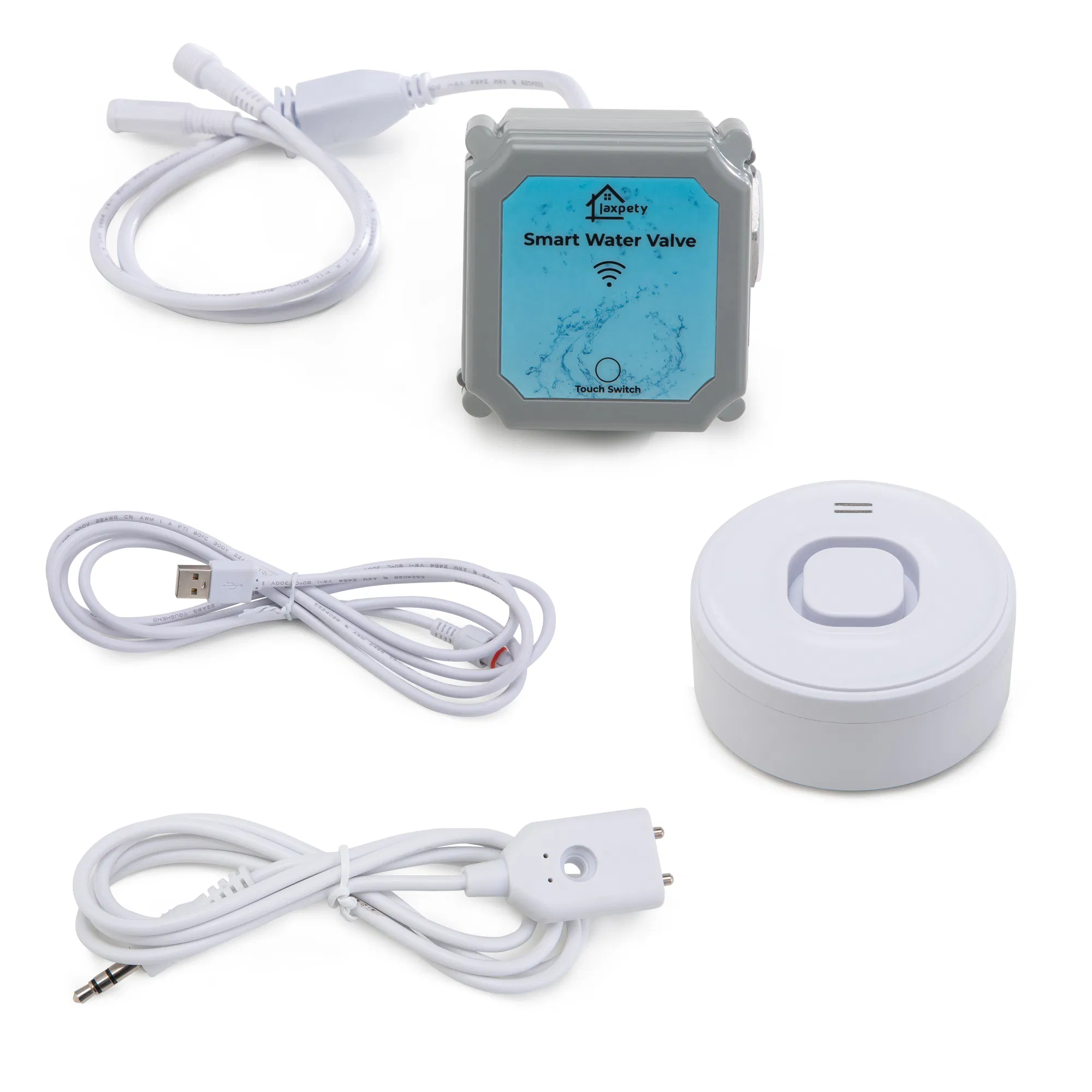

Photos from current listings. Actual item, color, and included accessories may vary.
Smart Water Valve Buying Guide
A smart water valve is a motorized ball valve or actuator that lets you shut off your home's water supply remotely or automatically via app, voice, or leak sensors. The critical trade-off is between a full replacement valve (soldered or threaded inline) and a retrofit actuator that clamps onto an existing lever handle—retrofit units are easier to install but depend on your current valve type and torque requirements. Choose a full-valve replacement for new builds or when your existing valve is old or stiff; choose a retrofit actuator only if you have a smooth-operating lever ball valve and want a non-plumbing install.
Key takeaways
- Valve architecture: full-bore brass ball valve with motorized actuator vs. clamp-on retrofit actuator—retrofit requires a lever-style ball valve, not a gate or globe valve.
- Motor type: brushless DC motors deliver higher torque and longer duty cycles than brushed motors, critical for overcoming mineral buildup in older valves.
- Power and wiring: most units run on 12V DC or 24V AC—battery-only models need frequent recharging, while hardwired models require a nearby outlet or low-voltage transformer.
At a glance
- Category
- Smart Home Electronics
- Last updated
- Nov 28, 2026
Current offers
Highlights
- Valve architecture: full-bore brass ball valve with motorized actuator vs. clamp-on retrofit actuator—retrofit requires a lever-style ball valve, not a gate or globe valve.
- Motor type: brushless DC motors deliver higher torque and longer duty cycles than brushed motors, critical for overcoming mineral buildup in older valves.
- Power and wiring: most units run on 12V DC or 24V AC—battery-only models need frequent recharging, while hardwired models require a nearby outlet or low-voltage transformer.
- Connectivity: Wi-Fi (2.4 GHz only) for cloud control, Zigbee/Z-Wave for hub-based local automation, or Bluetooth for setup-only—match to your existing smart home ecosystem.
Best use cases
- Best fit: whole-house automatic shutoff paired with leak sensors—pick a full-valve replacement with a motorized brass ball valve and 12V DC power for reliable daily cycling.
- Best fit: apartment or rental where plumbing modification is prohibited—choose a clamp-on retrofit actuator only if your existing valve is a quarter-turn lever ball valve with smooth operation.
- Wrong fit: homes with gate valves or multi-turn globe valves—retrofit actuators do not work on these; you must replace the valve with a ball valve first.
- Skip: battery-only Wi-Fi models for freeze protection or vacation homes—they drain quickly and lose connectivity; hardwired or hub-based Zigbee/Z-Wave is more reliable.
Buying tips
- Measure your pipe diameter and valve type before buying: retrofit actuators fit 1/2-inch to 1-inch lever ball valves, but full replacements require matching NPT thread size (3/4-inch and 1-inch are most common).
- Check torque rating: retrofit actuators need at least 15–20 inch-pounds to turn a well-maintained ball valve; higher torque (30+ in-lb) is needed for valves that have not been exercised recently.
- Confirm power: hardwired 12V DC models require a nearby outlet and low-voltage wiring; battery models typically use 4 AA batteries and last 6–12 months under normal use, less with frequent cycling.
- Match protocol to your smart home: Wi-Fi works standalone but relies on cloud; Zigbee or Z-Wave requires a compatible hub but enables local automation and longer battery life.
Specs
| Valve Type | Full replacement vs retrofit clamp-on |
|---|---|
| Motor Torque | 15–30+ in-lb for ball valves |
| Power Source | 12V DC / 24V AC / battery (4xAA) |
| Protocol | Wi-Fi 2.4GHz / Zigbee / Z-Wave |
Related searches
What to check before buying
- Verify your existing valve is a quarter-turn lever ball valve—retrofit actuators will not fit gate, globe, or multi-turn valves.
- Measure pipe outer diameter and thread type (NPT or sweat) to ensure the replacement valve or actuator clamp fits.
- Confirm a power source: nearby 120V outlet for plug-in transformers, or plan for battery replacement every 6–12 months.
- Check smart home compatibility: Wi-Fi models need 2.4 GHz network; Zigbee/Z-Wave models require a compatible hub (SmartThings, Hubitat, etc.).
FAQ
Data sources: eBay / Amazon listings and product attribute feeds. Updated Nov 28, 2026.
Some links on this page are affiliate links. If you buy after clicking one, we may earn a commission at no extra cost to you. This does not change which products appear here or their order. Affiliate disclosure.