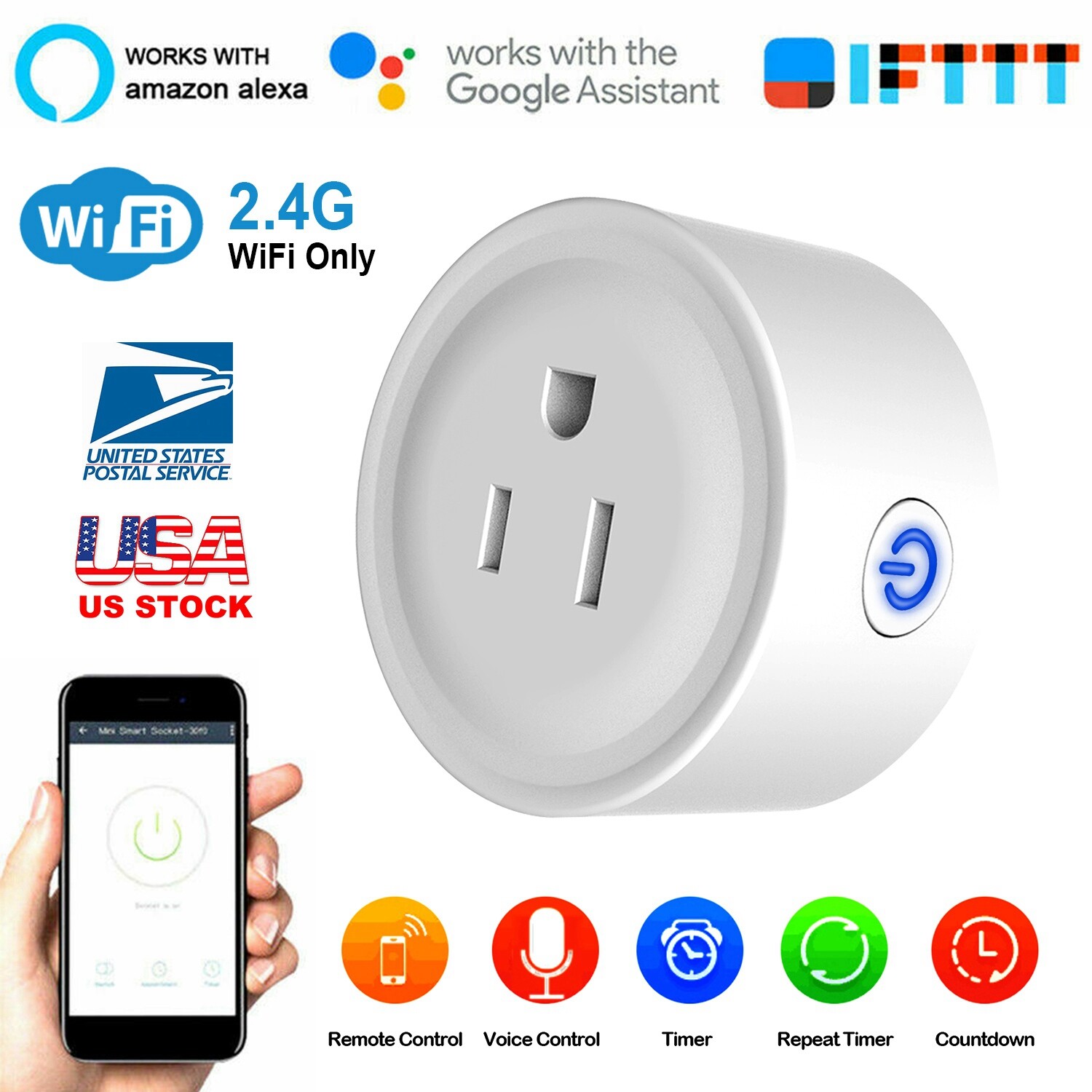

Photos from current listings. Actual item, color, and included accessories may vary.
Smart Socket Plug Buying Guide
A smart socket plug is a Wi-Fi or Bluetooth relay that adds app, voice, and schedule control to a standard AC outlet; the core trade-off is relay/amperage rating and enclosure quality (indoor plastic vs. IP-rated outdoor housing) versus connectivity protocol and neutral-wire-free installation. Buy indoor mini plugs for lamp/appliance scheduling at 10–15A, and only buy weatherized outdoor units when the enclosure carries an IP rating and a GFCI-protected circuit. Avoid any plug that omits its amperage, voltage, and wireless standard from the label.
Key takeaways
- Indoor plugs are typically 10A/120V or 15A/125V relays; anything switching a space heater or window AC needs a 15A rating and a 16AWG-minimum cord.
- Outdoor smart plugs must be IP64 or better and plug into a GFCI outlet; the Kasa EP40/KP400 dual-socket form is the reference outdoor layout.
- Wi-Fi 2.4GHz only is the norm for plugs; 5GHz-only routers require a 2.4GHz guest band because the plug radio cannot see 5GHz SSIDs.
At a glance
- Category
- Smart Home Electronics
- Last updated
- Nov 28, 2026
Current offers
Highlights
- Indoor plugs are typically 10A/120V or 15A/125V relays; anything switching a space heater or window AC needs a 15A rating and a 16AWG-minimum cord.
- Outdoor smart plugs must be IP64 or better and plug into a GFCI outlet; the Kasa EP40/KP400 dual-socket form is the reference outdoor layout.
- Wi-Fi 2.4GHz only is the norm for plugs; 5GHz-only routers require a 2.4GHz guest band because the plug radio cannot see 5GHz SSIDs.
- Mini form factor (~2.1x2.1x1.1 in) leaves the second wall socket usable; bulky plugs block it and are the main fit complaint.
Best use cases
- Best fit: indoor lamp, fan, or coffee-maker scheduling — pick a 10–15A mini Wi-Fi plug that supports Alexa/Google and keeps the second outlet free.
- Best fit: patio string lights, fountain pumps, or holiday lighting — pick a dual-socket IP64 outdoor plug on a GFCI circuit, not an indoor plug in a bag.
- Wrong fit: space heaters, EV trickle chargers, or 240V dryers — skip standard 10A plugs; these need 15A+ dedicated relays or hardwired controls.
- Wrong fit: homes with only 5GHz Wi-Fi or no 2.4GHz band — skip Wi-Fi plugs and choose a Bluetooth/Zigbee plug with a hub instead.
Buying tips
- Match the relay to the load: 10A for lamps/electronics, 15A for heaters and motors; never exceed 80% continuous load (12A on a 15A plug).
- Demand an IP rating for outdoor use — IP64 handles rain splashes; unrated plastic housings crack and corrode within a season.
- Confirm the wireless standard: Wi-Fi 2.4GHz plugs need no hub; Zigbee/Thread plugs require a compatible hub or border router.
- Check plug depth and width: mini plugs under ~1.2 in deep fit behind furniture; dual-outdoor bodies need ~2 in clearance for the hinged cover.
Specs
| Relay Rating | 10A vs 15A / 120V AC |
|---|---|
| Wireless Standard | Wi-Fi 2.4GHz / Zigbee / Thread |
| Outdoor Rating | IP44 splash vs IP64 rain-rated |
| Form Factor | Mini single vs dual outdoor socket |
Related searches
What to check before buying
- Measure the wall outlet and furniture gap — a mini plug needs about 1.5 in of side clearance; a dual outdoor body needs a flat mounting surface.
- Verify the circuit: outdoor plugs require a GFCI-protected receptacle; older two-prong outlets need a grounding adapter or rewiring.
- Confirm 120V/60Hz US plug standard and that your router broadcasts a 2.4GHz SSID before buying a Wi-Fi-only model.
- Check app/voice ecosystem: Alexa and Google Home support is standard, but Apple Home requires HomeKit-certified plugs or a bridge.
FAQ
Data sources: eBay / Amazon listings and product attribute feeds. Updated Nov 28, 2026.
Some links on this page are affiliate links. If you buy after clicking one, we may earn a commission at no extra cost to you. This does not change which products appear here or their order. Affiliate disclosure.