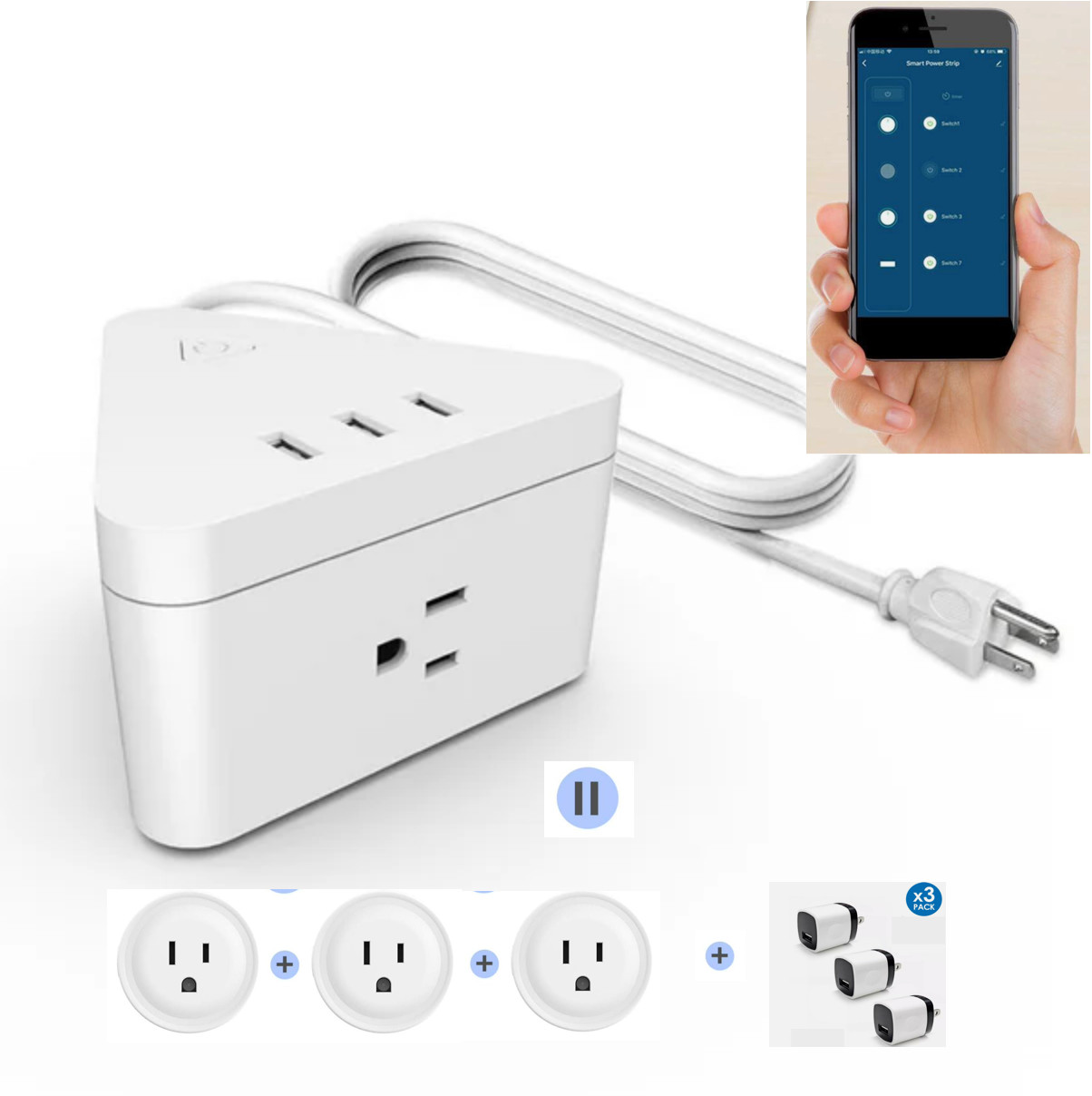

Photos from current listings. Actual item, color, and included accessories may vary.
Smart Plug That Work With Alexa Buying Guide
Alexa-compatible smart plugs are Wi-Fi relay modules that let you voice-control lamps, fans, and small appliances without a hub. The decisive trade-off is Wi-Fi chipset and firmware quality versus counterfeit-prone white-label builds: certified 2.4 GHz-only plugs with energy monitoring and local fallback last, while no-name plugs with unverified amps and cloud-only control fail early. Buy a plug whose rated load, Wi-Fi band, and app ecosystem are printed and verifiable — skip anything that hides amperage or demands a proprietary hub.
Key takeaways
- Most Alexa plugs run 2.4 GHz Wi-Fi only; 5 GHz-only routers need a split SSID or a 2.4 GHz guest network to pair.
- Relay rating separates tiers: 10A/1200W for lamps and fans, 15A/1800W for heaters and kitchen appliances — check the printed amp rating.
- Local-control plugs (Matter, Zigbee via hub, or Wi-Fi with LAN fallback) keep schedules working when the cloud or internet drops.
At a glance
- Category
- Smart Home Electronics
- Last updated
- Nov 28, 2026
Current offers
Highlights
- Most Alexa plugs run 2.4 GHz Wi-Fi only; 5 GHz-only routers need a split SSID or a 2.4 GHz guest network to pair.
- Relay rating separates tiers: 10A/1200W for lamps and fans, 15A/1800W for heaters and kitchen appliances — check the printed amp rating.
- Local-control plugs (Matter, Zigbee via hub, or Wi-Fi with LAN fallback) keep schedules working when the cloud or internet drops.
- Energy-monitoring models (TP-Link Kasa EP25, Eve Energy) report watts and kWh; basic plugs only switch power with no consumption data.
Best use cases
- Lamp and fan control: pick a compact 10A Wi-Fi plug with 2.4 GHz setup and app scheduling; skip 15A appliance plugs that block the second outlet.
- Space heater or window AC: choose a 15A/1800W-rated plug with thermal cut-off and grounded three-prong passthrough; never run high-draw heating on a 10A lamp plug.
- Whole-home reliability: use Matter-over-Wi-Fi or Zigbee plugs on a hub for local routines and multi-ecosystem control; skip cloud-only white-label plugs if you need offline schedules.
- Outdoor or damp locations: select an IP44+ rated plug with a covered outlet and GFCI protection upstream; indoor plugs in a weatherproof box are a compromise, not a solution.
Buying tips
- Match plug amps to load: 10A (1200W) covers lighting and fans; 15A (1800W) is mandatory for resistive heaters, kettles, and AC units.
- Verify the Wi-Fi band before buying: Alexa setup fails on 5 GHz-only networks, so a 2.4 GHz SSID or guest network must be available.
- Prefer plugs with Matter or a documented local API for offline schedules; cloud-only plugs lose timers when internet drops.
- Check outlet spacing: side-by-side duplex receptacles need a plug under 1.5 in wide or a design with the cord exit offset.
Specs
| Protocol | Wi-Fi 2.4 GHz / Zigbee / Matter |
|---|---|
| Load Rating | 10A 1200W vs 15A 1800W |
| Outlet Type | NEMA 5-15 grounded (US) |
| Energy Monitor | Yes (watts/kWh) vs No |
Related searches
What to check before buying
- Measure the wall outlet: confirm a compact plug leaves the second receptacle usable or choose a two-pack of slim plugs.
- Confirm router band: enable a 2.4 GHz SSID (or guest network) and have the Wi-Fi password ready before pairing to Alexa.
- Check circuit capacity: a 15A plug on a 15A branch circuit should not share with other high-draw loads; verify breaker rating.
- Verify plug type: US NEMA 5-15 grounded three-prong is standard; EU/UK buyers need the regional Shucko or Type G variant.
FAQ
Data sources: eBay / Amazon listings and product attribute feeds. Updated Nov 28, 2026.
Some links on this page are affiliate links. If you buy after clicking one, we may earn a commission at no extra cost to you. This does not change which products appear here or their order. Affiliate disclosure.