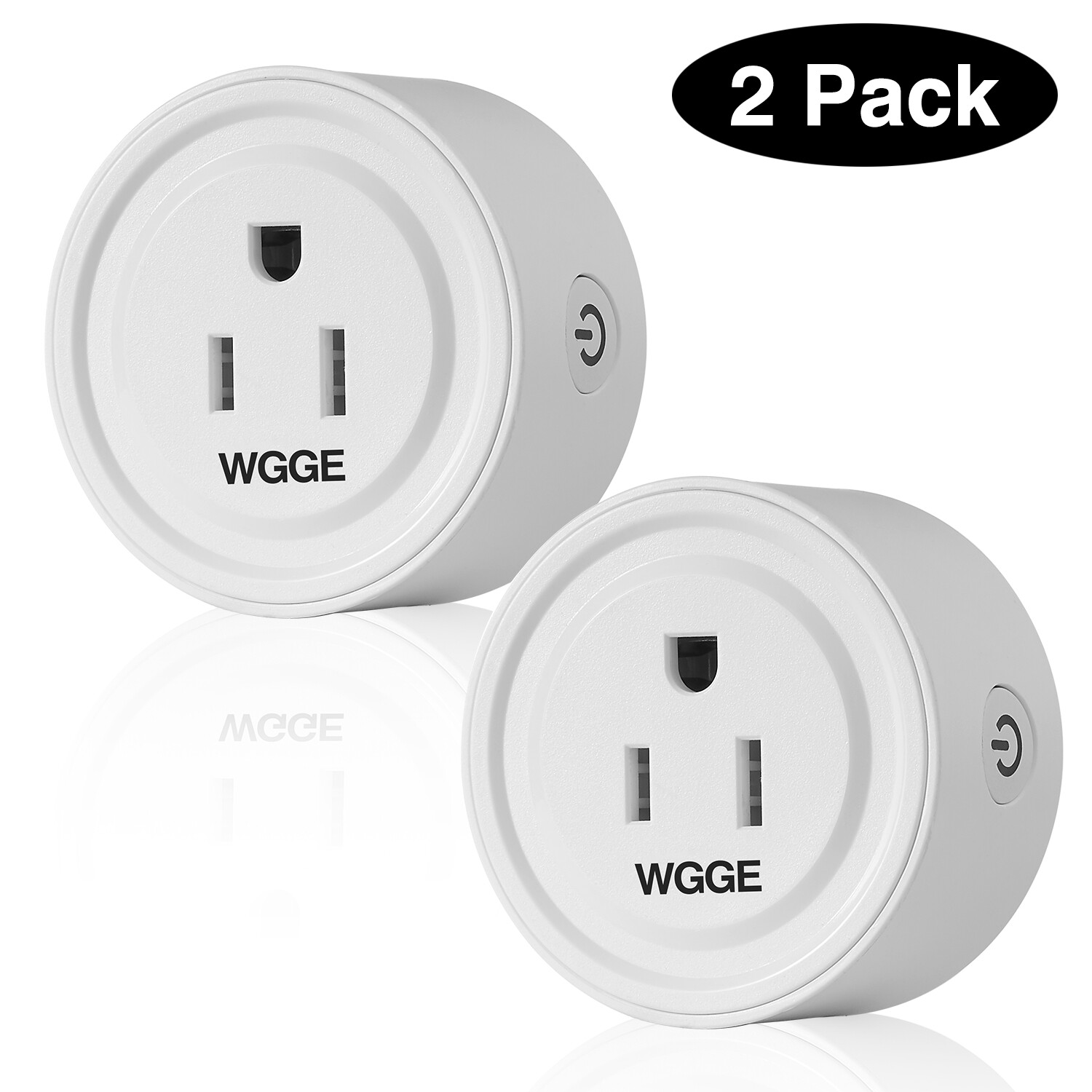

Photos from current listings. Actual item, color, and included accessories may vary.
Mini Smart Plug Buying Guide
A mini smart plug is a compact Wi-Fi or hub-based outlet adapter that adds app, voice, and schedule control to dumb devices while preserving adjacent outlet access. The core trade-off is between compactness (which often sacrifices max load rating and energy monitoring) and full-feature modules that may block the second socket. The decision rule: buy a UL/ETL-listed plug rated at least 15A/1800W with 2.4GHz Wi-Fi and local scheduling if you need safe, reliable daily switching; accept 10A/1200W mini plugs only for light loads like lamps and chargers.
Key takeaways
- Mini plugs fall into two electrical tiers: 10A/1200W compact bodies (often blocking adjacent outlets) versus 15A/1800W full-size bodies that preserve a second receptacle or include pass-through.
- Wi-Fi smart plugs use 2.4GHz 802.11 b/g/n only; 5GHz-only routers require a separate 2.4GHz SSID or band-steering disabled for initial pairing.
- Energy-monitoring models (e.g., Kasa EP25, TP-Link HS105 with monitoring variants) add real-time wattage and historical kWh tracking; non-monitoring versions only switch power.
At a glance
- Category
- Smart Home Electronics
- Last updated
- Nov 28, 2026
Current offers
Highlights
- Mini plugs fall into two electrical tiers: 10A/1200W compact bodies (often blocking adjacent outlets) versus 15A/1800W full-size bodies that preserve a second receptacle or include pass-through.
- Wi-Fi smart plugs use 2.4GHz 802.11 b/g/n only; 5GHz-only routers require a separate 2.4GHz SSID or band-steering disabled for initial pairing.
- Energy-monitoring models (e.g., Kasa EP25, TP-Link HS105 with monitoring variants) add real-time wattage and historical kWh tracking; non-monitoring versions only switch power.
- Matter and Thread support is generation-specific: Matter-over-Wi-Fi plugs pair natively with Apple Home, Google Home, and Alexa without vendor cloud, while older Wi-Fi models depend on manufacturer apps and cloud accounts.
Best use cases
- Best fit: lamp and small-appliance scheduling in bedrooms or living rooms — pick a 15A/1800W UL-listed mini plug with local scheduling so routines run without internet.
- Best fit: holiday lighting and phone-charger loads — a 10A/1200W mini plug is sufficient and its smaller body fits behind furniture; skip energy monitoring to save cost.
- Wrong fit: space heaters, irons, or kitchen appliances above 1200W — choose a 15A/1800W plug with a grounded 3-prong outlet and never exceed the device nameplate.
- Wrong fit: outdoor or damp locations — standard mini plugs are indoor-only; use an outdoor-rated plug with an IP65 enclosure and GFCI-protected circuit.
Buying tips
- Verify the plug bears UL or ETL listing and a 15A/1800W (or 10A/1200W) rating on the body; unlisted plugs lack overcurrent and thermal protection.
- Choose 2.4GHz Wi-Fi for pairing; if your router is 5GHz-only or uses WPA3-only mode, confirm the plug supports WPA2 mixed mode or use a Matter/Thread model.
- For energy monitoring, select a model with real-time watts and kWh history (e.g., Kasa EP25 or TP-Link HS105 monitoring variant); basic plugs report only on/off state.
- Check plug body width: a mini plug under 1.5 inches wide preserves the adjacent outlet in a standard duplex; wider bodies block it and require a 1-to-3 adapter.
Specs
| Electrical Rating | 10A/1200W mini vs 15A/1800W full-size |
|---|---|
| Wi-Fi Band | 2.4GHz 802.11 b/g/n only |
| Protocol | Wi-Fi direct, Matter, Zigbee, Z-Wave |
| Energy Monitoring | Real-time watts + kWh history or none |
Related searches
What to check before buying
- Measure the wall outlet spacing: standard duplex receptacles are 1.5 inches apart center-to-center; a plug wider than 1.5 inches blocks the second socket.
- Confirm your Wi-Fi router broadcasts a 2.4GHz SSID (802.11 b/g/n) and that the phone used for setup is on that band during pairing.
- Check the load nameplate watts and amps: devices above 1200W require a 15A/1800W plug; devices above 1800W require a dedicated smart circuit, not a plug.
- Verify plug type matches your country: NEMA 1-15 or 5-15 in North America, Type G in UK, Schuko in EU; mini plugs are region-specific and not voltage-agnostic.
FAQ
Data sources: eBay / Amazon listings and product attribute feeds. Updated Nov 28, 2026.
Some links on this page are affiliate links. If you buy after clicking one, we may earn a commission at no extra cost to you. This does not change which products appear here or their order. Affiliate disclosure.