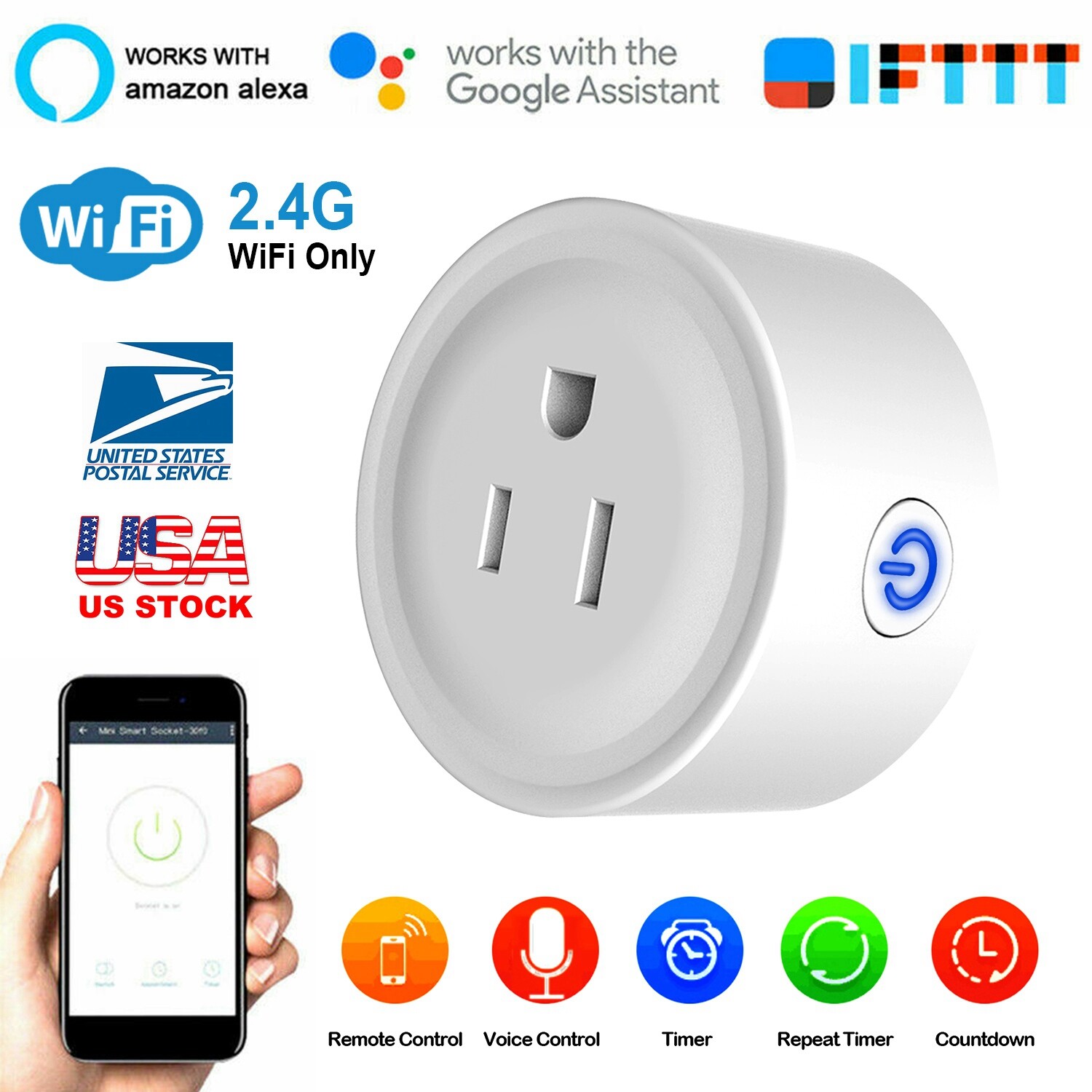

Photos from current listings. Actual item, color, and included accessories may vary.
Google Smart Plug Buying Guide
A Google smart plug is a Wi-Fi or Bluetooth outlet adapter that adds voice control, scheduling, and energy monitoring to any standard receptacle, with the primary trade-off being relay/amperage rating and Wi-Fi chipset reliability versus price. Durable units use 15A relays, 2.4GHz-only radios with mature firmware, and UL/ETL certification; sub-10A or uncertified plugs are compromises that overheat under continuous loads. The decision rule: buy a certified 15A plug from a brand with a proven app for high-draw appliances, and a compact 10A mini for lamps and low-draw electronics.
Median $13.96
Key takeaways
- Relay amperage is the key durability spec: 15A/1800W units handle space heaters and kettles, while 10A minis are limited to lamps and fans.
- Google compatibility requires Matter or the Google Home app; older Wi-Fi plugs rely on cloud linking, which adds latency and outage risk.
- Mini plugs measure roughly 2.1x2.1x1.1 in and often block the second outlet; wider 'duo' or side-outlet designs preserve both receptacles.
At a glance
- Category
- Smart Home Electronics
- Last updated
- Nov 28, 2026
Current offers
Highlights
- Relay amperage is the key durability spec: 15A/1800W units handle space heaters and kettles, while 10A minis are limited to lamps and fans.
- Google compatibility requires Matter or the Google Home app; older Wi-Fi plugs rely on cloud linking, which adds latency and outage risk.
- Mini plugs measure roughly 2.1x2.1x1.1 in and often block the second outlet; wider 'duo' or side-outlet designs preserve both receptacles.
- Energy monitoring models (e.g., Kasa EP25) sample wattage and voltage, enabling cost tracking; basic plugs only switch power on/off.
Best use cases
- Best fit: 15A certified plug for window ACs, space heaters, and coffee makers; skip 10A minis for any continuous load above 1000W.
- Best fit: outdoor plug with IP64 rating and light sensor for holiday lighting and porch lamps; skip indoor-only plugs in exposed locations.
- Best fit: Matter-certified plug for local control and multi-platform use (Google, Alexa, Apple Home); skip cloud-only plugs if you want offline scheduling.
- Best fit: energy-monitoring plug for tracking appliance draw and phantom loads; skip it for simple on/off lamps where a basic mini suffices.
Buying tips
- Match plug amperage to load: 15A (1800W) for heating/cooling appliances, 10A (1200W) for lighting and small electronics; never exceed 80% continuous load.
- Choose 2.4GHz Wi-Fi or Matter/Thread; 5GHz-only routers require a 2.4GHz band enabled for setup, and Bluetooth-only plugs lack remote access.
- Prefer UL or ETL certification marks; uncertified plugs risk relay welding and fire, especially at high draw.
- For outlet density, measure your receptacle spacing: a 2.1 in wide mini can block the adjacent outlet; side-entry or slim designs avoid this.
Specs
| Amperage Rating | 10A mini vs 15A standard |
|---|---|
| Protocol | Wi-Fi 2.4GHz / Matter / Bluetooth |
| Energy Monitoring | Yes (watt/volt) vs no |
| Certification | UL/ETL listed vs uncertified |
Related searches
What to check before buying
- Confirm your wall outlet is standard US 120V/15A and grounded; smart plugs do not work on 240V dryer or EV circuits.
- Measure the outlet cover plate and adjacent plug clearance; mini plugs wider than 2 in may overlap the second socket.
- Verify your Wi-Fi router broadcasts a 2.4GHz SSID and that your phone is on that band during pairing.
- Check whether you need a neutral wire or hub: Matter plugs need a Thread border router for full local control; Wi-Fi plugs need only your router.
FAQ
Data sources: eBay / Amazon listings and product attribute feeds. Updated Nov 28, 2026.
Some links on this page are affiliate links. If you buy after clicking one, we may earn a commission at no extra cost to you. This does not change which products appear here or their order. Affiliate disclosure.