
Photos from current listings. Actual item, color, and included accessories may vary.
Doorbell Camera Buying Guide
A doorbell camera replaces your passive peephole with a motion-triggered video intercom, and the decisive trade-off is power architecture: battery units install anywhere but need recharging and often miss 24/7 recording, while wired units deliver constant power, longer clips, and reliable smart-home triggers. Buy wired if you have existing doorbell transformer wiring and want set-and-forget reliability; buy battery only when no low-voltage wiring exists and you accept periodic charging as routine maintenance.
Median $127.99
Key takeaways
- Wired doorbell cameras run on 16-24 VAC from a doorbell transformer; most require a 10-30 VA transformer upgrade to avoid voltage-drop reboots during night-vision IR activation.
- Battery doorbell cameras typically record 10-30 second event clips and use PIR sensors; continuous 24/7 recording is generally reserved for wired or plug-in models.
- 2K (2560x1440) resolution delivers roughly 1.7x the pixels of 1080p and resolves faces at 8-10 ft; 1080p remains adequate for packages within 5-6 ft of the lens.
At a glance
- Category
- Smart Home Electronics
- Last updated
- Nov 27, 2026
Current offers
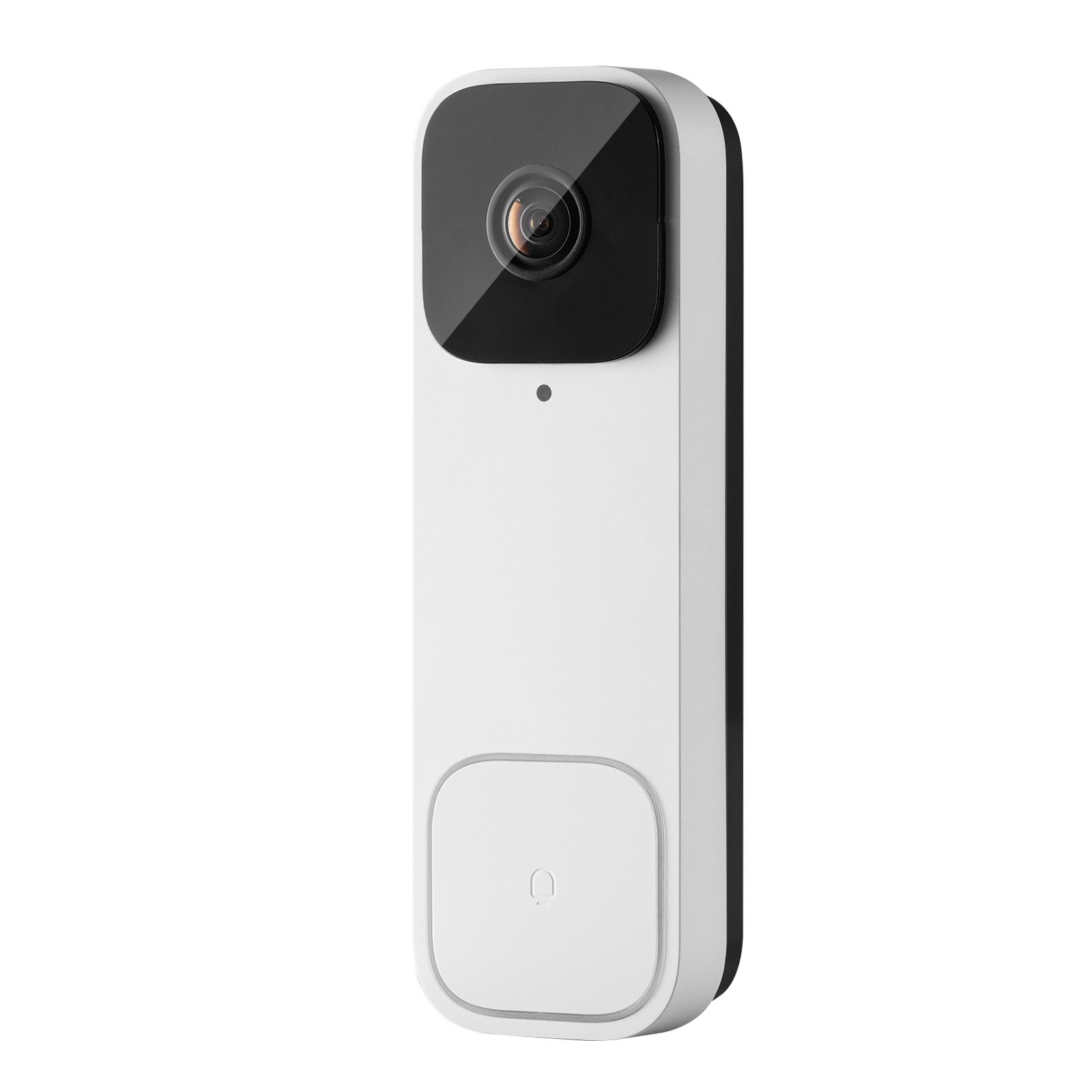 Video Doorbell, 2K Wireless Camera Ring Works With 170° Ultra-Wide View, 2-Way Audio, Motion Detection & Night Vision, Supports Alexei & Google, Cloud Storage, Battery/Wired Powered$63.99View on Mallflare
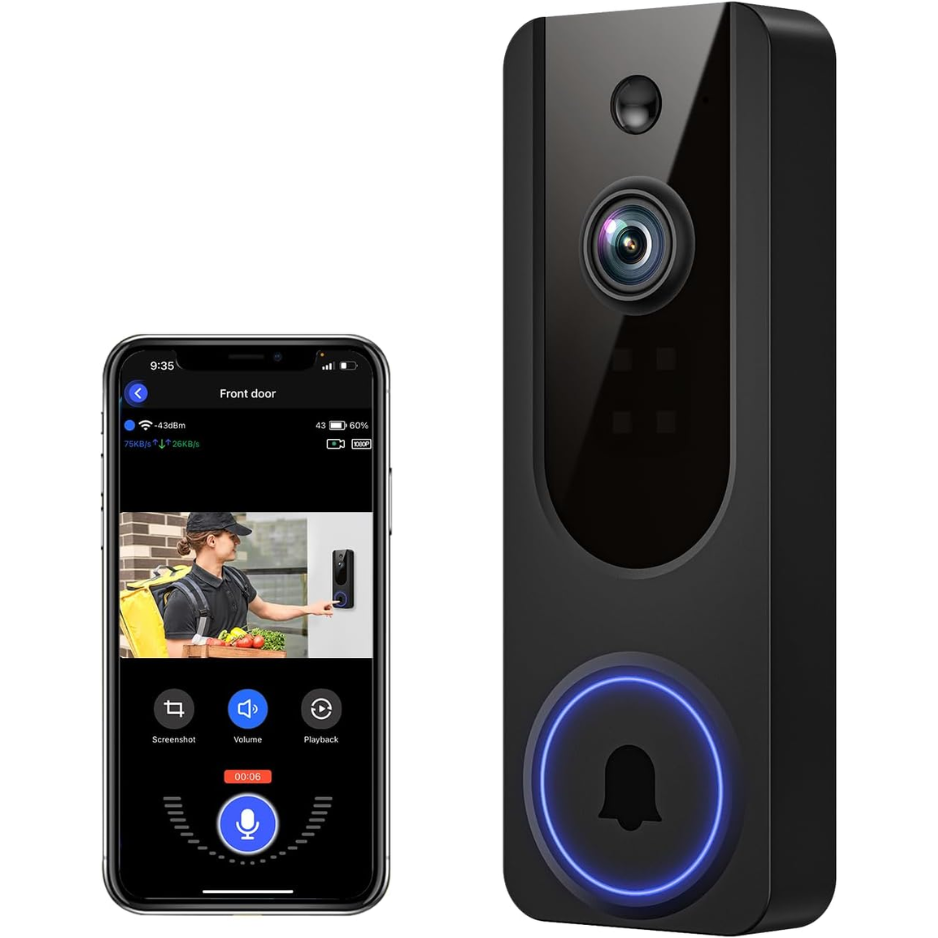 1080P Wireless Wi-Fi Video Doorbell Camera, AI Motion Detection$127.99View on Mallflare
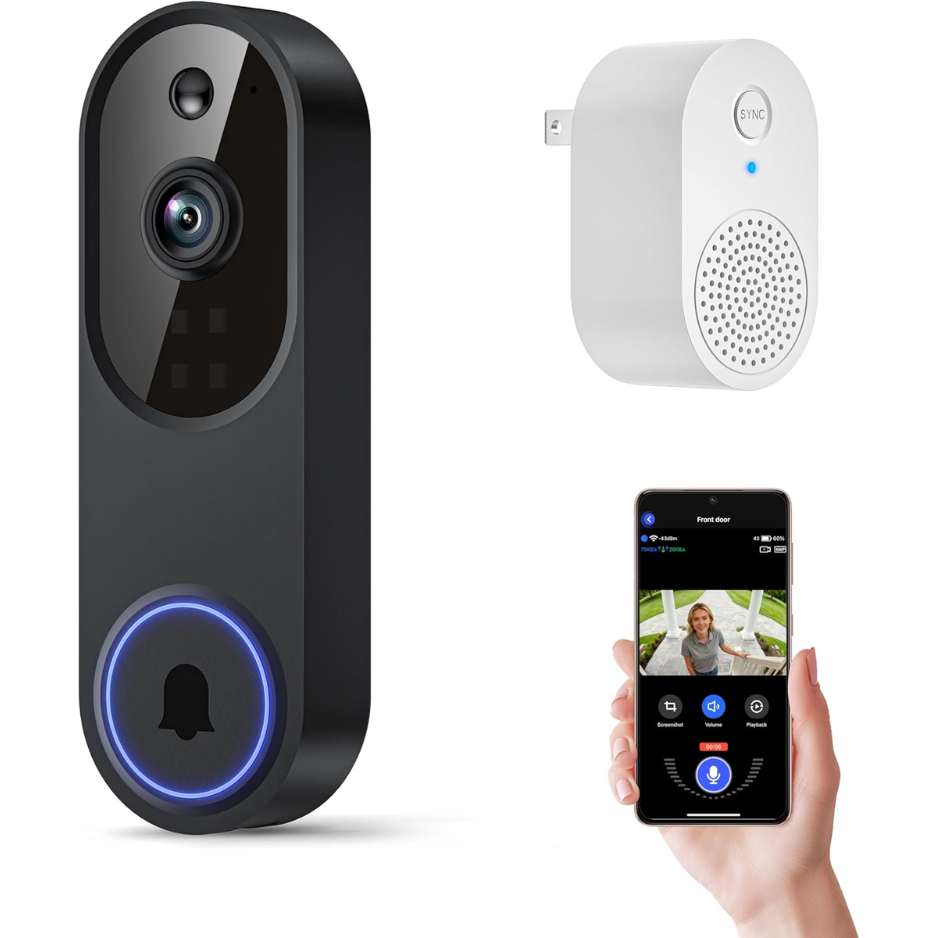 1080P Wi-Fi Video Doorbell Camera With Two-Way Audio & Night Vision$136.99View on Mallflare
Highlights
- Wired doorbell cameras run on 16-24 VAC from a doorbell transformer; most require a 10-30 VA transformer upgrade to avoid voltage-drop reboots during night-vision IR activation.
- Battery doorbell cameras typically record 10-30 second event clips and use PIR sensors; continuous 24/7 recording is generally reserved for wired or plug-in models.
- 2K (2560x1440) resolution delivers roughly 1.7x the pixels of 1080p and resolves faces at 8-10 ft; 1080p remains adequate for packages within 5-6 ft of the lens.
- A 170-degree diagonal field of view covers a porch width of about 8-10 ft at door height, but wider lenses increase fisheye distortion at the frame edges.
Best use cases
- Choose a wired 2K unit with 16-24 VAC transformer support for a single-family home with existing doorbell wiring—it delivers pre-event buffering, longer recordings, and no battery swaps.
- Choose a battery-powered 1080p unit for a rental apartment or metal-frame door where low-voltage wiring cannot be run; pair it with a removable rechargeable pack and accept 3-6 month charge intervals.
- Skip both and use a peephole camera or plug-in indoor camera if your door is in a shared hallway without Wi-Fi coverage at the door—Wi-Fi RSSI below -70 dBm causes constant clip dropouts regardless of camera tier.
- For a package-heavy porch, pick a wired 2K model with 170-degree view and person/package detection; skip battery 1080p units whose PIR range (~20-25 ft) and clip length may miss porch pirates.
Buying tips
- Measure door-frame width and setback: a 170-degree lens at 48-60 inch mounting height covers a 8-10 ft porch width; a narrower 130-150 degree lens suits narrow 3-4 ft entryways.
- Match power to wiring: confirm your transformer output is 16-24 VAC at 10 VA minimum; upgrading to a 24 VAC 20-40 VA transformer prevents brownouts on wired 2K units with IR and Wi-Fi active.
- Choose 2K over 1080p when the camera-to-face distance exceeds 8 ft; 1080p is sufficient for doors where visitors stand within 5-6 ft of the lens.
- Verify local storage support: a microSD slot (typically up to 128-256 GB, class 10/U3) eliminates subscription dependence; cloud-only models lock event history behind a paid plan.
Specs
| Power Source | Wired 16-24 VAC vs Battery |
|---|---|
| Max Resolution | 1080p vs 2K (2560x1440) |
| Field of View | 130-170° diagonal |
| Local Storage | microSD up to 128-256 GB |
What to check before buying
- Measure the mounting surface and door trim: the camera body plus angled wedge must clear the door swing and sit at 48-60 inches above the threshold for face-height framing.
- Check Wi-Fi signal at the doorbell location with a phone: RSSI better than -65 dBm supports 2K streaming; below -70 dBm requires a mesh node or chime-pro repeater.
- Confirm transformer voltage and VA rating at the chime box before buying a wired model; 16 VAC 10 VA is the common minimum, and 24 VAC 20-40 VA is the safe upgrade.
- Verify existing chime compatibility: mechanical chimes need a power-kit bypass, while digital chimes may require a specific module or the camera's own plug-in chime accessory.
FAQ
Data sources: eBay / Amazon listings and product attribute feeds. Updated Nov 27, 2026.
Some links on this page are affiliate links. If you buy after clicking one, we may earn a commission at no extra cost to you. This does not change which products appear here or their order. Affiliate disclosure.