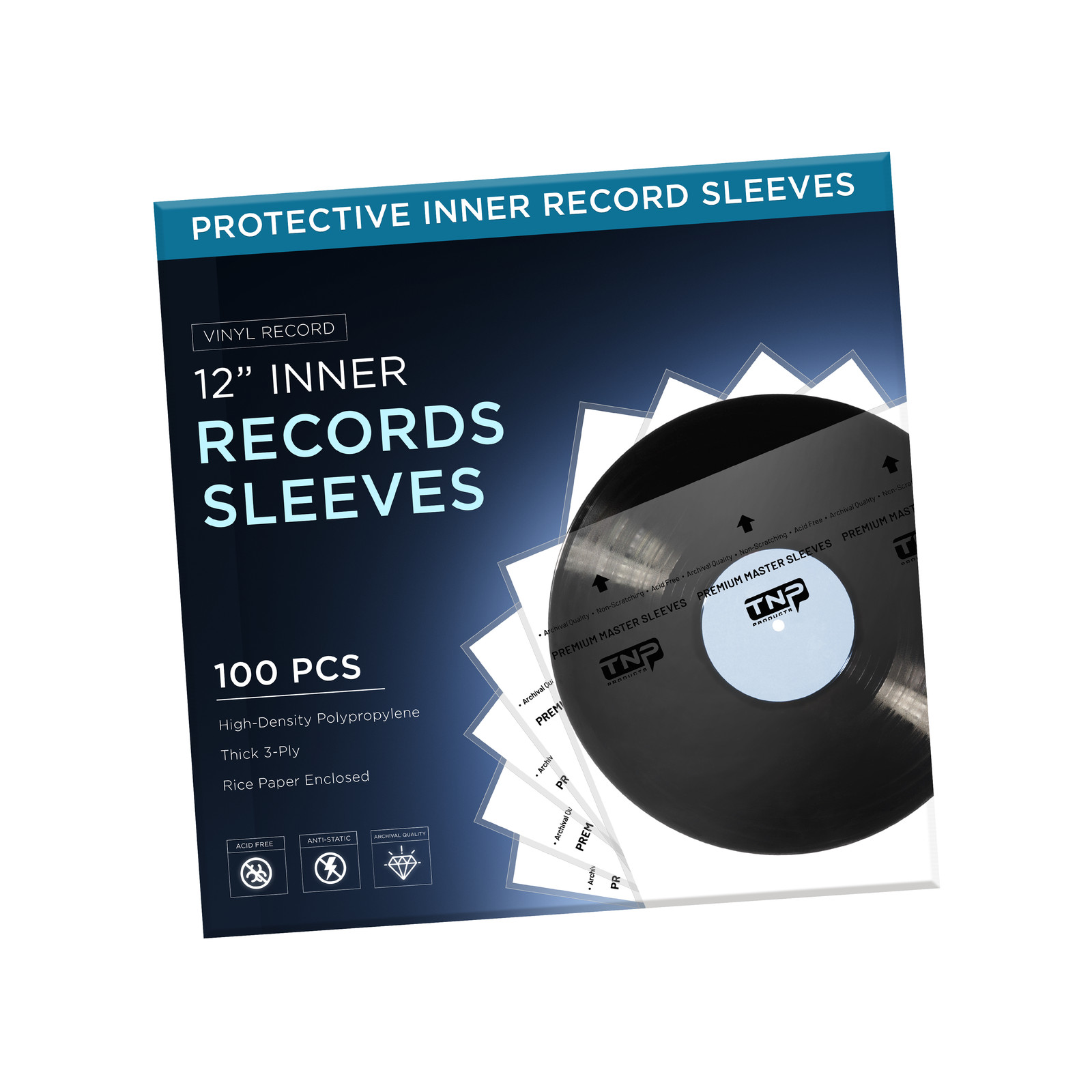

Photos from current listings. Actual item, color, and included accessories may vary.
Vinyl Inner Sleeve Buying Guide
Vinyl inner sleeves are the anti-static, anti-abrasion liners that sit between a record and its outer jacket, and the choice comes down to material (paper vs. plastic vs. rice-paper composite) and fit tolerance. The trade-off is protection versus handling: paper is cheap but sheds fibers and scratches, while plastic and rice-paper laminates protect the groove but can be fussy to load. The decision rule: buy rice-paper or HDPE anti-static sleeves for anything you care about, and only use plain paper when a record's existing sleeve is already worn out and the disc is low-value.
Key takeaways
- Three-ply rice-paper sleeves combine a paper core with HDPE inner liners, giving anti-static glide plus rigidity that plain paper lacks.
- 12" x 12" outer dimensions fit standard 12-inch LPs; 7-inch and 10-inch sleeves are separate sizes, not trim-to-fit.
- HDPE (high-density polyethylene) is softer and more anti-static than cheaper PVC, which can off-gas and leave residue on vinyl over years.
At a glance
- Category
- Record Storage & Accessories
- Last updated
- Nov 28, 2026
Current offers
Highlights
- Three-ply rice-paper sleeves combine a paper core with HDPE inner liners, giving anti-static glide plus rigidity that plain paper lacks.
- 12" x 12" outer dimensions fit standard 12-inch LPs; 7-inch and 10-inch sleeves are separate sizes, not trim-to-fit.
- HDPE (high-density polyethylene) is softer and more anti-static than cheaper PVC, which can off-gas and leave residue on vinyl over years.
- Thin paper sleeves (around 60-80 GSM) shed fibers into grooves; rice-paper composites resist tearing and static buildup during repeated in/out handling.
Best use cases
- Best fit: new or valuable LPs stored in rice-paper or HDPE anti-static sleeves, which protect the groove and slide easily in and out of the jacket.
- Best fit: bulk 12-inch collections using three-ply paper-core sleeves, where rigidity and cost matter more than anti-static performance.
- Wrong fit: buying 7-inch sleeves for 12-inch records (or vice versa) — size is fixed by record diameter, and oversize sleeves bunch inside the jacket.
- Skip: plain thin paper sleeves for anything played often or stored long-term, since fiber shedding and static are the main causes of surface noise.
Buying tips
- Match sleeve to record diameter: 12-inch for LPs, 10-inch for 78s/EPs, 7-inch for singles; never fold a larger sleeve to fit.
- Choose rice-paper or HDPE for anti-static protection; avoid PVC sleeves for long-term storage because plasticizers can migrate onto vinyl.
- Check thickness: 3-ply or 80-100 GSM paper-core sleeves resist creasing better than single-ply paper, which tears at the seam.
- Buy in packs sized to your collection; 100-count packs suit small collections, while 500-count bulk packs lower per-sleeve handling cost.
Specs
| Sleeve Material | Rice paper / HDPE / paper / PVC |
|---|---|
| Sleeve Size | 12-inch / 10-inch / 7-inch |
| Anti-Static Layer | HDPE inner vs none |
| Pack Format | 50 / 100 / 500 counts |
Related searches
What to check before buying
- Measure your record diameter (12-inch, 10-inch, 7-inch) and buy the matching sleeve size — no trimming.
- Confirm your outer jacket inner dimensions clear the sleeve: standard 12-inch jackets accept 12.375-inch sleeves without bunching.
- Check storage climate: high humidity can soften paper sleeves, so HDPE or rice-paper is safer in damp rooms.
- Verify the sleeve material is HDPE or rice-paper composite, not PVC, if you plan to store records for years.
FAQ
Data sources: eBay / Amazon listings and product attribute feeds. Updated Nov 28, 2026.
Some links on this page are affiliate links. If you buy after clicking one, we may earn a commission at no extra cost to you. This does not change which products appear here or their order. Affiliate disclosure.