
Photos from current listings. Actual item, color, and included accessories may vary.
Ultrasonic Record Cleaner Buying Guide
Ultrasonic record cleaners use high-frequency transducers (typically 40 kHz) in a liquid bath to cavitate away mold release, finger oils, and deep-groove grit that brushes and vacuums cannot reach. The core trade-off is tank capacity and record-handling architecture versus transducer power and drying capability: 6L units clean multiple LPs per cycle but need proper surfactant and drying to avoid residue, while larger tanks and higher wattage shorten cycle times and improve throughput. The decision rule is simple: buy a stainless-steel tank with at least 40 kHz transducers, a fitted record spindle or rack, and a separate drying rack; skip open-basket generic cleaners that cannot hold records vertically and lack post-clean drying.
Median $154.49
Key takeaways
- 40 kHz is the standard cavitation frequency for vinyl: high enough to reach groove bottoms without pitting, low enough to avoid the aggressive 28-33 kHz range used for industrial degreasing.
- 6L stainless-steel tanks clean 4-8 records per cycle depending on spindle design; 180W heating-assisted units shorten dwell time and improve surfactant action versus unheated baths.
- Record-specific cleaners add vertical spindles, groove-safe rotation, and fitted drying racks; generic ultrasonic baskets leave LPs flat and trap debris in the label area.
At a glance
- Category
- Vinyl Record Cleaning
- Last updated
- Nov 25, 2026
Current offers
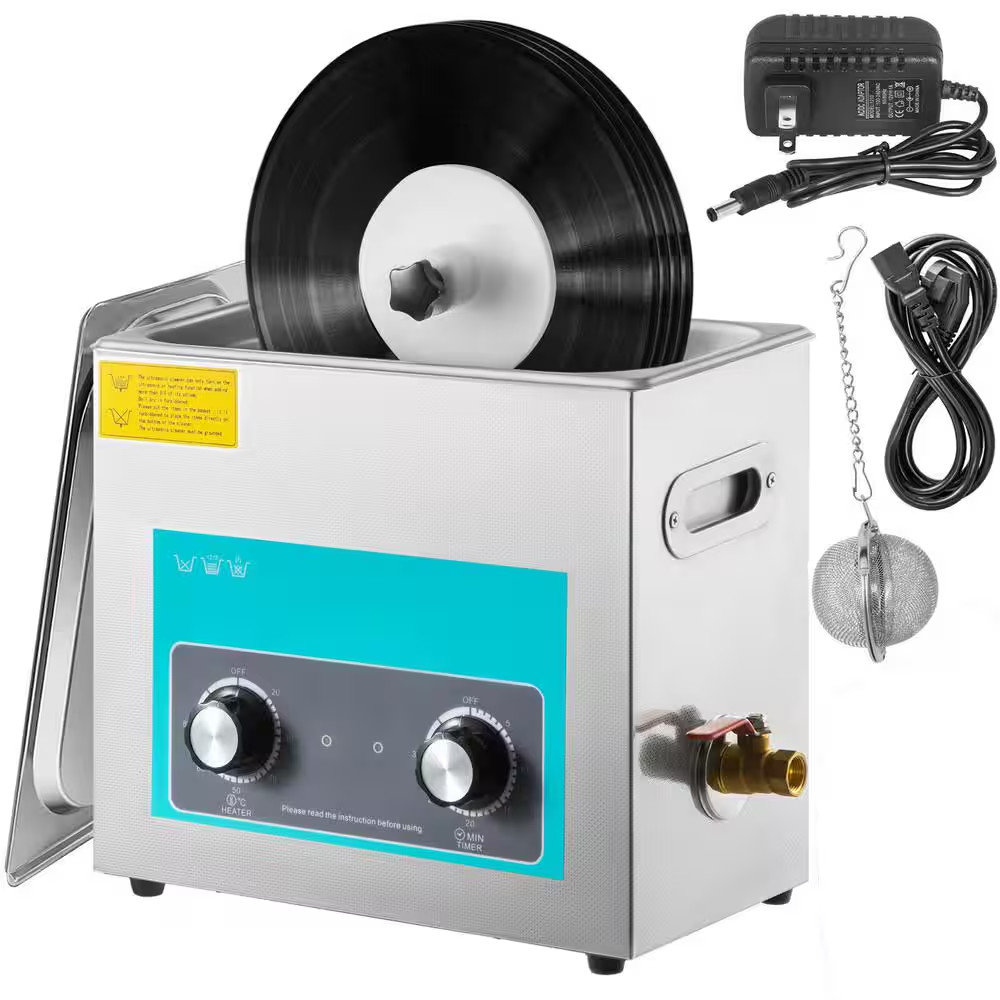 Ultrasonic Vinyl Record Cleaner 6L 40Khz Vinyl Ultrasonic Cleaning Machine Knob$118.71View on eBay
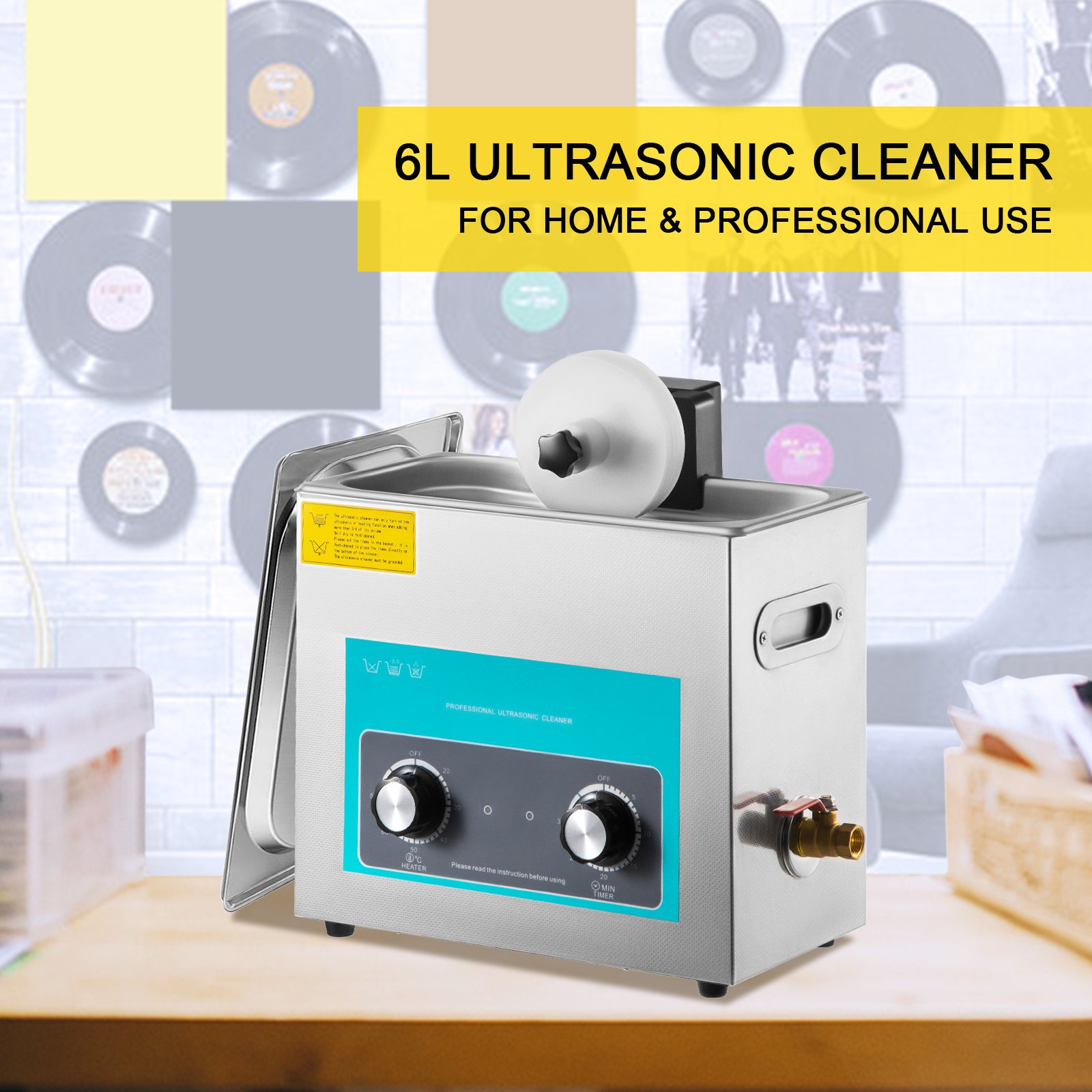 Ultrasonic Vinyl Record Cleaner 6L 40kHz Cleaning Machine Knob Control 4 Records$143.99View on Mallflare
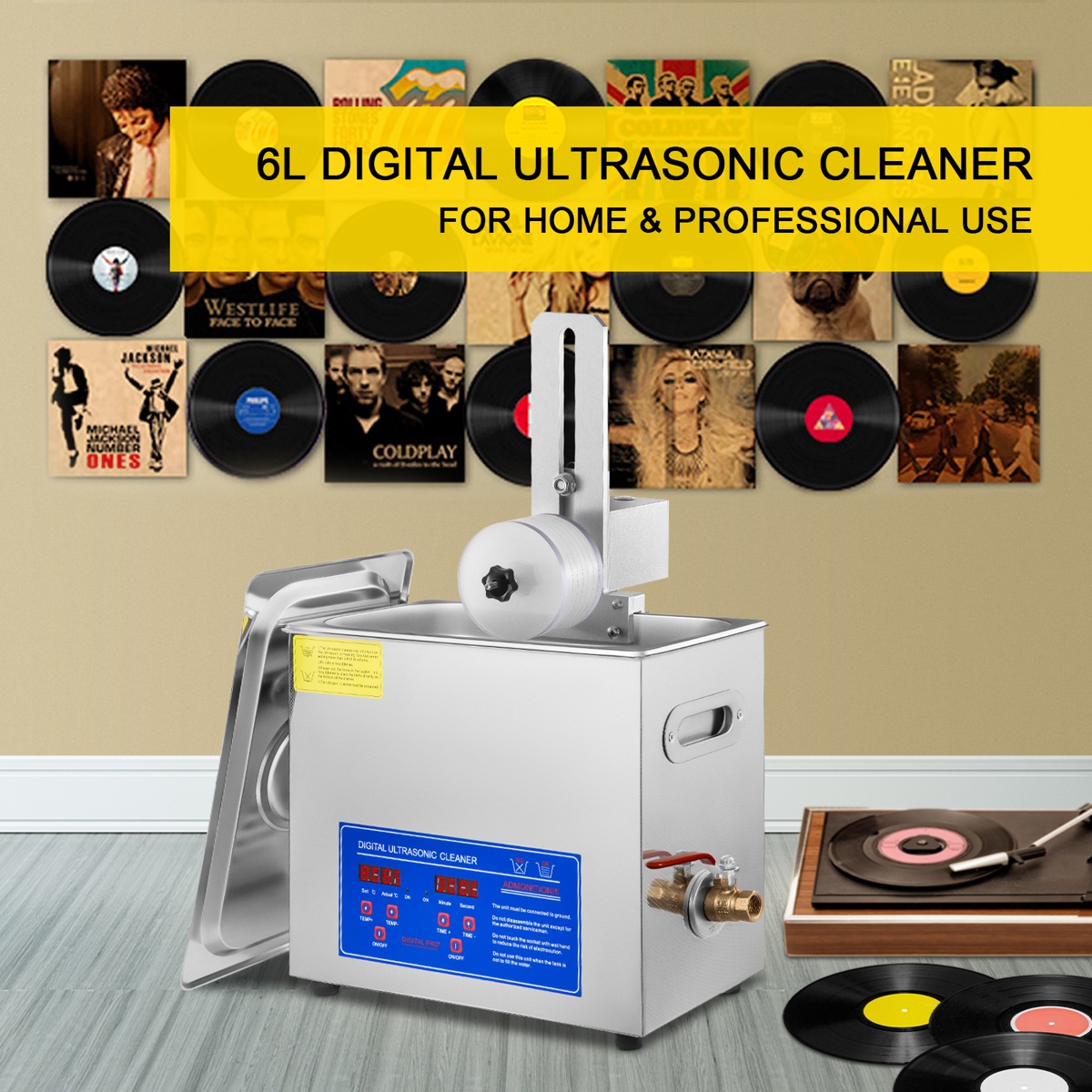 VEVOR Ultrasonic Cleaner 6L Vinyl 7-12 Inch 8 Records Cleaning Machine 180W With Drying Rack For Home Store$164.99View on Mallflare
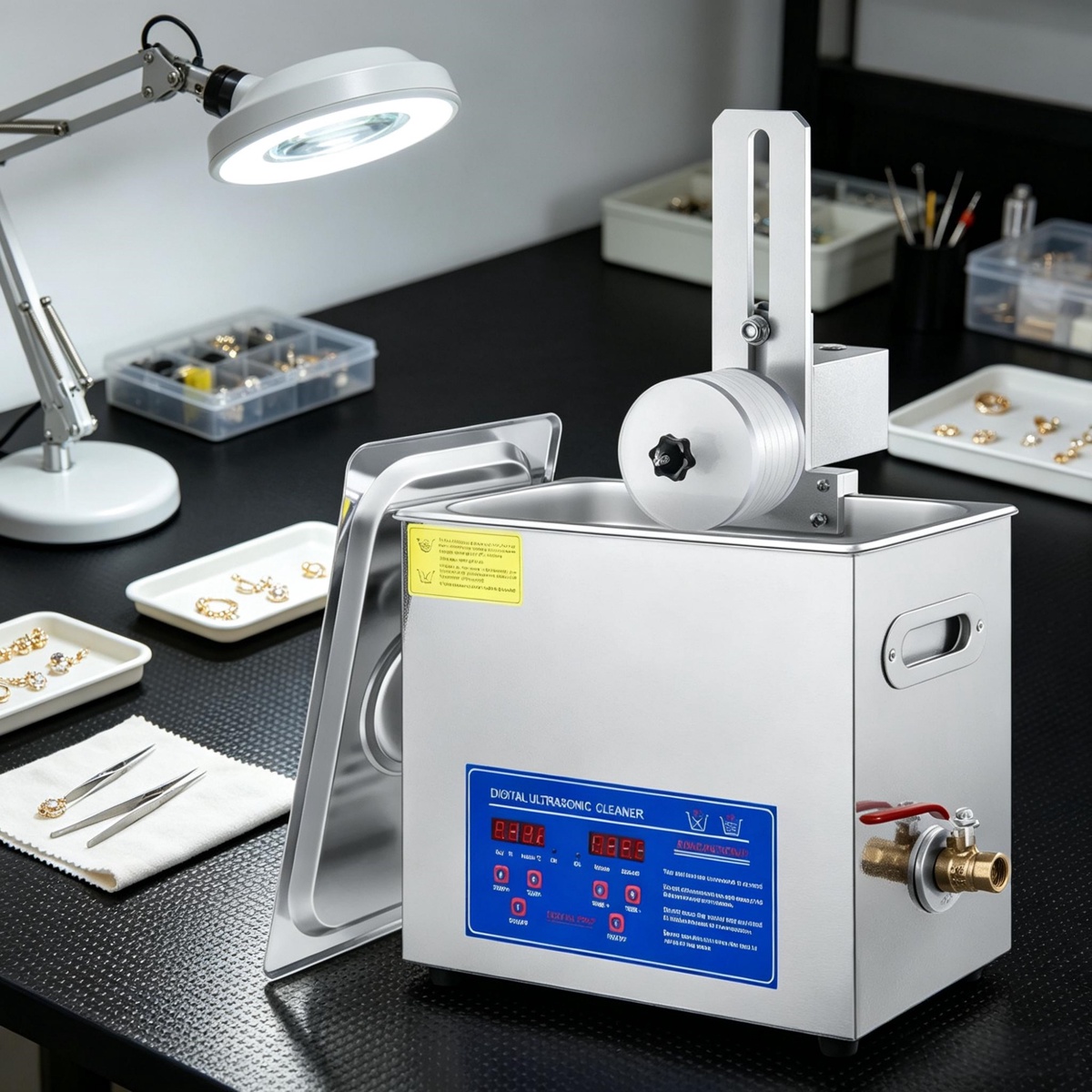 Ultrasonic Vinyl Record Cleaner, 7-12 Inch Cleaning Machine for 8 Records$307.99View on Mallflare
Highlights
- 40 kHz is the standard cavitation frequency for vinyl: high enough to reach groove bottoms without pitting, low enough to avoid the aggressive 28-33 kHz range used for industrial degreasing.
- 6L stainless-steel tanks clean 4-8 records per cycle depending on spindle design; 180W heating-assisted units shorten dwell time and improve surfactant action versus unheated baths.
- Record-specific cleaners add vertical spindles, groove-safe rotation, and fitted drying racks; generic ultrasonic baskets leave LPs flat and trap debris in the label area.
- Tank material and weld quality determine longevity: 304 stainless steel with welded transducer plates resists cavitation erosion; thin stamped tanks degrade and leak at seams.
Best use cases
- Best fit: a collector with 50+ LPs and moderate mold/dust issues should pick a 6L, 40 kHz unit with a 4-8 record spindle and 180W heating; skip 2L jewelry cleaners that cannot submerge a 12-inch LP vertically.
- Best fit: a home user restoring thrift-store finds should pair the cleaner with a record drying rack and distilled water plus a few drops of surfactant; skip units that ship without any record holder or drying stand.
- Wrong fit: a buyer wanting one-step cleaning should skip ultrasonic entirely and choose a vacuum-based record cleaning machine; ultrasonic requires pre-rinse, surfactant dosing, and full drying to avoid residue.
Buying tips
- Match tank length to record diameter: a 12-inch LP needs an internal tank length of at least 13 inches (33 cm); 6L rectangular tanks typically clear this, while round 2L tanks do not.
- Choose 40 kHz transducers over 28-33 kHz for vinyl; lower frequencies are for carburetor and industrial parts and can erode groove walls with repeated use.
- Insist on 304 stainless steel tank construction with visible welded transducer plates; plastic-bodied or thin stamped tanks fail at seams under continuous cavitation.
- Budget for a drying rack and distilled water: residuals from tap water minerals cause surface noise, so a fitted rack plus a surfactant (e.g., Kodak Photo-Flo or dedicated record cleaner) is mandatory, not optional.
Specs
| Tank Capacity | 6L standard / 2-10L range |
|---|---|
| Frequency | 40 kHz vinyl-safe |
| Tank Material | 304 stainless steel |
| Record Capacity | 4-8 LPs per cycle |
Related searches
What to check before buying
- Measure your cleaning area: 6L units are roughly 12-14 inches wide and need clearance for the lid and record spindle; confirm counter depth before buying.
- Verify the unit ships with a record spindle or vertical rack rated for 7-12 inch records; open baskets without spindles will not hold LPs upright.
- Confirm 120V/60Hz plug standard for US outlets and that the heater (if present) has its own switch; 180W heating elements draw noticeable current.
- Check that a drying rack or stand is included or available; cleaning without drying leaves surfactant residue that attracts dust.
FAQ
Data sources: eBay / Amazon listings and product attribute feeds. Updated Nov 25, 2026.
Some links on this page are affiliate links. If you buy after clicking one, we may earn a commission at no extra cost to you. This does not change which products appear here or their order. Affiliate disclosure.