
Photos from current listings. Actual item, color, and included accessories may vary.
Brush Clean Vinyl Record Buying Guide
A vinyl cleaning brush is a dry or wet-contact tool that removes dust and static from record grooves; the core trade-off is between soft natural-fiber or carbon-fiber bristles that lift debris without scratching and stiff synthetic brushes that risk groove damage. The decisive rule: choose anti-static carbon-fiber or velvet-lip brushes with fine, dense bristles for routine dry cleaning, and reserve wet-cleaning brushes with microfiber or goat-hair pads for periodic deep cleans.
Median $18.09
Key takeaways
- Carbon-fiber brushes dissipate static via conductive fibers and are the standard for dry pre-play cleaning; velvet-lip brushes trap dust on the pad surface instead of redistributing it.
- Goat-hair and natural-bristle brushes are softer than nylon and less likely to micro-scratch; synthetic stiff bristles can abrade high-frequency groove modulations over repeated use.
- Stylus brushes require fine carbon or nylon bristles under 0.1 mm tip diameter to clean without bending the cantilever; a separate stylus brush in a 3-in-1 kit is not a substitute for a record brush.
At a glance
- Category
- Vinyl Record Cleaning
- Last updated
- Nov 25, 2026
Current offers
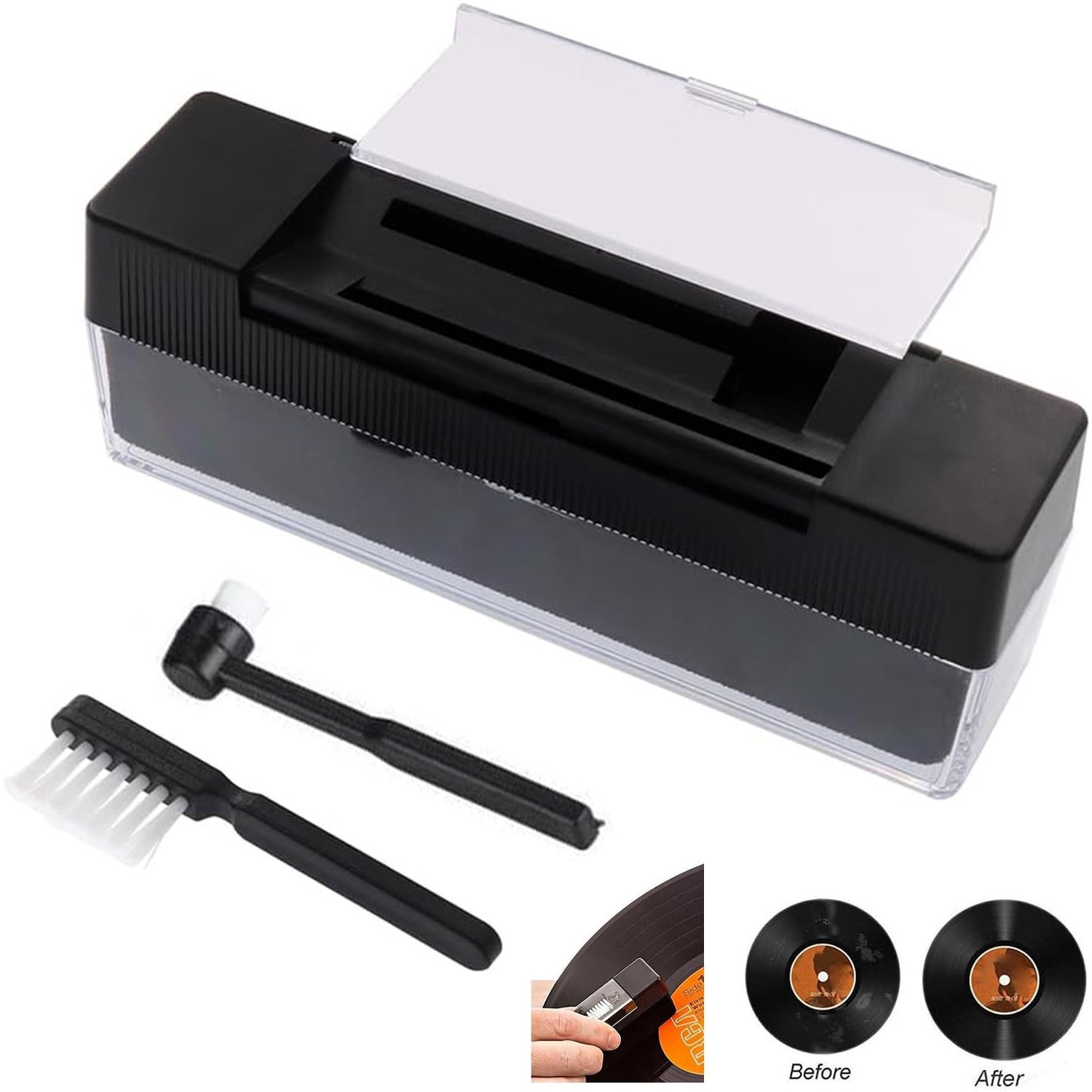 3in1 Vinyl Record Cleaning Brush Set Stylus Velvet Anti-static Cleaner Tool Kit$7.09View on eBay
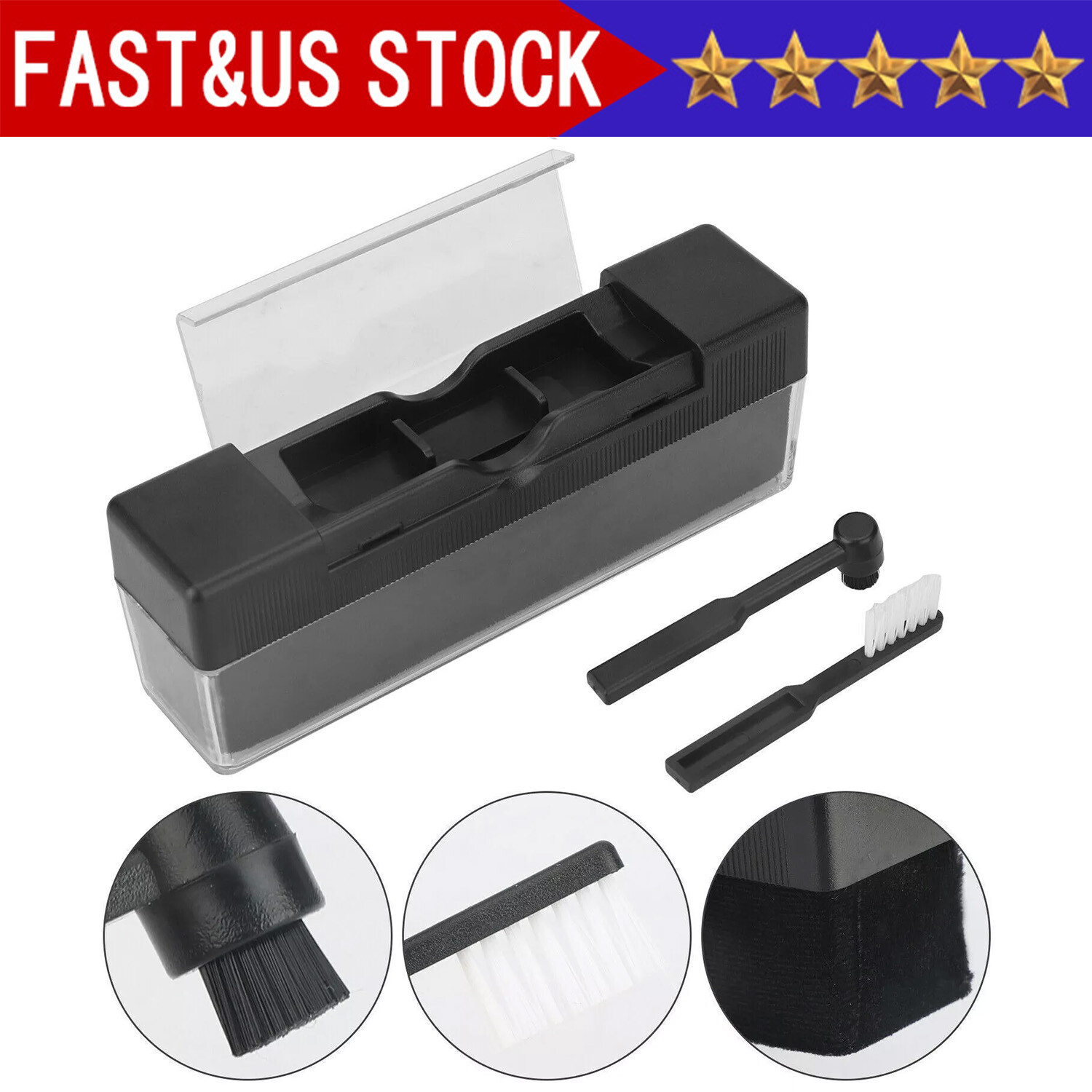 3in1 Vinyl Record Cleaning Brush Set Stylus Velvet Anti-static Cleaner Tool Kit$7.99View on eBay
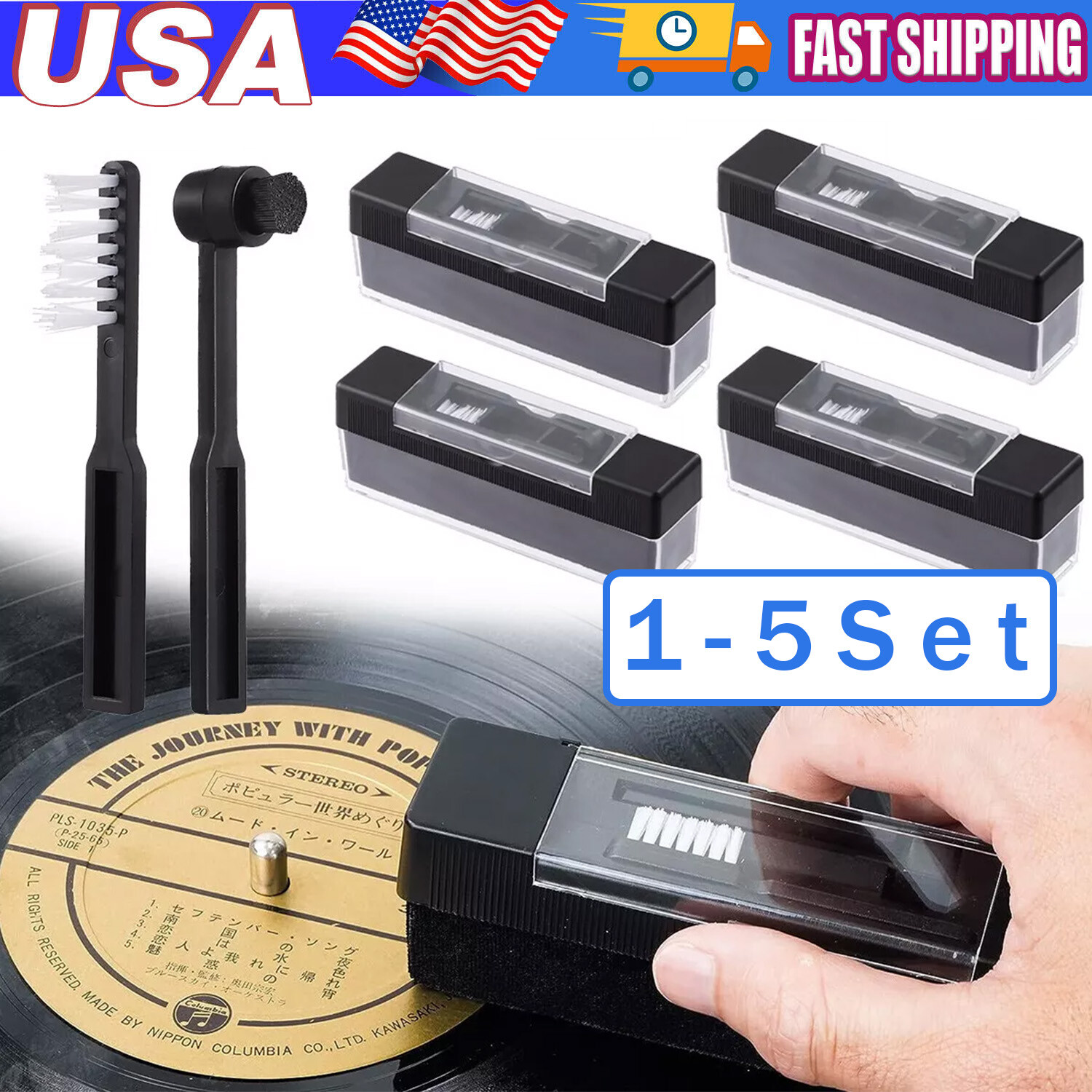 3in1 Vinyl Record Cleaning Brush Set Stylus Velvet Anti-static Cleaner Tool Kit$28.18View on eBay
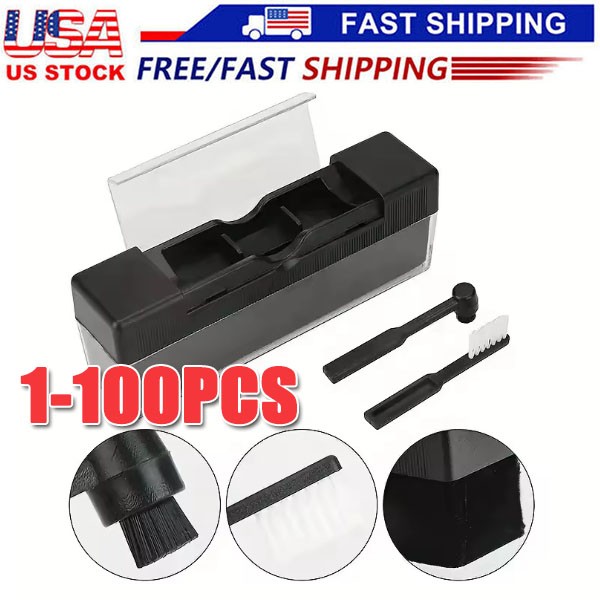 3in1 Vinyl Record Cleaning Brush Stylus Velvet Anti-static Cleaner Tool Kit LOT$62.33View on eBay
Highlights
- Carbon-fiber brushes dissipate static via conductive fibers and are the standard for dry pre-play cleaning; velvet-lip brushes trap dust on the pad surface instead of redistributing it.
- Goat-hair and natural-bristle brushes are softer than nylon and less likely to micro-scratch; synthetic stiff bristles can abrade high-frequency groove modulations over repeated use.
- Stylus brushes require fine carbon or nylon bristles under 0.1 mm tip diameter to clean without bending the cantilever; a separate stylus brush in a 3-in-1 kit is not a substitute for a record brush.
- Anti-static performance depends on fiber conductivity and humidity; carbon-fiber blends work below 40% RH, while pure nylon brushes generate static and are unsuitable for dry cleaning.
Best use cases
- Best fit: a carbon-fiber or velvet-lip dry brush for every play session — pick a wide 10–12 cm pad that covers the full record radius in two sweeps and skip narrow stylus-only brushes for this job.
- Best fit: a wet-cleaning microfiber or goat-hair brush paired with a cleaning fluid for thrift-store or heavily soiled records — choose a brush with a separate fluid applicator and skip dry-only carbon brushes for ingrained grime.
- Wrong fit: stiff nylon or boar-bristle brushes sold for general household use — these scratch vinyl and should never touch a record; also skip 3-in-1 kits if the record brush is an afterthought with sparse, coarse bristles.
- Best fit: a dedicated stylus brush with fine carbon bristles for between-side cleaning — pick one with a hinged or angled head for visibility, and do not rely on the record brush to clean the stylus.
Buying tips
- Match brush width to record diameter: a 10–12 cm pad cleans a 12-inch LP in two radial sweeps; pads under 8 cm require four or more passes and redistribute dust.
- Choose carbon-fiber bristles for anti-static dry cleaning and velvet-lip pads for dust trapping; avoid pure nylon bristles, which generate static and can scratch.
- For wet cleaning, select microfiber or natural goat-hair brushes rated for use with alcohol-free record fluid; stiff synthetic bristles are for shellac 78s only, not vinyl LPs.
- In 3-in-1 kits, verify the record brush has dense, fine bristles (not coarse craft-brush fibers) and that the stylus brush tip is under 0.1 mm; otherwise buy components separately.
Specs
| Bristle Material | Carbon fiber / velvet / goat hair |
|---|---|
| Brush Type | Dry anti-static vs wet-clean |
| Pad Width | 10-12 cm for 12-inch LPs |
| Stylus Brush Tip | Under 0.1 mm carbon/nylon |
Related searches
What to check before buying
- Confirm your turntable platter diameter and record size (12-inch LP vs 7-inch single) so the brush pad covers the grooves in two passes.
- Check ambient humidity where you clean: below 40% RH, carbon-fiber anti-static brushes are essential; above 60% RH, static is less of an issue and velvet pads suffice.
- For wet cleaning, verify you have a record cleaning fluid compatible with the brush material and a drying rack or microfiber cloths — a wet brush alone leaves residue.
- Inspect the brush for a protective cap or storage case; exposed bristles pick up dust and oils between uses and transfer them back to records.
FAQ
Data sources: eBay / Amazon listings and product attribute feeds. Updated Nov 25, 2026.
Some links on this page are affiliate links. If you buy after clicking one, we may earn a commission at no extra cost to you. This does not change which products appear here or their order. Affiliate disclosure.