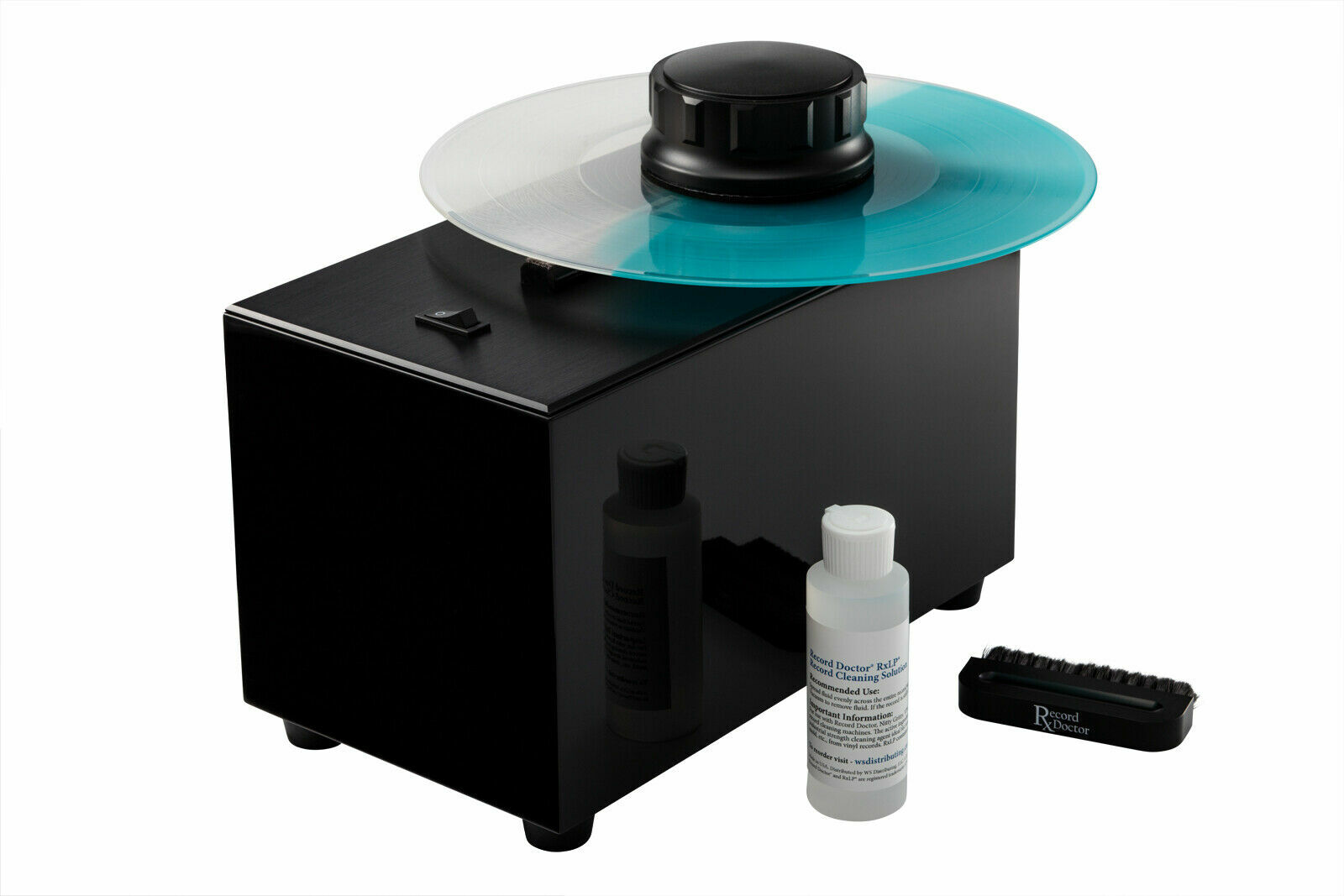

Photos from current listings. Actual item, color, and included accessories may vary.
Record Cleaning Machine Buying Guide
A record cleaning machine is a dedicated appliance that scrubs, vacuums, or cavitates debris from vinyl grooves, and the core trade-off is mechanical wet-vacuum vs. ultrasonic cavitation vs. manual spin-clean kits. Durable options use high-torque motors, sealed fluid paths, and stainless or anodized hardware; compromises rely on low-power pumps, thin plastic tanks, or undersized transducers that leave fluid and grit behind.
Key takeaways
- Wet-vacuum machines like the Record Doctor VI use a high-torque motor and platter clamp to pull fluid and grit out of grooves; suction slot width and felt lip condition determine cleaning effectiveness.
- Ultrasonic tanks rated at 40 kHz with 180 W transducers (e.g., 6 L VEVOR-style units) clean 4–8 records per cycle; lower wattage or single-transducer tanks leave dead zones and require longer cycles.
- Spin-clean and manual washer kits (Record Washer MKII-style) rely on a basin, brushes, and hand rotation—durable versions use metal bearings and sealed baths, while budget kits warp thin plastic tubs and leave fluid residue.
At a glance
- Category
- Vinyl Record Cleaning
- Last updated
- Nov 28, 2026
Current offers
Highlights
- Wet-vacuum machines like the Record Doctor VI use a high-torque motor and platter clamp to pull fluid and grit out of grooves; suction slot width and felt lip condition determine cleaning effectiveness.
- Ultrasonic tanks rated at 40 kHz with 180 W transducers (e.g., 6 L VEVOR-style units) clean 4–8 records per cycle; lower wattage or single-transducer tanks leave dead zones and require longer cycles.
- Spin-clean and manual washer kits (Record Washer MKII-style) rely on a basin, brushes, and hand rotation—durable versions use metal bearings and sealed baths, while budget kits warp thin plastic tubs and leave fluid residue.
- Drying racks and platter clamps are not accessories but performance parts: without a vertical drip rack or vacuum wand, cleaned records retain fluid that recontaminates grooves.
Best use cases
- Best fit: high-volume collectors with 100+ LPs should choose a wet-vacuum machine with a clamp and suction wand for one-pass deep cleaning; skip ultrasonic unless you also buy a drying rack and surfactant.
- Best fit: thrift-store and estate-sale buyers with batches of 4–8 dirty records per session should pick a 6 L 40 kHz ultrasonic tank with a rotating record holder and knob timer; skip manual spin kits that cannot cavitate grit out of microgrooves.
- Best fit: casual listeners with a few dozen records and limited space should use a manual spin-clean washer with metal bearings and a sealed basin; skip large ultrasonic tanks that need setup, degassing, and storage footprint.
- Wrong fit: any shopper expecting a machine to flatten warped vinyl—cleaning machines remove debris and mold release, not warp; skip units marketed as 'restoration' machines.
Buying tips
- Match tank capacity to batch size: a 6 L ultrasonic tank cleans 4 records per cycle with a standard holder and up to 8 with a dual-spindle rack; smaller tanks force more cycles and more fluid changes.
- Require 40 kHz frequency and at least 180 W transducer power for ultrasonic units; lower frequencies (25–28 kHz) risk groove damage and higher frequencies (60+ kHz) clean gentler but slower.
- For wet-vacuum machines, confirm a platter clamp and a felt-lipped suction slot; machines without a clamp let fluid seep to the label and motor housing.
- Choose stainless-steel tanks and anodized or powder-coated metal frames over painted steel or thin ABS; cleaning fluids and distilled water accelerate corrosion on cheap housings.
Specs
| Cleaning Method | Ultrasonic / Wet-vacuum / Manual spin |
|---|---|
| Ultrasonic Frequency | 40 kHz standard; 25–60 kHz range |
| Tank Capacity | 6 L cleans 4–8 records per cycle |
| Transducer Power | 180 W for 6 L tanks |
Related searches
What to check before buying
- Measure your shelf or counter depth: ultrasonic tanks run roughly 12–16 in wide and need 6–8 in clearance above for the record holder and lid.
- Confirm your electrical outlet matches the unit's plug standard (US 120 V NEMA 1-15 for most 180 W tanks; EU/UK units ship with different plugs).
- Budget for companion parts: record holder/spindle rack, drying rack, surfactant or cleaning fluid, and distilled water—many tanks ship with only the basket.
- Check record diameter support: 7-inch, 10-inch, and 12-inch LPs need adjustable or multi-slot holders; fixed 12-inch-only holders cannot clean 45s safely.
FAQ
Data sources: eBay / Amazon listings and product attribute feeds. Updated Nov 28, 2026.
Some links on this page are affiliate links. If you buy after clicking one, we may earn a commission at no extra cost to you. This does not change which products appear here or their order. Affiliate disclosure.