
Photos from current listings. Actual item, color, and included accessories may vary.
USB Headset Wireless Buying Guide
A USB wireless headset combines a USB audio link (dongle or direct USB-C) with over-ear cups and an integrated boom or beamforming mic for calls, gaming, or TV. The core trade-off is latency and mic clarity versus battery life and comfort: RF/dongle systems deliver near-zero lag, Bluetooth favors convenience at the cost of 100–200 ms delay. Choose a dedicated 2.4 GHz dongle or USB-C receiver for real-time work and gaming; accept Bluetooth only for casual listening and mobile calls.
Median $49.99
Key takeaways
- 2.4 GHz USB dongle links sustain under 30 ms latency; Bluetooth 5.x codecs (SBC/AAC/aptX) add 100–200 ms, disqualifying them for rhythm gaming or live monitoring.
- Office UC headsets (Yealink UH37, Grandstream GUV3005) are USB-A/C corded with noise-canceling boom mics and busy lights; they trade wireless freedom for zero charging and certified Teams/Zoom compatibility.
- Battery tiers separate use cases: 30–45 hr ANC models (TREBLAB Z7 PRO class) last multiple workdays; TV RF systems (Sennheiser RS275) use a charging dock with swappable cells for all-evening viewing.
At a glance
- Category
- Over-Ear Headphones
- Last updated
- Nov 28, 2026
Current offers
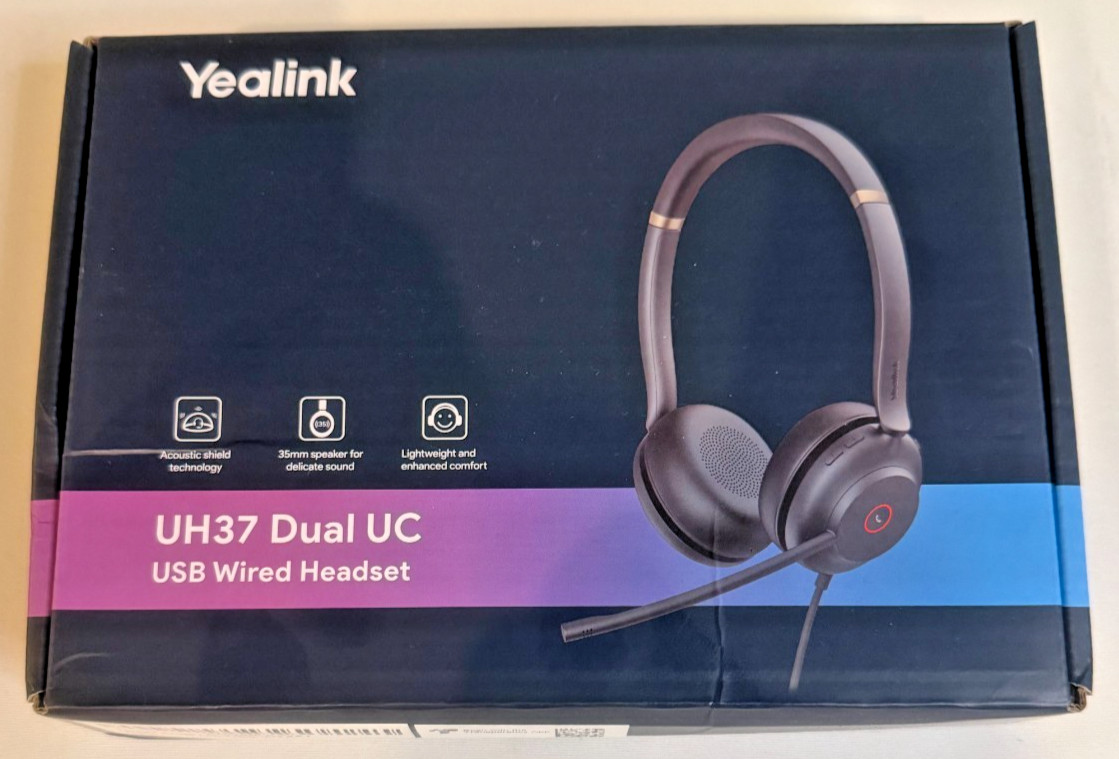 Yealink UH37 USB Wired Headset with Noise Canceling Microphone. UC certified.$49.99View on eBay
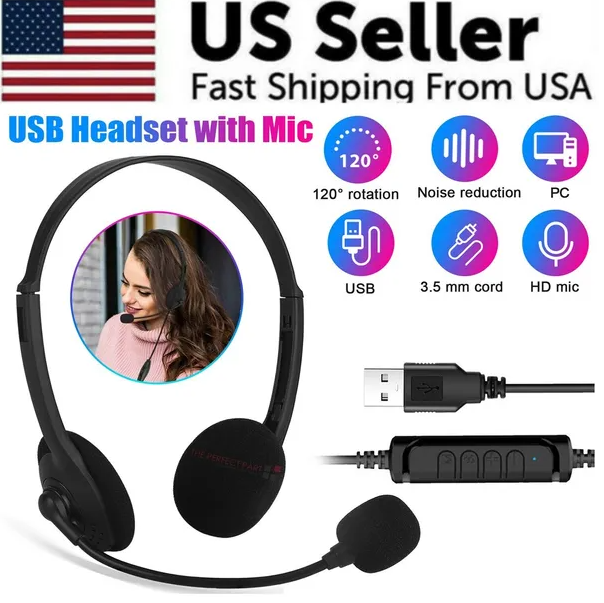 USB Headset Headphone With Microphone Noise Cancelling For PC Computer Call Chat$21.99View on Mallflare
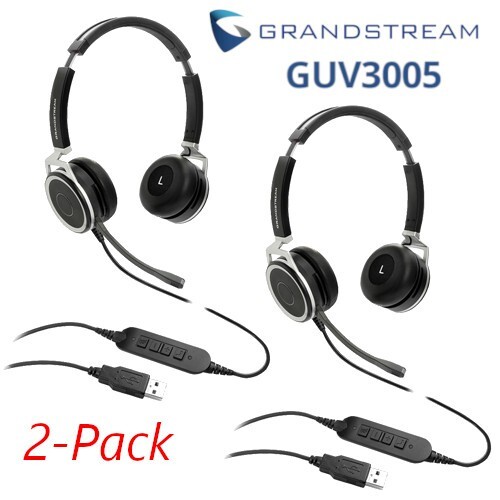 2-Pack Grandstream GUV3005 USB Corded Dual Headset HD Noise Canceling Busy Light$79.95Last checked Nov 28, 2026View on eBay
Highlights
- 2.4 GHz USB dongle links sustain under 30 ms latency; Bluetooth 5.x codecs (SBC/AAC/aptX) add 100–200 ms, disqualifying them for rhythm gaming or live monitoring.
- Office UC headsets (Yealink UH37, Grandstream GUV3005) are USB-A/C corded with noise-canceling boom mics and busy lights; they trade wireless freedom for zero charging and certified Teams/Zoom compatibility.
- Battery tiers separate use cases: 30–45 hr ANC models (TREBLAB Z7 PRO class) last multiple workdays; TV RF systems (Sennheiser RS275) use a charging dock with swappable cells for all-evening viewing.
- Driver size and acoustic design matter: 50 mm closed-back drivers (Razer BlackShark V3 Pro) boost bass isolation; open-back audiophile models (Fidelio X3) trade isolation for soundstage and are wrong for noisy offices.
Best use cases
- Pick a 2.4 GHz USB dongle headset with ANC and 30+ hr battery if you take back-to-back video calls and play competitive games; skip Bluetooth-only models and corded office headsets.
- Choose a corded USB UC headset with boom mic and busy light (UH37, GUV3005) for shared offices or call centers where charging downtime and mic bleed are unacceptable; skip RF TV headphones.
- Buy an RF dock-charging TV headset (RS275 class) for late-night living-room viewing with zero pairing friction; skip it for PC gaming or mobile use—it is a single-source optical/RCA system.
- Pick a 50 mm closed-back gaming headset with detachable mic for console/PC mixed use; skip open-back audiophile headphones like the Fidelio X3 if you need isolation or a built-in mic.
Buying tips
- Match the USB interface: USB-C direct for modern laptops and phones, USB-A dongle for desktops and consoles, or a USB-A-to-C adapter—dongle-based 2.4 GHz beats Bluetooth for latency-critical work.
- Size battery to shift length: 20–25 hr covers one workday plus commute; 40–45 hr covers a full week of 8-hr calls; TV RF docks charge continuously so runtime is not a constraint.
- Check mic architecture: boom mic with noise-canceling ENC is mandatory for calls; beamforming dual-mic arrays suit open offices, while omni mics pick up keyboard noise.
- Verify codec and platform certification: UC-certified (Teams/Zoom) headsets guarantee mute-button and dial-pad integration; consumer Bluetooth headsets often lack call-control hooks on softphones.
Specs
| Wireless Link | 2.4 GHz USB dongle vs Bluetooth 5.x |
|---|---|
| Mic Type | Boom ENC / Beamforming / Detachable |
| Battery Runtime | 20–25 hr / 40–45 hr ANC tiers |
| Cup Design | Closed-back 50 mm vs Open-back |
Related searches
What to check before buying
- Measure headband clamp and cup depth against your head width and ear size; closed-back over-ear cups need at least 60 mm inner depth to avoid ear contact during 8-hr wear.
- Confirm your laptop/console port mix: USB-C only means you need a C dongle or C-to-A adapter; PS5/Xbox may require a specific dongle or 3.5 mm fallback.
- Check RF TV headset compatibility: optical, RCA, or 3.5 mm output on your TV, plus line-of-sight range for the charging dock.
- For ANC models, verify the mic array faces your mouth and that the headset supports your softphone (Teams, Zoom, Webex) natively rather than as a generic audio device.
FAQ
Data sources: eBay / Amazon listings and product attribute feeds. Updated Nov 28, 2026.
Some links on this page are affiliate links. If you buy after clicking one, we may earn a commission at no extra cost to you. This does not change which products appear here or their order. Affiliate disclosure.