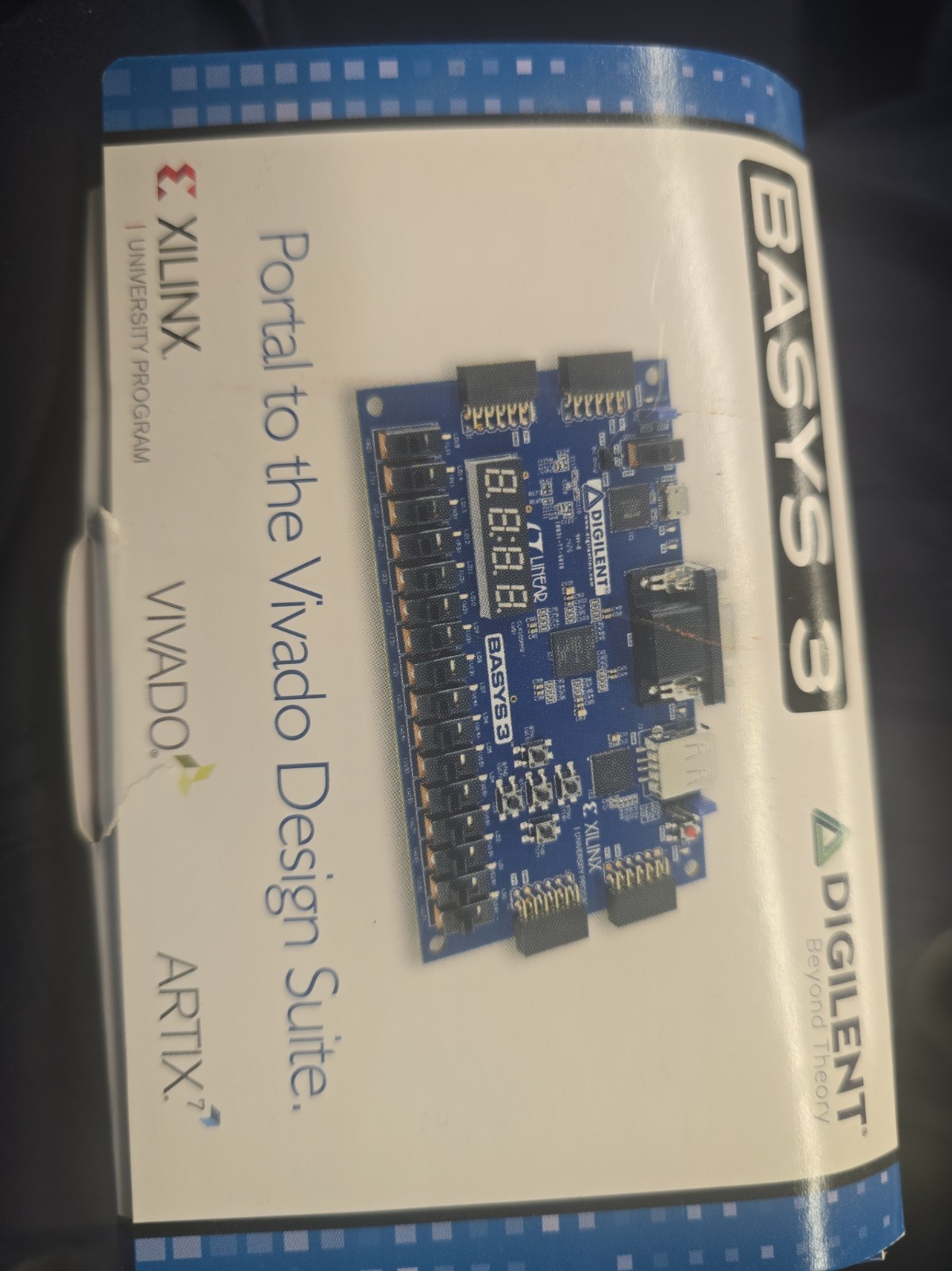

Photos from current listings. Actual item, color, and included accessories may vary.
Fpga Development Board Buying Guide
FPGA development boards pair a reconfigurable logic fabric with on-board programming, I/O, and memory so you can prototype custom digital hardware rather than execute fixed software. The core trade-off is logic capacity and high-speed I/O versus board-level ecosystem: cheap boards often skimp on configuration flash, clocking, and usable expansion. Buy by exact device family and package, on-board programming/debug, and expansion standard—not by marketing clock speed.
Key takeaways
- Artix-7 XC7A35T (Basys 3 class) offers ~33K logic cells, 1,800 Kb BRAM, 90 DSP slices, and 5 clock tiles—enough for soft-core CPUs and video pipelines.
- Entry boards split into two architectures: single-chip SRAM FPGAs needing external config flash versus Flash-based FPGAs that are instantly on at power-up.
- On-board USB-JTAG (Digilent FTDI or equivalent) determines whether you need a separate programmer; bare JTAG headers require an external dongle.
At a glance
- Category
- Microcontrollers & Dev Boards
- Last updated
- Nov 25, 2026
Current offers
Highlights
- Artix-7 XC7A35T (Basys 3 class) offers ~33K logic cells, 1,800 Kb BRAM, 90 DSP slices, and 5 clock tiles—enough for soft-core CPUs and video pipelines.
- Entry boards split into two architectures: single-chip SRAM FPGAs needing external config flash versus Flash-based FPGAs that are instantly on at power-up.
- On-board USB-JTAG (Digilent FTDI or equivalent) determines whether you need a separate programmer; bare JTAG headers require an external dongle.
- High-speed expansion standards differ sharply: PMOD (12-pin), FMC LPC/HPC, and Arduino-style shields are not electrically interchangeable.
Best use cases
- Best fit: students and first-time HDL learners—pick a Basys 3-class board with USB-JTAG, switches, 7-segment displays, and PMOD headers; skip bare core boards lacking I/O.
- Best fit: soft-core CPU and DSP prototyping—choose a device with at least 30K logic cells, 90 DSP slices, and 1,800 Kb BRAM so a MicroBlaze or RISC-V core fits comfortably.
- Best fit: high-speed interfacing (HDMI, Ethernet, ADC)—require FMC or high-pin-count PMOD and check LVDS-capable I/O banks; skip boards with only 3.3V limited headers.
- Wrong fit: production deployment—dev boards use commercial-grade parts and USB power; move to a SOM or custom PCB with industrial temperature rating.
Buying tips
- Match logic capacity to workload: under 10K cells for glue logic and blink tests, 30K–50K for soft cores and video, 100K+ for multi-core SoC and signal processing.
- Insist on on-board USB-JTAG and QSPI configuration flash; without flash the FPGA loses its bitstream at every power cycle, forcing re-download.
- Check the I/O voltage banks: 3.3V-only headers cannot directly drive LVDS or 1.8V peripherals; confirm at least one bank supports the standard you need.
- Prefer boards with documented pin constraint files (.xdc) and a maintained toolchain flow; undocumented pinouts turn a capable device into a paperweight.
Specs
| FPGA Family | Xilinx Artix-7 / Lattice ECP5 / Intel Cyclone |
|---|---|
| Logic Capacity | 10K–100K+ logic cells (XC7A35T ~33K) |
| Config Memory | SRAM + QSPI flash vs Flash-based |
| Programming | USB-JTAG on-board vs external dongle |
Related searches
What to check before buying
- Confirm your host PC meets the vendor toolchain requirements—Xilinx Vivado needs a supported 64-bit OS and several GB of disk for device families.
- Verify the board's power input: most dev boards are USB-powered (5V) but FPGA-heavy designs may need an external 5V barrel supply with adequate current.
- Measure your desk/prototyping space and confirm the board's PMOD/FMC header pitch matches your planned daughter cards or breadboard adapters.
- Check that the board includes or documents the configuration flash and JTAG path, so you can program it without buying a separate programmer.
FAQ
Data sources: eBay / Amazon listings and product attribute feeds. Updated Nov 25, 2026.
Some links on this page are affiliate links. If you buy after clicking one, we may earn a commission at no extra cost to you. This does not change which products appear here or their order. Affiliate disclosure.