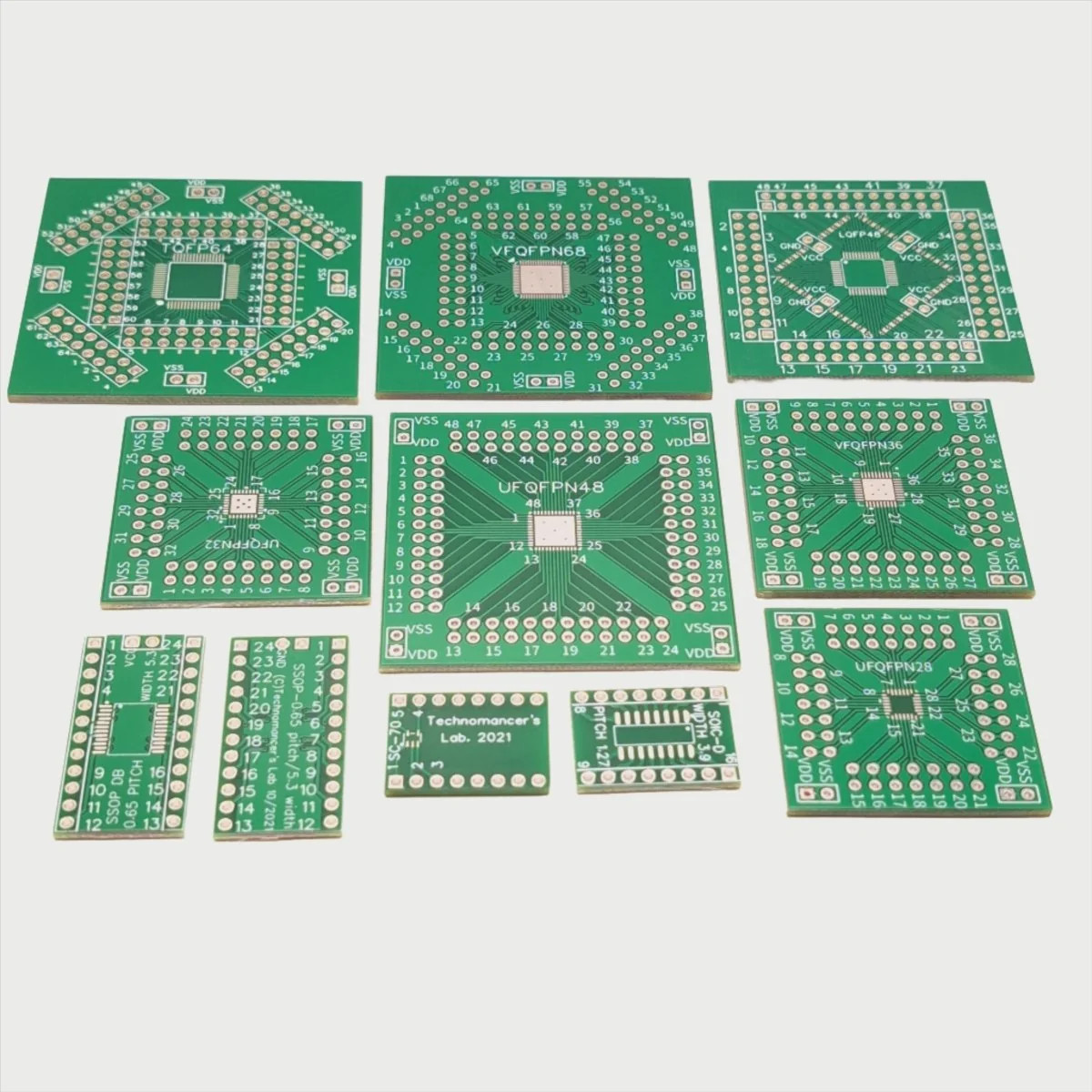

Photos from current listings. Actual item, color, and included accessories may vary.
Electronic Prototype Board Buying Guide
Electronic prototype boards are bare or plated circuit substrates used to build and test circuits before committing to a custom PCB. The core trade-off is copper construction and pitch compatibility: FR-4 with 1 oz copper and proper plating survives repeated soldering, while thin phenolic or unplated boards delaminate and fail. Buy by hole pitch and copper weight for your package type, not by board count.
Median $33.99
Key takeaways
- FR-4 glass-epoxy (Tg 130-180°C) is the durable substrate; paper-phenolic boards carbonize and lift pads after 2-3 rework cycles.
- 1 oz (35 µm) copper with HASL or ENIG finish handles repeated soldering; bare 0.5 oz copper traces lift under 350°C iron contact.
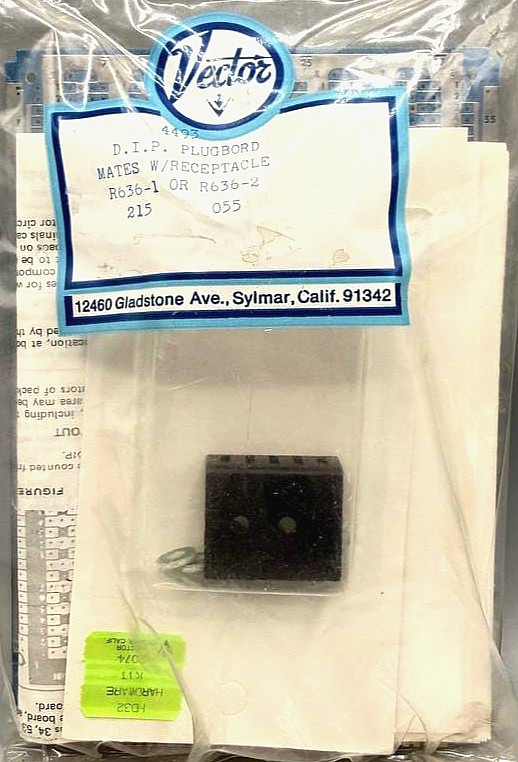
- 0.1 in (2.54 mm) pitch fits DIP, headers, and most through-hole modules; 0.156 in pitch is for edge-connector and vintage DIP plugboards.
At a glance
- Category
- Microcontrollers & Dev Boards
- Last updated
- Nov 25, 2026
Current offers
Highlights
- FR-4 glass-epoxy (Tg 130-180°C) is the durable substrate; paper-phenolic boards carbonize and lift pads after 2-3 rework cycles.
- 1 oz (35 µm) copper with HASL or ENIG finish handles repeated soldering; bare 0.5 oz copper traces lift under 350°C iron contact.
- 0.1 in (2.54 mm) pitch fits DIP, headers, and most through-hole modules; 0.156 in pitch is for edge-connector and vintage DIP plugboards.
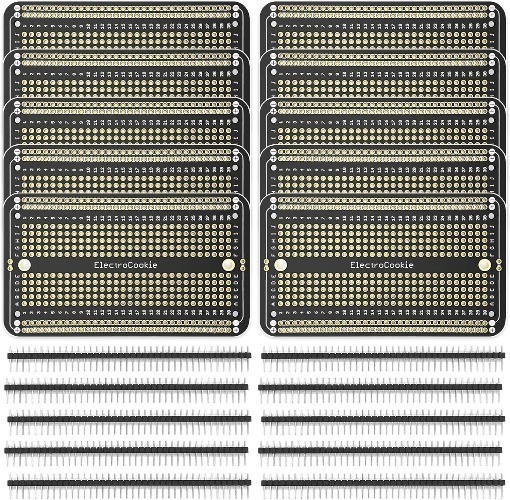
- Perfboard vs breadboard: solderable perfboard is permanent, solderless breadboard is reusable; stripboard (Veroboard) needs trace cuts between rows.
Best use cases
- Permanent through-hole builds with DIP ICs and 0.1 in headers: pick FR-4 perfboard or stripboard with 1 oz copper and plated through holes.
- Arduino and module prototyping: choose gold-plated or HASL 0.1 in perfboard sized to the module footprint; skip paper-phenolic boards.
- Vintage or edge-connector reproduction (0.156 in DIP plugboards): buy a dedicated plugboard kit; standard 0.1 in perfboard will not fit.
- High-frequency or fine-pitch SMD work: skip perfboard entirely and use a custom PCB or SMD adapter; 0.1 in pitch cannot route 0.5 mm packages.
Buying tips
- Match hole pitch to package: 0.1 in (2.54 mm) for DIP and headers; 0.156 in (3.96 mm) only for card-edge and plugboard systems.
- Demand 1 oz (35 µm) copper minimum and HASL or ENIG finish; unplated or 0.5 oz boards fail after a few desoldering cycles.
- Size the board to your enclosure and mounting pattern: standard Eurocard is 100×160 mm; verify hole grid aligns with mounting posts.
- Prefer FR-4 over phenolic (paper) board for anything soldered more than once; phenolic is only acceptable for one-off low-heat builds.
Specs
| Substrate | FR-4 glass-epoxy vs phenolic paper |
|---|---|
| Hole Pitch | 0.1 in (2.54 mm) / 0.156 in (3.96 mm) |
| Copper Weight | 1 oz (35 µm) vs 0.5 oz |
| Surface Finish | HASL / ENIG / bare copper |
Related searches
What to check before buying
- Measure your IC or module pin spacing with calipers; confirm 2.54 mm or 3.96 mm before ordering.
- Confirm board dimensions and mounting hole pattern fit your enclosure or standoffs.
- Check copper weight (1 oz+) and surface finish (HASL/ENIG) on the listing spec, not just the photo.
- Verify plating type: plated through holes (PTH) for reliable solder joints versus bare-drilled holes.
FAQ
Data sources: eBay / Amazon listings and product attribute feeds. Updated Nov 25, 2026.
Some links on this page are affiliate links. If you buy after clicking one, we may earn a commission at no extra cost to you. This does not change which products appear here or their order. Affiliate disclosure.