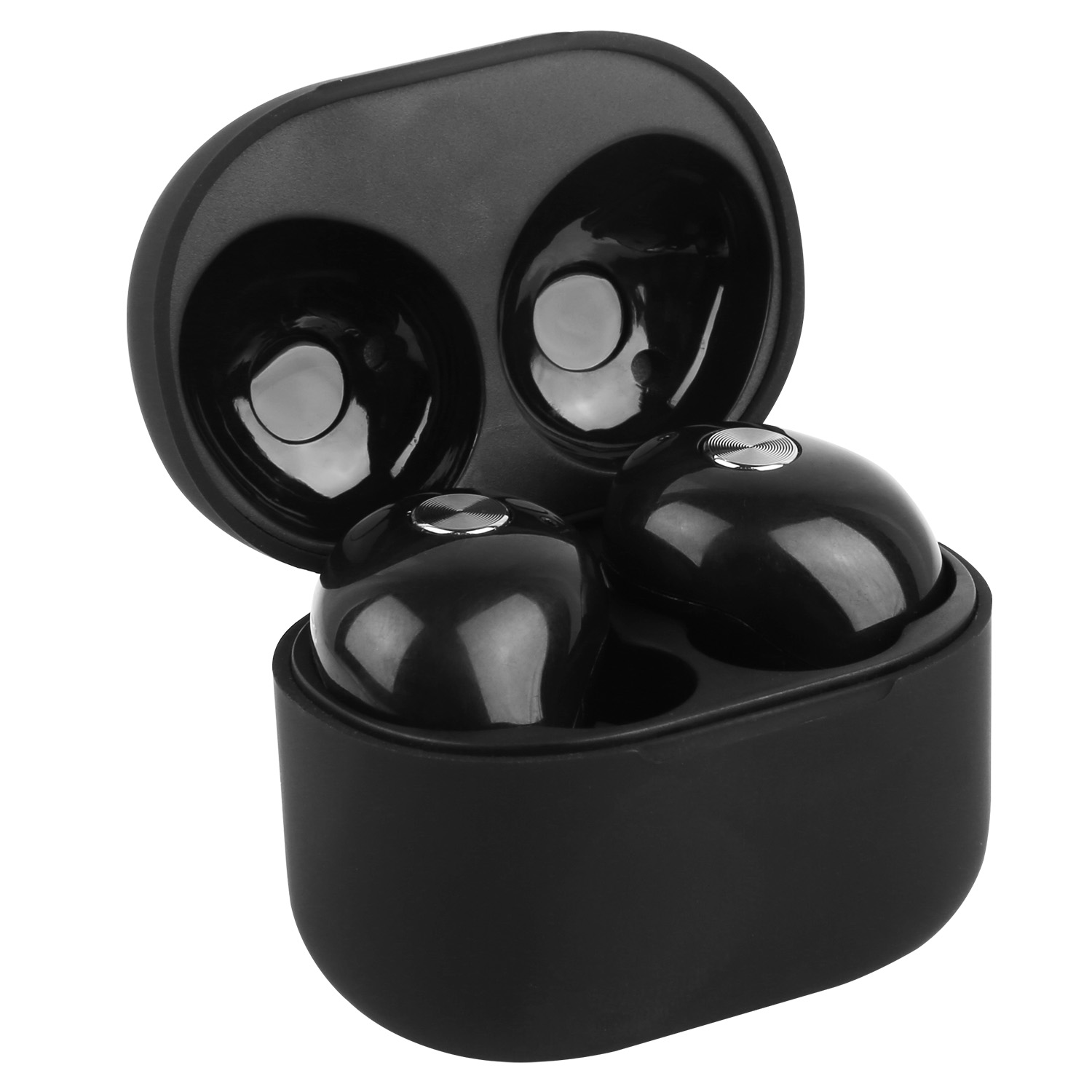

Photos from current listings. Actual item, color, and included accessories may vary.
Wireless Charging Earbud Buying Guide
Wireless charging earbuds pair true-wireless in-ear earphones with a Qi-compatible charging case, eliminating the need to plug in a cable. The core trade-off is between charging convenience and battery/feature compromises: wireless charging coils add bulk and cost, so budget models often pair it with older Bluetooth or smaller drivers. Choose a model with Bluetooth 5.3 or newer and a case that supports Qi wireless charging if you value convenience; skip wireless charging entirely if you need maximum battery life or the lowest possible latency.
Key takeaways
- Bluetooth version dictates connection stability and power draw: V5.3/V5.4 offers lower latency and better efficiency than V5.0/V4.2, which can struggle with multipoint and higher battery drain.
- Qi wireless charging requires a case with an integrated receiver coil; cases without a coil can only charge via USB-C, so verify the case explicitly lists Qi or wireless charging support.
- IPX rating determines sweat and splash resistance: IPX4 handles light rain and sweat, while IPX5 withstands low-pressure water jets; neither is safe for swimming or full submersion.
At a glance
- Category
- In-Ear Earphones
- Last updated
- Nov 28, 2026
Current offers
Highlights
- Bluetooth version dictates connection stability and power draw: V5.3/V5.4 offers lower latency and better efficiency than V5.0/V4.2, which can struggle with multipoint and higher battery drain.
- Qi wireless charging requires a case with an integrated receiver coil; cases without a coil can only charge via USB-C, so verify the case explicitly lists Qi or wireless charging support.
- IPX rating determines sweat and splash resistance: IPX4 handles light rain and sweat, while IPX5 withstands low-pressure water jets; neither is safe for swimming or full submersion.
- Driver size and acoustic design affect bass and clarity: 10mm or larger dynamic drivers generally deliver deeper bass than 6–8mm drivers, while balanced armature drivers offer more detail at the cost of bass impact.
Best use cases
- Best fit for commuters and desk workers: pick a Bluetooth 5.3+ model with a Qi wireless charging case (often styled like the case of popular models with a coil) for cable-free top-ups on a pad.
- Best fit for workouts: choose IPX5 or higher and a secure ear-hook or wing-tip fit; skip wireless charging if the case becomes too bulky for a gym bag.
- Wrong fit for audiophile critical listening: wireless earbuds with wireless charging rarely support high-bitrate codecs like LDAC or aptX Lossless; opt for wired IEMs instead.
- Wrong fit for marathon runners or swimmers: no wireless charging earbud is waterproof for submersion; choose a dedicated IPX8 or bone-conduction model instead.
Buying tips
- Prioritize Bluetooth 5.3 or 5.4 over 5.0 or 4.2: newer versions reduce power consumption and improve connection stability, which matters more than wireless charging for daily reliability.
- Check the charging case battery capacity: 500mAh is typical for earbuds, providing roughly 2–3 full charges; larger cases add bulk but extend total playtime.
- Confirm Qi compatibility: the case must have a built-in wireless receiver coil; cases that only support wired charging will not work on a wireless pad.
- Match IP rating to activity: IPX4 is fine for sweaty workouts, but IPX5 is better for outdoor running in rain; do not expect any IPX rating to survive swimming.
Specs
| Bluetooth Version | 5.3 / 5.4 recommended over 5.0 |
|---|---|
| Wireless Charging | Qi-certified case required |
| Water Resistance | IPX4 (sweat) to IPX5 (rain) |
| Driver Size | 10mm+ dynamic for strong bass |
Related searches
What to check before buying
- Measure your charging pad or wireless charger: ensure it is Qi-certified and at least 5W output to charge earbud cases efficiently; cheap 2.5W pads may not trigger charging.
- Check your phone’s Bluetooth version: if your phone uses Bluetooth 5.0 or older, you won’t benefit from the lower latency of earbuds with Bluetooth 5.3.
- Verify ear tip fit: most wireless earbuds include silicone tips in S/M/L; if you have small ear canals, look for models with extra-small tips or a shallow-fit design.
- Consider case size for portability: wireless charging cases are often 10–20% larger than wired-only cases; if pocketability matters, compare dimensions before buying.
FAQ
Data sources: eBay / Amazon listings and product attribute feeds. Updated Nov 28, 2026.
Some links on this page are affiliate links. If you buy after clicking one, we may earn a commission at no extra cost to you. This does not change which products appear here or their order. Affiliate disclosure.