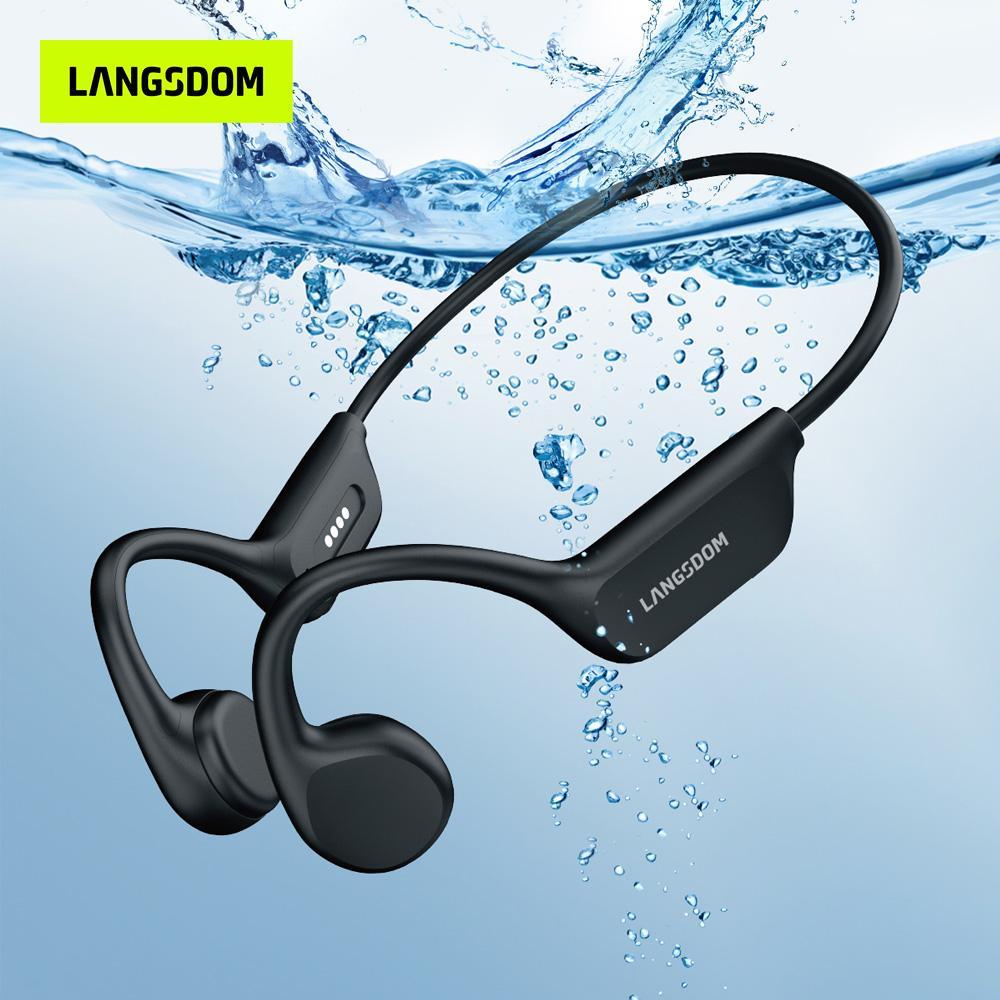

Photos from current listings. Actual item, color, and included accessories may vary.
Waterproof Swimming Headphone Buying Guide
Waterproof swimming headphones are in-ear or bone-conduction audio devices engineered to survive continuous submersion and chlorine/saltwater exposure, with the primary trade-off being sealed waterproofing (IPX8 and 2m+ depth ratings) versus open-ear situational awareness for lap swimming. The clear decision rule: buy only if the product explicitly rates IPX8 and at least 2 meters depth for 30+ minutes—anything rated IPX7 or lower is a shower/sweat device, not a swim device.
Key takeaways
- IPX8 is the minimum swim standard; real swim ratings add depth and duration (e.g., 2m for 30 min or 5m for 2 hr), while IPX7 means accidental immersion only.
- Bone-conduction models keep ears open for lane awareness and pool safety; sealed in-ear models use ear-tip seals for muffled but fuller underwater audio.
- Built-in MP3 storage (4–32GB) is the most reliable pool audio source because Bluetooth does not transmit underwater; Bluetooth range only works when the head is above the surface.
At a glance
- Category
- In-Ear Earphones
- Last updated
- Nov 28, 2026
Current offers
Highlights
- IPX8 is the minimum swim standard; real swim ratings add depth and duration (e.g., 2m for 30 min or 5m for 2 hr), while IPX7 means accidental immersion only.
- Bone-conduction models keep ears open for lane awareness and pool safety; sealed in-ear models use ear-tip seals for muffled but fuller underwater audio.
- Built-in MP3 storage (4–32GB) is the most reliable pool audio source because Bluetooth does not transmit underwater; Bluetooth range only works when the head is above the surface.
- Open-swim legal models often require onboard memory and no transmitting radio; FM and Bluetooth radios are restricted in many open-water event rulesets.
Best use cases
- Best fit: lap swimmers in chlorinated pools should pick an IPX8 bone-conduction set with 8–32GB onboard MP3 and a rigid storage case; skip IPX7 sweat-proof earbuds and Bluetooth-only models.
- Best fit: triathletes and open-water swimmers need IPX8, 2m+ depth rating, secure ear-hook or headband fit, and high-visibility color; skip clip-on MP3 players that drag and unseal.
- Best fit: recreational snorkelers and pool walkers get value from sealed in-ear IPX8 models with silicone tips and 6–10 hr battery; skip bone-conduction if underwater clarity matters more than ambient sound.
- Wrong fit: shower and gym users should buy IPX5/IPX7 sport earbuds at lower cost and lighter weight; a swim-rated unit’s sealed housing and lower Bluetooth functionality are wasted.
Buying tips
- Match the depth rating to use: pool lap swimming needs IPX8 at 2m/30min minimum; diving and snorkeling below 3m require a manufacturer-stated depth of 5m or more.
- Prefer onboard MP3 storage of 8GB or more over Bluetooth for underwater listening; Bluetooth typically drops below roughly 10cm of water because 2.4GHz signals attenuate rapidly.
- Check ear-tip or ear-hook fit: sealed in-ear models need a full silicone/nylon seal across the ear canal; bone-conduction models must clamp the cheekbone without pressure points under swim caps.
- Verify charging port sealing: USB-C ports need a tight rubber gasket or magnetic pogo-pin charging; exposed micro-USB flaps degrade and are the most common water-entry failure point.
Specs
| Waterproof Rating | IPX8 required; IPX7 not swim-rated |
|---|---|
| Depth & Duration | 2m/30min min; 5m+ for diving |
| Audio Delivery | Onboard MP3 vs open Bluetooth |
| Fit Style | Bone conduction vs sealed in-ear |
Related searches
What to check before buying
- Measure your swim cap and goggle strap clearance: bone-conduction headbands must sit between skull and cap without lifting the seal; in-ear models must clear goggle straps at the ear.
- Confirm pool water chemistry: chlorine and saltwater degrade silicone and polycarbonate; rinse in fresh water after every swim and avoid leaving units in hot cars.
- Check your audio source plan: onboard MP3 requires file transfer via USB; Bluetooth works only above water, and FM reception varies by pool building.
- Verify open-water event rules: many races ban transmitting radios and require onboard memory; confirm your model has no active Bluetooth when racing.
FAQ
Data sources: eBay / Amazon listings and product attribute feeds. Updated Nov 28, 2026.
Some links on this page are affiliate links. If you buy after clicking one, we may earn a commission at no extra cost to you. This does not change which products appear here or their order. Affiliate disclosure.