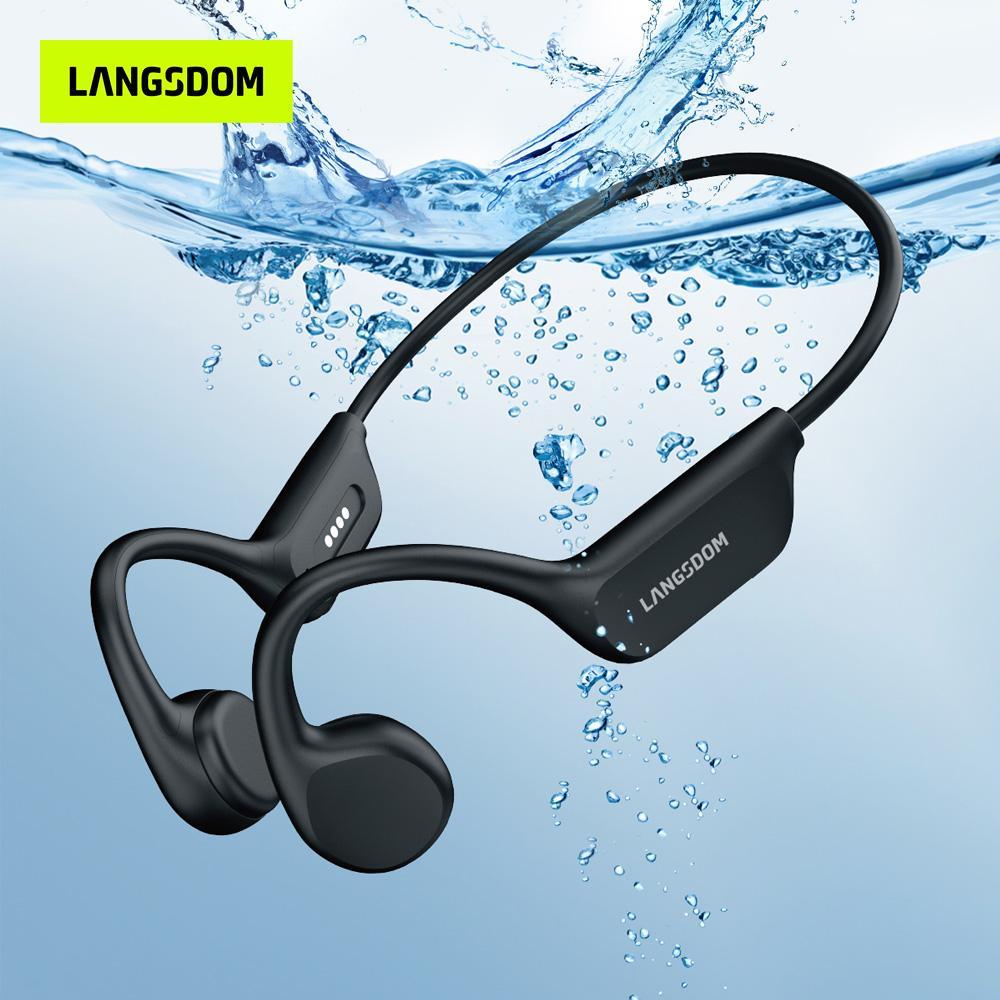

Photos from current listings. Actual item, color, and included accessories may vary.
Waterproof Swimming Earbud Bluetooth Buying Guide
Waterproof swimming earbuds are Bluetooth in-ear earphones engineered to survive chlorinated pool water, open-water swims, and high-sweat training without driver failure or seal degradation. The core trade-off is acoustic isolation versus water ingress protection: fully sealed IP68 units with onboard MP3 memory avoid Bluetooth dropout underwater, while open-fit IPX8 models rely on bone conduction or ambient ports and must be paired with a swim cap or goggle strap. The decision rule is simple—buy IP68 with 4GB+ onboard storage for lap swimming, and IPX7/IPX8 Bluetooth-only for shower, surf, and pool-deck use where the phone stays dry on the bank.
Key takeaways
- IPX8 vs IP68: IPX8 guarantees continuous immersion beyond 1 meter for 30 minutes; IP68 adds dust-tight sealing but its water depth/time rating is manufacturer-defined, so IPX8 is the relevant swim standard.
- Bluetooth does not transmit through water—2.4 GHz signals attenuate ~100x in chlorinated water—so true lap-swimming buds stream from 4–32GB onboard flash memory and sync playlists before entering the pool.
- Bone-conduction swimmers (e.g., Shokz OpenSwim) avoid ear-canal sealing entirely, using 4GB MP3 storage and IP68 rating; in-ear sealed models (e.g., Sony NW-WS623) use a unified MP3/Bluetooth headset with ear-fin stabilization.
At a glance
- Category
- In-Ear Earphones
- Last updated
- Nov 28, 2026
Current offers
Highlights
- IPX8 vs IP68: IPX8 guarantees continuous immersion beyond 1 meter for 30 minutes; IP68 adds dust-tight sealing but its water depth/time rating is manufacturer-defined, so IPX8 is the relevant swim standard.
- Bluetooth does not transmit through water—2.4 GHz signals attenuate ~100x in chlorinated water—so true lap-swimming buds stream from 4–32GB onboard flash memory and sync playlists before entering the pool.
- Bone-conduction swimmers (e.g., Shokz OpenSwim) avoid ear-canal sealing entirely, using 4GB MP3 storage and IP68 rating; in-ear sealed models (e.g., Sony NW-WS623) use a unified MP3/Bluetooth headset with ear-fin stabilization.
- Driver and battery seals fail at the micro-USB port first—USB-C with a gasketed door or magnetic pogo-pin charging is the durability threshold separating 6-month from 3-year service life.
Best use cases
- Lap swimming in chlorinated pools: pick IPX8/IP68 in-ear or bone-conduction buds with 4GB+ onboard MP3 and no Bluetooth dependency; skip open-ear air-conduction models that leak water into the driver chamber.
- Open-water and triathlon training: choose bone-conduction IP68 (ambient awareness plus no ear-canal occlusion) with a goggle-strap or behind-neck fit; skip fully sealed in-ear models that block traffic and pool-deck announcements.
- Shower, sauna, and pool-deck workouts: IPX7 Bluetooth earbuds with phone within 10 m are sufficient—skip onboard-memory premiums you will not use; prioritize USB-C gasketed charging and ear-hook stability.
- Competitive swim training with pace clocks and coach calls: skip music-first designs and use IPX8 buds with transparency/ambient mode or bone conduction—sealed in-ear models with 25+ dB passive isolation are a wrong fit for coached sessions.
Buying tips
- Match the ingress rating to the activity: IPX7 is splash/1 m for 30 min, IPX8 is continuous submersion (typically 2 m/30–60 min), IP68 adds dust sealing—pool swimming requires IPX8 or IP68, not IPX6 or IPX5.
- For lap swimming, storage capacity is the spec that matters: 4GB holds roughly 500–1,000 MP3 tracks (~4–8 hours at 128–320 kbps), 8–32GB covers multi-hour open-water sessions and podcast libraries; Bluetooth-only models cannot stream underwater.
- Battery math for swimmers: onboard-MP3 playback typically runs 6–8 hours, Bluetooth 8–10 hours; expect 30–50% capacity loss after 300–500 charge cycles, so a 2-year-old IPX8 bud may deliver only 4 hours—check cycle-rated cells and USB-C fast charge.
- Stabilization determines fit more than tip size: ear-fin (umbrella) tips lock into the concha for flip turns, behind-neck bands suit open water, and bone-conduction temples require a snug goggle strap—loose buds leak water and lose seal within 25 m.
Specs
| Water Rating | IPX8 / IP68 (IPX7 splash only) |
|---|---|
| Audio Delivery | Onboard MP3 vs Bluetooth vs bone conduction |
| Onboard Storage | 4–32 GB flash (required for lap swim) |
| Charging Port | USB-C gasketed / magnetic pogo-pin |
Related searches
What to check before buying
- Measure your ear-canal diameter and concha depth: most swimmers need 10–13 mm tip diameters; if standard silicone tips slip during flip turns, budget for ear-fin or foam tips before buying.
- Confirm pool water chemistry: chlorinated and saltwater pools both degrade TPU gaskets—silicone or fluoroelastomer seals outlast TPU by roughly 2x; rinse in fresh water after every swim regardless of rating.
- Verify charging standard: USB-C with a gasketed or screw-down door is the durable standard; micro-USB ports and exposed pogo pins corrode within one season in chlorinated environments.
- Check companion requirements: bone-conduction and onboard-MP3 buds need a computer or phone for playlist transfer (MTP/USB mass storage); Bluetooth-only IPX8 models need a dry phone or watch within 10 m on the pool deck.
FAQ
Data sources: eBay / Amazon listings and product attribute feeds. Updated Nov 28, 2026.
Some links on this page are affiliate links. If you buy after clicking one, we may earn a commission at no extra cost to you. This does not change which products appear here or their order. Affiliate disclosure.