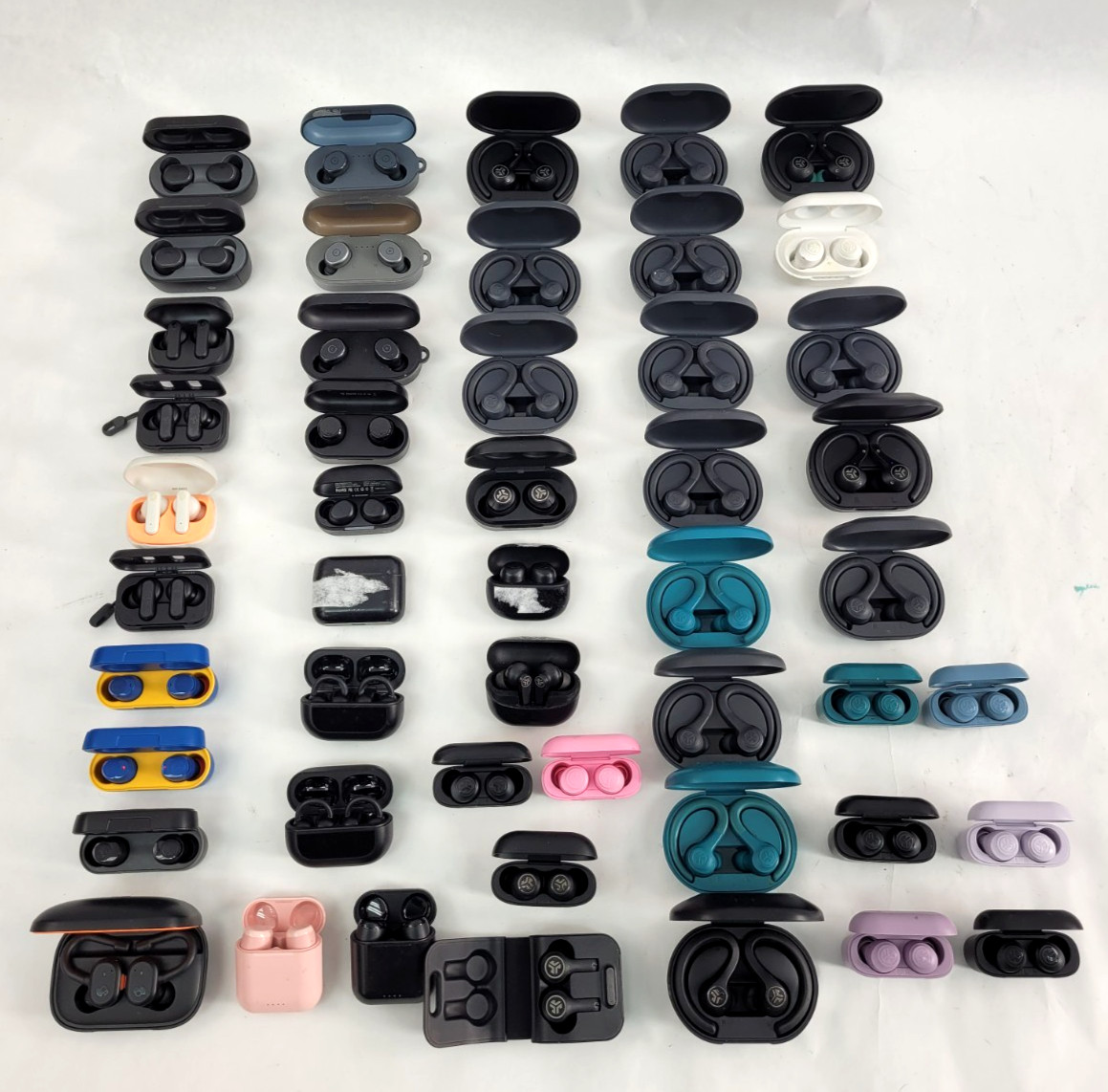

Photos from current listings. Actual item, color, and included accessories may vary.
Skullcandy Earbud Buying Guide
Skullcandy earbuds span true wireless (Indy, Grind, Push, Rail) and wired (Ink'd, Jib, Set) lines, all built around the brand's signature bass-forward tuning and a tiered feature ladder. The core trade-off is between ultra-budget wired models with fixed cables and true-wireless models whose battery, IP rating, and codec support scale with price tier. Buyers should choose a wired model only for zero-latency monitoring or absolute lowest cost, and a true-wireless model with at least IPX4 and USB-C for daily mobile use.
Median $245.00 · Pre-owned listings
Key takeaways
- True wireless tiers: Indy (entry, 20-24 hr total), Grind (IP55, 30 hr), Push (ANC, 30-36 hr), Rail (gaming low-latency dongle) — battery and IP rating define durability tier.
- Wired models (Ink'd+, Jib+) use fixed 3.5 mm cables with in-line mic; no replacement cable, so strain relief at plug and earbud housing is the primary failure point.
- Bluetooth generations: older Indy uses BT 5.0, newer Grind/Push use BT 5.2/5.3 for lower latency and better multipoint; check chipset generation before buying.
At a glance
- Category
- In-Ear Earphones
- Last updated
- Nov 28, 2026
Current offers
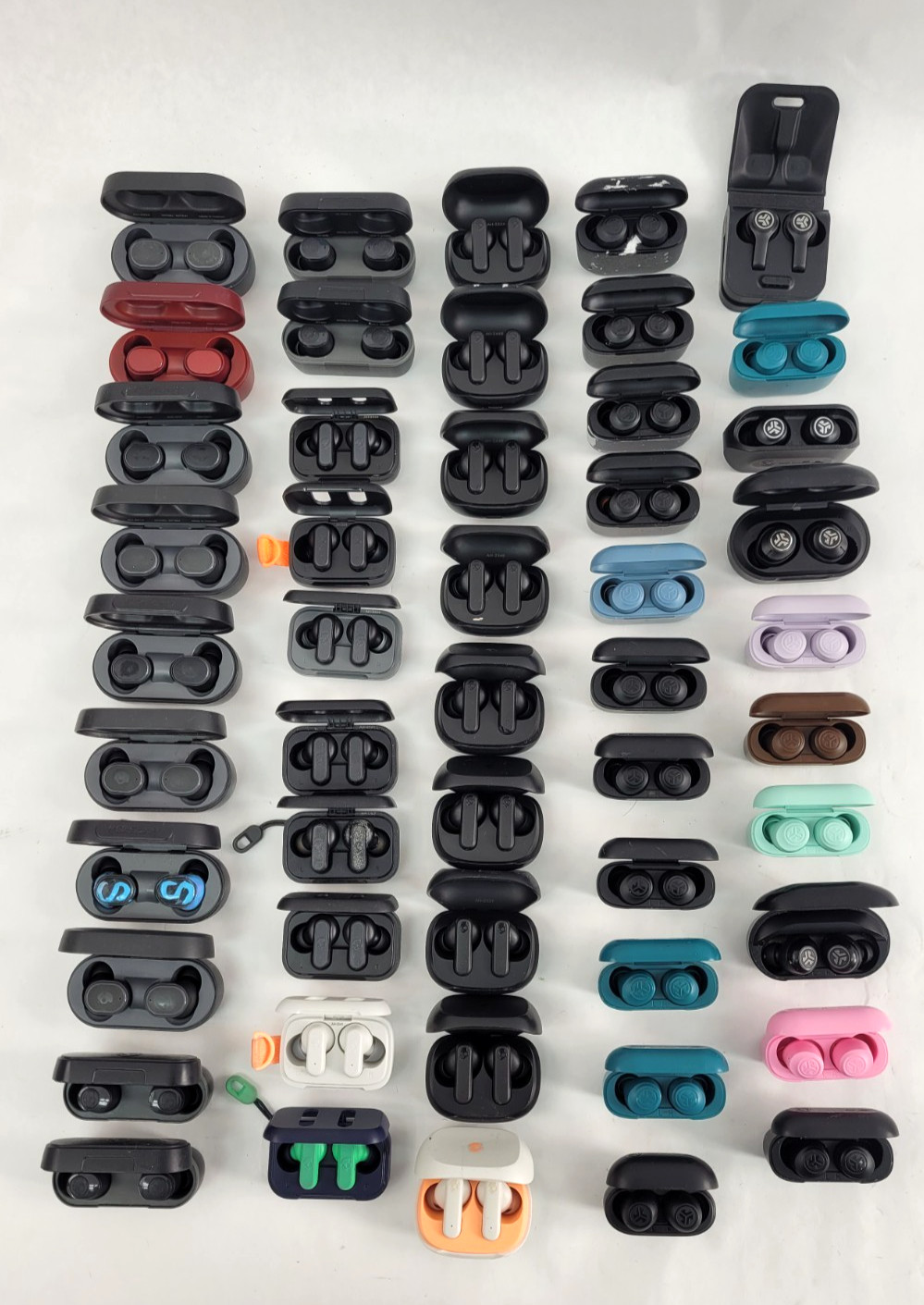
Highlights
- True wireless tiers: Indy (entry, 20-24 hr total), Grind (IP55, 30 hr), Push (ANC, 30-36 hr), Rail (gaming low-latency dongle) — battery and IP rating define durability tier.
- Wired models (Ink'd+, Jib+) use fixed 3.5 mm cables with in-line mic; no replacement cable, so strain relief at plug and earbud housing is the primary failure point.
- Bluetooth generations: older Indy uses BT 5.0, newer Grind/Push use BT 5.2/5.3 for lower latency and better multipoint; check chipset generation before buying.
- Fit system: Skullcandy uses silicone tips in S/M/L; secure-fit ear hooks on Push/Indy Fuel improve retention during exercise but add bulk in helmets or tight hats.
Best use cases
- Best for gym/running: pick Push or Grind with IP55 and ear-hook or wing-tip fit; skip wired Ink'd because cable microphonics and sweat corrosion kill 3.5 mm plugs.
- Best for calls/commuting: pick Push ANC or Indy ANC with beamforming mics and multipoint; skip base Grind if you need wind-noise rejection on open platforms.
- Best for gaming/streaming: pick Rail with its USB-C low-latency dongle; skip standard Bluetooth earbuds because 150-250 ms codec latency breaks lip-sync.
- Best for absolute lowest cost or backup: pick wired Jib/Ink'd with 3.5 mm; skip true wireless under the Grind tier if you need sweat resistance.
Buying tips
- Match IP rating to use: IPX4 handles sweat and light rain; IP55 (Grind/Push) handles dust and heavy sweat; no Skullcandy earbud is swim-proof, so skip for swimming.
- Battery math: true-wireless earbuds deliver 4-8 hr per charge; total case capacity (20-36 hr) determines weekly charging; USB-C is standard, micro-USB on older Indy means slower charging.
- Codec check: Skullcandy uses SBC/AAC only; no aptX or LDAC, so Android users wanting hi-res should look elsewhere or accept AAC-only.
- Fit rule: if you have small ear canals, order Comply foam tips or use the smallest silicone; secure-fit hooks add 4-6 mm bulk, so measure helmet/hat clearance before choosing Push/Indy Fuel.
Specs
| Wireless Type | True wireless vs wired 3.5 mm |
|---|---|
| Battery Life | 4-8 hr buds / 20-36 hr case |
| Water Resistance | IPX4 to IP55 (no swim) |
| Codec Support | SBC / AAC only |
Related searches
What to check before buying
- Measure your ear canal and helmet/hat interior: ear-hook models (Push, Indy Fuel) need 6-8 mm extra clearance versus stem-style Indy.
- Confirm your phone's Bluetooth version: BT 5.2+ on newer Skullcandy gives multipoint and lower latency; older BT 4.2 phones may drop connection with BT 5.3 earbuds.
- Check charging port: newer models use USB-C; older Indy uses micro-USB, so match your cable ecosystem before buying.
- Verify fit for glasses or long hair: over-ear hooks can interfere with glasses temples; stem-style Indy is better for glasses wearers.
FAQ
Data sources: eBay / Amazon listings and product attribute feeds. Updated Nov 28, 2026.
Some links on this page are affiliate links. If you buy after clicking one, we may earn a commission at no extra cost to you. This does not change which products appear here or their order. Affiliate disclosure.