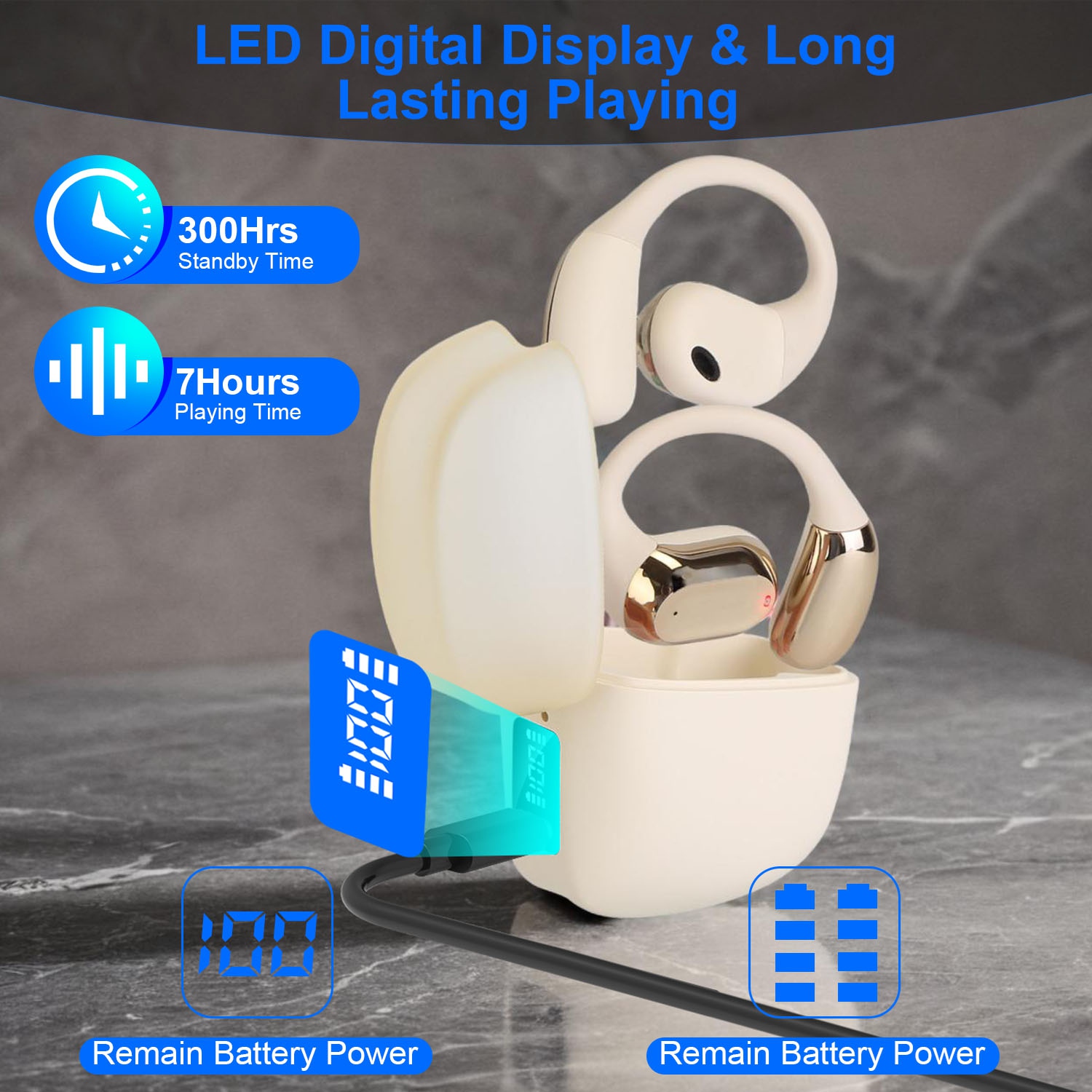

Photos from current listings. Actual item, color, and included accessories may vary.
Open Ear Earbud Buying Guide
Open-ear earbuds sit outside the ear canal, using air-conduction drivers to project sound toward the ear while leaving the canal fully open for situational awareness. The core trade-off is acoustic isolation versus comfort and safety: open designs leak sound and lose bass, so the decisive rule is whether you need environmental awareness (sport, cycling, office) or maximum fidelity (commuting, noisy transit). Durable open-ear models use Bluetooth 5.3+, IPX5 or better, and a rigid earhook or flexible titanium band; compromised versions use Bluetooth 5.0 or lower, IPX4, and loose plastic clips that degrade fit and connection stability.
Key takeaways
- Bluetooth 5.3 vs 5.0: 5.3 cuts latency and connection drops; 5.0 is prone to stutter in crowded 2.4GHz environments.
- IPX5 vs IPX4: IPX5 resists direct water jets and heavy sweat; IPX4 only handles light splashes — critical for running and cycling.
- Air-conduction drivers (16–18mm) project sound without sealing the canal; bone-conduction alternatives vibrate the skull and sacrifice bass entirely.
At a glance
- Category
- In-Ear Earphones
- Last updated
- Nov 28, 2026
Current offers
Highlights
- Bluetooth 5.3 vs 5.0: 5.3 cuts latency and connection drops; 5.0 is prone to stutter in crowded 2.4GHz environments.
- IPX5 vs IPX4: IPX5 resists direct water jets and heavy sweat; IPX4 only handles light splashes — critical for running and cycling.
- Air-conduction drivers (16–18mm) project sound without sealing the canal; bone-conduction alternatives vibrate the skull and sacrifice bass entirely.
- Earhook vs clip-on: rigid earhooks stay locked during high-impact sport; clip-on designs suit glasses wearers but shift more at speed.
Best use cases
- Running and cycling: pick IPX5+ with a rigid earhook and Bluetooth 5.3 — skip clip-on or IPX4 models that loosen with sweat and vibration.
- Office and open-plan work: choose air-conduction with moderate volume leak control; skip bone-conduction if you need clear voice-call audio and bass.
- Commuting and noisy transit: open-ear is the wrong fit — choose sealed IEMs or ANC over-ear instead, because open designs cannot block engine or rail noise.
- Glasses wearers: prioritize slim earhooks or behind-neck bands that clear temple arms; skip bulky over-ear hooks that press against frames.
Buying tips
- Match IP rating to sweat rate: IPX5 for heavy sweat and rain resistance; IPX4 only for light workouts and dry climates.
- Require Bluetooth 5.3 or 5.4 for stable multipoint and lower latency; Bluetooth 5.0–5.2 models drop more often near routers and crowds.
- Check driver size and leak: 16–18mm air-conduction drivers give fuller midrange; smaller drivers sound thin and leak more at high volume.
- For glasses, measure temple-arm thickness: earhooks with at least 3mm clearance or behind-neck bands avoid pressure points during long wear.
Specs
| Bluetooth Version | 5.3–5.4 preferred; 5.0–5.2 basic |
|---|---|
| Waterproof Rating | IPX5+ sport; IPX4 light use |
| Driver Type | Air-conduction vs bone-conduction |
| Fit Style | Earhook / clip-on / behind-neck band |
Related searches
What to check before buying
- Head and ear fit: earhook models need a snug helix fit; behind-neck bands require clearance around glasses arms and helmets.
- Sweat and climate: confirm IPX5+ if you run in humid heat or rain; IPX4 is insufficient for heavy perspiration.
- Volume leakage: open-ear designs leak at high volume — check you are not in a quiet shared space where sound bleed matters.
- Companion gear: verify helmet straps and glasses do not conflict with the earhook path before committing to a hook design.
FAQ
Data sources: eBay / Amazon listings and product attribute feeds. Updated Nov 28, 2026.
Some links on this page are affiliate links. If you buy after clicking one, we may earn a commission at no extra cost to you. This does not change which products appear here or their order. Affiliate disclosure.