
Photos from current listings. Actual item, color, and included accessories may vary.
FPV Flight Controller Buying Guide
An FPV flight controller is the stabilization and mixing brain of a multirotor or fixed-wing FPV craft, and the core trade-off is processor headroom plus I/O versus weight and voltage support. Durable, future-proof boards use STM32 F4/F7/H7-class MCUs with onboard Betaflight/INAV-compatible firmware and proper pad strain relief; compromise boards use older F1/F3 chips, thin solder pads, or no barometer. The decision rule: match MCU class and voltage range to your build's cell count and firmware target, and reject any board without a documented UART map and supported target.
Median $51.45
Key takeaways
- STM32 F405 is the baseline for Betaflight/INAV multirotors; F7/H7 boards add processing headroom for GPS rescue, HD OSD, and high-rate loop times above 8 kHz.
- AIO boards integrate 4-in-1 ESC and receiver (e.g., ELRS 2.4 GHz) to cut wiring, but cap continuous current around 25-45 A total and demand clean 1-2S or 2-4S voltage matching.
- Fixed-wing and long-range builds favor full-size FCs with dual BEC rails, multiple full UARTs, and barometer support rather than weight-optimized whoop AIOs.
At a glance
- Category
- FPV Flight Controllers
- Last updated
- Nov 23, 2026
Current offers
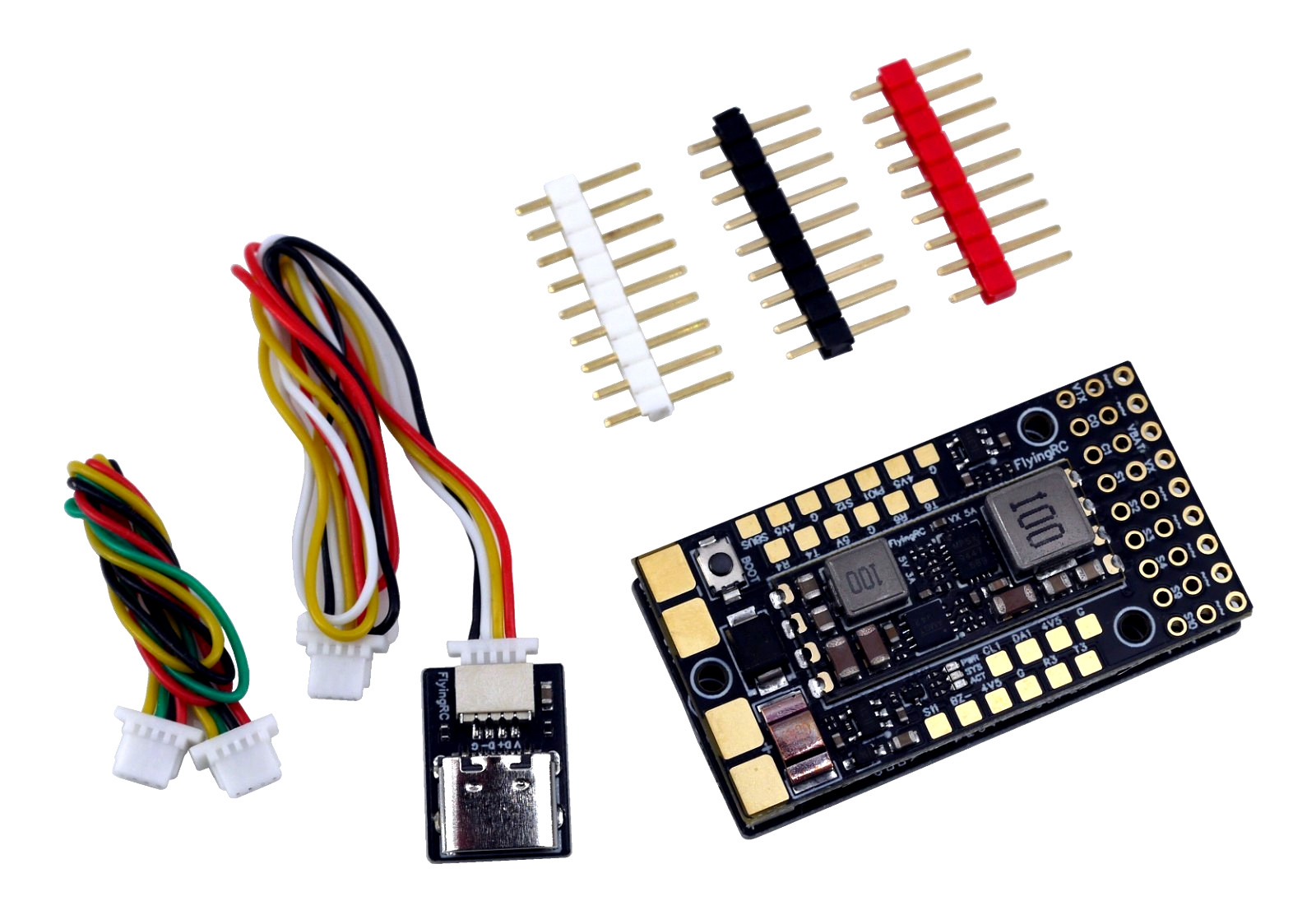 F4WSE F405 Pro Flight Controller for Fixed Wing FPV UAV RC Plane$39.99View on eBay
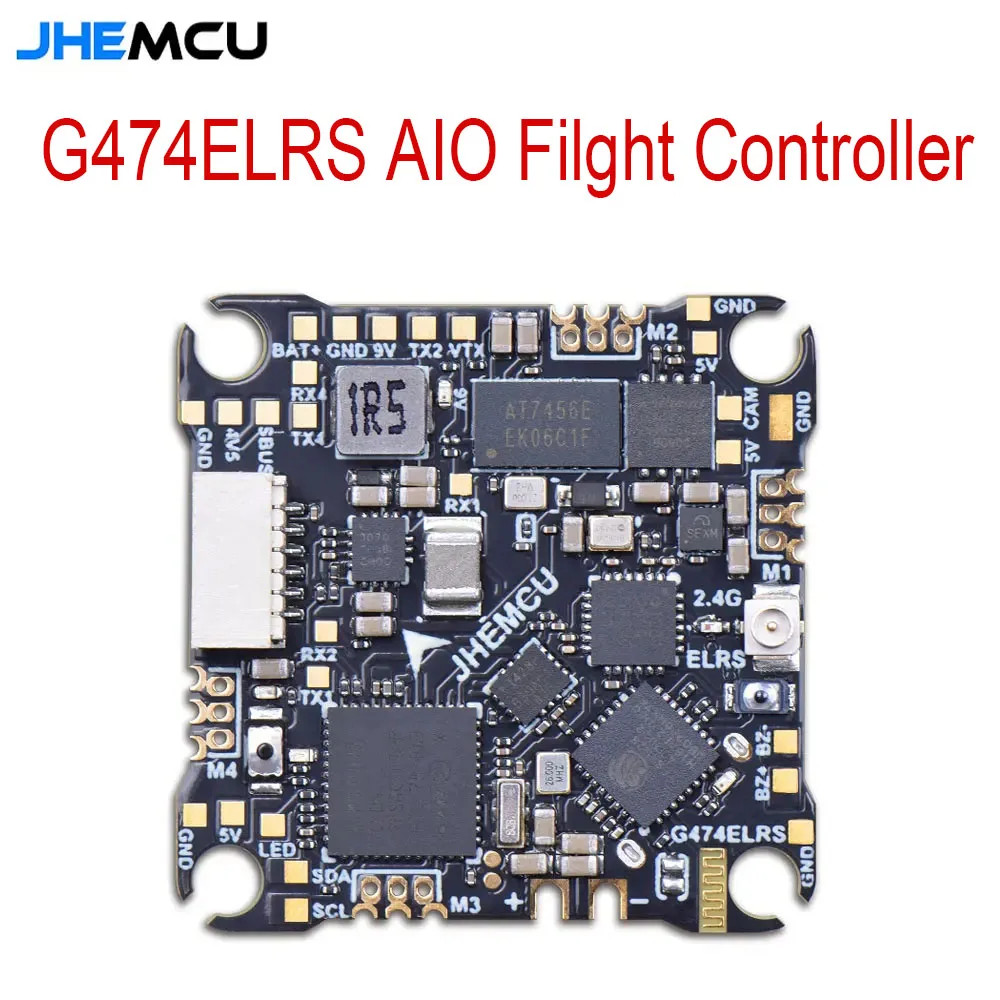 JHEMCU G474ELRS AIO Flight Controller Built-in 2.4G Receiver OSD 8MB 1-2S FPV$50.65View on eBay
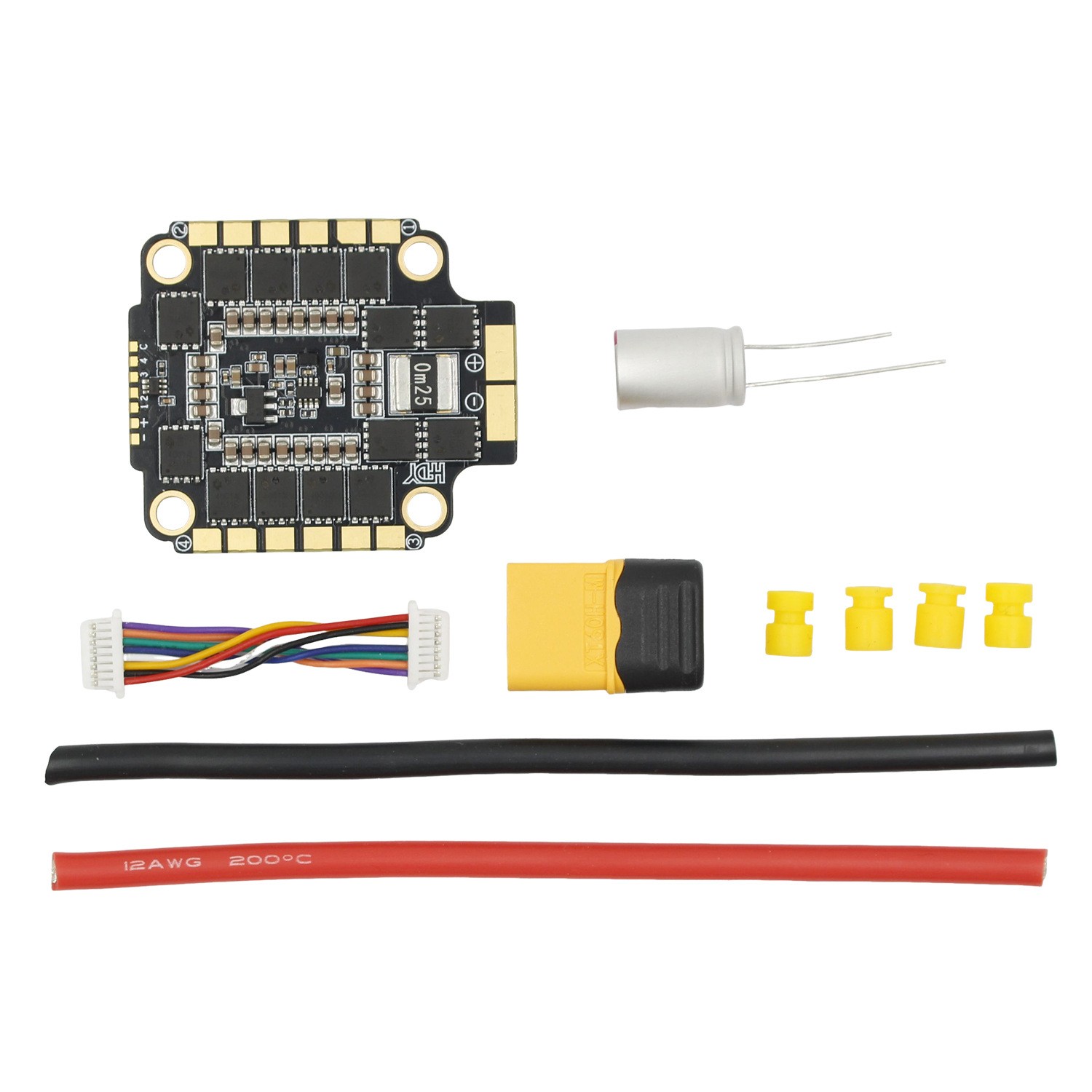 FPV Cross-Country Drone DIY STF43562 & FC435 Flight Controller and 4-in-1 ESC$52.25View on eBay
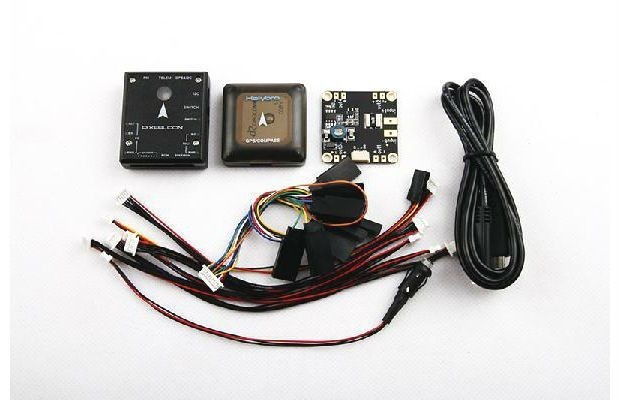 PIXFALCON PX4 Micro Flight Controller + M8N GPS for FPV Drone UAV$100.00View on eBay
Highlights
- STM32 F405 is the baseline for Betaflight/INAV multirotors; F7/H7 boards add processing headroom for GPS rescue, HD OSD, and high-rate loop times above 8 kHz.
- AIO boards integrate 4-in-1 ESC and receiver (e.g., ELRS 2.4 GHz) to cut wiring, but cap continuous current around 25-45 A total and demand clean 1-2S or 2-4S voltage matching.
- Fixed-wing and long-range builds favor full-size FCs with dual BEC rails, multiple full UARTs, and barometer support rather than weight-optimized whoop AIOs.
- PX4/Pixhawk-class controllers (e.g., PX4 Micro with M8N GPS) target autonomous waypoint and ArduPilot/PX4 missions, not low-latency freestyle rates.
Best use cases
- 5-inch freestyle or racing quad: pick an STM32F405/F7 full-size FC with 30.5x30.5 mm mounting, 3-6S input, and at least 5 full UARTs for receiver, VTX, GPS, and buzzer.
- Sub-250 g or 1-2S whoop/tinywhoop: choose an AIO FC with integrated ELRS receiver and 1-2S BEC; skip full-size FC + separate RX to save grams and wiring.
- Fixed-wing FPV or long-range cruiser: select an FC with barometer, dual BEC, and INAV/ArduPilot support; avoid bare racing FCs lacking airspeed and GPS UART allocation.
- Autonomous mapping or PX4 research: use a Pixhawk/PX4-class controller with external M8N GPS; skip Betaflight-only boards that cannot run PX4 or ArduPilot stacks.
Buying tips
- Match cell count exactly: 1-2S AIOs use lower-voltage FETs, while 3-6S FCs need onboard BEC rated for at least 5 V/2 A to survive 6S spikes.
- Confirm firmware target exists for your exact board revision — Betaflight target names change between revs, and an unsupported target bricks OSD and gyro calibration.
- Count UARTs before buying: receiver + VTX + GPS + buzzer + telemetry needs 4-5 full UARTs; AIOs often expose only 2-3, forcing soft-serial compromises.
- Check mounting pattern (20x20 mm, 25.5x25.5 mm, or 30.5x30.5 mm) and pad spacing against your frame and ESC stack before ordering.
Specs
| MCU Class | STM32 F405 / F7 / H7 |
|---|---|
| Board Format | AIO vs standard stack FC |
| Input Voltage | 1-2S / 3-6S / 2-4S AIO |
| Mounting Pattern | 20x20 / 25.5x25.5 / 30.5x30.5 mm |
Related searches
What to check before buying
- Measure your frame's stack mounting pattern and available vertical gap; 30.5x30.5 mm FCs need clearance for USB and solder pads.
- Verify your receiver protocol (ELRS, Crossfire, SBUS) has a dedicated UART and matches the FC's inversion and serial settings.
- Confirm your ESC signal type (DShot, PWM, OneShot) and current rating align with the FC's motor output pads and AIO ESC limit.
- Check input voltage against your battery: 6S builds need FCs and BECs rated to at least 25 V, and AIOs must match 1-2S or 2-4S cell ranges.
FAQ
Data sources: eBay / Amazon listings and product attribute feeds. Updated Nov 23, 2026.
Some links on this page are affiliate links. If you buy after clicking one, we may earn a commission at no extra cost to you. This does not change which products appear here or their order. Affiliate disclosure.