
Photos from current listings. Actual item, color, and included accessories may vary.
Flight Controller Buying Guide
An FPV flight controller is the flight-stabilization brain that runs gyro/accelerometer fusion, PID loops, and mixer outputs to ESCs; the core trade-off is processor headroom and firmware ecosystem versus built-in integration convenience. Durable, well-supported boards use STM32 F4/H7 MCUs with hardware UARTs and Betaflight/ArduPilot support, while compromise boards use clone sensors and undersized regulators that brown out on 6S or high-refresh builds. Decision rule: pick a board whose MCU, gyro, and BEC ratings match your cell count and firmware target, not the lowest-friction listing.
Median $51.45
Key takeaways
- STM32 F405 (168 MHz, 1 MB flash) is the baseline for Betaflight 4.x with 8 kHz gyro loops; H7 (480 MHz) or G4 targets are needed for dual-gyro or high-NaN filtering builds.
- AIOS with integrated 2.4 GHz ExpressLRS receivers (e.g., JHEMCU G474ELRS-class) eliminate a UART and wiring harness but lock you to one radio link and 1-2S power envelopes.
- PX4/ArduPilot-class controllers (Pixhawk heritage, Pixfalcon form factor) use dual-IMU redundancy and require GPS/compass modules like M8N for autonomous modes, unlike Betaflight racing boards.
At a glance
- Category
- FPV Flight Controllers
- Last updated
- Nov 23, 2026
Current offers
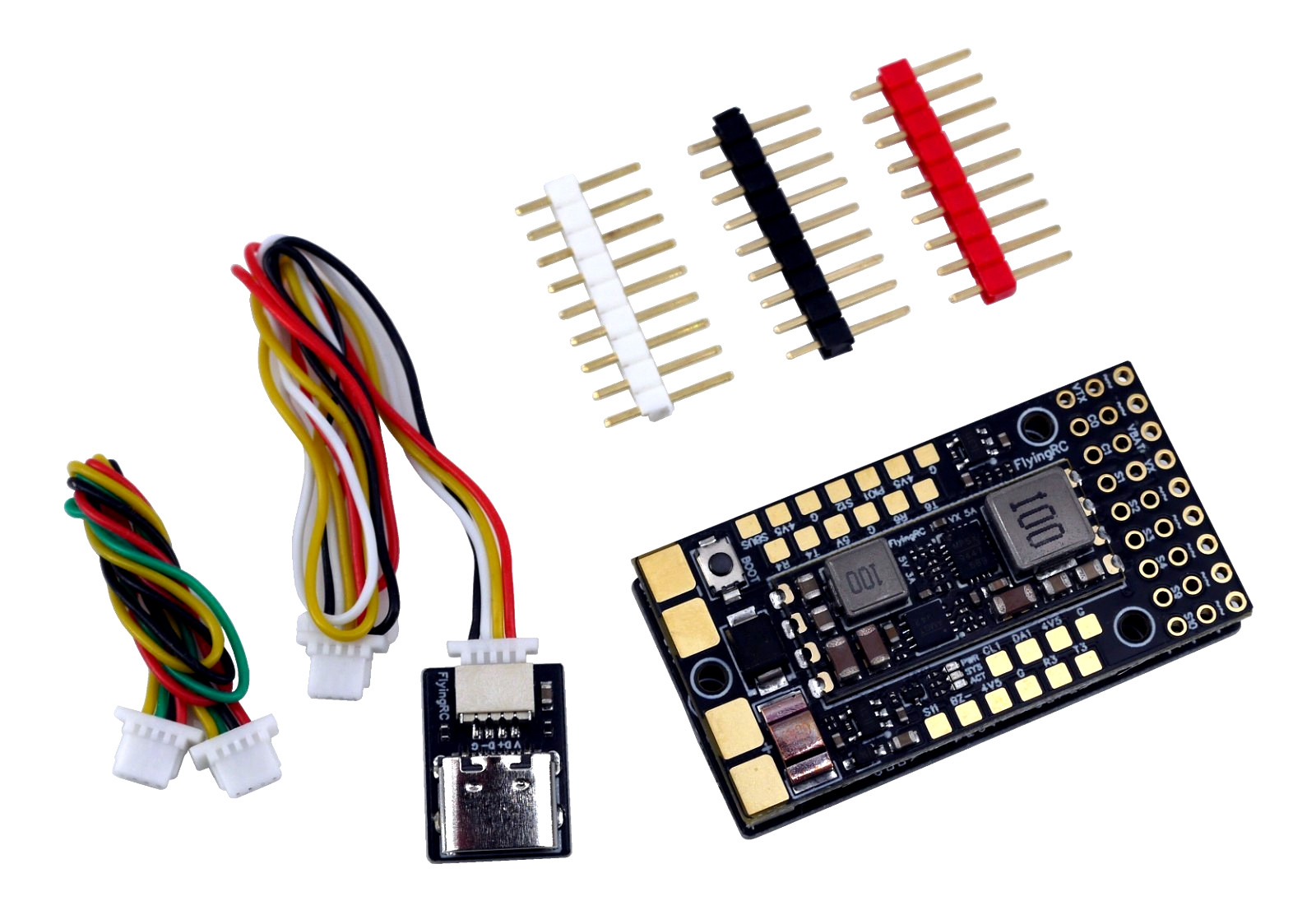 F4WSE F405 Pro Flight Controller for Fixed Wing FPV UAV RC Plane$39.99View on eBay
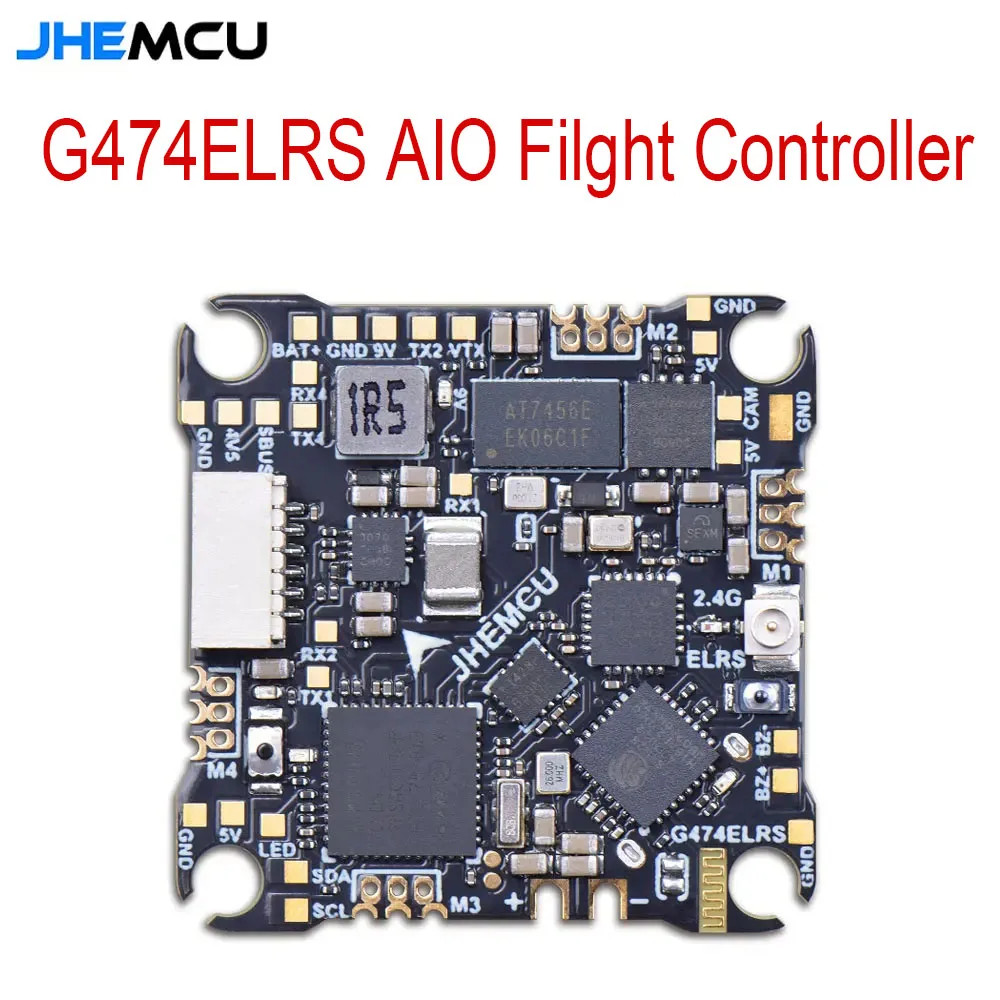 JHEMCU G474ELRS AIO Flight Controller Built-in 2.4G Receiver OSD 8MB 1-2S FPV$50.65View on eBay
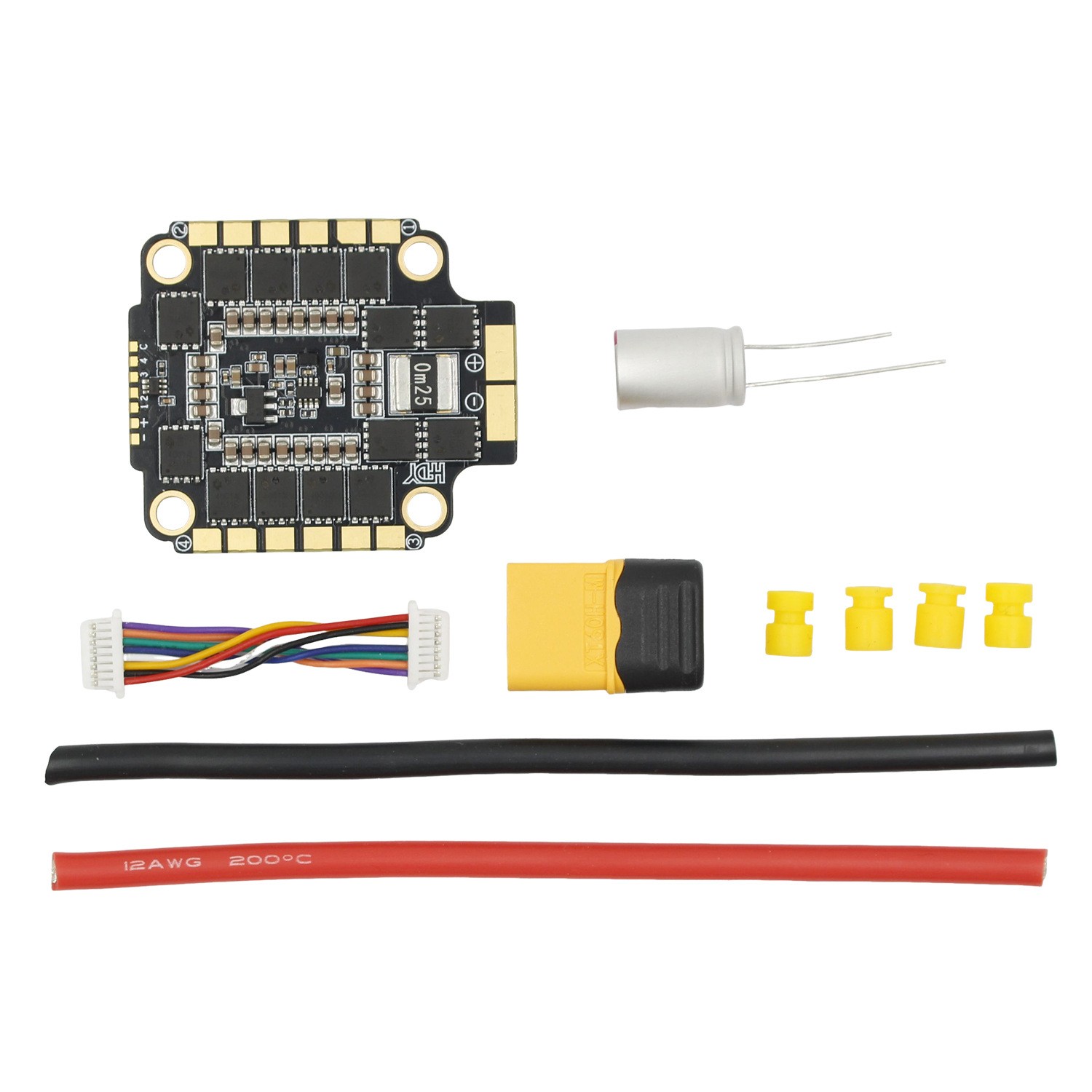 FPV Cross-Country Drone DIY STF43562 & FC435 Flight Controller and 4-in-1 ESC$52.25View on eBay
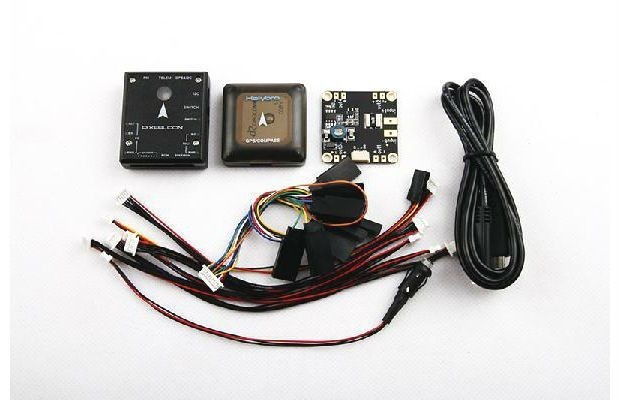 PIXFALCON PX4 Micro Flight Controller + M8N GPS for FPV Drone UAV$100.00View on eBay
Highlights
- STM32 F405 (168 MHz, 1 MB flash) is the baseline for Betaflight 4.x with 8 kHz gyro loops; H7 (480 MHz) or G4 targets are needed for dual-gyro or high-NaN filtering builds.
- AIOS with integrated 2.4 GHz ExpressLRS receivers (e.g., JHEMCU G474ELRS-class) eliminate a UART and wiring harness but lock you to one radio link and 1-2S power envelopes.
- PX4/ArduPilot-class controllers (Pixhawk heritage, Pixfalcon form factor) use dual-IMU redundancy and require GPS/compass modules like M8N for autonomous modes, unlike Betaflight racing boards.
- Onboard BEC output and ESC integration determine build viability: 5V/9V rails at 2-3 A sustain receiver, VTX, and camera loads; 4-in-1 ESC stack pairing (e.g., FC435 + STF43562) fixes current handling to the ESC's amp rating.
Best use cases
- Racing/freestyle 5-inch builds: choose an F405 or H7 board with a dedicated gyro, 9V VTX rail, and 6S-rated BEC; skip 1-2S AIO boards whose regulators cannot sustain 6S transients.
- Sub-250 g cinewhoops and toothpick quads: pick an AIO with integrated ELRS and 1-2S BEC; skip full-size 30.5×30.5 mm stacks that add mass and require separate receiver wiring.
- Fixed-wing FPV and long-range cruisers: select an F405 board with ample UARTs and I2C for GPS/compass (e.g., F4WSE-class) and run ArduPilot or INav; skip Betaflight-only racing boards with few serial ports.
- Autonomous mapping or PX4 research: use a Pixfalcon/Pixhawk-class controller with M8N GPS and dual-IMU redundancy; skip integrated AIOs that lack PX4 firmware support and redundant sensors.
Buying tips
- Match MCU to firmware: Betaflight 4.5+ needs F405 minimum, H7 for dual gyro; ArduPilot/PX4 requires boards with published hwdef targets, typically F4/H7 or Pixhawk-class.
- Size the BEC to your load: 5V/2A minimum for receiver plus camera, 9V/2A for VTX; on 6S builds confirm the regulator is rated for 25.2 V input, not 4S-only.
- Count UARTs before buying: GPS, RX, VTX control, and camera control each need one; fixed-wing and GPS builds need at least 4-5 hardware UARTs plus I2C.
- For AIO boards, verify the integrated receiver protocol (ELRS 2.4 GHz vs 900 MHz) and firmware target match your transmitter module before committing to the 1-2S envelope.
Specs
| MCU Tier | F405 / H7 / G4 / Pixhawk-class |
|---|---|
| Firmware Ecosystem | Betaflight / INav / ArduPilot / PX4 |
| Mount Pattern | 30.5×30.5 / 20×20 / AIO integrated |
| Cell Count & BEC | 1-2S AIO / 3-6S with 5V-9V BEC |
Related searches
What to check before buying
- Confirm frame mounting pattern: 30.5×30.5 mm or 20×20 mm stack spacing and M3 soft-mount grommet clearance for the board.
- Verify cell count and BEC input rating: 1-2S AIOs cannot take 6S, and 4S-rated BECs fail on 6S packs above 25.2 V.
- Check radio compatibility: integrated ELRS receivers must match your TX module band (2.4 GHz vs 900 MHz) and binding phrase workflow.
- For GPS/autonomy builds, confirm I2C or dedicated GPS port plus compass support and that the firmware target includes the required navigation modes.
FAQ
Data sources: eBay / Amazon listings and product attribute feeds. Updated Nov 23, 2026.
Some links on this page are affiliate links. If you buy after clicking one, we may earn a commission at no extra cost to you. This does not change which products appear here or their order. Affiliate disclosure.