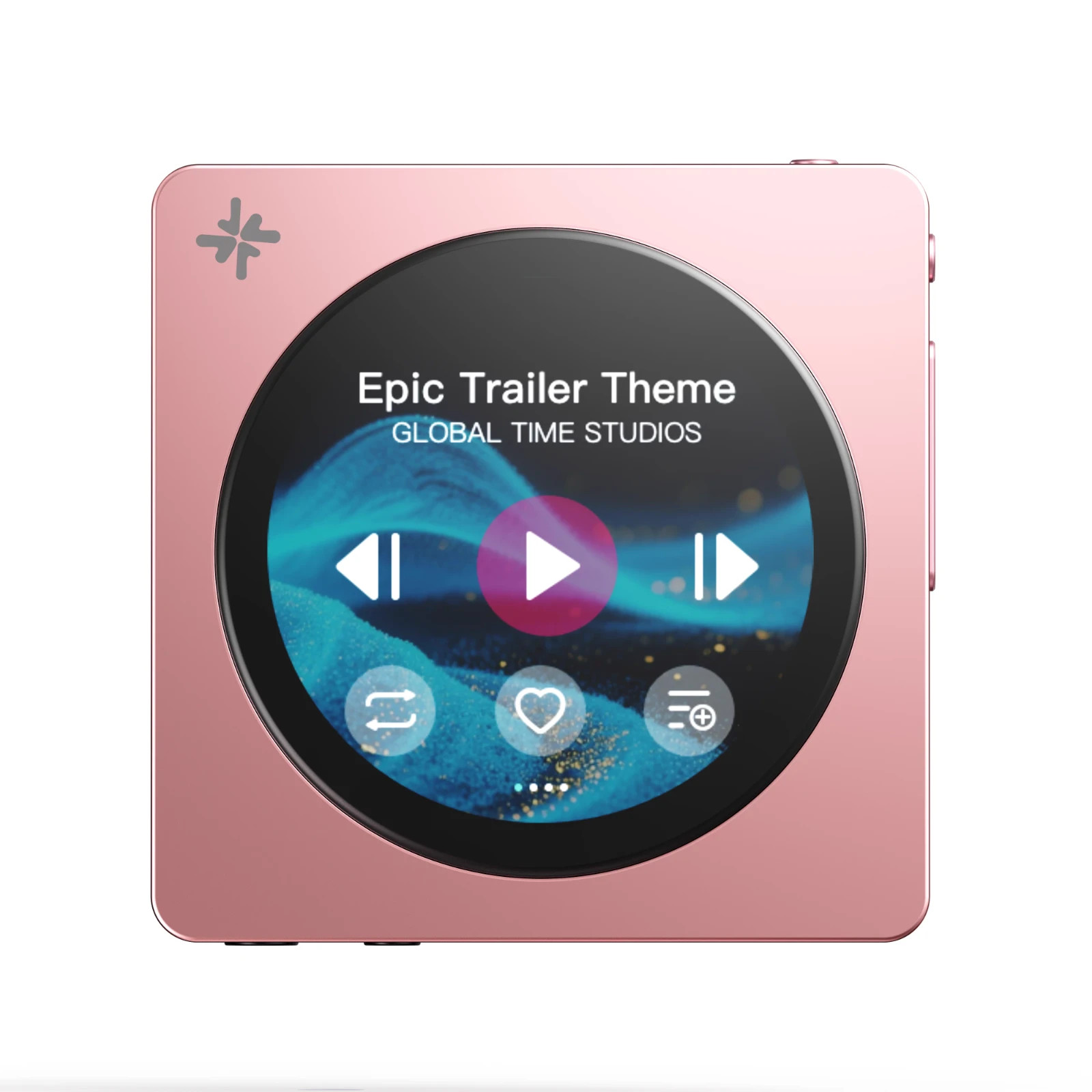

Photos from current listings. Actual item, color, and included accessories may vary.
Portable USB Player Buying Guide
A portable USB player is a compact digital audio player that connects to computers, phones, or DACs via USB for file transfer, USB-DAC output, or direct playback from flash storage. The primary trade-off is between a stripped-down USB transport with excellent signal integrity and a full-featured Hi-Res player with Bluetooth/Wi-Fi and onboard storage. The clear decision rule: choose a USB-only transport if your phone or laptop is your library and you want a clean digital feed; choose a standalone player with local storage if you listen untethered and refuse to drain your phone battery.
Key takeaways
- USB audio class compliance matters more than sample-rate bragging: class-compliant UAC 1.0/2.0 devices work driver-free on Windows, macOS, iOS, and Android; proprietary USB-DAC modes often require vendor drivers and break on phones.
- Bluetooth codec support determines wireless quality: SBC/AAC are universal but lossy, aptX/aptX HD and LDAC deliver higher bitrate, and the player must also support the receiving headphone's best common codec.
- Output architecture splits the segment: single-ended 3.5 mm only, or 3.5 mm plus balanced 2.5/4.4 mm — balanced outputs typically double voltage swing and improve channel separation for hard-to-drive headphones.
At a glance
- Category
- Digital Audio Players
- Last updated
- Nov 28, 2026
Current offers
Highlights
- USB audio class compliance matters more than sample-rate bragging: class-compliant UAC 1.0/2.0 devices work driver-free on Windows, macOS, iOS, and Android; proprietary USB-DAC modes often require vendor drivers and break on phones.
- Bluetooth codec support determines wireless quality: SBC/AAC are universal but lossy, aptX/aptX HD and LDAC deliver higher bitrate, and the player must also support the receiving headphone's best common codec.
- Output architecture splits the segment: single-ended 3.5 mm only, or 3.5 mm plus balanced 2.5/4.4 mm — balanced outputs typically double voltage swing and improve channel separation for hard-to-drive headphones.
- Storage and power tiers define real portability: microSD expansion up to 1–2 TB vs fixed internal storage; battery capacity is sized to the output stage, so high-power balanced modes cut runtime roughly in half.
Best use cases
- Best fit for a USB-only transport: you already own wired IEMs or efficient headphones and want a tiny dongle-style player that turns a laptop or phone into a clean source — skip Bluetooth and screen-equipped models.
- Best fit for a standalone Hi-Res player: you commute or travel without wanting your phone tethered, need microSD storage, Bluetooth for wireless IEMs, and a balanced output — choose a model with UAC 2.0 and LDAC if you stream from a phone.
- Wrong fit for a portable USB player: driving 300-ohm planar magnetic headphones at full dynamics — a dongle or pocket player will clip; you need a desktop amp or a player with dedicated high-voltage balanced output.
- Best fit for a budget USB player: a class-compliant UAC 1.0 device used purely as a USB-DAC from a PC — avoid models that require app-based control or proprietary drivers.
Buying tips
- Check USB audio class before buying: UAC 1.0 caps at 24-bit/96 kHz but is universally driver-free; UAC 2.0 supports higher rates but needs OS support — Windows 10/11 and macOS handle it natively, older Android may not.
- Match output impedance to your IEMs: rule of thumb is output impedance under 1/8 of the headphone's rated impedance; high-impedance outputs thicken and blur low-impedance multi-driver IEMs.
- For Bluetooth, buy for the lowest common codec: if your headphones only do AAC or SBC, paying for LDAC in the player yields no benefit — codec support must exist on both ends.
- Prioritize microSD over internal storage for library size: a 1 TB card holds roughly 20,000–30,000 FLAC tracks; fixed internal storage cannot be expanded and is the main reason players become obsolete.
Specs
| USB Audio Class | UAC 1.0 driver-free vs UAC 2.0 hi-res |
|---|---|
| Output Stage | 3.5 mm single-ended / 2.5–4.4 mm balanced |
| Bluetooth Codec | SBC/AAC vs aptX HD / LDAC |
| Storage | microSD up to 1–2 TB vs fixed internal |
Related searches
What to check before buying
- Confirm the USB port type and role: USB-C vs micro-USB, and whether the device acts as USB-DAC (receives audio), USB host (reads flash drives), or both — many budget players only do one.
- Measure your headphone load: impedance and sensitivity determine whether a pocket player's 3.5 mm output is sufficient; plan on balanced output for anything below about 100 dB/mW sensitivity.
- Check Bluetooth version and codec list against your headphones and phone, not just the player's marketing — version 5.4 improves pairing stability but does not raise audio quality without a matching codec.
- Account for companion parts: a microSD card, a USB-C OTG cable for phone use, and the correct balanced cable termination are real added cost and compatibility gates.
FAQ
Data sources: eBay / Amazon listings and product attribute feeds. Updated Nov 28, 2026.
Some links on this page are affiliate links. If you buy after clicking one, we may earn a commission at no extra cost to you. This does not change which products appear here or their order. Affiliate disclosure.