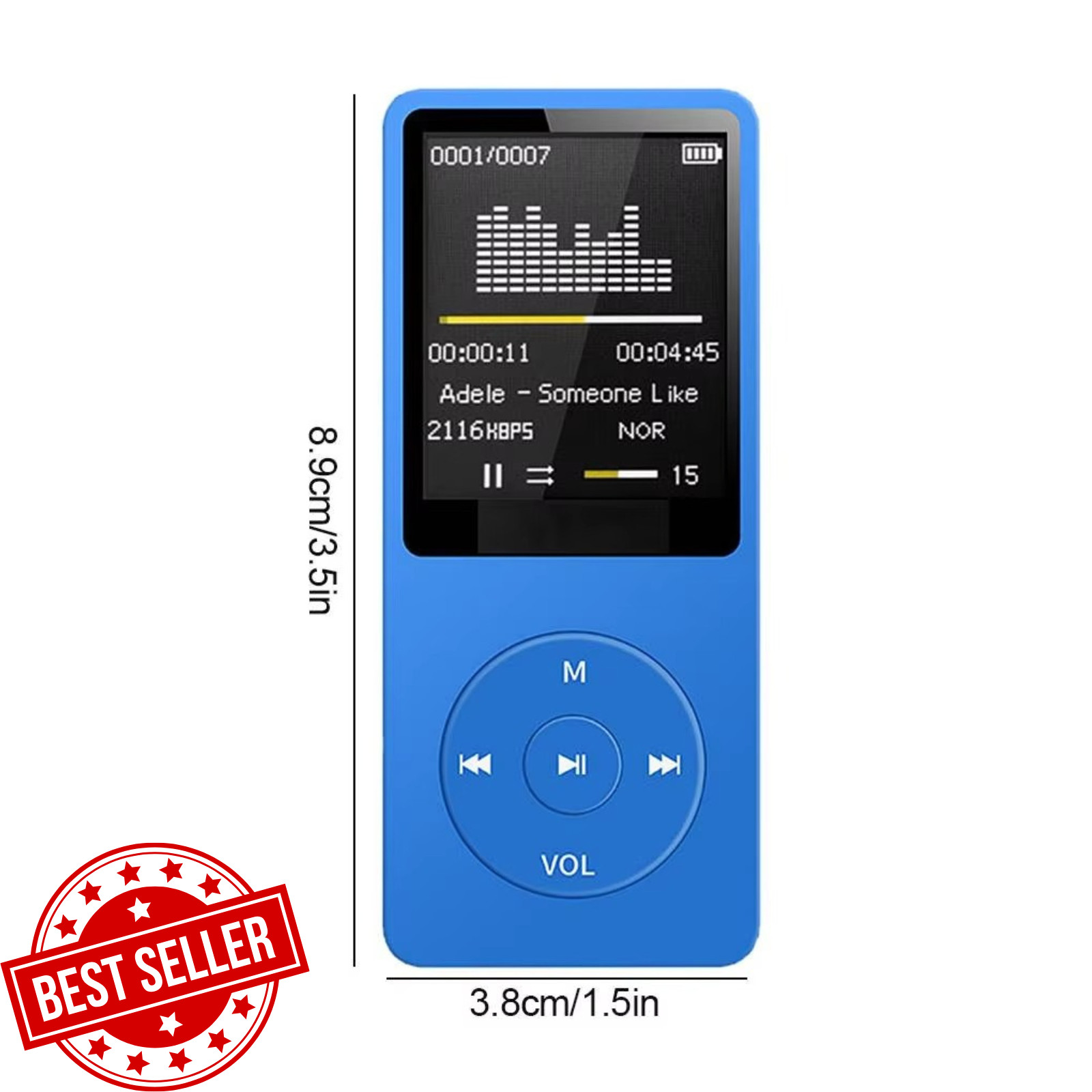

Photos from current listings. Actual item, color, and included accessories may vary.
Portable Radio Buying Guide
A portable radio is a self-contained AM/FM (often weather-band) receiver built for battery or AC operation, where the core trade-off is analog tuner simplicity and battery life versus digital DSP tuning with presets and RDS. Choose a digital-DSP set with a physical tuning knob and standard battery format for reliable daily use; treat ultra-thin analog-only sets as emergency spares, not primary receivers.
Key takeaways
- Digital DSP tuners (SiLabs-style chips) lock stations precisely and enable presets/RDS, while analog dial tuners drift and need repeated fine-tuning.
- Weather-band coverage (NOAA 162.400–162.550 MHz) with SAME alert decoding is the decisive feature for emergency-ready radios.
- Battery format defines running cost: AA/AAA cells are field-replaceable anywhere, while built-in lithium packs require USB charging and eventually degrade.
At a glance
- Category
- Digital Audio Players
- Last updated
- Nov 28, 2026
Current offers
Highlights
- Digital DSP tuners (SiLabs-style chips) lock stations precisely and enable presets/RDS, while analog dial tuners drift and need repeated fine-tuning.
- Weather-band coverage (NOAA 162.400–162.550 MHz) with SAME alert decoding is the decisive feature for emergency-ready radios.
- Battery format defines running cost: AA/AAA cells are field-replaceable anywhere, while built-in lithium packs require USB charging and eventually degrade.
- Speaker size and enclosure volume drive audio quality—larger drivers with bass ports outperform slim pocket sets on speech clarity and volume.
Best use cases
- Best fit: kitchen or workshop counter use—pick a digital AM/FM set with 3-inch or larger speaker, AC adapter, and AA battery backup for uninterrupted listening.
- Best fit: emergency kit or severe-weather region—choose a NOAA weather-band radio with SAME alerts, hand-crank or solar charging, and a built-in flashlight.
- Wrong fit: audiophile music listening—portable radios use mono speakers and compressed FM audio; use a dedicated DAP or Bluetooth speaker instead.
- Wrong fit: pocket carry on a run—compact analog sets have tiny speakers and poor reception indoors; a phone with wired headphones is more practical.
Buying tips
- For reception, extendable telescopic antennas (60–90 cm) outperform stub antennas; verify the antenna is replaceable or at least robustly hinged.
- Match battery type to use: AA NiMH rechargeables suit heavy daily use, while lithium-ion packs save weight but lock you into proprietary charging.
- If emergency use matters, require SAME (Specific Area Message Encoding) decoding so the radio only alerts for your county, not distant regions.
- Check FM sensitivity specs (typically 3–10 µV) and selectivity; DSP tuners usually beat analog on weak-signal handling and adjacent-channel rejection.
Specs
| Tuner Type | Digital DSP vs Analog dial |
|---|---|
| Bands | AM/FM, +Weather (NOAA) |
| Power Source | AA/AAA, Li-ion, AC, crank/solar |
| Speaker Size | 1–2 in pocket / 3–5 in tabletop |
Related searches
What to check before buying
- Measure your shelf or counter space—most tabletop radios run 20–30 cm wide and need clearance for the top-loaded telescopic antenna.
- Confirm your power environment: 120 V AC for North American adapters or 230 V for Europe; most adapters are region-specific and not dual-voltage.
- Decide whether you need headphone output (3.5 mm) for private listening; many budget sets omit it.
- Verify weather-band coverage if you live in a NOAA-served region; standard AM/FM-only radios will not receive alerts.
FAQ
Data sources: eBay / Amazon listings and product attribute feeds. Updated Nov 28, 2026.
Some links on this page are affiliate links. If you buy after clicking one, we may earn a commission at no extra cost to you. This does not change which products appear here or their order. Affiliate disclosure.