
Photos from current listings. Actual item, color, and included accessories may vary.
Portable CD Player Car With USB Connection And Bluetooth Buying Guide
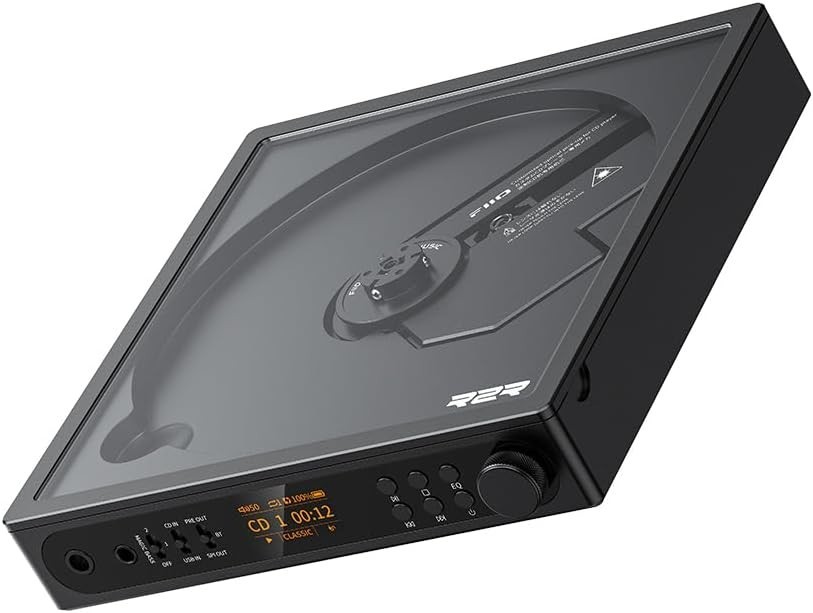
A car-ready portable CD player bridges legacy disc collections with modern vehicle head units, but the segment splits sharply between basic USB bus-powered spinners and Bluetooth-enabled players with their own battery and line-out stages. The core trade-off is transport durability plus power topology versus wireless convenience: USB-only models depend entirely on the car's 5V port, while Bluetooth models add a battery, a DAC, and a transmitter that must survive heat and vibration. The decision rule is simple: buy a slot-load or anti-shock player with a dedicated 3.5mm line-out and USB-C power for USB setups, or a model with Bluetooth 5.0+ and a user-replaceable or high-cycle battery for wireless setups — skip tray-load players and no-name units with no shock buffer rating.
Median $221.50 · New & pre-owned listings
Key takeaways
- Transport type determines skip resistance: slot-load and anti-shock buffered players (typically 10–45 seconds of memory) outperform tray-load mechanisms on potholed roads.
- USB car connection is power-only on most portable players — audio still needs a 3.5mm aux or FM transmitter unless the unit explicitly supports USB audio class output.
- Bluetooth models carry their own DAC and transmitter; Bluetooth 5.0+ with SBC/AAC support is the practical floor, and battery capacity of 1,000–2,000 mAh yields roughly 8–20 hours.
At a glance
- Category
- Digital Audio Players
- Last updated
- Nov 29, 2026
Current offers
Highlights
- Transport type determines skip resistance: slot-load and anti-shock buffered players (typically 10–45 seconds of memory) outperform tray-load mechanisms on potholed roads.
- USB car connection is power-only on most portable players — audio still needs a 3.5mm aux or FM transmitter unless the unit explicitly supports USB audio class output.
- Bluetooth models carry their own DAC and transmitter; Bluetooth 5.0+ with SBC/AAC support is the practical floor, and battery capacity of 1,000–2,000 mAh yields roughly 8–20 hours.
- Power topology matters: bus-powered USB players need a 5V/1A (5W) port minimum, while battery players charge via USB-C or micro-USB and run independently of the car socket.
Best use cases
- Best fit for USB-only cars: pick a slot-load player with a 3.5mm line-out and USB-C power; skip Bluetooth models if your head unit already has an aux jack.
- Best fit for wireless dashboards: choose a Bluetooth 5.0+ player with a built-in battery and aux fallback; skip USB-only spinners that tether you to a cable.
- Wrong fit: tray-load players and unbuffered budget units for daily commuting over rough roads — choose anti-shock slot-load instead.
- Wrong fit: players without a dedicated line-out for cars using aux-to-aux — headphone-only jacks distort at high car-stereo gain; pick a true line-out stage.
Buying tips
- Match power to your port: a 5V/1A USB port delivers 5W, enough for bus-powered players; if the player ships with its own battery, confirm USB-C charging and 1,000 mAh+ capacity.
- Insist on a 3.5mm line-out (not just headphone out) so the car head unit controls volume without clipping the player's amp stage.
- For Bluetooth, require version 5.0 or newer and SBC/AAC codec support; older 4.x transmitters add noticeable latency and dropouts in dense dashboards.
- Check shock buffer time in seconds (10s minimum, 45s preferred) and prefer slot-load mechanisms over tray-load for vibration resistance.
Specs
| Transport Type | Slot-load anti-shock vs tray-load |
|---|---|
| Car Connection | USB power / 3.5mm aux / Bluetooth 5.0+ |
| Power Source | USB 5V bus vs internal 1,000mAh+ battery |
| Shock Buffer | 10–45 sec anti-skip memory |
Related searches
What to check before buying
- Measure your dash and console space: compact players run roughly 5–7 inches wide, so confirm a flat mounting spot or a secure vent/seat pouch.
- Verify the car's power port: a 5V/1A USB-A or USB-C socket for bus-powered players, or a 12V socket plus USB adapter for battery models.
- Confirm your head unit input: 3.5mm aux, USB audio, or FM transmitter — the player must match at least one without adapters.
- Check cabin temperature exposure: disc mechanisms and batteries degrade above 140°F/60°C, so avoid permanent dashboard mounting in direct sun.
FAQ
Data sources: eBay / Amazon listings and product attribute feeds. Updated Nov 29, 2026.
Some links on this page are affiliate links. If you buy after clicking one, we may earn a commission at no extra cost to you. This does not change which products appear here or their order. Affiliate disclosure.