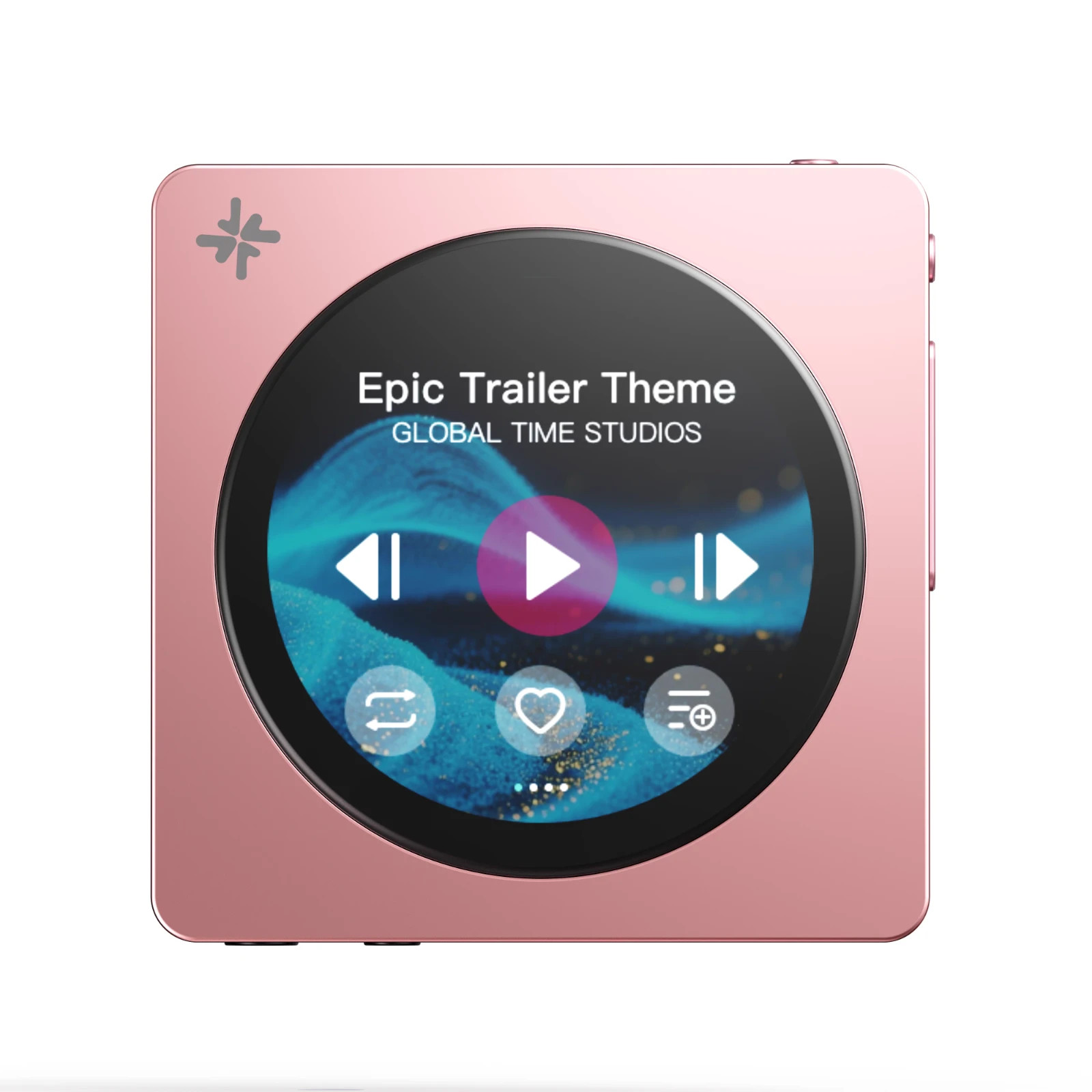

Photos from current listings. Actual item, color, and included accessories may vary.
Fiio Audio Player Buying Guide
Fiio audio players are portable digital audio players (DAPs) spanning entry-level Snowsky models to Android-based M-series and flagship players, defined by their DAC chip, output architecture (single-ended vs balanced), and streaming capability. The core trade-off is DAC/amp power and balanced output versus battery life, size, and Android overhead. Choose by matching your headphone impedance/sensitivity and required streaming apps to the player's output and OS tier—skip balanced-capable tiers only if you use sensitive IEMs on 3.5mm.
Key takeaways
- DAC architecture tiers: single CS43131 (entry), dual ES9219 (mid), dual ES9038Q2M or AK4499 (flagship) directly set resolution, noise floor, and decoding ceiling.
- Balanced 4.4mm output typically doubles voltage swing and channel separation versus 3.5mm single-ended, critical for 150-300Ω headphones.
- Android-based players (M11/M15/M17) run full streaming apps and support microSD up to 2TB; non-Android Snowsky models are local-file and Bluetooth-only.
At a glance
- Category
- Digital Audio Players
- Last updated
- Nov 28, 2026
Current offers
Highlights
- DAC architecture tiers: single CS43131 (entry), dual ES9219 (mid), dual ES9038Q2M or AK4499 (flagship) directly set resolution, noise floor, and decoding ceiling.
- Balanced 4.4mm output typically doubles voltage swing and channel separation versus 3.5mm single-ended, critical for 150-300Ω headphones.
- Android-based players (M11/M15/M17) run full streaming apps and support microSD up to 2TB; non-Android Snowsky models are local-file and Bluetooth-only.
- Bluetooth 5.4 with LDAC/aptX Adaptive on newer models enables hi-res wireless, but wired balanced remains the only route to full DAC potential.
Best use cases
- Pick Snowsky Disc or M3 if you stream from phone via Bluetooth or play local FLAC with sensitive IEMs; skip balanced models and save size/battery.
- Pick M11 Plus or M15 if you need 4.4mm balanced drive for planar or 300Ω headphones and on-device Tidal/Apple Music streaming.
- Pick M17 if you drive full-size high-impedance headphones with desktop-class gain and use DC power mode; skip it for pocket carry.
- Skip Android DAPs entirely if your library is local-only and you value 15+ hour battery over app flexibility—non-Android tiers deliver longer runtime.
Buying tips
- Match output to headphone load: under 32Ω and high sensitivity (>110dB/mW) runs clean on 3.5mm; 150-300Ω or planar needs 4.4mm balanced and >200mW per channel.
- Check DAC chip generation: dual ES9219 or CS43131 handles 32-bit/384kHz and DSD256; flagship ES9038Q2M/AK4499 adds DSD512 and lower THD+N.
- Confirm Android version and streaming certification—M-series run full Android with Google Play, while Snowsky models lack app stores and rely on local files/Bluetooth.
- Verify microSD support: most Fiio players accept up to 2TB cards but require FAT32/exFAT formatting; internal storage is minimal and cards are mandatory for large libraries.
Specs
| DAC Chip Tier | CS43131 / ES9219 / ES9038Q2M |
|---|---|
| Output Jacks | 3.5mm SE + 4.4mm balanced |
| Max Resolution | 32-bit/384kHz, DSD256-DSD512 |
| OS / Streaming | Android w/ Play Store vs local-only |
Related searches
What to check before buying
- Measure headphone impedance and sensitivity: if 150Ω+ or planar, require 4.4mm balanced output; if under 32Ω, 3.5mm is sufficient.
- Confirm microSD card capacity and format (exFAT for >32GB) before loading a library; players ship without cards.
- Check Bluetooth codec support on both player and headphones (LDAC, aptX Adaptive) for wireless use.
- Verify USB DAC mode and USB-C charging standard—some models require specific cables for USB Audio Class 2 output to computers.
FAQ
Data sources: eBay / Amazon listings and product attribute feeds. Updated Nov 28, 2026.
Some links on this page are affiliate links. If you buy after clicking one, we may earn a commission at no extra cost to you. This does not change which products appear here or their order. Affiliate disclosure.