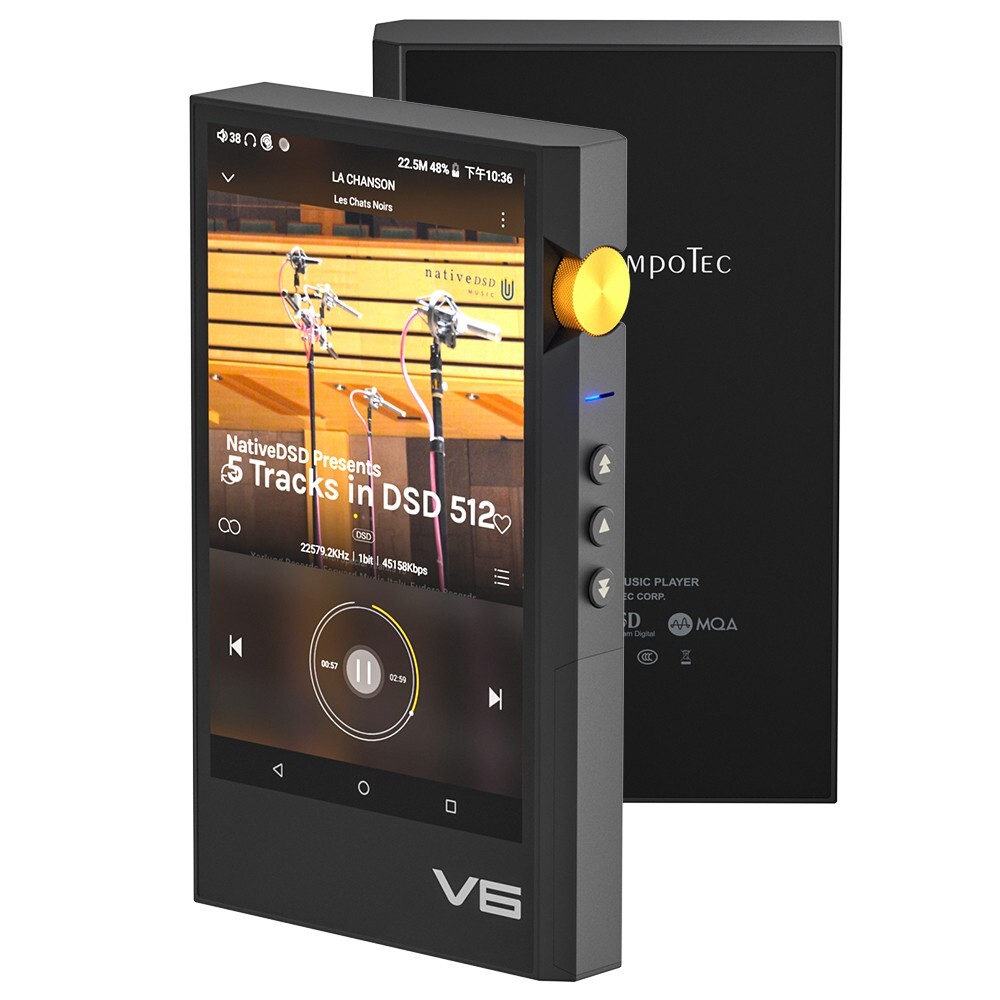

Photos from current listings. Actual item, color, and included accessories may vary.
Dap Music Player Buying Guide
A DAP (Digital Audio Player) is a dedicated playback device built around a DAC/amp chain and local storage, trading smartphone convenience for cleaner signal, higher output power, and expanded headphone synergy. The core trade-off is DAC/amp architecture and output topology versus software ecosystem and battery life. Buy only if your headphones genuinely need more current/voltage than a phone can deliver or you want bit-perfect local files without streaming interruptions.
Key takeaways
- Balanced 2.5/4.4mm outputs deliver roughly double the voltage swing and channel separation of single-ended 3.5mm, directly improving dynamic range on high-impedance loads.
- Android-based DAPs (like the TempoTec V6 class) run streaming apps and full codec support but add SoC heat and idle drain; Linux/RTOS players are leaner but app-limited.
- Output power is the decisive spec: under 150mW into 32Ω cannot properly drive 300Ω headphones, while 500mW+ balanced handles planar and high-Z models cleanly.
At a glance
- Category
- Digital Audio Players
- Last updated
- Nov 28, 2026
Current offers
Highlights
- Balanced 2.5/4.4mm outputs deliver roughly double the voltage swing and channel separation of single-ended 3.5mm, directly improving dynamic range on high-impedance loads.
- Android-based DAPs (like the TempoTec V6 class) run streaming apps and full codec support but add SoC heat and idle drain; Linux/RTOS players are leaner but app-limited.
- Output power is the decisive spec: under 150mW into 32Ω cannot properly drive 300Ω headphones, while 500mW+ balanced handles planar and high-Z models cleanly.
- DAC chip tier (ESS/AKM/Cirrus) matters far less than the amplifier stage and output impedance, which should stay under 1Ω for multi-driver IEMs.
Best use cases
- Best fit: pick a balanced-output Android DAP if you stream Tidal/Qobuz and own 250Ω+ dynamic headphones or planar IEMs needing current.
- Best fit: pick a compact Linux/RTOS player with dual microSD if your library is offline FLAC and battery life above 15 hours matters.
- Wrong fit: skip a DAP entirely if you use only 16–32Ω efficient IEMs at low volume — a phone dongle DAC reaches the same loudness with lower cost and bulk.
- Wrong fit: skip open-box/no-packaging units unless you can test the battery health and 4.4mm jack on arrival, since DAP batteries are not user-replaceable.
Buying tips
- Match output power to load: at least 200mW into 32Ω single-ended and 400mW+ balanced for 300Ω headphones; below that, bass and dynamics collapse.
- Choose 4.4mm Pentaconn over 2.5mm balanced for durability and lower crosstalk; 2.5mm plugs bend and short more easily in pockets.
- Demand at least one microSD slot rated to 1TB or 2TB; internal storage alone rarely exceeds 128GB for large FLAC libraries.
- Verify Bluetooth codec support (LDAC/aptX HD) if you use wireless headphones; SBC/AAC-only DAPs cap wireless quality regardless of DAC.
Specs
| Output Jacks | 3.5mm SE + 4.4mm/2.5mm balanced |
|---|---|
| Output Power | 150–500mW+ into 32Ω (balanced) |
| DAP OS | Android, Linux/RTOS, or hybrid |
| Storage | microSD slot(s), 1–2TB support |
Related searches
What to check before buying
- Confirm headphone impedance and sensitivity: above 100Ω or below 100dB/mW means you need a DAP with real balanced output power.
- Check the output jack types physically present: 3.5mm single-ended alone excludes balanced cable upgrades and limits power.
- Confirm the OS supports your streaming apps and file formats (DSD, FLAC 24/192) plus gapless playback before committing.
- Verify battery capacity in mAh and rated playback hours, plus whether the unit charges over USB-C and supports fast charging.
FAQ
Data sources: eBay / Amazon listings and product attribute feeds. Updated Nov 28, 2026.
Some links on this page are affiliate links. If you buy after clicking one, we may earn a commission at no extra cost to you. This does not change which products appear here or their order. Affiliate disclosure.