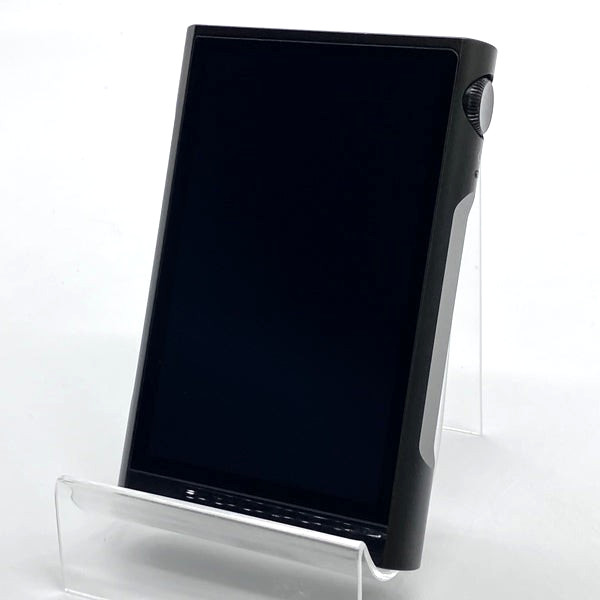

Photos from current listings. Actual item, color, and included accessories may vary.
Dap Audio Player Buying Guide
Digital Audio Players (DAPs) are dedicated high-resolution music players built around a DAC/amp architecture that smartphones cannot match, with the core trade-off being Android-based streaming flexibility versus locked-down, battery-efficient custom firmware. The decisive rule: pick a player whose DAC chip, output impedance, and storage ceiling match your headphone/IEM load and library size; skip any tier that lacks a microSD slot or balanced output if you drive power-hungry cans.
Key takeaways
- DAC architecture splits into flagship 1-bit/Delta-Sigma (ESS Sabre, AKM Velvet) and R-2R ladder designs; R-2R delivers smoother treble but higher power draw and cost.
- Balanced 4.4mm Pentaconn outputs typically double voltage swing versus 3.5mm single-ended, giving 2-3x more power for high-impedance (300Ω+) headphones.
- Android DAPs (Snapdragon 665-class, Shanling M3X, Sony NW-ZX707) stream natively but cap battery at 15-20 hours; custom-firmware players reach 30-40 hours.
At a glance
- Category
- Digital Audio Players
- Last updated
- Nov 28, 2026
Current offers
Highlights
- DAC architecture splits into flagship 1-bit/Delta-Sigma (ESS Sabre, AKM Velvet) and R-2R ladder designs; R-2R delivers smoother treble but higher power draw and cost.
- Balanced 4.4mm Pentaconn outputs typically double voltage swing versus 3.5mm single-ended, giving 2-3x more power for high-impedance (300Ω+) headphones.
- Android DAPs (Snapdragon 665-class, Shanling M3X, Sony NW-ZX707) stream natively but cap battery at 15-20 hours; custom-firmware players reach 30-40 hours.
- Output impedance under 1Ω is critical for multi-driver IEMs; above 2Ω shifts frequency response and bloats bass on low-impedance balanced armature sets.
Best use cases
- Best fit: commuters and streamers who need Spotify/Tidal offline — choose an Android DAP with 4.4mm balanced and 64GB+ internal plus microSD; skip low-RAM (1GB) models that stutter on modern apps.
- Best fit: critical listeners with a large local FLAC/DSD library — pick a custom-firmware player with 2TB microSD support and 30+ hour battery; skip Android if you never stream.
- Best fit: IEM owners wanting portability — a compact player with <1Ω output impedance and 3.5mm/4.4mm is ideal; skip desktop-class DAPs weighing over 300g for pocket use.
- Wrong fit: powering 600Ω studio headphones — no portable DAP drives these cleanly; use a DAP with line-out into a dedicated desktop amp instead.
Buying tips
- Match power to load: for 300Ω headphones demand ≥200mW at 32Ω balanced; for sensitive IEMs prioritize noise floor below -110dB and gain switch.
- Storage rule: internal 32-64GB fills fast with hi-res; require microSD expandability to 1TB+ (2TB on newer models) for DSD/FLAC libraries.
- Android version matters: choose Android 10+ for current streaming-app compatibility; older Android 7-8 players lose app support within 2-3 years.
- Battery math: rated hours usually at 3.5mm, 16-bit/44.1kHz; balanced output and hi-res decoding cut runtime by 30-50%, so buy capacity for worst case.
Specs
| DAC Architecture | Delta-Sigma vs R-2R ladder |
|---|---|
| Balanced Output | 4.4mm Pentaconn / 2.5mm |
| Max microSD | 1TB-2TB (exFAT) |
| Battery Life | 15-20 hr Android / 30-40 hr custom |
Related searches
What to check before buying
- Measure headphone impedance and sensitivity; confirm DAP rated output at that impedance (not just 32Ω spec).
- Verify microSD slot maximum capacity and whether it accepts exFAT-formatted cards over 1TB.
- Check output-jack types: 3.5mm single-ended plus 4.4mm balanced covers most cables; 2.5mm is legacy.
- Confirm Bluetooth codec support (LDAC/aptX HD) if wireless is needed, and whether the DAP can act as USB DAC.
FAQ
Data sources: eBay / Amazon listings and product attribute feeds. Updated Nov 28, 2026.
Some links on this page are affiliate links. If you buy after clicking one, we may earn a commission at no extra cost to you. This does not change which products appear here or their order. Affiliate disclosure.