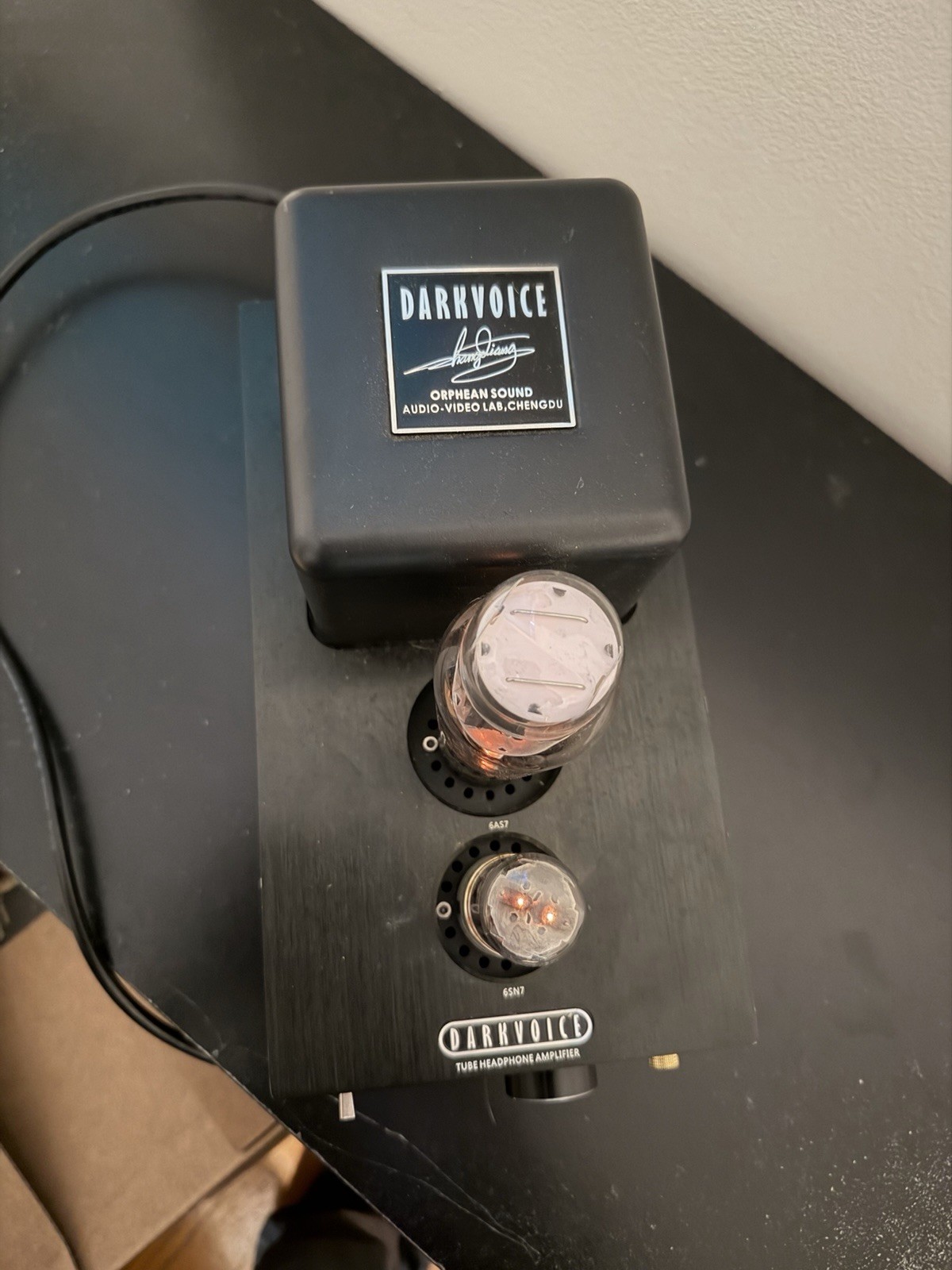

Photos from current listings. Actual item, color, and included accessories may vary.
Tube Headphone Amplifier Buying Guide
A tube headphone amplifier uses vacuum tubes for voltage gain or output buffering, delivering even-order harmonic richness and a high output impedance that can shift frequency response with low-impedance headphones. The core trade-off is tube topology and output-coupling method versus noise floor, heat, and maintenance, so durability hinges on transformer quality, power-supply design, and whether the amp is OTL, transformer-coupled, or hybrid. The decision rule: choose a transformer-coupled or hybrid design for low-impedance headphones and an OTL only for high-impedance dynamic models above 150 ohms.
Median $10,105.00 · Pre-owned listings
Key takeaways
- Output topology decides headphone matching: OTL amps typically present 30–120 ohm output impedance, transformer-coupled amps run 4–32 ohm, and hybrid amps use a solid-state buffer for near-zero impedance.
- Tube families set gain and replacement cost: 12AX7/ECC83 preamp tubes give high gain and low cost, 6AS7/6080 power tubes suit OTL current delivery, and 300B/2A3 directly heated triodes demand premium iron and bias care.
- Power-supply design separates quiet amps from noisy ones: choke-filtered or regulated high-voltage rails reduce hum, while unregulated supplies rely on oversized filter capacitors and star grounding.
At a glance
- Category
- DACs & Headphone Amplifiers
- Last updated
- Nov 25, 2026
Current offers
Highlights
- Output topology decides headphone matching: OTL amps typically present 30–120 ohm output impedance, transformer-coupled amps run 4–32 ohm, and hybrid amps use a solid-state buffer for near-zero impedance.
- Tube families set gain and replacement cost: 12AX7/ECC83 preamp tubes give high gain and low cost, 6AS7/6080 power tubes suit OTL current delivery, and 300B/2A3 directly heated triodes demand premium iron and bias care.
- Power-supply design separates quiet amps from noisy ones: choke-filtered or regulated high-voltage rails reduce hum, while unregulated supplies rely on oversized filter capacitors and star grounding.
- Transformer quality governs bandwidth and noise: grain-oriented silicon steel or amorphous cores with interleaved windings extend frequency response and reject mains hum better than budget EI-core transformers.
Best use cases
- Best fit: 300-ohm Sennheiser HD 600/650 or 250-ohm Beyerdynamic DT series with a transformer-coupled or OTL tube amp — skip hybrid designs if you want maximum tube tone.
- Best fit: low-impedance planar or IEM listeners should pick a hybrid tube amp with solid-state output stage; skip OTL amps, which can sound bloated and rolled off below 32 ohms.
- Best fit: desktop listeners with sensitive high-efficiency dynamics (over 100 dB/mW) should choose a low-gain OTL with a regulated supply; skip high-power transformer amps that add hiss at low volume.
- Wrong fit: portable or commuting use — tube amps draw 10–40 W, weigh 1–5 kg, and need 15–30 minutes warm-up, so skip tubes and choose a solid-state or hybrid dongle instead.
Buying tips
- Match output impedance to headphone impedance: aim for amp output impedance at or below 1/8 of headphone impedance (e.g., 32-ohm amp max for 250-ohm headphones) to keep damping factor above 8.
- Check heater supply type: AC heaters are cheaper but can induce hum in high-gain circuits; DC-regulated or elevated AC heaters reduce noise in sensitive IEM and low-impedance setups.
- Prefer amps with auto-bias or cathode-bias output stages for low maintenance; fixed-bias designs require multimeter adjustment and matched tube pairs to avoid channel imbalance.
- Verify input compatibility: RCA line-in is universal, but USB DAC modules vary — choose asynchronous USB with 24-bit/192kHz support and a dedicated XMOS or Amanero receiver for clean computer audio.
Specs
| Circuit Topology | OTL / Transformer / Hybrid |
|---|---|
| Output Impedance | 4 ohm (hybrid) to 120 ohm (OTL) |
| Tube Complement | 12AX7 preamp / 6AS7 power / 300B triode |
| Power Supply | Choke-filtered / Regulated HV vs unregulated |
Related searches
What to check before buying
- Measure desktop clearance: most tube amps require 20–30 cm of open air above and behind the tubes and run 40–60°C on the chassis, so confirm shelf depth and ventilation before buying.
- Confirm headphone impedance and sensitivity: below 32 ohms or above 105 dB/mW demands a hybrid or low-gain design to avoid noise and volume-range problems.
- Plan tube replacement: budget for a matched pair every 2,000–5,000 hours and confirm the amp exposes bias test points or auto-bias for safe swapping.
- Check mains voltage and plug standard: tube amps are region-specific (100–120 V or 220–240 V) with fixed internal wiring, so buy the correct voltage variant for your country.
FAQ
Data sources: eBay / Amazon listings and product attribute feeds. Updated Nov 25, 2026.
Some links on this page are affiliate links. If you buy after clicking one, we may earn a commission at no extra cost to you. This does not change which products appear here or their order. Affiliate disclosure.