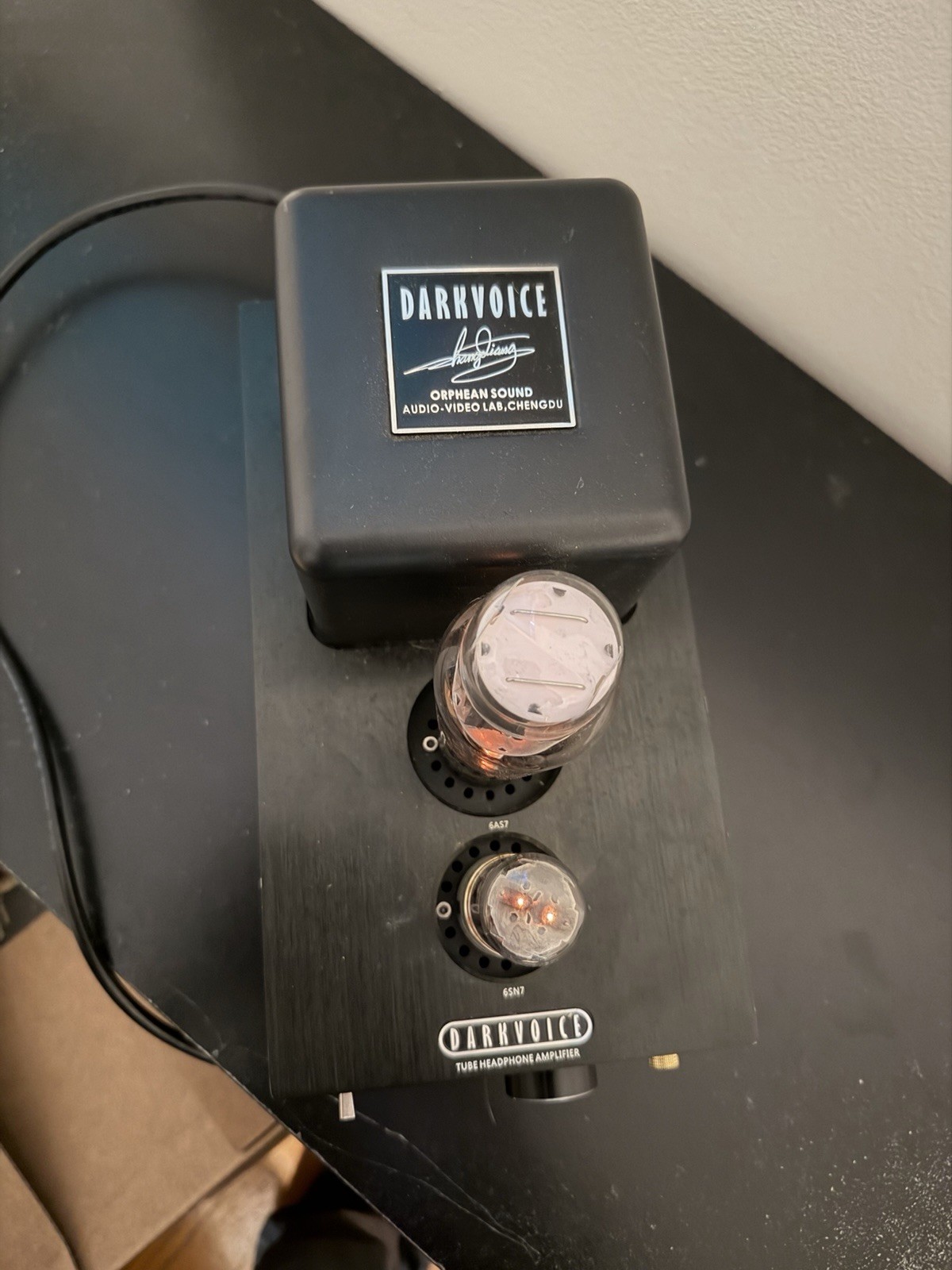

Photos from current listings. Actual item, color, and included accessories may vary.
Tube Headphone Amp Buying Guide
A tube headphone amp uses vacuum tubes for voltage gain or buffering, adding harmonic coloration and often high output impedance that interact with headphone load. The core trade-off is tubey warmth and voltage swing versus noise floor, microphonics, heat, and impedance mismatch. Buy a tube amp only when you want deliberate coloration and your headphones have stable, high impedance or benign load; skip tubes for low-impedance, high-sensitivity IEMs where solid-state noise and output impedance win.
Median $10,105.00 · Pre-owned listings
Key takeaways
- Tube topologies split into OTL (output-transformerless, high Z out, best with 100-300+ ohm dynamics), transformer-coupled (low Z out, drives planars), and hybrid (tube gain + solid-state buffer, low Z out, low heat).
- Output impedance from OTL designs can reach tens of ohms, shifting frequency response of low-impedance headphones by several dB per the damping-factor rule (Zhp / (Zhp + Zout)).
- Tube families differ: 12AX7/ECC83 high gain, 12AU7/ECC82 low gain, 6922/6DJ8 low noise, 6AS7/6080 high current for OTL output; 6V6/EL84 power pentodes in single-ended transformer designs.
At a glance
- Category
- DACs & Headphone Amplifiers
- Last updated
- Nov 25, 2026
Current offers
Highlights
- Tube topologies split into OTL (output-transformerless, high Z out, best with 100-300+ ohm dynamics), transformer-coupled (low Z out, drives planars), and hybrid (tube gain + solid-state buffer, low Z out, low heat).
- Output impedance from OTL designs can reach tens of ohms, shifting frequency response of low-impedance headphones by several dB per the damping-factor rule (Zhp / (Zhp + Zout)).
- Tube families differ: 12AX7/ECC83 high gain, 12AU7/ECC82 low gain, 6922/6DJ8 low noise, 6AS7/6080 high current for OTL output; 6V6/EL84 power pentodes in single-ended transformer designs.
- Noise floor and microphonics separate tiers: AC-heated entry amps hum; DC-regulated heaters, star grounding, and socket dampers cut hum to inaudible levels with sensitive headphones.
Best use cases
- Best fit: 300-ohm Sennheiser HD 6XX/HD 800 or 250-ohm Beyerdynamic on an OTL amp—high impedance tames output-Z effects and voltage swing suits high-Z loads. Skip hybrid solid-state for these if you want maximum tube character.
- Best fit: low-impedance planar magnetics (Hifiman, Audeze) on a transformer-coupled or hybrid amp with under 2-ohm output impedance. Skip OTL amps here—they roll off bass and bloat midbass.
- Wrong fit: high-sensitivity IEMs (under 32 ohm, over 110 dB/mW) on any tube amp—hiss, channel imbalance, and output-Z coloration dominate. Use a solid-state dongle instead.
- Wrong fit: desktop stacks needing pristine transparency for critical mixing—tubes add THD and noise. Choose a clean solid-state amp and add tubes only as a second flavor.
Buying tips
- Match output impedance: aim for Zout under 1/8 of headphone impedance (rule of eighths). A 300-ohm headphone needs Zout under 37 ohms; a 32-ohm headphone needs under 4 ohms.
- Pick topology by headphone: OTL for 100-300+ ohm dynamic headphones, transformer-coupled or hybrid for planars and low-Z dynamics; hybrid if you need low heat and low noise.
- Budget for tube rolling: check socket type (9-pin noval vs 8-pin octal) and heater current headroom. 6922/6DJ8 and 12AU7 families have broad, affordable NOS and new-production stock.
- Verify power supply: DC-regulated heater supplies and choke-filtered B+ reduce hum versus simple RC-filtered AC heaters. A headphone amp with 300V+ B+ rails swings enough voltage for 300-ohm loads.
Specs
| Topology | OTL / Transformer / Hybrid |
|---|---|
| Output Impedance | <1 ohm to 60 ohm |
| Tube Complement | 12AX7 / 6922 / 6AS7 / EL84 |
| Power Output | 0.5-2 W into 32-300 ohm |
Related searches
What to check before buying
- Measure headphone impedance and sensitivity: if under 32 ohm or over 110 dB/mW, choose a low-noise hybrid or skip tubes entirely.
- Confirm desk space and ventilation: tubes run hot; leave 2-3 inches clearance above and around the chassis, and keep away from flammable surfaces.
- Check input/output: rear RCA line input for a DAC, 6.35mm (1/4-inch) or 4-pin XLR headphone out; preamp outputs if driving powered speakers.
- Plan tube access: top-mounted sockets for easy rolling; confirm the amp ships with tubes and that replacements of the same family are available.
FAQ
Data sources: eBay / Amazon listings and product attribute feeds. Updated Nov 25, 2026.
Some links on this page are affiliate links. If you buy after clicking one, we may earn a commission at no extra cost to you. This does not change which products appear here or their order. Affiliate disclosure.