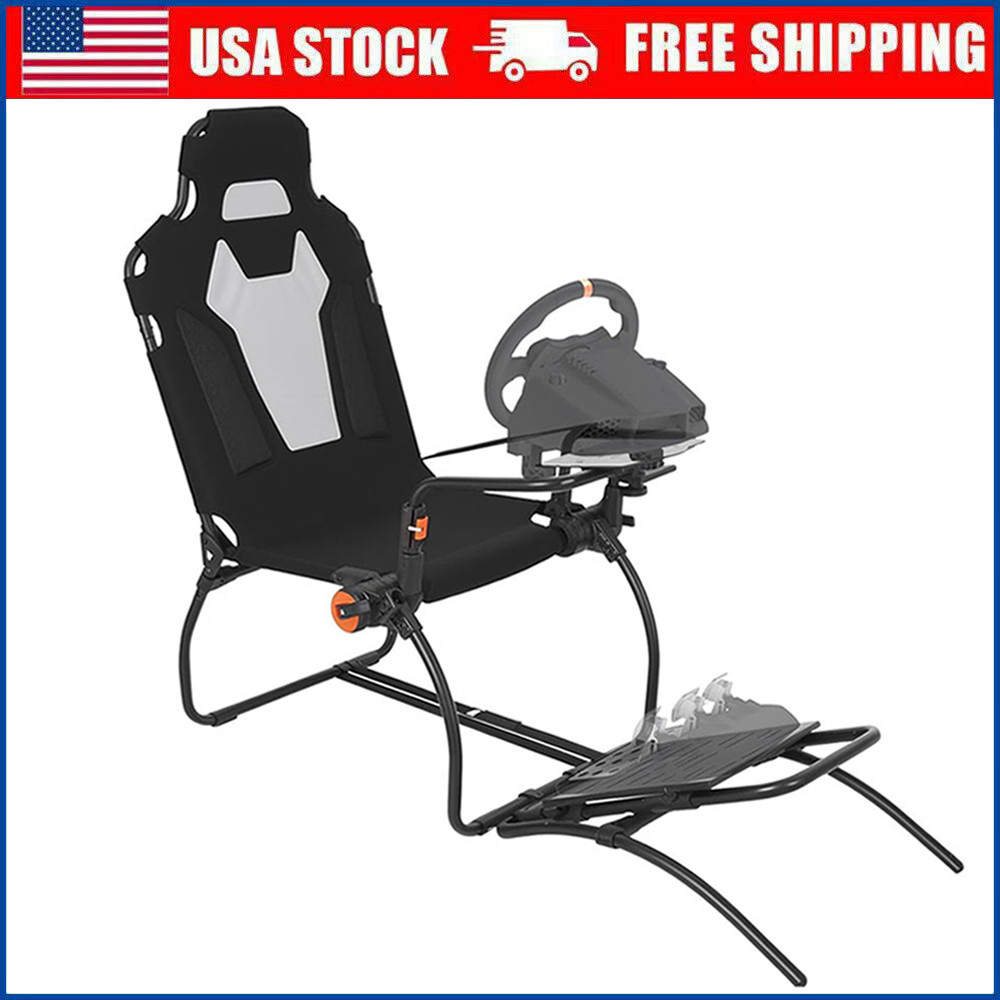

Photos from current listings. Actual item, color, and included accessories may vary.
Sim Racing Wheel Stand Buying Guide
A wheel stand is the minimum viable upgrade for force-feedback realism, but most buyers misjudge pedal-plate flex and wheel-deck height before they ever clamp a base down. Decide between a foldable stand and a full cockpit by measuring your storage footprint and whether you run load-cell pedals. Compatible with Logitech G29/G920/G923 and Thrustmaster T248/T300, these stands are steel-frame platforms—not universal rigs for direct-drive torque.
Key takeaways
- Foldable wheel stands use alloy steel tube frames with hinge locks; rigidity depends on leg cross-bracing and deck thickness, not seat presence.
- Wheel-deck tilt and height adjustability determine whether a stand fits your seated eye line and shifter reach; fixed decks force awkward posture.
- Pedal-plate angle and mounting holes matter most: load-cell brake pedals need a reinforced plate to avoid flex under high-pressure braking.
At a glance
- Category
- Sim Racing Cockpits & Mounts
- Last updated
- Nov 28, 2026
Current offers
Highlights
- Foldable wheel stands use alloy steel tube frames with hinge locks; rigidity depends on leg cross-bracing and deck thickness, not seat presence.
- Wheel-deck tilt and height adjustability determine whether a stand fits your seated eye line and shifter reach; fixed decks force awkward posture.
- Pedal-plate angle and mounting holes matter most: load-cell brake pedals need a reinforced plate to avoid flex under high-pressure braking.
- Stand-only units lack a seat and frame rails; full cockpits add a seat and pedal deck but sacrifice foldability and storage space.
Best use cases
- Best fit: apartment or shared-space sim racers who fold the stand after each session—choose a hinged alloy-steel stand with adjustable wheel and pedal decks.
- Best fit: desk-based PC racers using a G29/G920/G923 or T248—a stand-alone foldable cockpit positions the wheel at desk height without a permanent rig.
- Wrong fit: direct-drive base owners pushing high torque should skip stand-only units and choose a full cockpit with a rigid seat frame.
- Wrong fit: buyers wanting a complete seated rig should skip wheel stands and pick a cockpit-with-seat; stands require your own chair and monitor setup.
Buying tips
- Check the pedal plate for a reinforced, angle-adjustable deck if you run a load-cell brake; thin plates flex and dull braking feel.
- Prioritize alloy steel over thinner mild steel for the main uprights; cross-bracing at the leg junction is what kills wheel wobble.
- Choose a folding hinge with a locking pin or clamp—friction-only hinges loosen over time and cause deck play.
- Compare wheel-deck height range against your seated shoulder height; fixed-height decks force you to adapt your chair instead of the rig.
Specs
| Frame Material | Alloy steel tube vs mild steel |
|---|---|
| Foldability | Hinged foldable vs fixed cockpit |
| Wheel Deck Adjust | Tilt + height vs fixed deck |
| Pedal Plate | Reinforced adjustable vs flat clamp |
Related searches
What to check before buying
- Measure your floor space and folded footprint—most foldable stands still need roughly a chair-depth clearance when deployed.
- Confirm your wheelbase's mounting pattern (Logitech and Thrustmaster clamp or bolt patterns differ) before assuming bolt-on fit.
- Check pedal deck height and angle against your leg length when seated; short decks push pedals too close for taller drivers.
- Verify floor surface and stand feet: hard floors need rubber pads to stop sliding under force-feedback kickback.
FAQ
Data sources: eBay / Amazon listings and product attribute feeds. Updated Nov 28, 2026.
Some links on this page are affiliate links. If you buy after clicking one, we may earn a commission at no extra cost to you. This does not change which products appear here or their order. Affiliate disclosure.