
Photos from current listings. Actual item, color, and included accessories may vary.
Sim Racing Rig Buying Guide
A sim racing rig is a dedicated frame—from a foldable wheel stand to a full aluminum-profile cockpit—that rigidly mounts your wheel base, pedals, and seat so force feedback and load-cell braking travel into the chassis, not your furniture. The core trade-off is stiffness versus footprint and cost: entry stands flex under high-torque direct-drive wheels, while profile cockpits eliminate flex but demand floor space and assembly time. The decision rule: match chassis rigidity to your wheel's peak torque and pedal type—anything above roughly 8 Nm or a load-cell brake needs a full-frame profile cockpit, not a stand.
Median $204.81
Key takeaways
- Chassis material splits into three tiers: steel-tube stands (entry, flex-prone), hybrid steel/plate rigs (mid), and 8020-style aluminum extrusion cockpits (rigid, modular, load-cell ready).
- Aluminum profile size matters: 40x40 mm extrusion suits belt wheels up to ~8 Nm, while 40x80 mm and 80x80 mm base rails resist direct-drive torque and heavy pedal loads.
- Wheelbase torque rating is the primary frame selector—direct-drive units at 8-25 Nm generate forces that twist thin stands and can loosen bolted joints over time.
At a glance
- Category
- Sim Racing Cockpits & Mounts
- Last updated
- Nov 27, 2026
Current offers
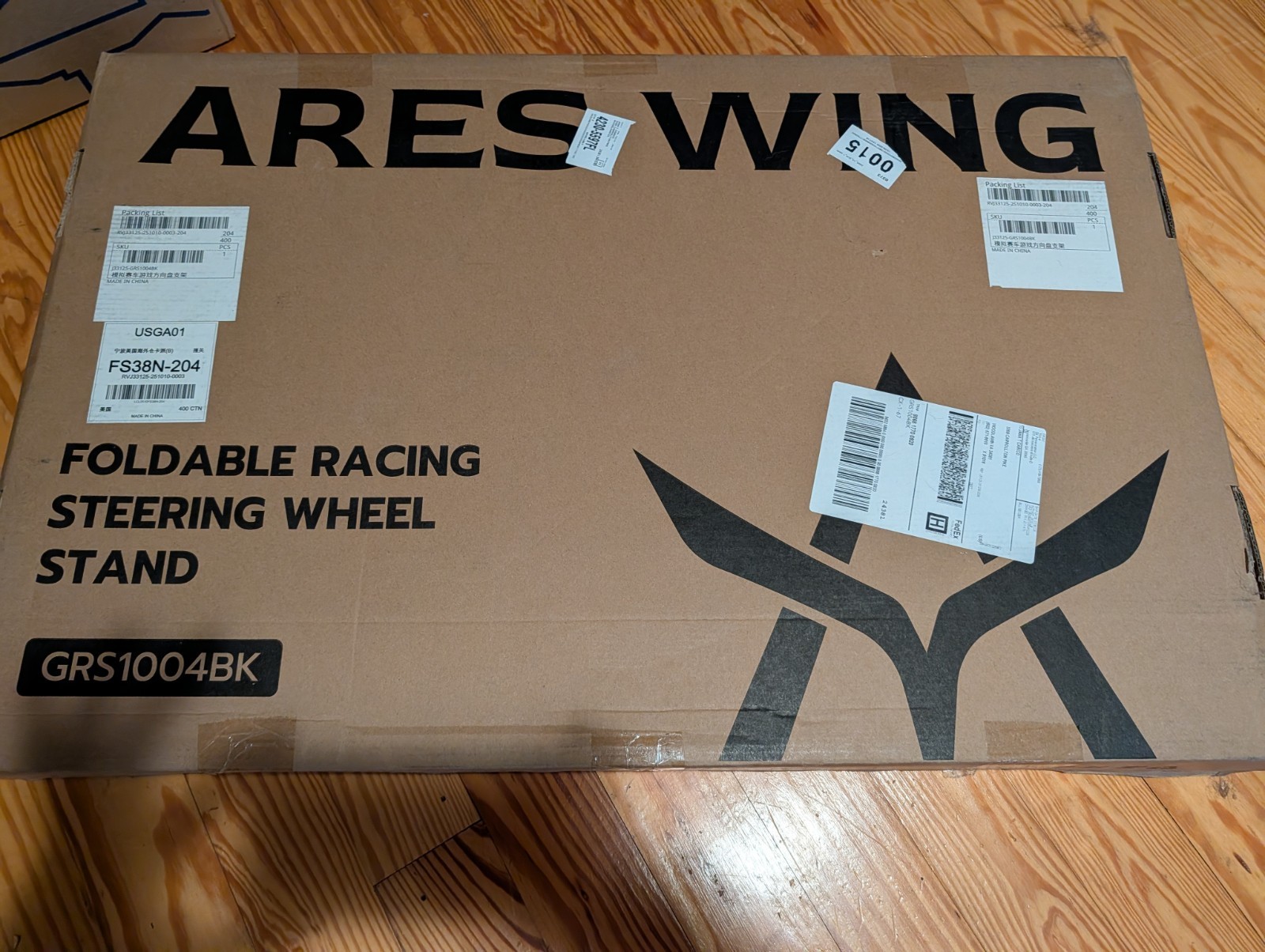 Foldable Sim Racing Wheel Stand Cockpit for Logitech Fanatec Thrustmaster$75.00View on eBay
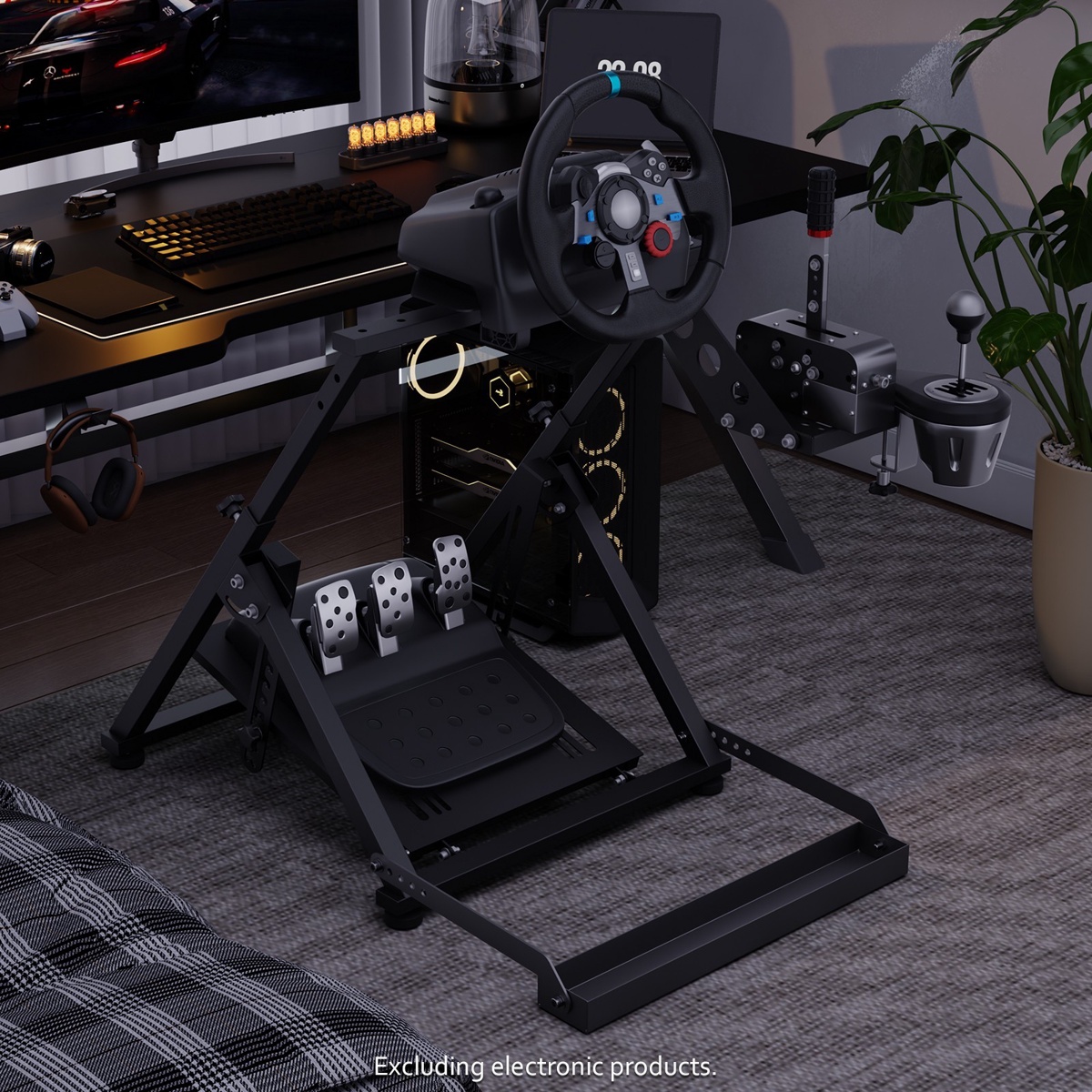 Hottoby Steering Racing Wheel Stand Foldable Sim Cockpit Fits Logitech G920 G923$105.99View on eBay
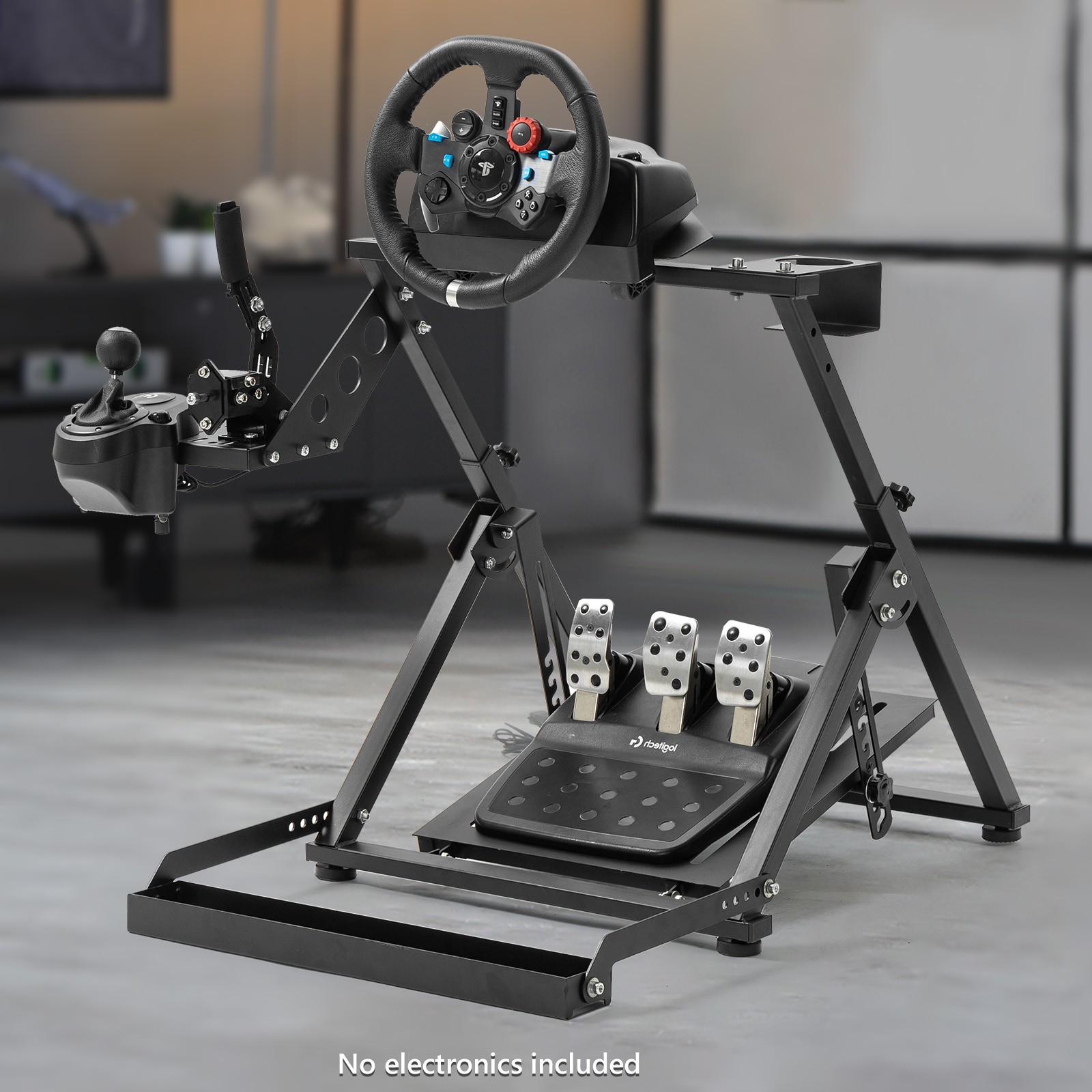 Marada Racing Wheel Stand Sim Adjustable Cockpit Alloy Fits Logitech G920 G923$109.99View on eBay
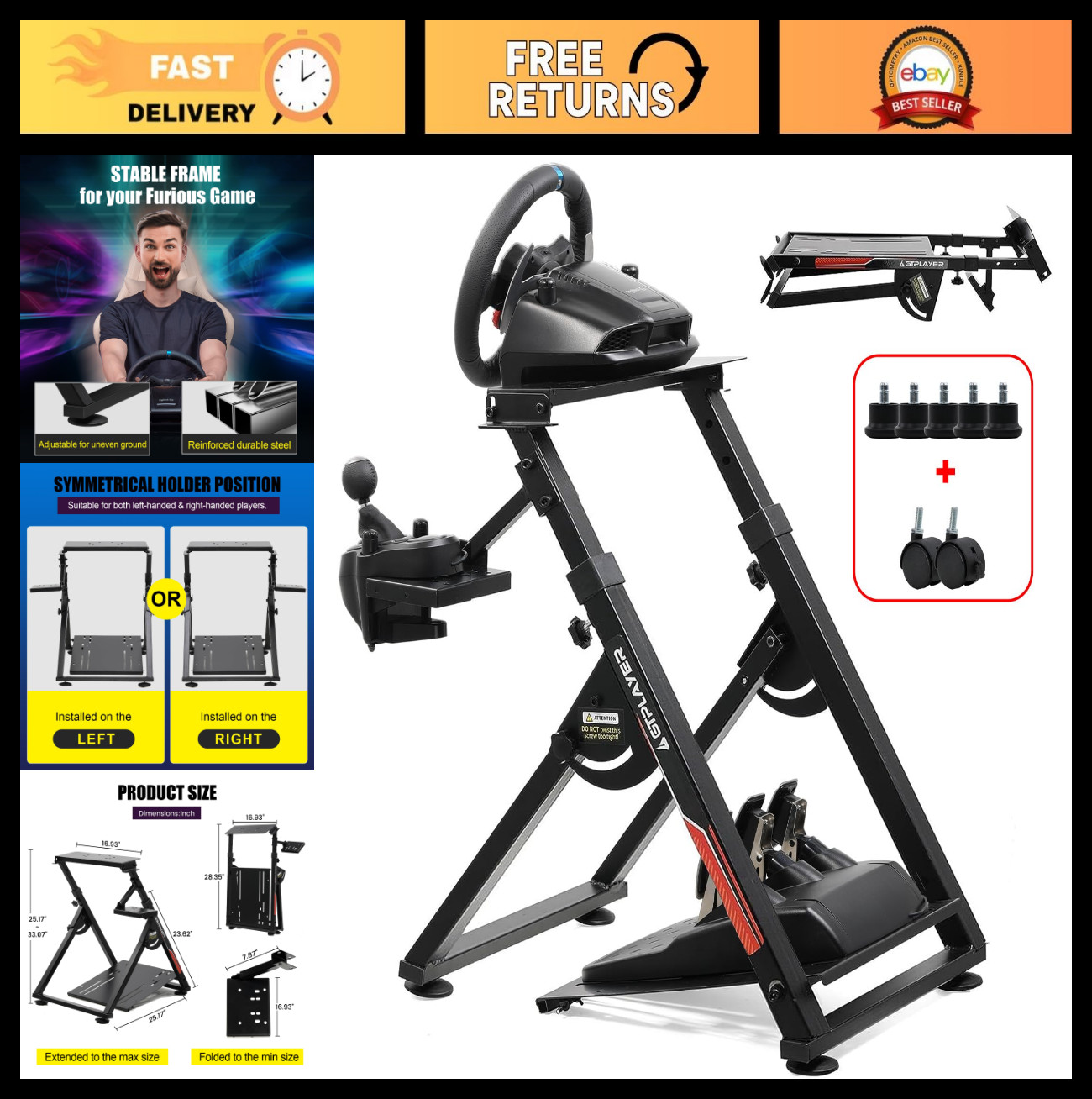 Adjustable Sim Racing Wheel Stand Cockpit for Logitech & Thrustmaster - Black$119.69View on eBay
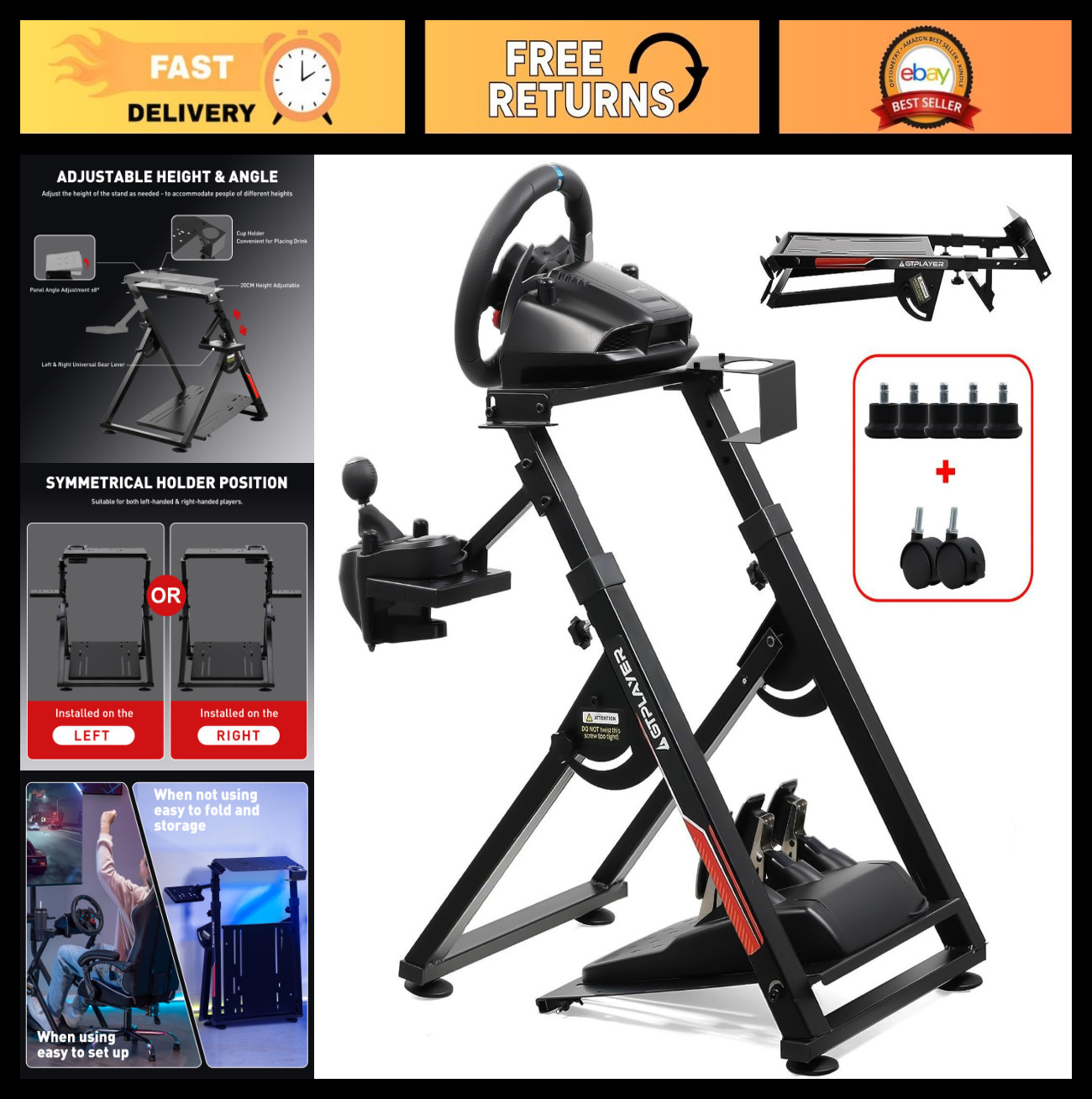 Sim Racing Wheel Stand Cockpit for Logitech & Thrustmaster - Adjustable, Deep Bl$147.24View on eBay
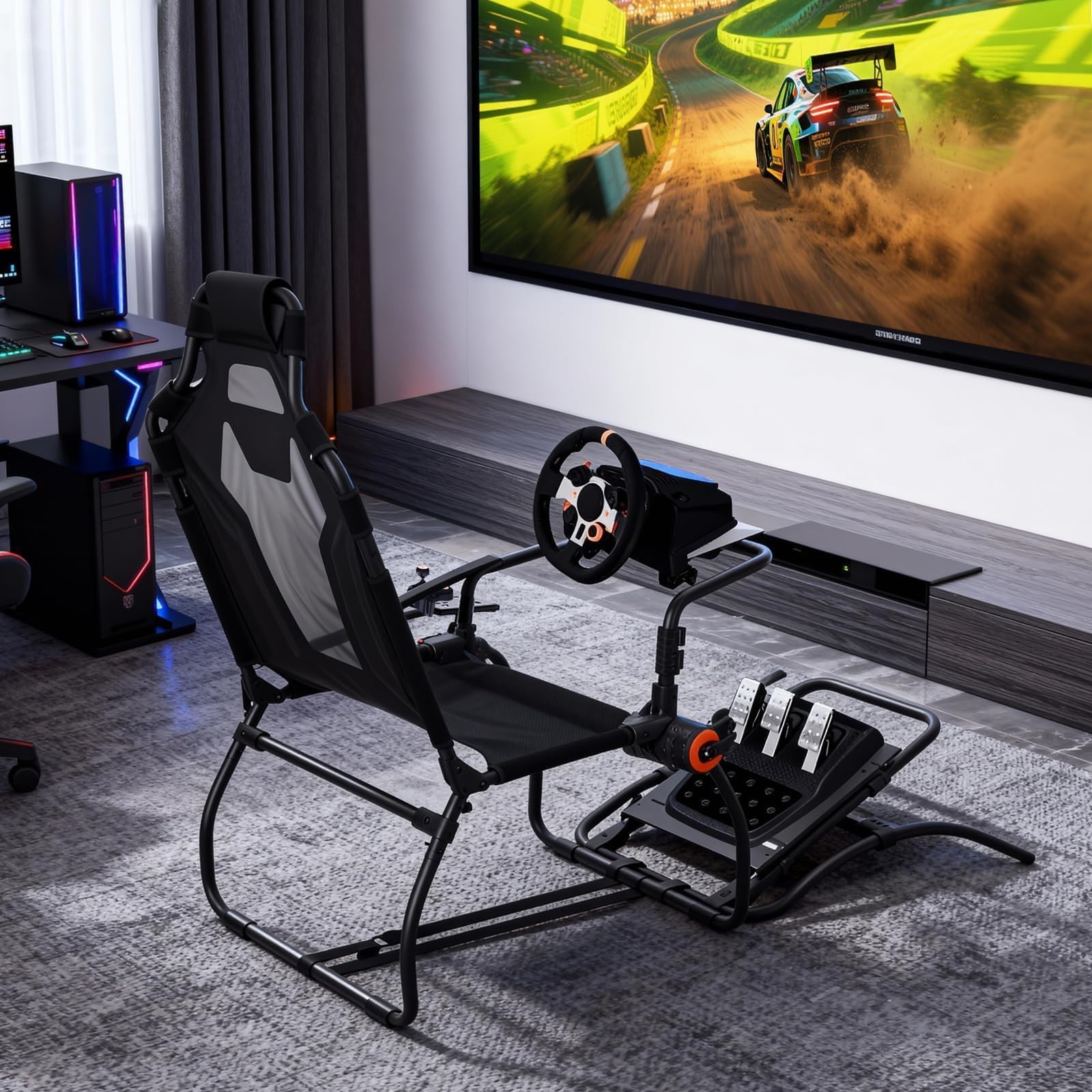 Racing Wheel Stand Sim Racing Simulator Cockpit for G923/G920/G29 & Thrustmaster$149.62View on eBay
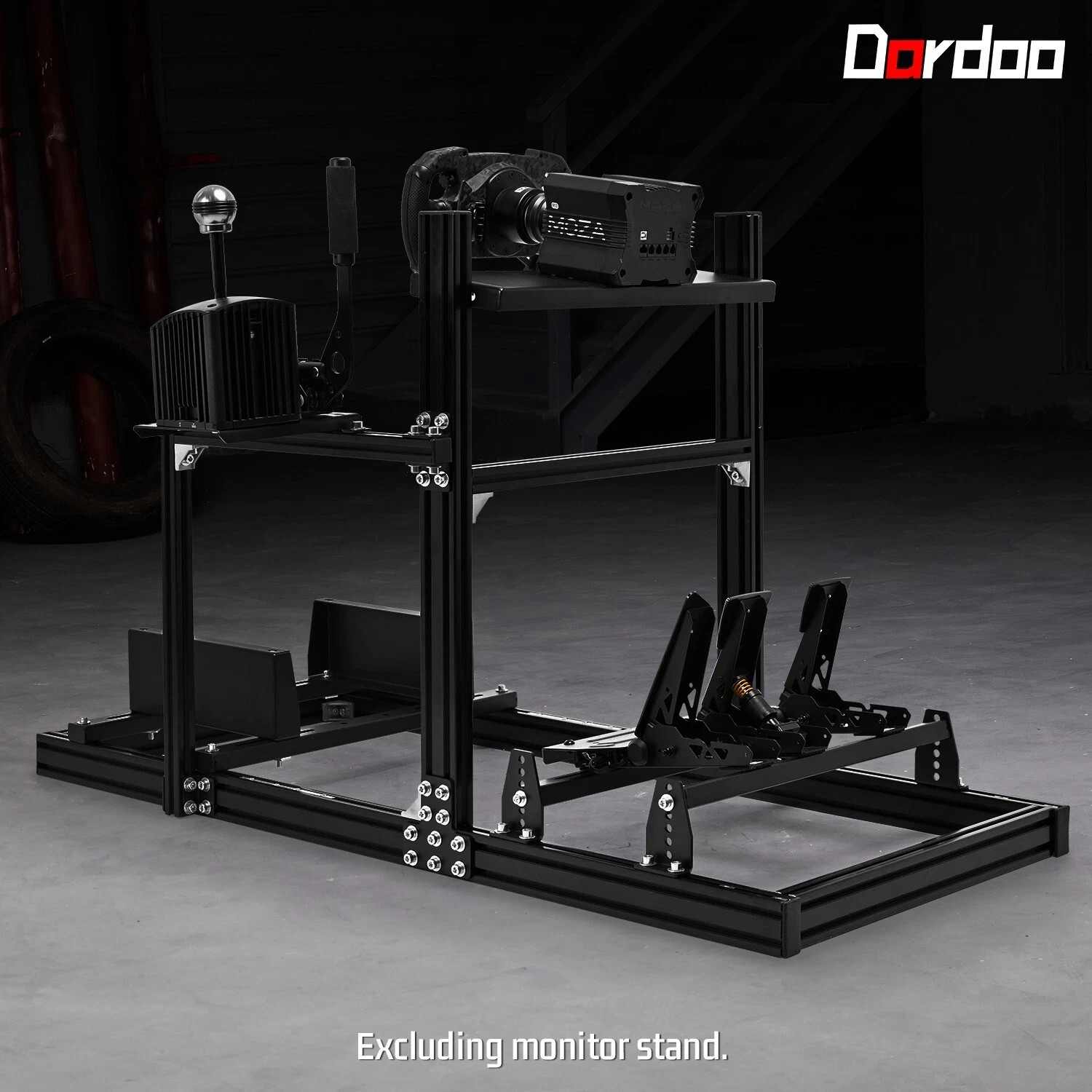 Dardoo 3060 Aluminum Racing Sim Cockpit Fits Logitech G923 Thrustmaster Fanatec$259.99Last checked Nov 18, 2026View on eBay
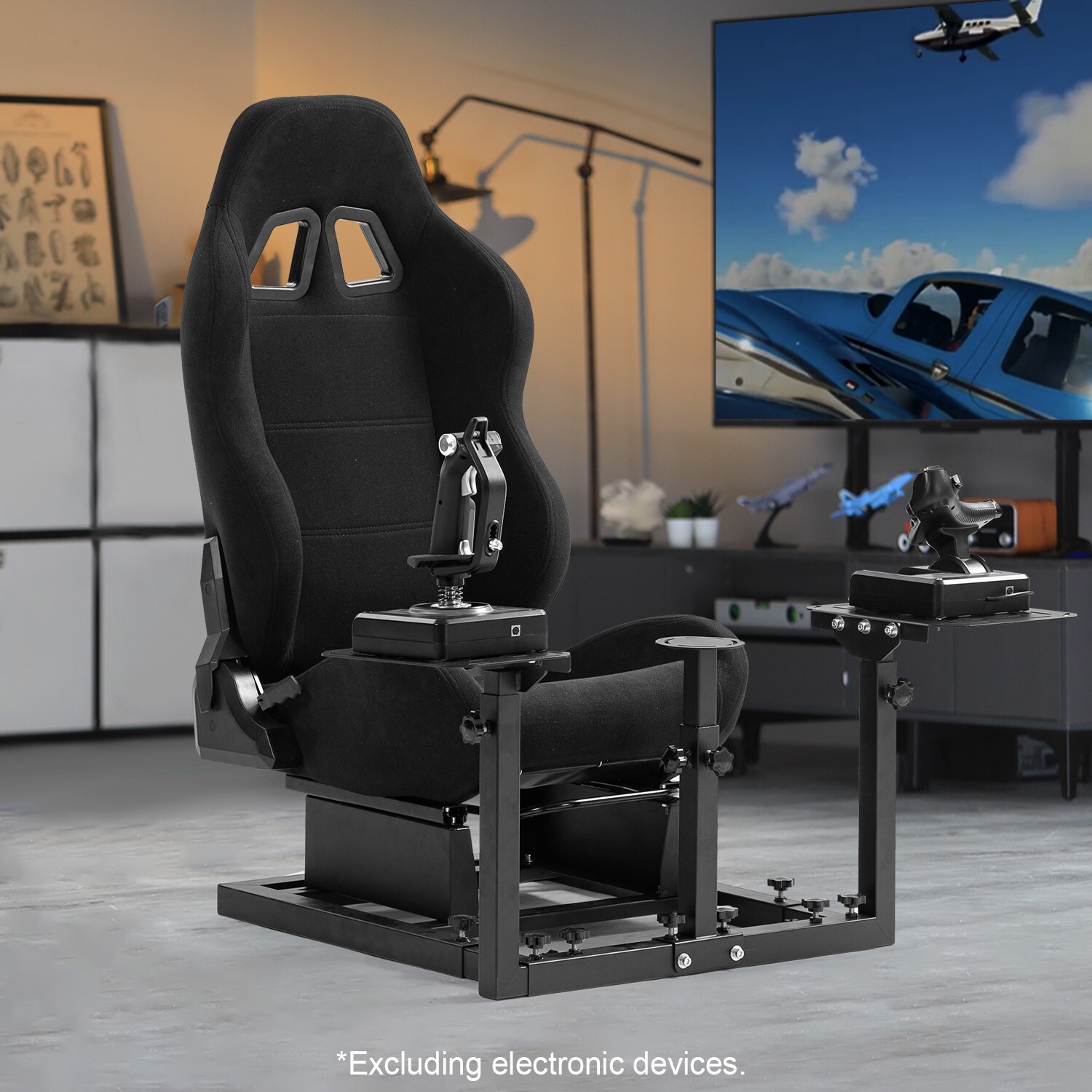 Marada Racing Flight Sim Cockpit With Adjustable Black Seat Fit For Thrustmaster$269.99Last checked Nov 18, 2026View on eBay
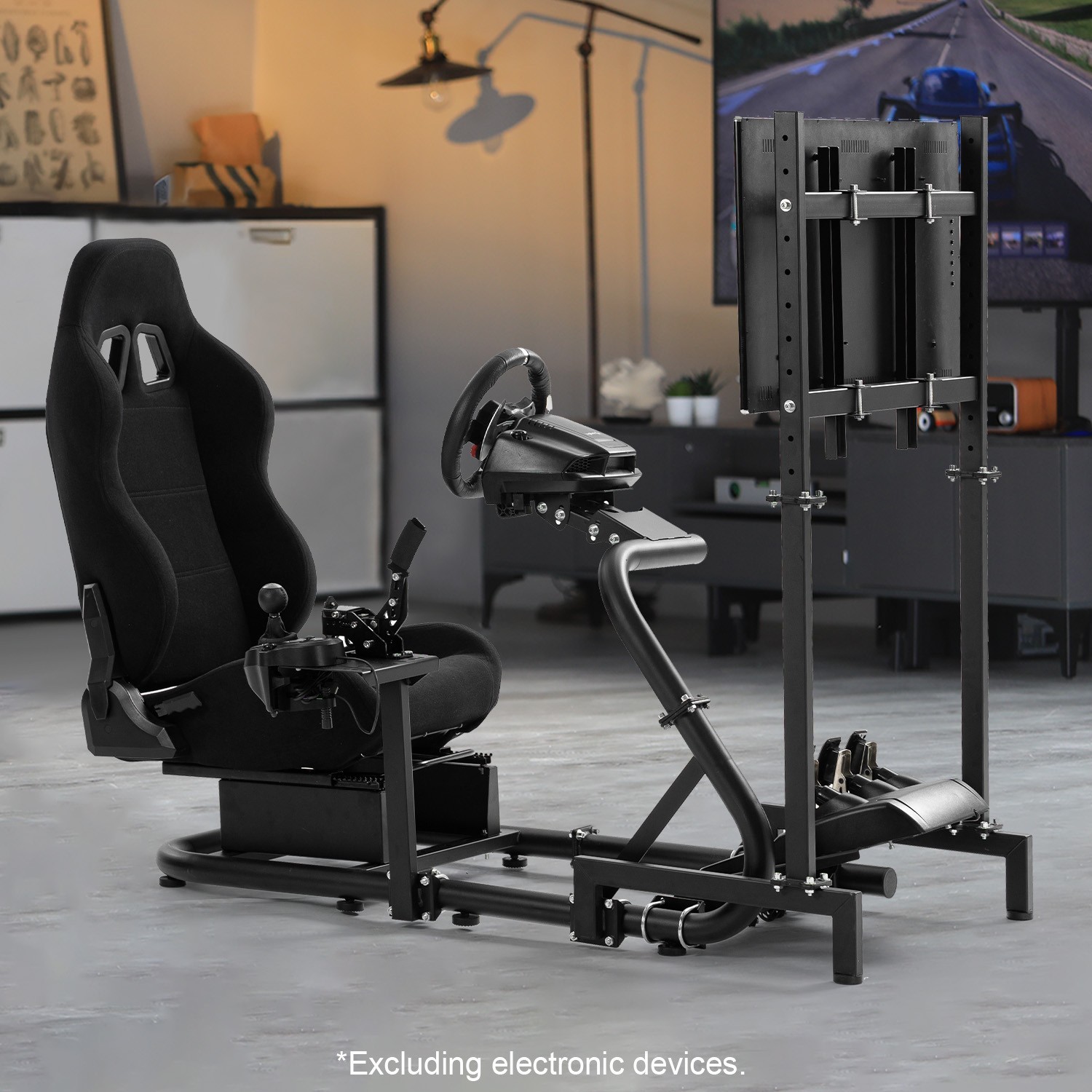 Marada Racing Sim Cockpit Semi Open With Monitor Stand & Black Seat Fit Logitech$385.99Last checked Nov 18, 2026View on eBay
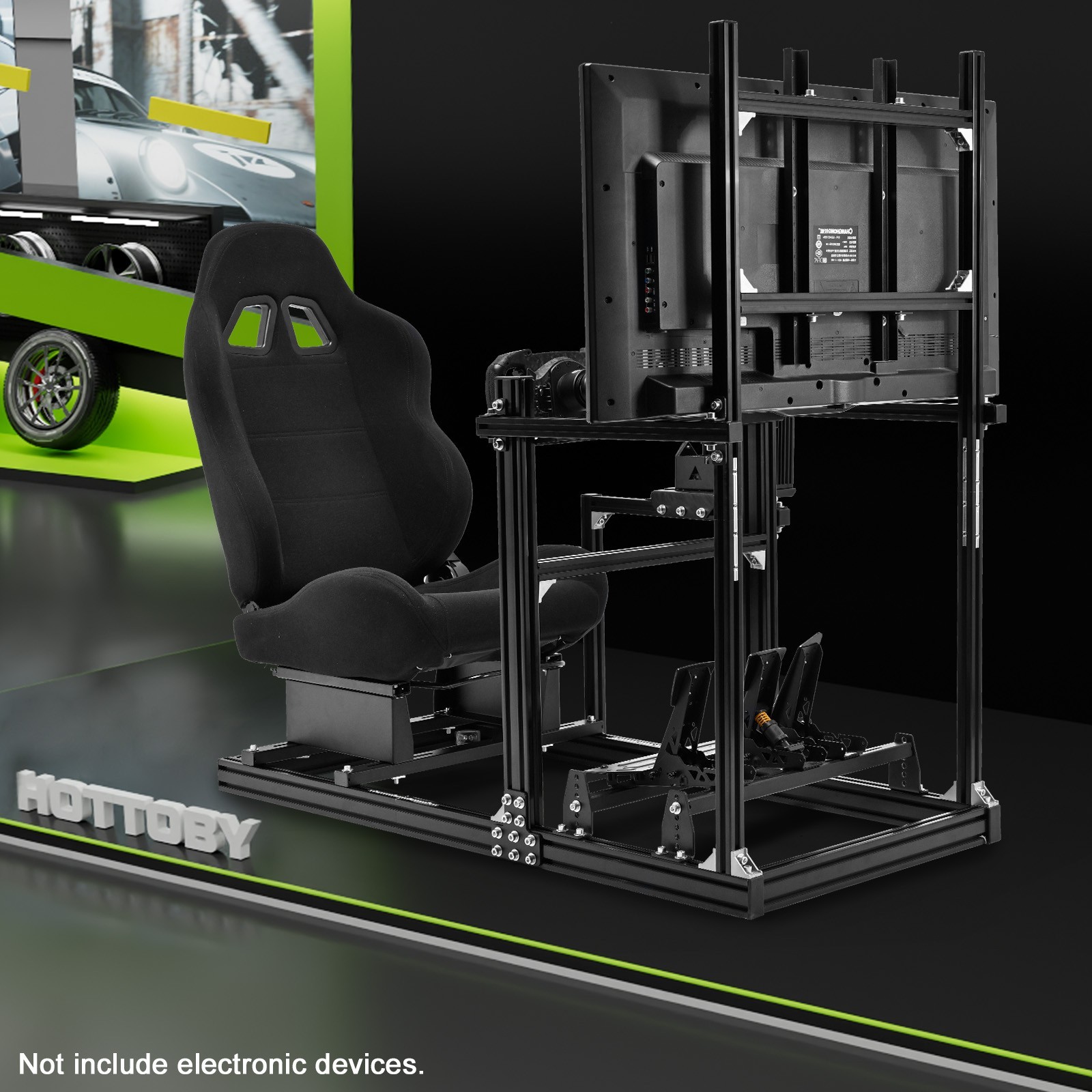 Hottoby 3060 Aluminum Racing Sim Cockpit With Black Seat & TV Stand Fit Logitech$489.99Last checked Nov 18, 2026View on eBay
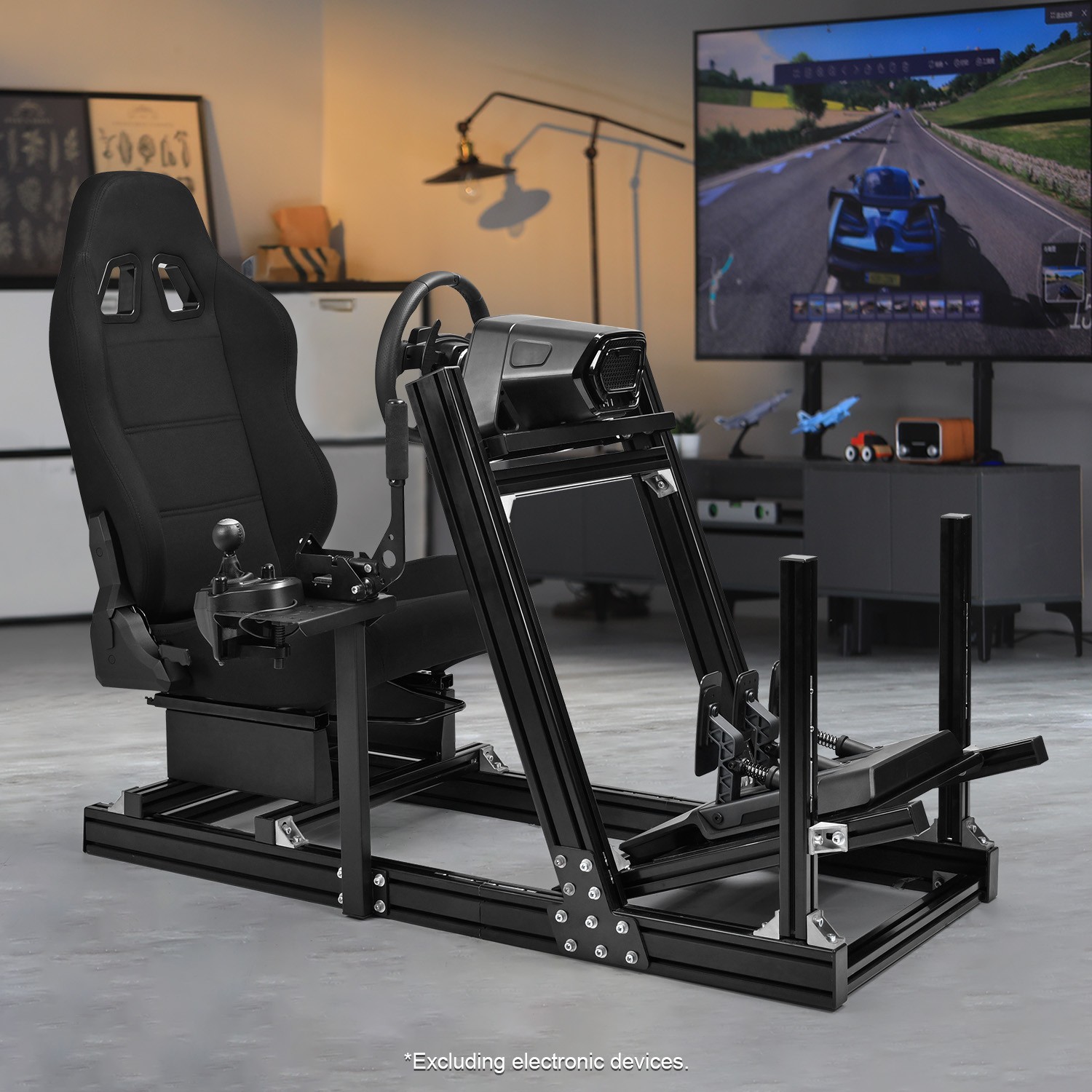 Marada 4080 Aluminum F1 Racing Sim Cockpit With Seat Fits Logitech Thrustmaster$499.99Last checked Nov 18, 2026View on eBay
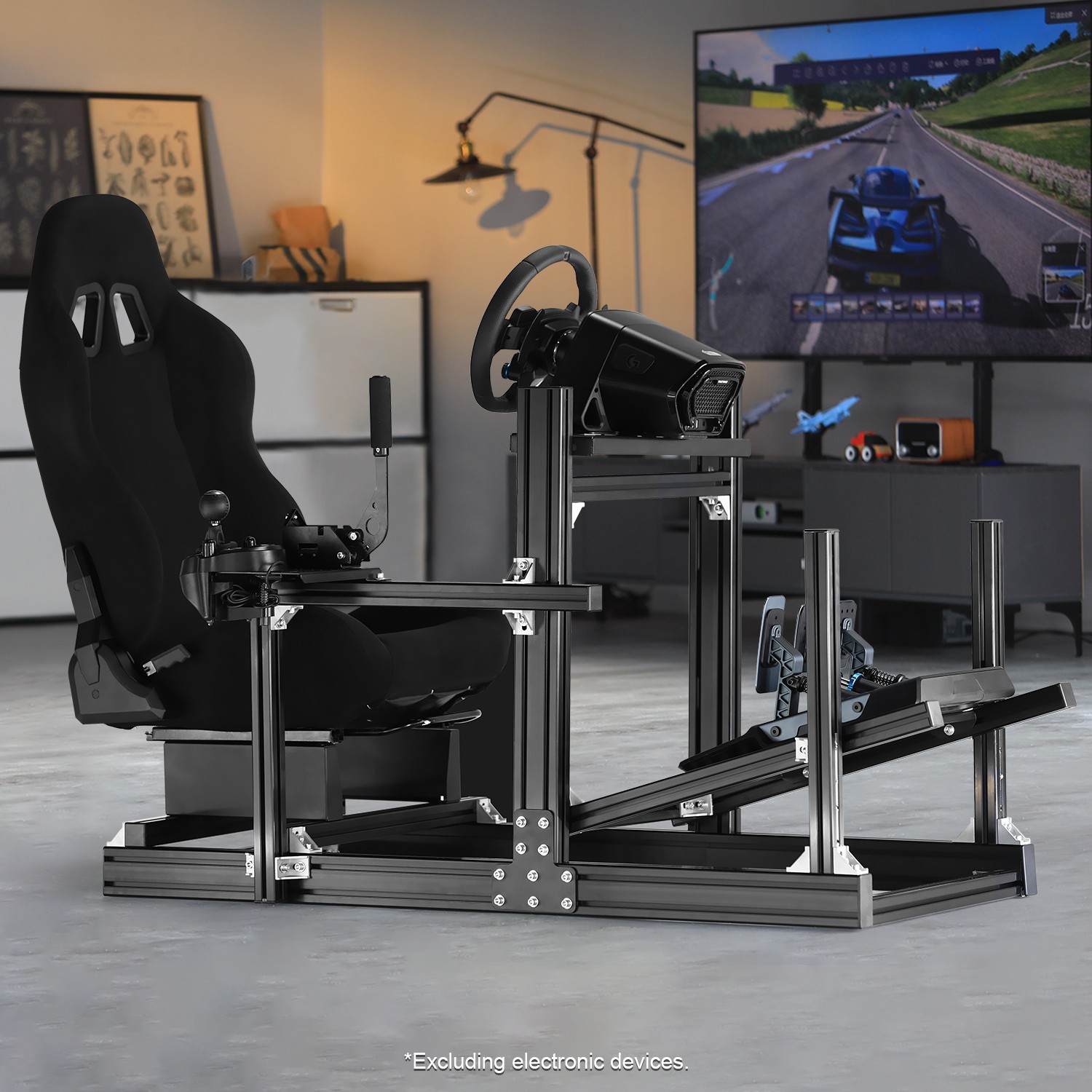 Marada 4080Aluminum F1 Racing Sim Cockpit With Seat Fits Logitech/Thrustmaster$519.99Last checked Nov 18, 2026View on eBay
Highlights
- Chassis material splits into three tiers: steel-tube stands (entry, flex-prone), hybrid steel/plate rigs (mid), and 8020-style aluminum extrusion cockpits (rigid, modular, load-cell ready).
- Aluminum profile size matters: 40x40 mm extrusion suits belt wheels up to ~8 Nm, while 40x80 mm and 80x80 mm base rails resist direct-drive torque and heavy pedal loads.
- Wheelbase torque rating is the primary frame selector—direct-drive units at 8-25 Nm generate forces that twist thin stands and can loosen bolted joints over time.
- Seat mounting standards differ: profile cockpits accept bottom-mount bucket seats or side-mount rails, while many stands ship with no seat and rely on a separate seat frame or office chair.
Best use cases
- Best fit: a 40x80 mm aluminum-profile cockpit with side-mount seat rails for a direct-drive wheel (8+ Nm) and load-cell pedals—skip foldable stands, which flex and dull force feedback.
- Best fit: a steel-tube wheel stand with pedal plate for a belt-driven wheel (5-8 Nm) and potentiometer pedals in a shared living space—pick one with a fold-flat hinge and locking casters.
- Wrong fit: a low-cost X-frame stand paired with a 12 Nm direct-drive base or hydraulic load-cell brake—the chassis will oscillate and pedal pressure will deflect the plate; step up to a full profile rig instead.
- Best fit: a mid-tier hybrid rig with integrated monitor mount for a single-screen desk-replacement setup—choose one rated for the combined wheel and monitor weight, not the wheel alone.
Buying tips
- Size the frame to wheel torque: belt wheels to 8 Nm run fine on 40x40 profile or sturdy steel; 8-15 Nm needs 40x80 base rails; 15+ Nm direct drive warrants 80x80 uprights and a reinforced wheel deck.
- Match pedal mounting to brake type: load-cell and hydraulic pedals need a rigid, pre-drilled pedal deck (often 3-5 mm steel or 40x80 profile); potentiometer pedals tolerate thinner plates.
- Measure your floor footprint first: a full cockpit typically occupies roughly 130-150 cm length by 60-70 cm width, plus 60-90 cm clearance behind for seat recline and cable routing.
- Check seat compatibility before buying: confirm bottom-mount or side-mount pattern and rail width, and whether the rig includes a seat or requires a separate bucket/office-chair adapter.
Specs
| Frame Material | Steel tube / aluminum extrusion / hybrid |
|---|---|
| Profile Size | 40x40 / 40x80 / 80x80 mm |
| Wheel Torque Support | Up to 8 / 15 / 25 Nm |
| Seat Mount | Bottom-mount / side-mount / none |
Related searches
What to check before buying
- Room and floor: measure length, width, and ceiling clearance for monitor placement; confirm the rig fits with seat fully reclined and door/desk clearance.
- Wheel and pedal interface: verify bolt pattern (typically 3-4 bolt wheel deck, pre-drilled pedal plate) matches your exact wheel base and pedal set.
- Seat and frame standard: confirm side-mount vs bottom-mount seat rails, rail spacing, and whether a seat or office-chair adapter is included.
- Power and cable path: plan a route for wheel USB, pedal cable, and monitor/PC power so cables don't cross the pedal travel or seat rails.
FAQ
Data sources: eBay / Amazon listings and product attribute feeds. Updated Nov 27, 2026.
Some links on this page are affiliate links. If you buy after clicking one, we may earn a commission at no extra cost to you. This does not change which products appear here or their order. Affiliate disclosure.