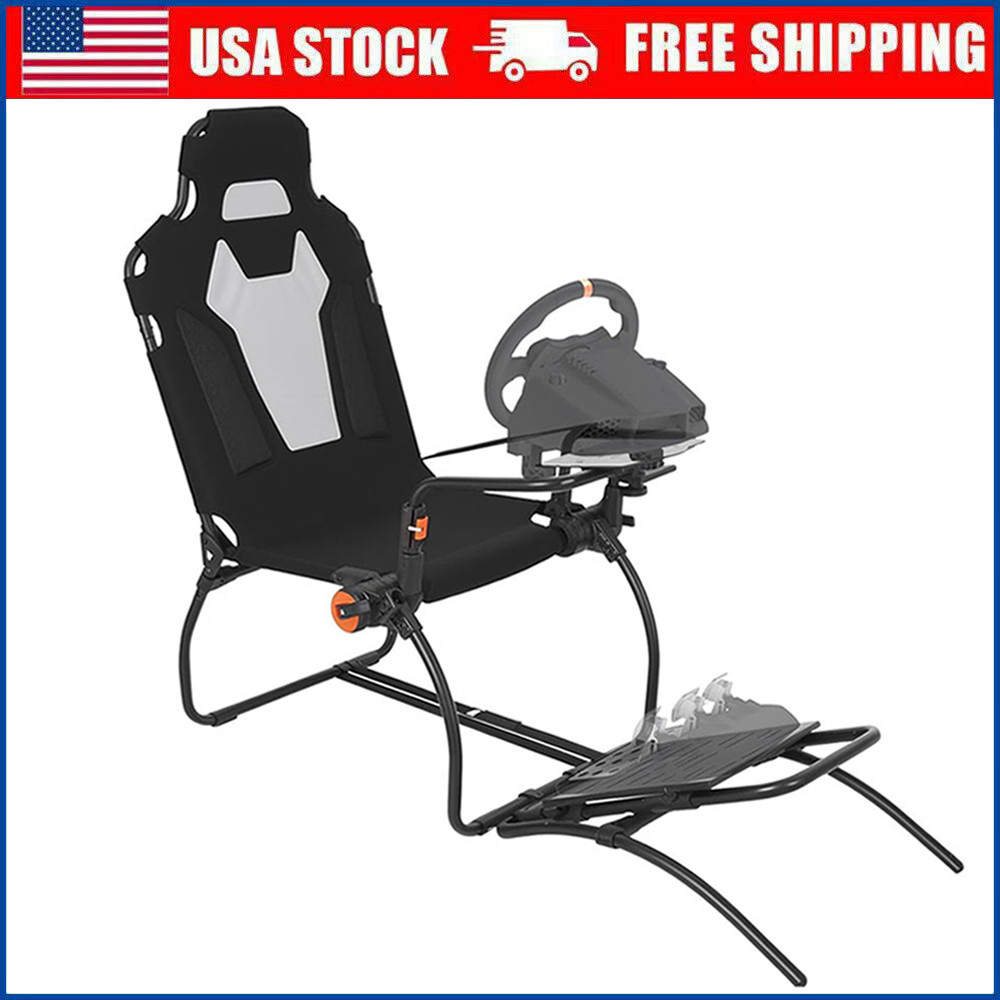

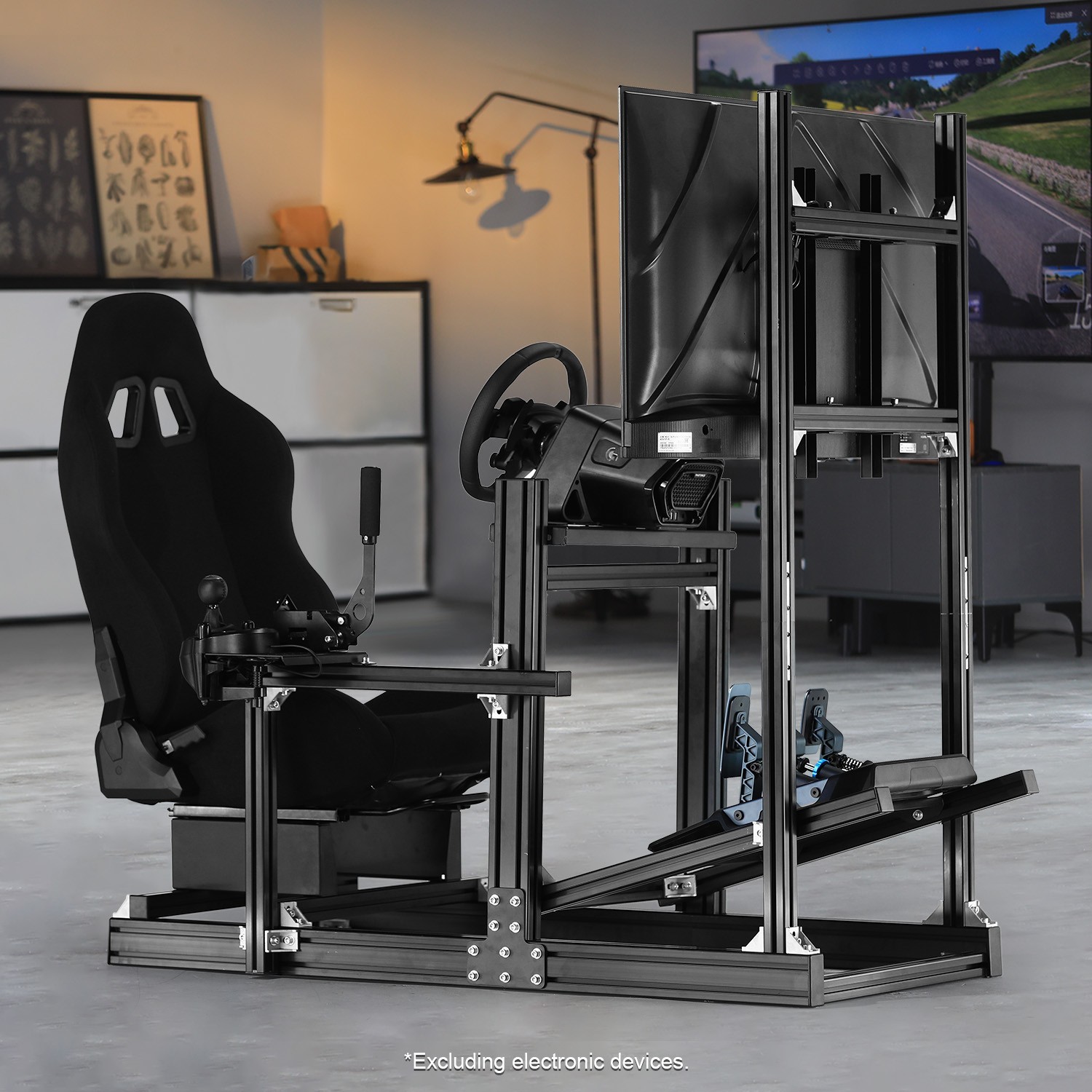
Photos from current listings. Actual item, color, and included accessories may vary.
Sim Racing Stand With Seat Buying Guide
A sim racing stand with seat is a pre-assembled or bolt-together steel/aluminum frame that mounts a force-feedback wheel, pedals, and a dedicated racing seat at fixed or adjustable geometry. The core trade-off is frame rigidity versus foldability: welded or profile-extrusion rigs resist high-torque wheelbase flex, while folding tubular stands trade some stiffness for storage. Buy a profile or heavy alloy frame if you run a direct-drive base above 8 Nm or load-cell pedals; choose a folding stand only for entry-level belt/gear wheels under 6 Nm.
Median $374.95
Key takeaways
- Frame architecture decides flex: 40x40 mm or larger aluminum extrusion with corner brackets is the stiff standard; thin 25-30 mm round steel tubes flex under direct-drive torque.
- Wheelbase torque rating is the primary compatibility metric: belt/gear bases (Logitech G29/G920/G923, Thrustmaster T300) need ~6 Nm stiffness; direct-drive units at 8-20 Nm require profile rigs with reinforced wheel decks.
- Pedal mounting must be rigid and angle-adjustable: load-cell brakes need a solid steel or extrusion pedal plate bolted at multiple points, not a single clamp or thin sheet.
At a glance
- Category
- Sim Racing Cockpits & Mounts
- Last updated
- Nov 28, 2026
Current offers
Highlights
- Frame architecture decides flex: 40x40 mm or larger aluminum extrusion with corner brackets is the stiff standard; thin 25-30 mm round steel tubes flex under direct-drive torque.
- Wheelbase torque rating is the primary compatibility metric: belt/gear bases (Logitech G29/G920/G923, Thrustmaster T300) need ~6 Nm stiffness; direct-drive units at 8-20 Nm require profile rigs with reinforced wheel decks.
- Pedal mounting must be rigid and angle-adjustable: load-cell brakes need a solid steel or extrusion pedal plate bolted at multiple points, not a single clamp or thin sheet.
- Seat mounting uses a standard 4-bolt pattern with dual-lock seat sliders; cloth-over-memory-foam seats are common, but fiberglass bucket seats with side brackets hold geometry better under braking.
Best use cases
- Pick a folding alloy stand with seat if you race on a belt/gear wheel under 6 Nm and must store the rig between sessions in a shared room.
- Pick a 40x40 extrusion cockpit with bucket seat and load-cell pedal plate if you run a direct-drive base or load-cell brakes and have a dedicated floor footprint.
- Skip any TV/monitor bundle unless the stand's monitor mast is rated for your panel: a separate 24-55 inch adjustable monitor stand is the correct add-on for triple or large single displays.
- Skip a fixed-geometry cockpit if multiple drivers of different heights share it; choose one with adjustable seat sliders and pedal deck distance instead.
Buying tips
- Match frame stiffness to wheelbase torque: 25-30 mm tubular steel suits gear/belt bases up to ~6 Nm; 40x40 mm or larger extrusion is required above 8 Nm direct drive.
- Measure your floor footprint first: a full cockpit with seat typically needs at least 130 x 60 cm, while folding stands collapse to roughly half that depth for storage.
- Confirm the wheel deck bolt pattern matches your base: Logitech G29/G920/G923 and Thrustmaster T300/TX use bottom-mount M6 patterns, while Fanatec and direct-drive bases often need a drilled or slotted deck.
- Choose a seat with dual-locking sliders and a 4-bolt base; cloth memory-foam recliners are comfortable for long stints, but fiberglass buckets with side mounts resist flex under heavy braking.
Specs
| Frame Material | Alloy steel tube vs aluminum profile |
|---|---|
| Profile Size | 25-30 mm tube vs 40x40 mm extrusion |
| Wheel Torque | Up to 6 Nm vs 8-20 Nm direct drive |
| Seat Type | Cloth memory foam vs fiberglass bucket |
Related searches
What to check before buying
- Measure available floor length and width: full rigs need roughly 130-170 cm depth including pedal deck and seat recline; folding stands need clearance to swing the wheel deck.
- Check your wheelbase clamp versus bolt mount: many stands include a tilt plate for clamp-style bases, but direct-drive bases should be hard-bolted through the deck.
- Verify pedal plate adjustability: distance and angle adjustment are needed to match your leg length and heel-and-toe position.
- Confirm monitor mounting separately: cockpit-mounted TV brackets and standalone 24-55 inch monitor stands are distinct parts, so plan the display support as its own purchase.
FAQ
Data sources: eBay / Amazon listings and product attribute feeds. Updated Nov 28, 2026.
Some links on this page are affiliate links. If you buy after clicking one, we may earn a commission at no extra cost to you. This does not change which products appear here or their order. Affiliate disclosure.