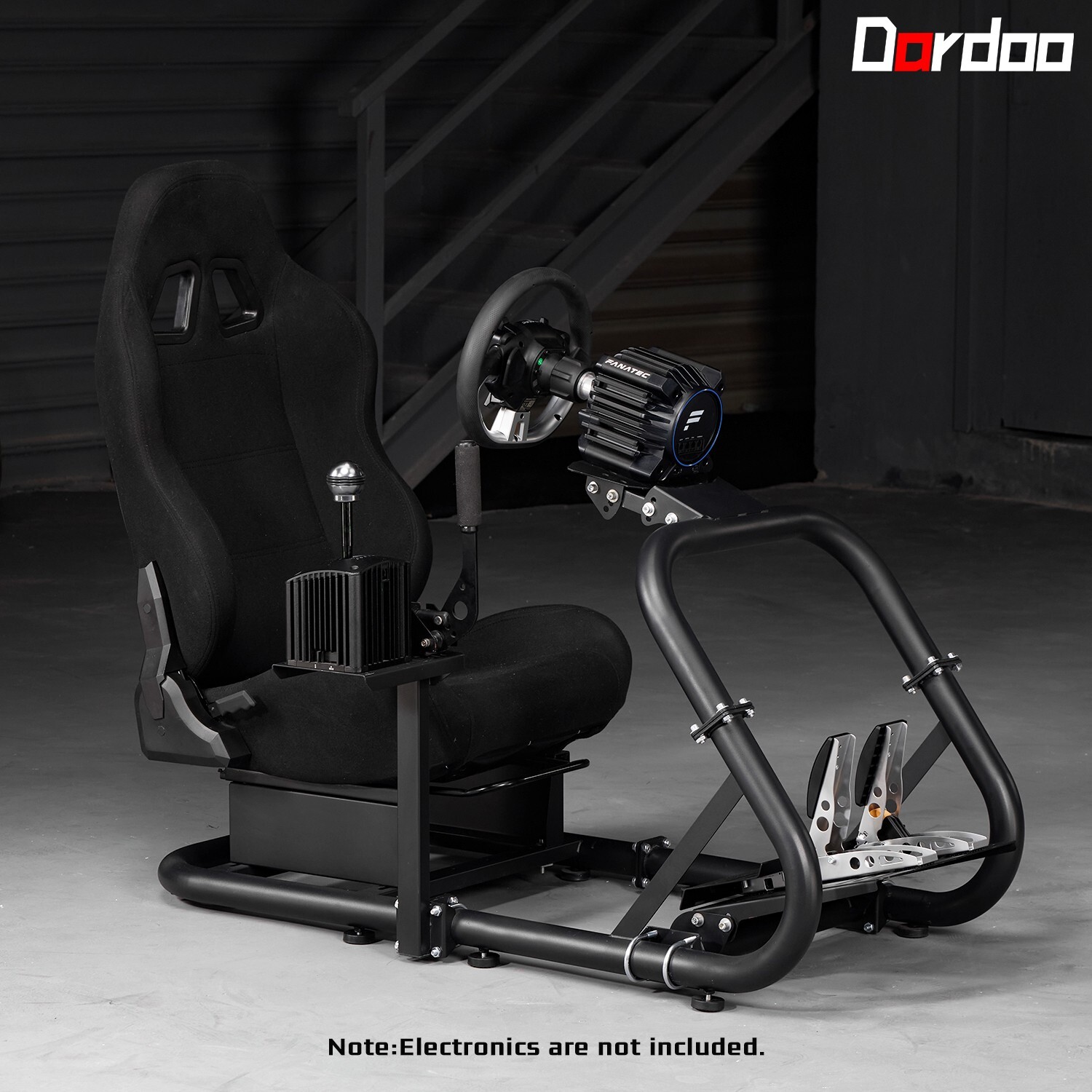

Photos from current listings. Actual item, color, and included accessories may vary.
Racing Simulator Frame Buying Guide
A racing simulator frame is the structural backbone that rigidly mounts your wheelbase, pedals, and seat so force feedback is transmitted to you, not lost in flex. The core trade-off is between steel tube frames (heavy, affordable, prone to flex under high-torque direct-drive wheels) and aluminum extrusion profile rigs (modular, stiffer, expandable, higher cost). Buy aluminum profile if you run a direct-drive wheelbase above 8 Nm or plan to add motion; choose steel if you use a belt-driven wheel under 8 Nm and need a low-cost, compact setup.
Key takeaways
- Aluminum profile rigs use 40x40mm, 40x80mm, or 80x80mm T-slot extrusion; 40x80mm base rails and 80x80mm uprights are the stiffness threshold for 10+ Nm direct-drive wheelbases.
- Steel tube cockpits rely on welded or bolted 25-32mm tubular steel; bolted joints introduce flex, so welded one-piece frames resist wheelbase torque better than multi-section bolt-together designs.
- Wheelbase deck flex is the key failure point: a 3mm steel plate or single 40x80mm extrusion deflects visibly under 15 Nm; dual 40x80mm crossmembers or 5mm+ steel eliminate it.
At a glance
- Category
- Sim Racing Cockpits & Mounts
- Last updated
- Nov 28, 2026
Current offers
Highlights
- Aluminum profile rigs use 40x40mm, 40x80mm, or 80x80mm T-slot extrusion; 40x80mm base rails and 80x80mm uprights are the stiffness threshold for 10+ Nm direct-drive wheelbases.
- Steel tube cockpits rely on welded or bolted 25-32mm tubular steel; bolted joints introduce flex, so welded one-piece frames resist wheelbase torque better than multi-section bolt-together designs.
- Wheelbase deck flex is the key failure point: a 3mm steel plate or single 40x80mm extrusion deflects visibly under 15 Nm; dual 40x80mm crossmembers or 5mm+ steel eliminate it.
- Seat mounting standards matter: most rigs use side-mount or bottom-mount slider rails; GT Omega RS9-style seats with sliders bolt to 290-330mm rail spacing, while aluminum rigs accept aftermarket bucket seats via side brackets.
Best use cases
- Best fit for aluminum profile: direct-drive wheelbases 8-25 Nm, load-cell pedals, and future motion or triple-screen expansion — pick 40x80mm base rails with 80x80mm uprights and corner gussets.
- Best fit for steel tube: Logitech G29/G923 or Thrustmaster belt-driven wheels under 8 Nm in a fixed room — choose a welded frame with a seat included to save on separate seat sourcing.
- Wrong fit to skip: a basic steel bolt-together frame for a 15 Nm direct-drive base — pedal and wheel deck flex will blunt force feedback detail and loosen fasteners over time.
- Best fit for compact spaces: a foldable or low-profile steel cockpit with integrated seat when floor space is under roughly 1.2m x 2m; skip full aluminum rigs if you must stow the frame between sessions.
Buying tips
- Match frame stiffness to wheelbase torque: up to 8 Nm suits 25-32mm steel tube; 8-15 Nm needs 40x80mm aluminum base rails; 15 Nm+ requires 80x80mm uprights and dual crossmembers.
- Measure your wheelbase bolt pattern before buying: Logitech G29/G923 uses a 2-hole bottom mount, Fanatec uses a 4-hole pattern, and direct-drive bases vary — confirm the deck includes slotted or pre-drilled mounting.
- Choose aluminum profile for adjustability: T-slot extrusion lets you reposition the wheel deck, pedal plate, and shifter without drilling, while steel frames lock you into factory geometry.
- Account for pedal plate rigidity: load-cell brakes need a steel or 5mm+ aluminum plate with no flex; thin stamped plates flex under 50kg+ pedal force and ruin braking consistency.
Specs
| Frame Material | Aluminum extrusion vs steel tube |
|---|---|
| Profile Size | 40x40 / 40x80 / 80x80 mm |
| Wheelbase Support | Belt drive to 25 Nm direct drive |
| Seat Mounting | Side-mount 290-330mm / sliders |
Related searches
What to check before buying
- Measure your floor footprint: a full cockpit with seat runs roughly 1.4-1.7m long and 0.6-0.8m wide; confirm clearance for seat recline and pedal reach before ordering.
- Verify wheelbase and pedal compatibility: check bolt patterns, deck height range, and whether the pedal plate accepts your pedal set's mounting holes or requires an adapter.
- Confirm seat mounting: if buying a frame without a seat, check side-mount bracket width (typically 290-330mm) and slider rail spacing to match your seat.
- Check room entry and floor type: aluminum rigs ship as long extrusion bundles and assembled frames can weigh 30-50kg; ensure doorways and stairs allow passage and use floor protectors on hardwood.
FAQ
Data sources: eBay / Amazon listings and product attribute feeds. Updated Nov 28, 2026.
Some links on this page are affiliate links. If you buy after clicking one, we may earn a commission at no extra cost to you. This does not change which products appear here or their order. Affiliate disclosure.