
Photos from current listings. Actual item, color, and included accessories may vary.
Racing Seat Buying Guide
A sim racing seat is the structural and ergonomic interface between your body and the force-feedback wheel, and it determines whether long stints cause fatigue or injury. The core trade-off is between a reclining road-style seat on sliding rails and a fixed-back bucket shell: recliners offer comfort and multi-driver adjustability, while fixed shells deliver rig rigidity and consistent brake-pedal bracing. Buy a seat with a rigid steel or aluminum frame, a seatback that locks without play, and a mounting pattern that matches your cockpit's rail spacing; skip any seat whose recline hinge flexes under hard braking.
Median $180.00
Key takeaways
- Seat frame construction separates durable from disposable: welded steel tube frames with 4-point or 6-point harness slots resist flex, while bent sheet-metal or plastic-hinged recliners develop wobble at the recline pivot.
- Double-locking sliders (left and right lever or linked bar) prevent seat twist under one-foot braking; single-side sliders allow yaw movement that ruins pedal consistency.
- Cloth-over-memory-foam holds shape and breathes for long sessions; vinyl and PU leather trap heat and crack at bolster seams within a few seasons of heavy use.
At a glance
- Category
- Sim Racing Cockpits & Mounts
- Last updated
- Nov 27, 2026
Current offers
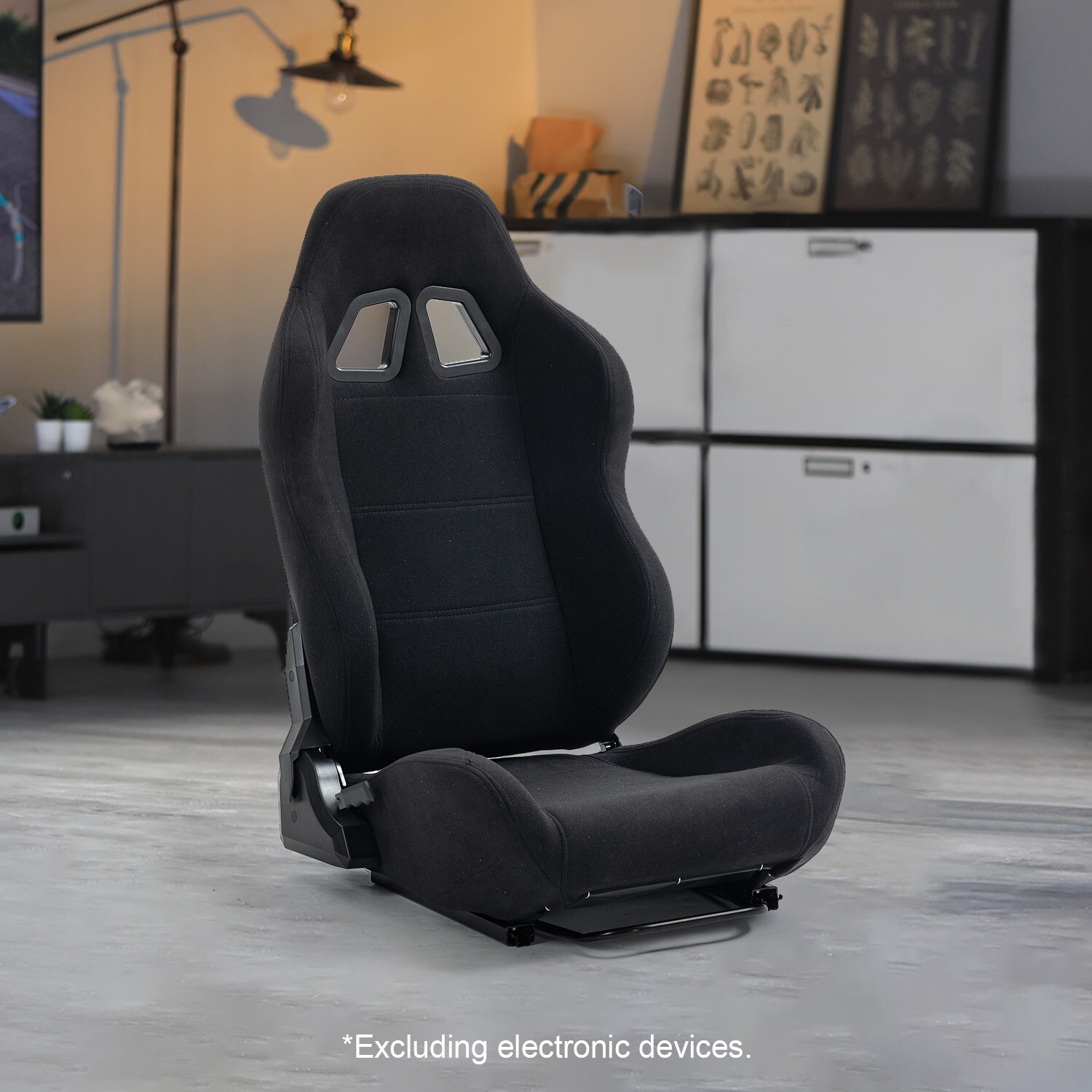 Marada Adjustable Racing Seat With Double Slide Fit For Racing Sim Cockpit Stand$159.99View on eBay
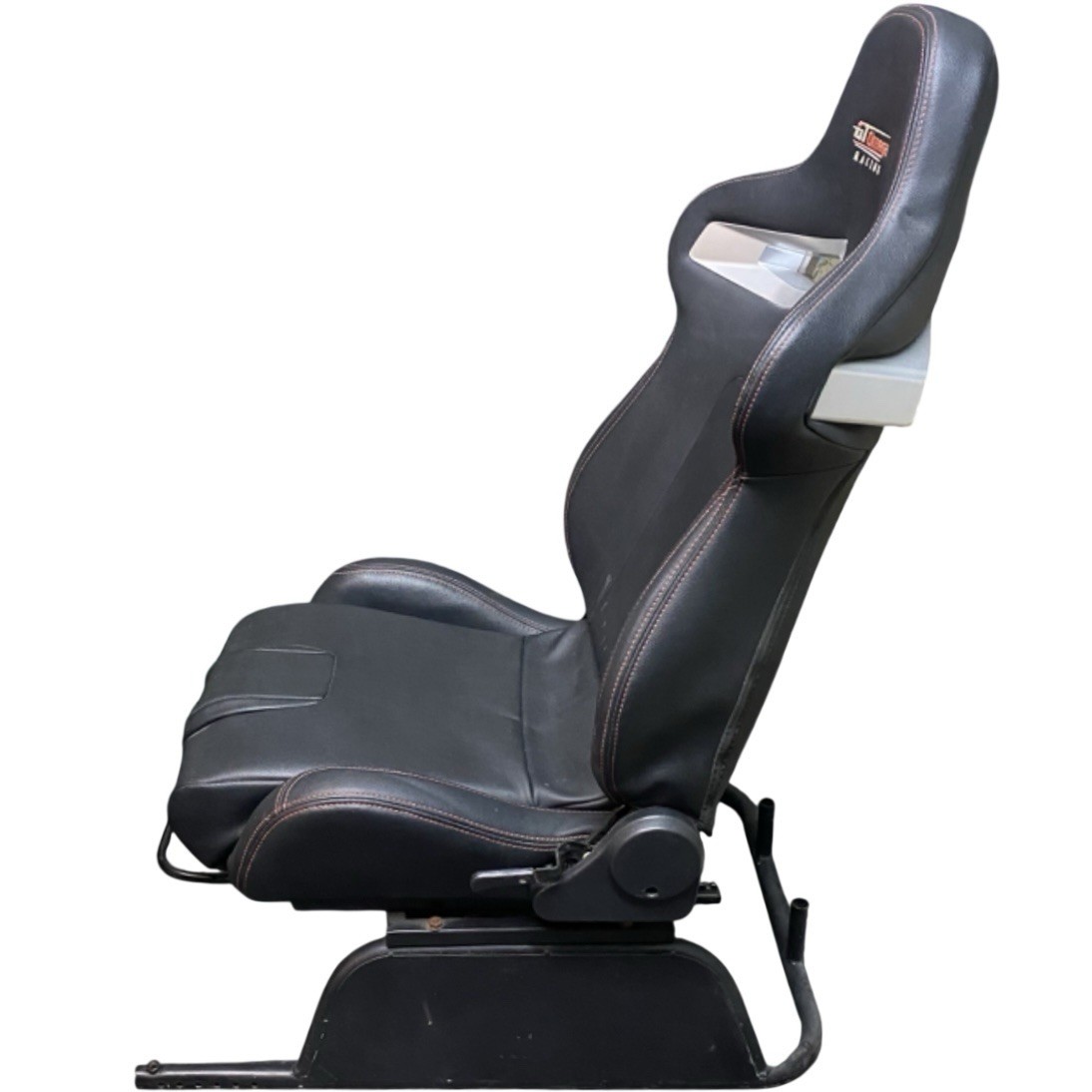 GT Omega RS9 Racing Simulator Seat w/ Sliders on Rear Seat Frame, Reclineable$180.00View on eBay
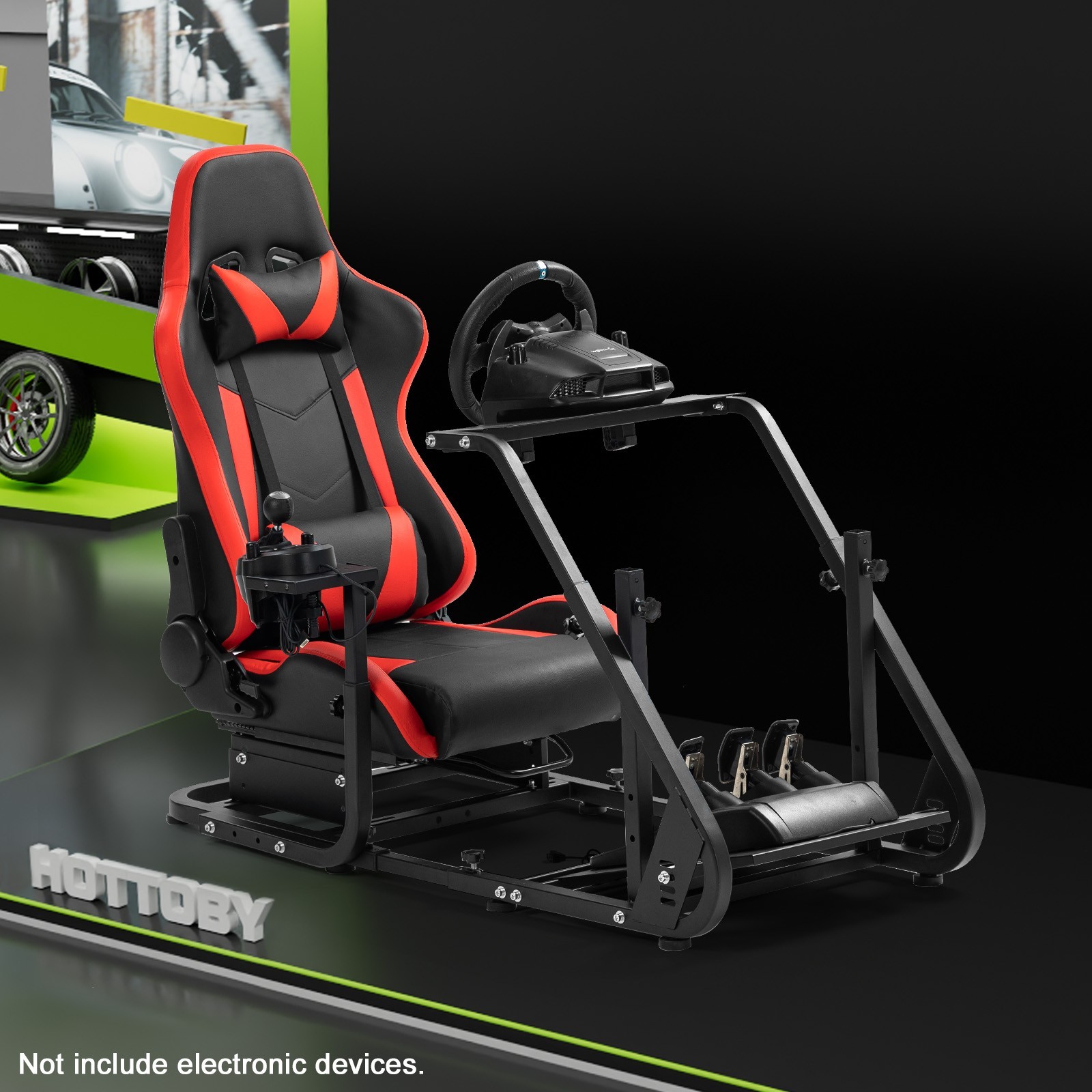 Hottoby G923 Racing Sim Cockpit Stand&Seat Fit Logitech G29Thrustmaster Fanatec$269.99Last checked Nov 18, 2026View on eBay
Highlights
- Seat frame construction separates durable from disposable: welded steel tube frames with 4-point or 6-point harness slots resist flex, while bent sheet-metal or plastic-hinged recliners develop wobble at the recline pivot.
- Double-locking sliders (left and right lever or linked bar) prevent seat twist under one-foot braking; single-side sliders allow yaw movement that ruins pedal consistency.
- Cloth-over-memory-foam holds shape and breathes for long sessions; vinyl and PU leather trap heat and crack at bolster seams within a few seasons of heavy use.
- Fixed-back fiberglass or steel bucket shells mount directly to side brackets or a seat frame for zero recline play; reclining seats add a hinge mechanism that is the first wear point on budget units.
Best use cases
- Best fit: a reclining seat on double-locking sliders for a shared rig or mixed road/flight use, because drivers of different heights can adjust distance and back angle quickly.
- Best fit: a fixed-back bucket shell with side mounts for a dedicated Formula or GT rig, because the rigid shell transfers brake force without hinge flex and keeps the driver locked in place.
- Wrong fit: a seat with a plastic recline hinge or single-side slider on a high-torque direct-drive wheel rig, because flex at the pivot and yaw at the rail will be felt through every curb strike.
- Wrong fit: a deep racing bucket for a flight-sim or truck-sim setup, because the high bolsters restrict shoulder movement needed for yoke or button-box reach; choose a wider road-style seat instead.
Buying tips
- Measure your cockpit's seat rail bolt spacing before buying: common sim rigs use 290-330 mm side-to-side and 270-350 mm front-to-back patterns, and universal sliders with slotted holes cover most, but fixed shells need exact side-bracket spacing.
- Match seat width to your hip measurement plus 25-50 mm: a seat with 350-380 mm between bolsters fits most adults, while 400 mm+ is needed for broad builds; too-narrow bolsters press on the hips and too-wide bolsters allow side-to-side sliding.
- Choose a seat with a steel or aluminum frame and replaceable foam; foam density of 35-50 kg/m³ holds up to daily use, while low-density foam compresses within months and bottoms out over the frame.
- For a fixed-back shell, confirm the shell accepts side-mount brackets and that the bracket bolt pattern matches your rig; for a recliner, confirm the slider travel (typically 200-250 mm) covers all drivers' leg lengths.
Specs
| Seat Type | Reclining road-style vs fixed-back bucket |
|---|---|
| Frame Material | Welded steel tube vs aluminum profile |
| Slider Lock | Double-locking vs single-side |
| Upholstery | Cloth + memory foam vs vinyl/PU |
Related searches
What to check before buying
- Measure the distance from your rig's pedal plate to the seat mounting rails and confirm the seat plus slider travel puts the wheel at 500-600 mm from your chest for a relaxed bend in the elbows.
- Check your cockpit's maximum seat width and height clearance: a reclined seat needs rearward clearance for the backrest drop, and a tall bucket may foul a monitor stand or triple-screen mount.
- Confirm the seat's mounting interface matches your rig: side-mount buckets need side brackets, bottom-mount recliners need sliders or a seat frame, and some rigs use proprietary adapter plates.
- Verify the seat material suits your room: cloth and breathable mesh suit warm rooms and long sessions, while vinyl is easier to wipe down but needs a ventilated space to avoid overheating.
FAQ
Data sources: eBay / Amazon listings and product attribute feeds. Updated Nov 27, 2026.
Some links on this page are affiliate links. If you buy after clicking one, we may earn a commission at no extra cost to you. This does not change which products appear here or their order. Affiliate disclosure.