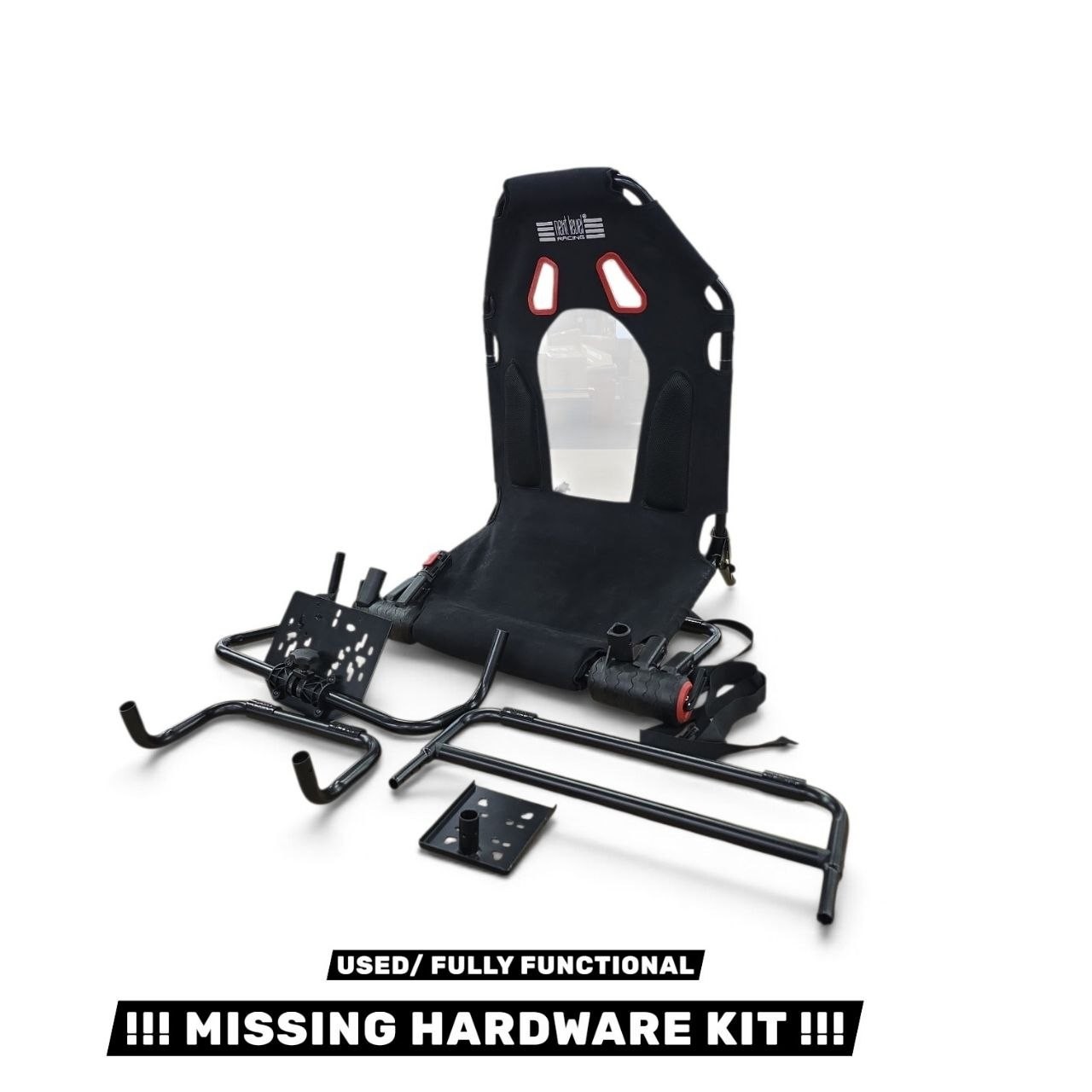

Photos from current listings. Actual item, color, and included accessories may vary.
Gt Racing Simulator Buying Guide
A GT racing simulator is a foldable or rigid cockpit/mount that positions a wheel, pedals, and shifter at realistic GT-style angles for console and PC racing. The core trade-off is foldable convenience versus flex rigidity: folding frames use thinner tubular steel and quick-release joints, while fixed cockpits use thicker gauge steel and triangulated bracing for zero wheel deck flex under load cells. The decision rule: buy a foldable GT cockpit only if you store it between sessions and run sub-8 Nm wheels; buy a rigid cockpit if you use a direct-drive base or load-cell pedals above 60 kg of brake force.
Key takeaways
- Foldable GT cockpits typically use 25-32 mm round steel tubing with hinge locks, while fixed rigs use 40x40 mm or 40x80 mm aluminum extrusion profiles for flex-free mounting.
- Wheel deck rigidity separates tiers: foldable decks flex noticeably above 8 Nm torque, whereas extrusion rigs support direct-drive bases up to and beyond 20 Nm without shimming.
- Pedal plate thickness matters most for load cells—foldable rigs use 1.5-2 mm stamped steel plates that deflect under 60+ kg brake loads; fixed rigs use 3-5 mm plates or extrusion crossmembers.
At a glance
- Category
- Sim Racing Cockpits & Mounts
- Last updated
- Nov 28, 2026
Current offers
Highlights
- Foldable GT cockpits typically use 25-32 mm round steel tubing with hinge locks, while fixed rigs use 40x40 mm or 40x80 mm aluminum extrusion profiles for flex-free mounting.
- Wheel deck rigidity separates tiers: foldable decks flex noticeably above 8 Nm torque, whereas extrusion rigs support direct-drive bases up to and beyond 20 Nm without shimming.
- Pedal plate thickness matters most for load cells—foldable rigs use 1.5-2 mm stamped steel plates that deflect under 60+ kg brake loads; fixed rigs use 3-5 mm plates or extrusion crossmembers.
- GT seating geometry differs from formula: GT cockpits set the wheel deck higher and pedals lower for a reclined touring posture, so measure seat-to-pedal distance before choosing a fixed versus folding frame.
Best use cases
- Best fit for foldable GT cockpit: apartment or shared-room racers using a Logitech G29/G923 or Thrustmaster T300 (under 5 Nm) who must collapse the rig after each session—pick a hinge-lock tubular frame like the Next Level Racing GT Lite class.
- Best fit for fixed extrusion cockpit: direct-drive owners (Moza R9/R12, Fanatec CSL DD 8 Nm+) and load-cell pedal users who race multiple times weekly and can dedicate floor space permanently.
- Wrong fit to skip: buying a foldable GT cockpit for a 12+ Nm direct-drive base or 100 kg load-cell brake—the hinge joints and thin pedal plate will flex and eventually loosen; step up to an 8020 aluminum rig instead.
- Wrong fit to skip: a full fixed cockpit for a casual console player in a small bedroom—measure the footprint (typically 130-150 cm long, 55-70 cm wide) before committing, since fixed rigs do not collapse.
Buying tips
- Match frame to wheel torque: tubular folding frames suit wheels under 8 Nm; aluminum extrusion (40x40 mm minimum, 40x80 mm for direct drive) is required above 8 Nm to prevent deck flex.
- Check pedal plate construction: choose at least 2 mm steel for spring pedals and 3 mm steel or extrusion crossmembers for load-cell brakes rated at 60-100 kg.
- Verify mounting patterns before buying: most wheels use 3- or 4-bolt M6 patterns at 52-70 mm spacing; confirm the deck includes slotted or pre-drilled holes for your specific base.
- For folding rigs, prioritize double hinge locks and a cross-brace at the wheel deck—single-lock hinges develop play within months of regular folding.
Specs
| Frame Architecture | Tubular folding steel vs 8020 extrusion |
|---|---|
| Wheel Torque Ceiling | Folding <8 Nm; extrusion 8-20+ Nm |
| Pedal Plate Grade | 1.5-2 mm steel vs 3-5 mm / extrusion |
| Cockpit Geometry | GT reclined vs formula lay-back |
Related searches
What to check before buying
- Measure your floor footprint and ceiling clearance: fixed GT cockpits run roughly 130-150 cm long and 55-70 cm wide, and folding rigs need swing clearance to collapse.
- Confirm your wheel base torque and pedal type before selecting a tier—sub-8 Nm spring pedals fit folding frames; 8+ Nm direct drive and load cells demand extrusion rigs.
- Check seat compatibility: many GT cockpits ship frame-only and require a separate seat or accept a real car seat with 4-point 290-330 mm bolt spacing.
- Verify your display setup: a wheel deck at GT height sits around 60-75 cm, so plan monitor distance (60-80 cm for a single screen) or a monitor stand that clears the frame.
FAQ
Data sources: eBay / Amazon listings and product attribute feeds. Updated Nov 28, 2026.
Some links on this page are affiliate links. If you buy after clicking one, we may earn a commission at no extra cost to you. This does not change which products appear here or their order. Affiliate disclosure.