
Photos from current listings. Actual item, color, and included accessories may vary.
Folding Racing Wheel Stand Buying Guide
A folding racing wheel stand is a portable, collapsible metal frame that mounts a force-feedback wheel and pedals without a full cockpit, letting you race at a desk then fold it away. The core trade-off is rigidity versus portability: thinner steel and single-locking hinges flex under torque, while heavier gauge tubing and dual-lock joints stay planted but weigh more. The clear decision rule is to match stand steel gauge and hinge design to your wheel's peak torque, and only choose a folding stand if you need to stow it between sessions.
Median $68.99
Key takeaways
- Steel tube thickness separates tiers: 1.5 mm wall flexes under 8+ Nm direct-drive torque, while 2.0–2.5 mm wall with cross-bracing resists oscillation.
- Hinge locking is the durability point: single quick-release levers loosen over time; dual-lock or bolt-through hinges hold wheelbase alignment session after session.
- Pedal deck angle and pre-drilled hole patterns determine compatibility—most stands support Logitech, Thrustmaster, and Fanatec two-bolt or four-bolt mounts, but direct-drive bases need wider plates.
At a glance
- Category
- Sim Racing Cockpits & Mounts
- Last updated
- Nov 27, 2026
Current offers
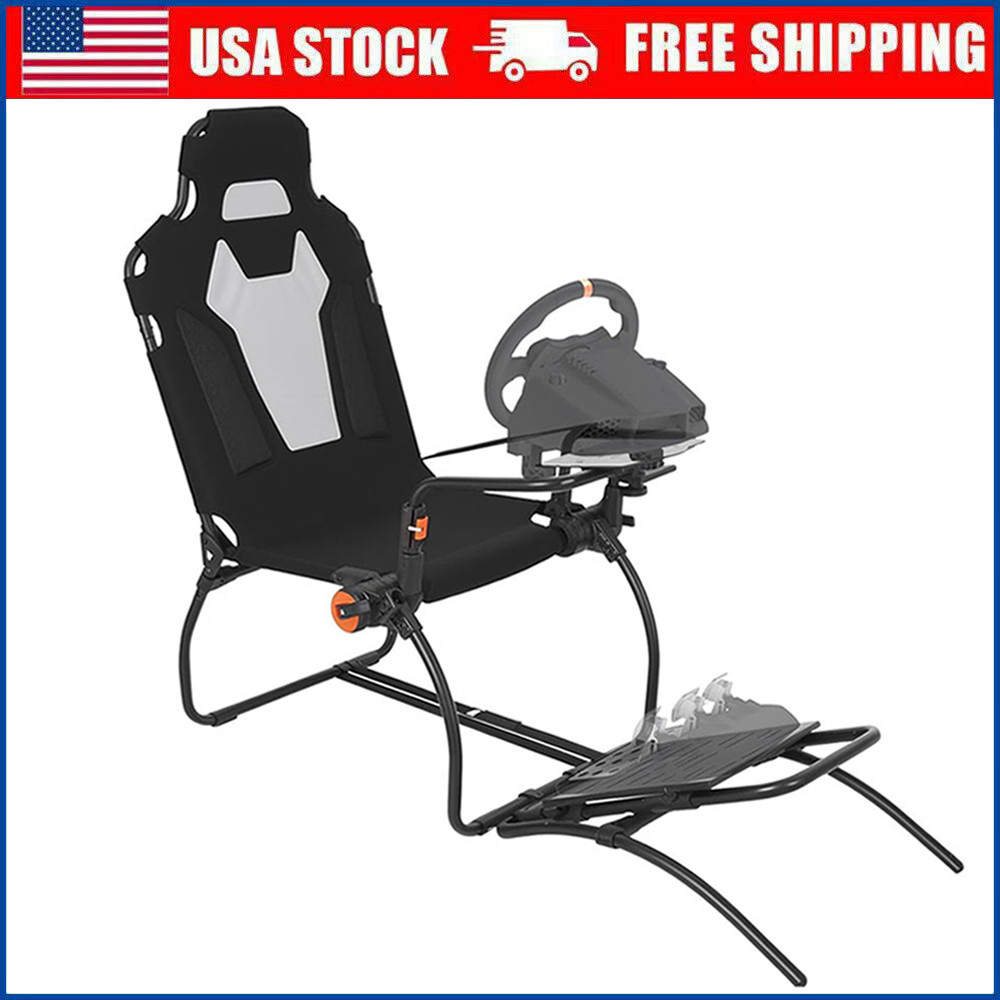 Racing Wheel Stand, Foldable Sim Racing Simulator Cockpit Fits for G923/G920/G29$149.90View on eBay
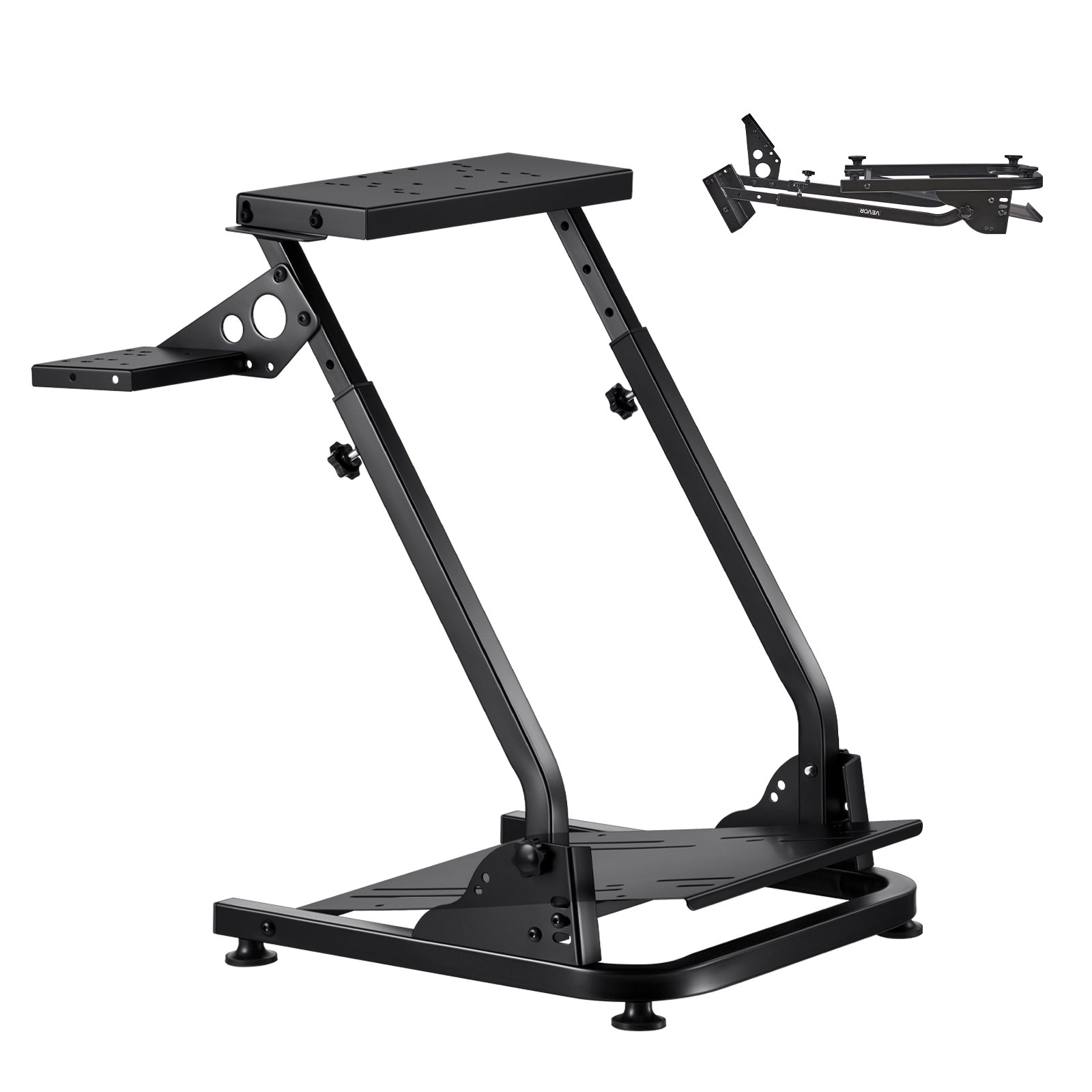 Racing Wheel Stand, Adjustable & Foldable Simulator For Logitech G29 G27 G920 G923, Thrustmaster T300RS T300GT T248 TS-PC TSXW Gaming Cockpit,Pedals NOT Included$63.99View on Mallflare
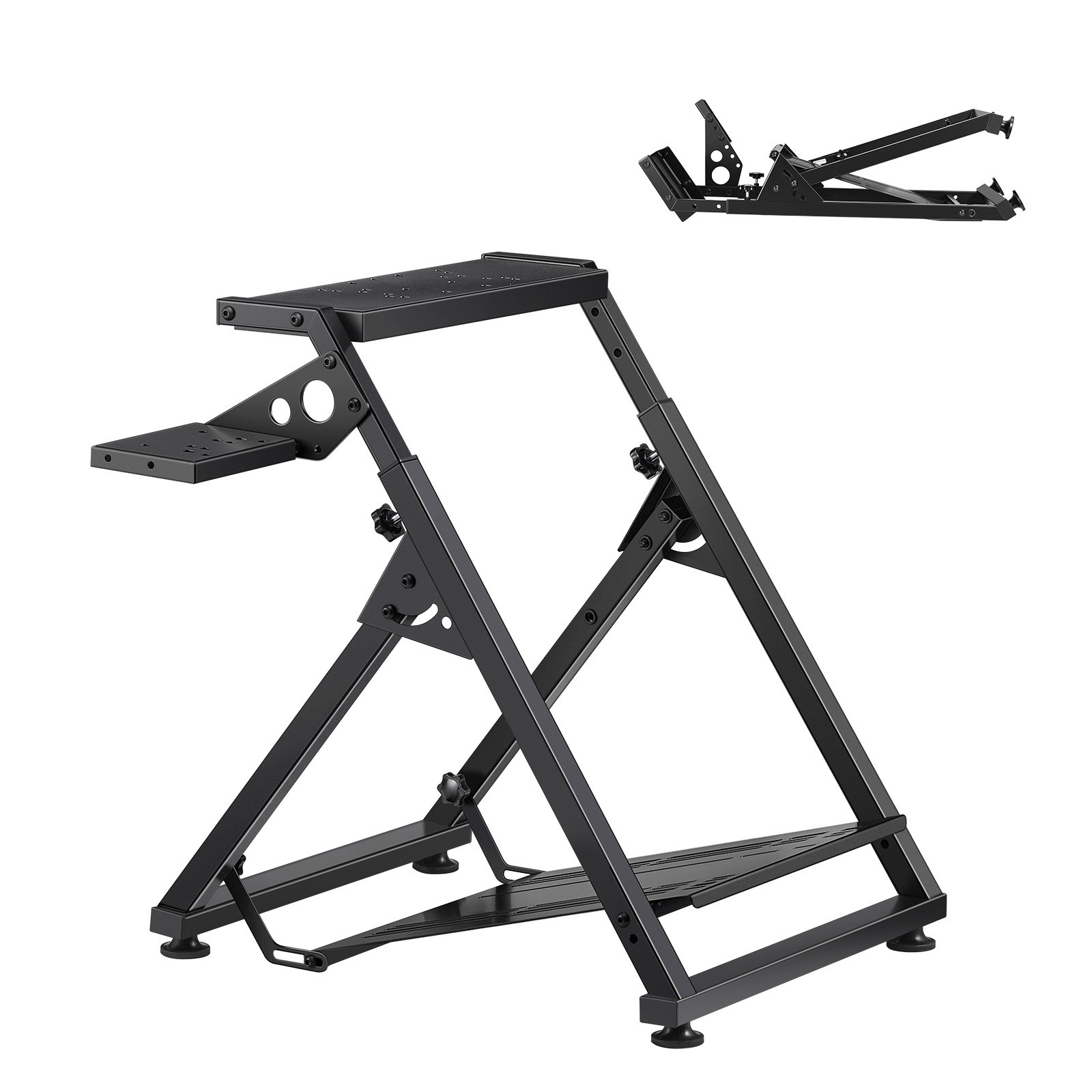 Racing Wheel Stand Adjustable & Foldable For Logitech G923 G920 G29 G27 Compact$68.99View on Mallflare
Highlights
- Steel tube thickness separates tiers: 1.5 mm wall flexes under 8+ Nm direct-drive torque, while 2.0–2.5 mm wall with cross-bracing resists oscillation.
- Hinge locking is the durability point: single quick-release levers loosen over time; dual-lock or bolt-through hinges hold wheelbase alignment session after session.
- Pedal deck angle and pre-drilled hole patterns determine compatibility—most stands support Logitech, Thrustmaster, and Fanatec two-bolt or four-bolt mounts, but direct-drive bases need wider plates.
- Folded footprint and weight decide real portability: stands under 15 kg fold to closet depth, while heavier stands with wheelbase trays need a dedicated storage corner.
Best use cases
- Best fit: apartment or shared-space sim racers using belt-driven wheels (5–8 Nm) who must fold the rig after each session—pick a 2.0 mm steel stand with dual-lock hinges.
- Wrong fit: direct-drive wheel owners (12+ Nm) who plan to leave the stand assembled—skip folding stands entirely and buy a fixed cockpit with a wheel deck and seat.
- Best fit: console racers on a couch or desk who need a stable pedal angle—choose a stand with an adjustable pedal plate and a wheelbase tilt range covering 0–45 degrees.
- Wrong fit: buyers wanting a complete seated driving position—a folding stand provides no seat or frame; budget for a separate seat or choose a full folding cockpit instead.
Buying tips
- Match stand steel wall thickness to wheel torque: 1.5 mm wall suits 3–6 Nm belt wheels, while 2.0 mm or thicker is required for 8 Nm+ direct-drive bases to prevent flex.
- Check hinge count and lock type: two locking hinges at the main fold joint plus a secondary brace reduce wobble; single-lever hinges are the first failure point on budget stands.
- Confirm wheelbase bolt pattern before buying: measure your base's mounting holes and compare to the stand's slotted or pre-drilled plate—most stands cover Logitech/Thrustmaster spacing but not all direct-drive widths.
- Weigh folded dimensions against your storage: a stand folding to under 30 cm depth and 15 kg is one-person portable; anything larger needs a permanent corner or wall hook.
Specs
| Frame Material | Steel tube, 1.5–2.5 mm wall |
|---|---|
| Hinge Lock Type | Single-lever vs dual-lock |
| Wheelbase Support | Belt 3–8 Nm / DD 8 Nm+ |
| Folded Footprint | Under 30 cm depth / 10–20 kg |
Related searches
What to check before buying
- Measure your wheelbase footprint and bolt spacing—stand decks are slotted, but direct-drive bases often exceed the plate width and need an adapter.
- Check floor surface and stand feet: carpet grips better with rubber pads, while hard floors need non-marking feet or a mat to prevent sliding under braking.
- Confirm pedal deck height and angle adjustability against your seating height—desk-chair racers need a lower pedal plate than sofa racers.
- Verify the stand's folded depth and weight fit your closet or under-bed space before committing to a heavier gauge frame.
FAQ
Data sources: eBay / Amazon listings and product attribute feeds. Updated Nov 27, 2026.
Some links on this page are affiliate links. If you buy after clicking one, we may earn a commission at no extra cost to you. This does not change which products appear here or their order. Affiliate disclosure.