
Photos from current listings. Actual item, color, and included accessories may vary.
Folding Racing Cockpit Buying Guide
A folding racing cockpit is a space-conscious sim-racing frame that folds or collapses between sessions, typically built from tubular steel or aluminum with a wheel-deck, pedal plate, and seat mount. The core trade-off is rigidity versus portability: folding joints and thinner tubing save space but introduce flex under heavy load, while thicker-gauge steel and locking mechanisms preserve force-feedback fidelity. Choose a folding cockpit only if you must stow the rig regularly; if you have permanent floor space, a fixed-cockpit design is stiffer and cheaper at the same load rating.
Median $105.99
Key takeaways
- Frame rigidity is set by main-tube gauge and joint design: 1.5–2 mm wall steel with double-locking hinges resists wheel-base torque far better than 1–1.2 mm tube with single-pin locks.
- Wheel-deck compatibility is defined by bolt pattern: most direct-drive bases use a 4-hole pattern at 80 mm or 100+ mm spacing, so check deck width and pre-drilled slots before buying.
- Load capacity should exceed the combined weight of wheel base, pedals, seat, and user by a safe margin; look for rated loads in the 120–150 kg class for adult use with a direct-drive wheel.
At a glance
- Category
- Sim Racing Cockpits & Mounts
- Last updated
- Nov 27, 2026
Current offers
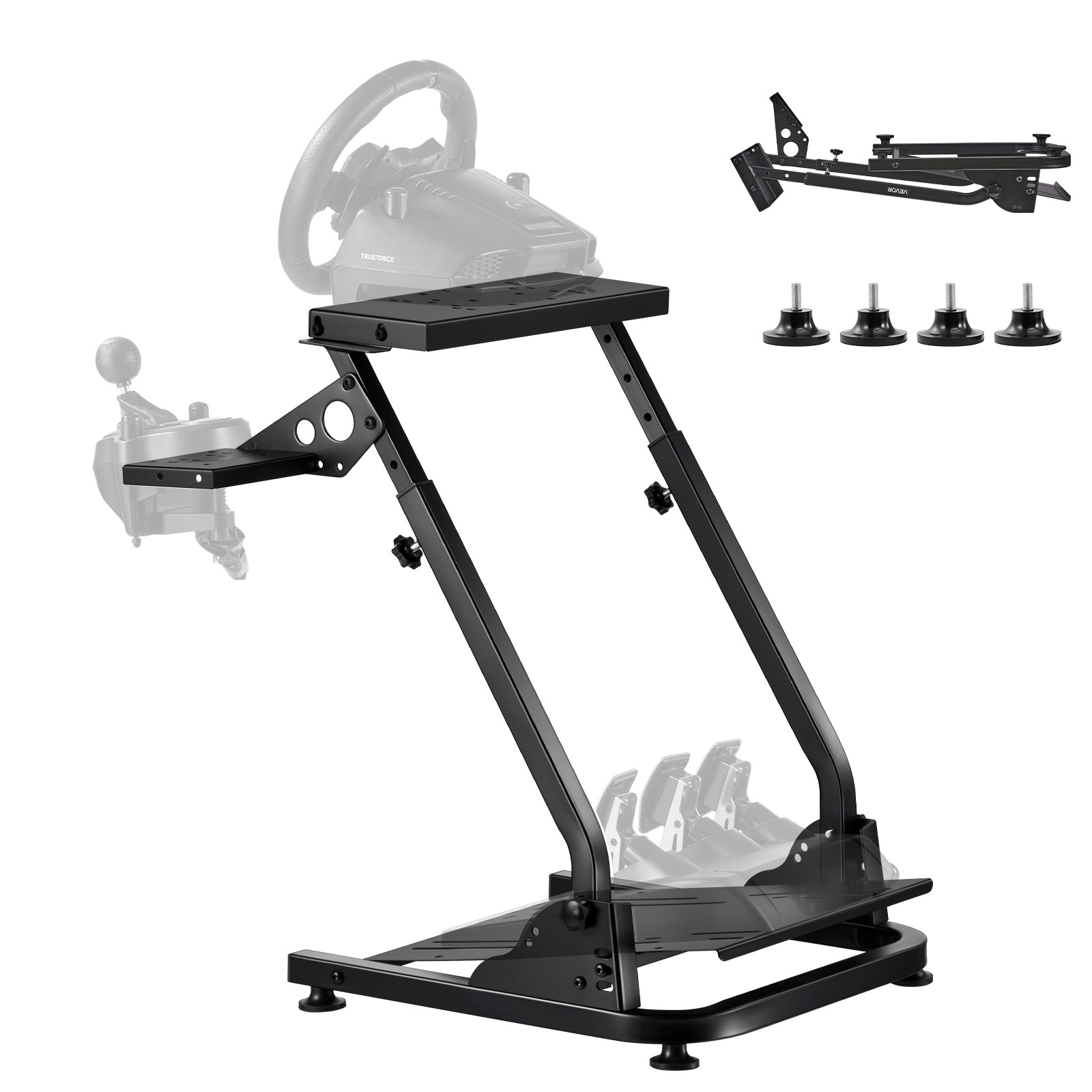 VEVOR Racing Wheel Stand Simulator Cockpit Foldable for Logitech G27 G920 G923$59.90View on eBay
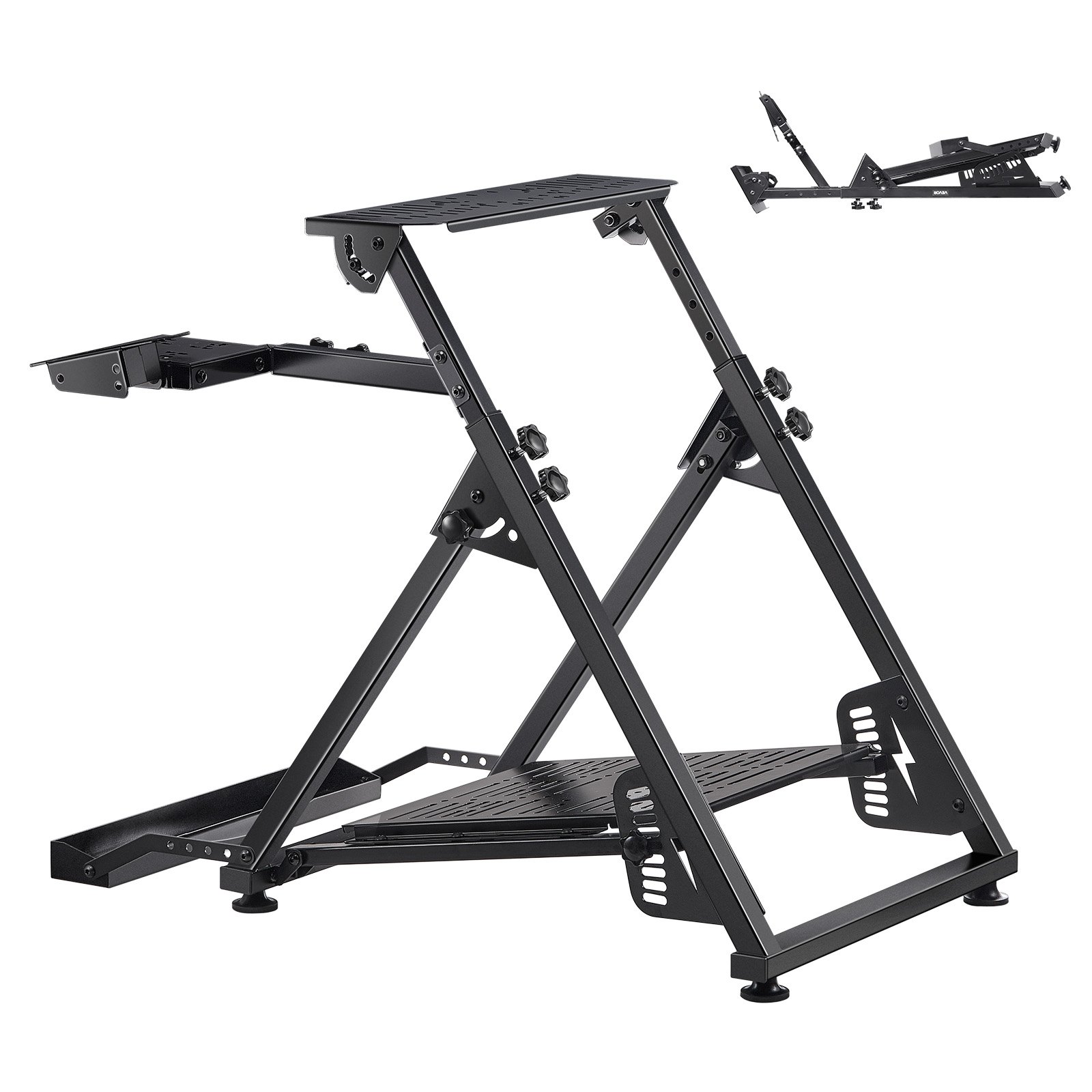 Racing Wheel Stand Simulator Cockpit Foldable For Logitech G923 G920 G29 G27$122.99View on Mallflare
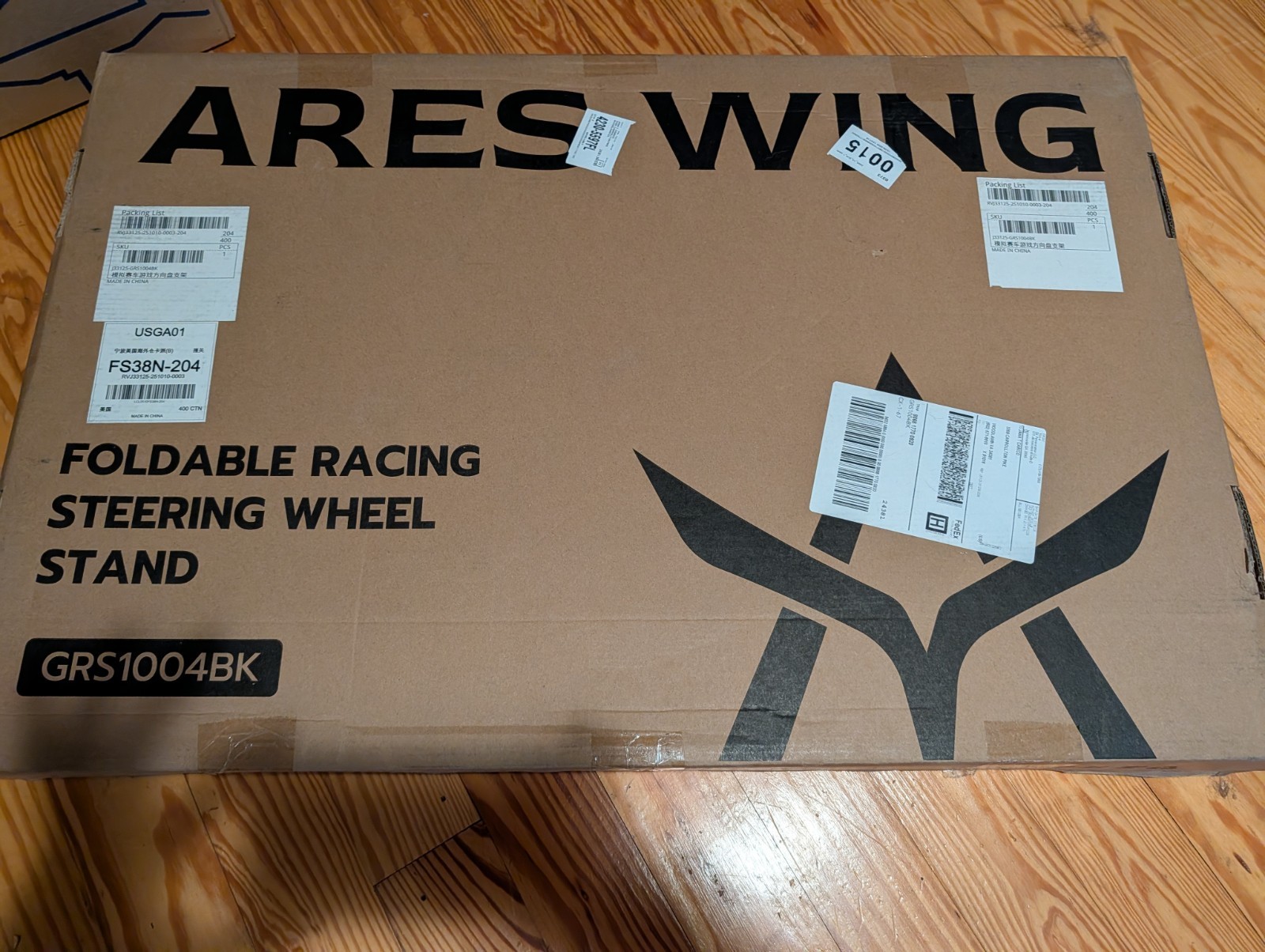 Foldable Sim Racing Wheel Stand Cockpit for Logitech Fanatec Thrustmaster$75.00View on eBay
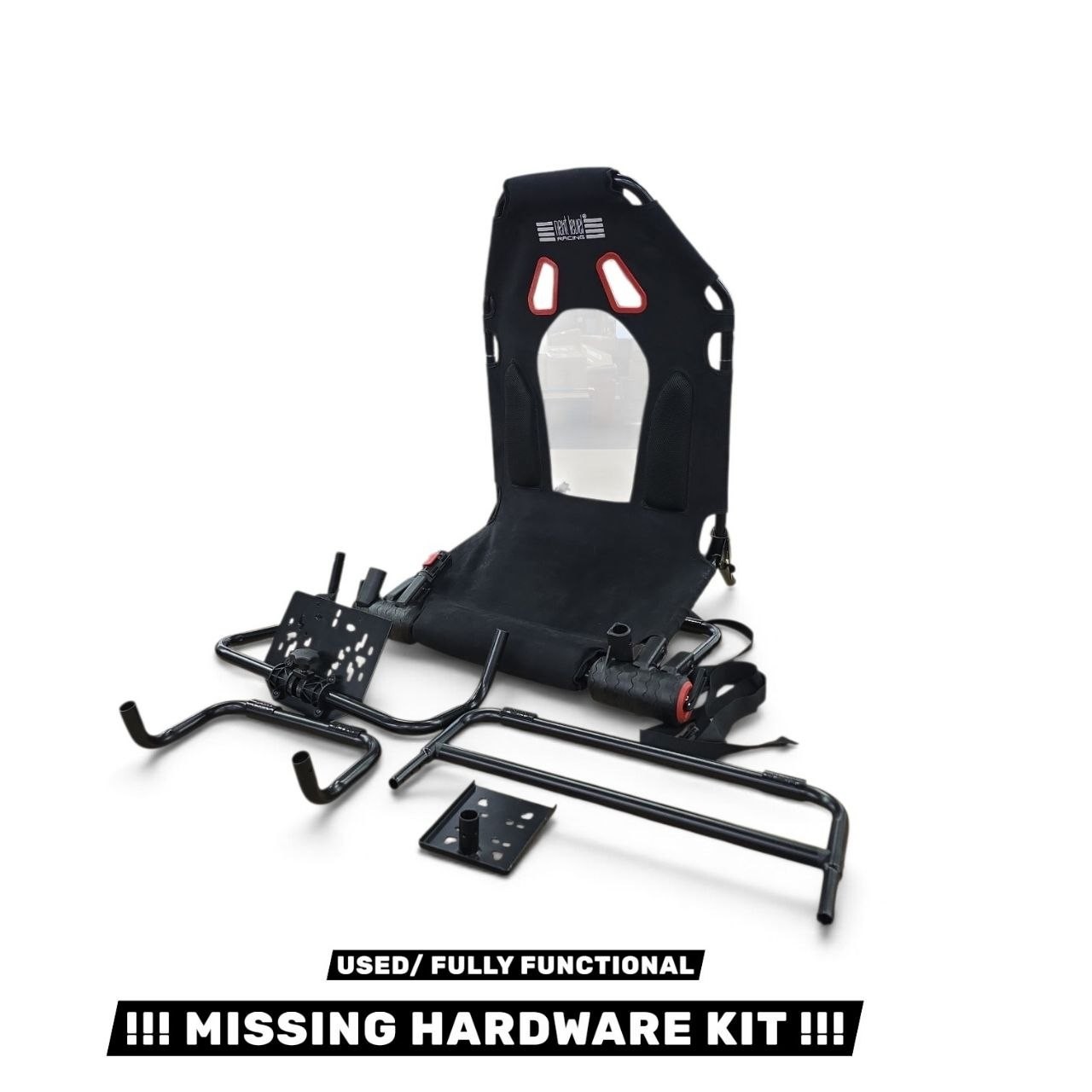 Next Level Racing GT Lite Simulator Cockpit Foldable Wheel Pedals NLR-S021$104.93View on eBay
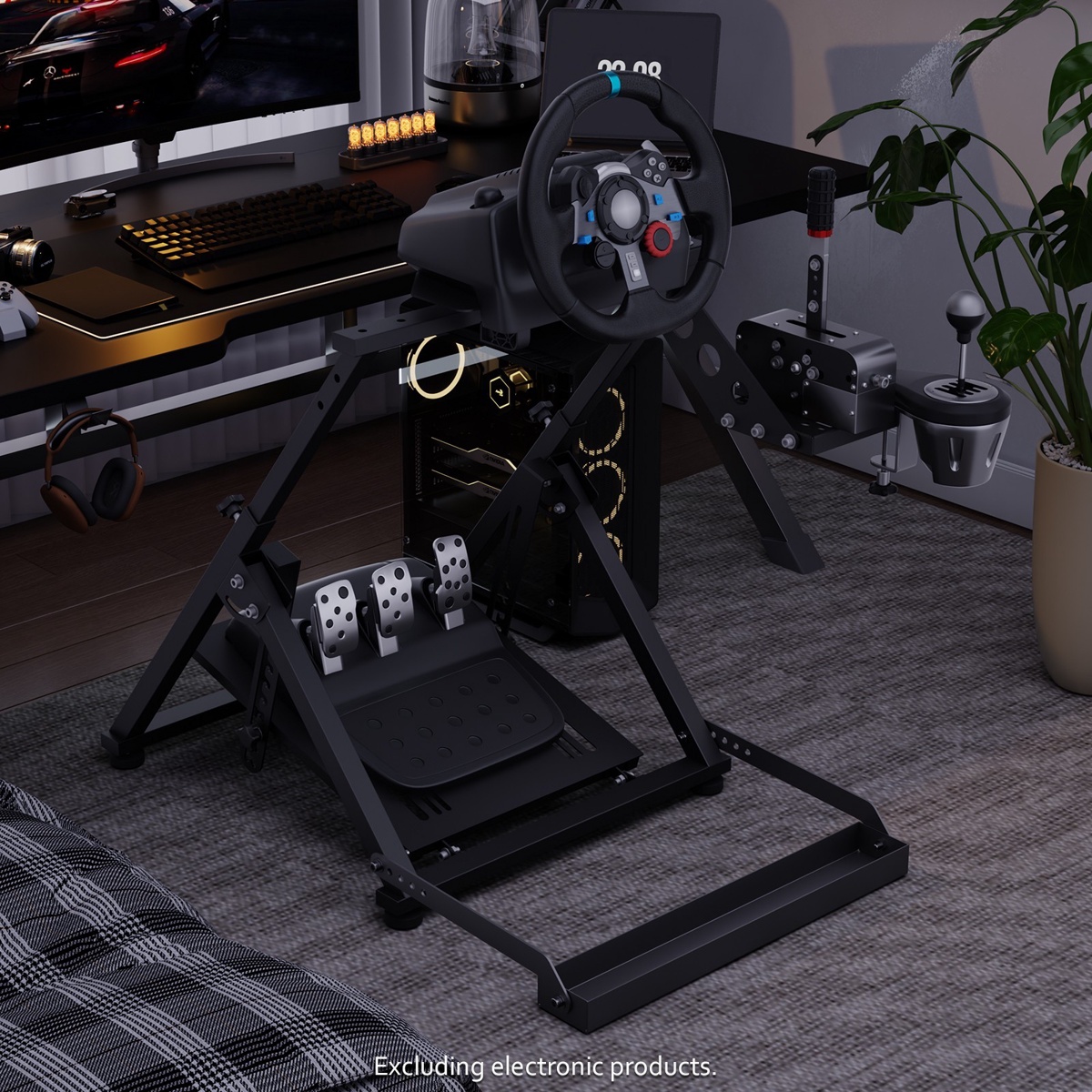 Hottoby Steering Racing Wheel Stand Foldable Sim Cockpit Fits Logitech G920 G923$105.99View on eBay
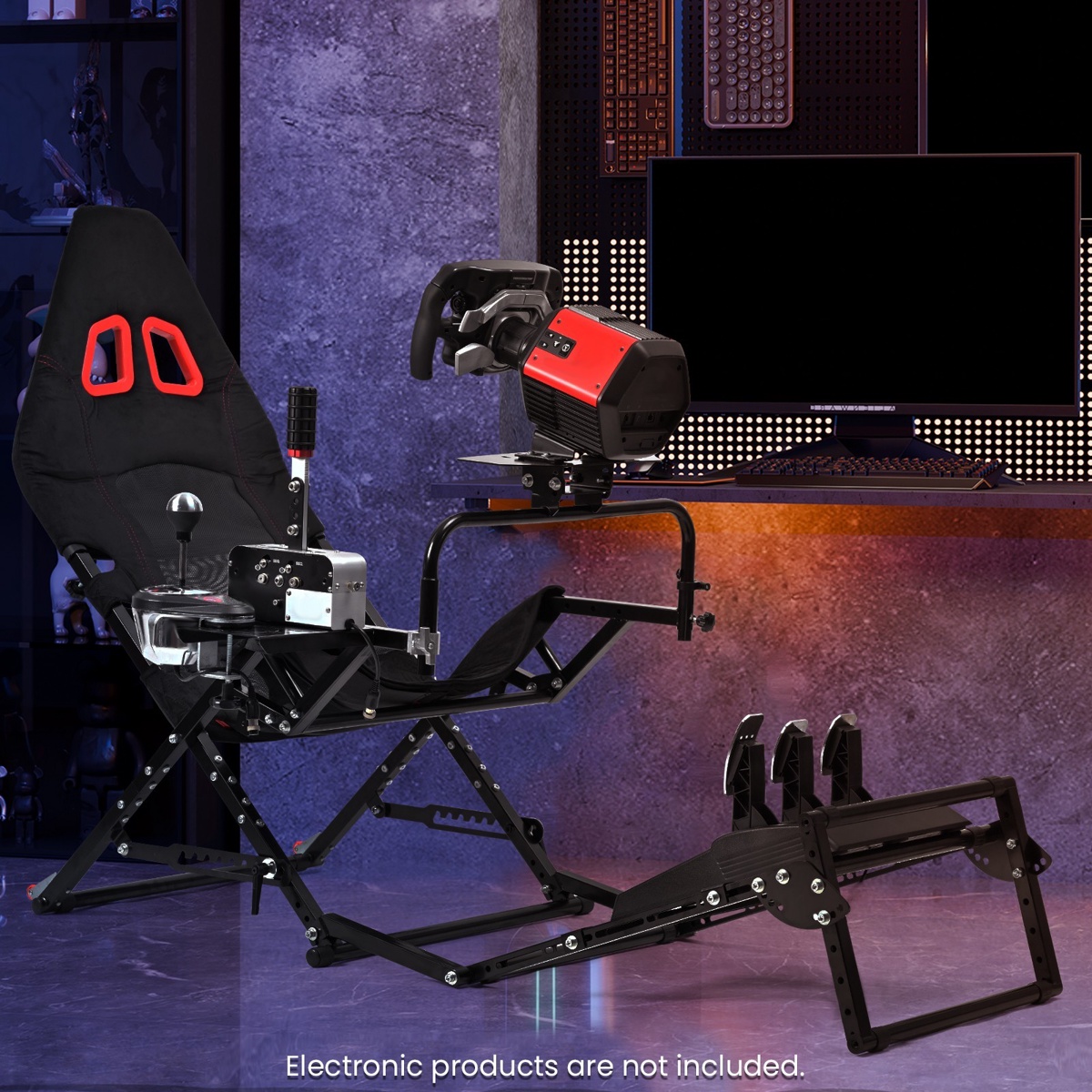 Minneer Foldable Racing Simulator Cockpit Fit Logitech G29 G923 Thrustmaster$174.99View on eBay
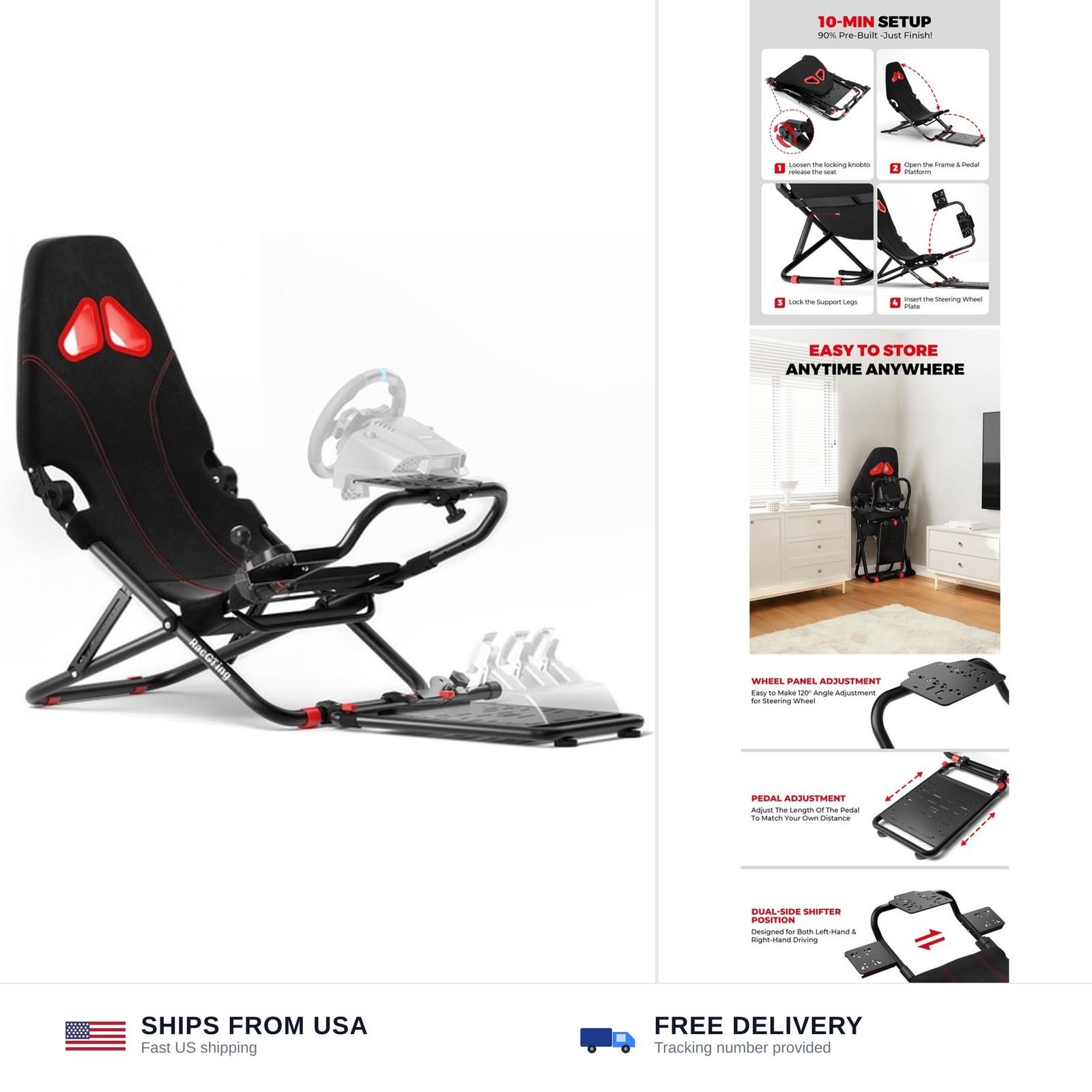 RACGTING Racing Simulator Cockpit for G920 G29 G923, Foldable Racing Simulato...$284.65Last checked Nov 18, 2026View on eBay
Highlights
- Frame rigidity is set by main-tube gauge and joint design: 1.5–2 mm wall steel with double-locking hinges resists wheel-base torque far better than 1–1.2 mm tube with single-pin locks.
- Wheel-deck compatibility is defined by bolt pattern: most direct-drive bases use a 4-hole pattern at 80 mm or 100+ mm spacing, so check deck width and pre-drilled slots before buying.
- Load capacity should exceed the combined weight of wheel base, pedals, seat, and user by a safe margin; look for rated loads in the 120–150 kg class for adult use with a direct-drive wheel.
- Folding mechanisms vary from simple scissor locks to removable cross-braces; the more rigid designs use at least two locking points per hinge and a cross-brace that stays installed when folded.
Best use cases
- Best fit: apartment or shared-room sim racers who must reclaim floor space weekly — pick a scissor-fold steel frame with a seat that folds flat and a deck rated for your wheel-base torque.
- Best fit: console or PC racers with mid-tier belt-driven wheels — a moderate-gauge folding cockpit with pre-drilled deck slots covers most Logitech, Thrustmaster, and Fanatec belt bases without overbuilding.
- Wrong fit: direct-drive wheel owners who race at high force-feedback torque — skip light folding frames and choose a fixed or semi-permanent cockpit with a reinforced wheel deck and heavy-gauge uprights.
- Wrong fit: buyers wanting a permanent multi-monitor battle station — folding frames rarely support monitor arms and triple-screen weight; choose a fixed aluminum-profile rig instead.
Buying tips
- Match wheel-deck bolt pattern first: measure your base's mounting holes (commonly 80 mm or wider spacing) and confirm the cockpit deck has slotted or multi-hole provision before ordering.
- Use a rigidity rule: for belt-driven wheels up to roughly 8 Nm, 1.5 mm steel tube with dual-lock hinges is sufficient; for direct-drive above that, require 2 mm tube or aluminum-profile construction.
- Check folded dimensions against your storage gap: most folding cockpits collapse to roughly 30–50 cm depth, so measure the closet, wall gap, or under-desk clearance you intend to use.
- Prioritize pedal-plate adjustability: angle and fore-aft slots let you set brake-pedal leverage correctly; a fixed pedal plate forces compromise and can hurt braking consistency.
Specs
| Frame Material | Steel tube vs aluminum profile |
|---|---|
| Tube Wall Thickness | 1.0–2.0 mm steel |
| Folded Depth | ~30–50 cm stowed |
| Wheel Deck Mount | Slotted / 80 mm+ bolt pattern |
Related searches
What to check before buying
- Measure your available floor footprint when deployed and your stowage gap when folded; confirm the cockpit's published folded depth fits with room for the seat.
- Confirm your wheel base's bolt pattern and weight, and verify the deck's slot spacing and rated load meet or exceed it.
- Check floor type and leveling: carpet needs wider feet or pads, while hard floors need rubber foot caps to prevent sliding under force feedback.
- Verify seat compatibility: some folding frames include a seat, others accept only specific seat mounts or slider rails — confirm which before buying.
FAQ
Data sources: eBay / Amazon listings and product attribute feeds. Updated Nov 27, 2026.
Some links on this page are affiliate links. If you buy after clicking one, we may earn a commission at no extra cost to you. This does not change which products appear here or their order. Affiliate disclosure.