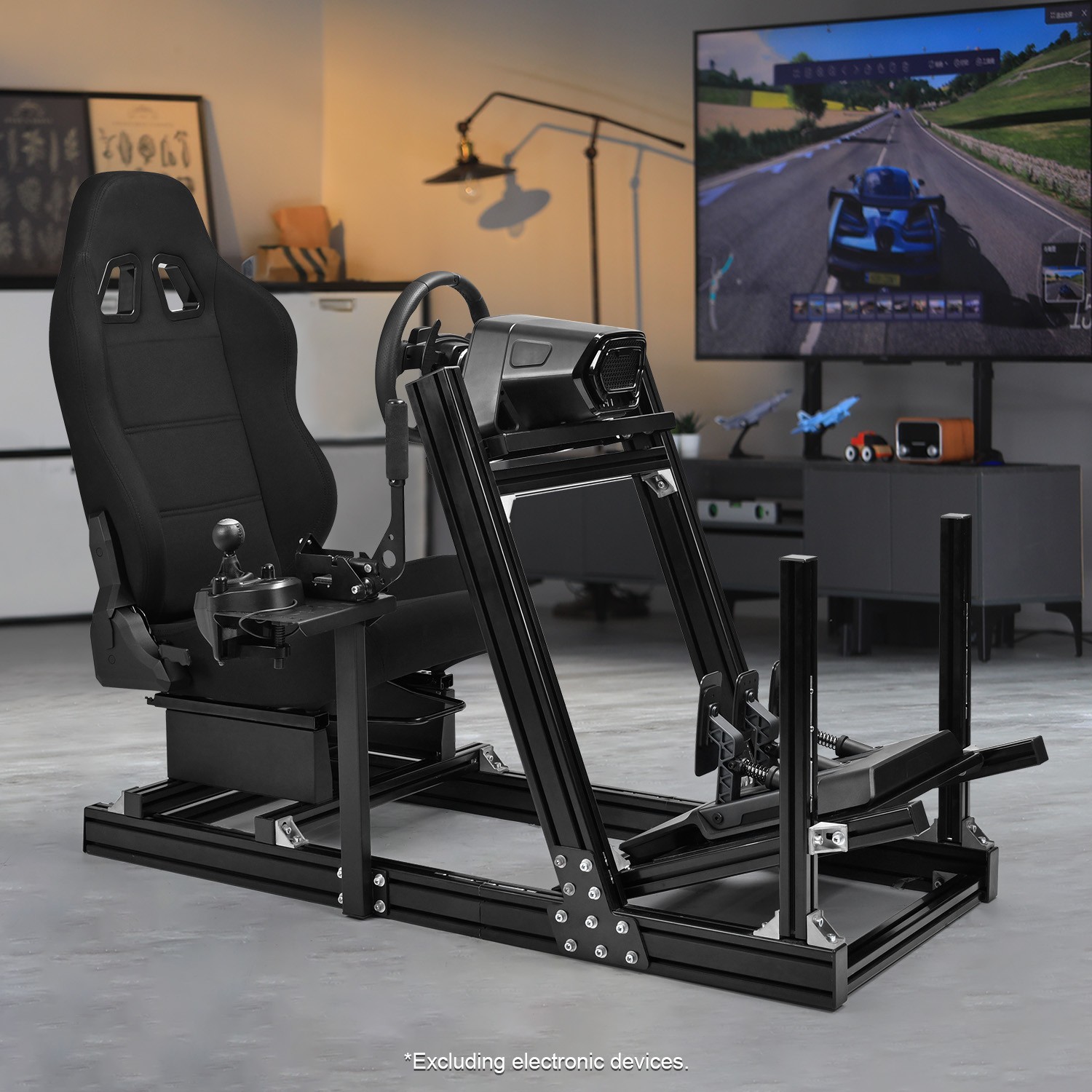

Photos from current listings. Actual item, color, and included accessories may vary.
F1 Sim Racing Cockpit Buying Guide
An F1 sim racing cockpit is a rigid frame and seat package that places the wheel, pedals, and driver in a low, reclined Formula-style position rather than the upright GT posture. The decisive trade-off is frame stiffness versus adjustability: aluminum profile rigs flex less under heavy load-cell braking, while steel tube rigs are cheaper but flex more. Buy an 8020-style aluminum extrusion rig if you run a direct-drive wheel or load-cell pedals; choose a steel tube cockpit only for belt-driven wheels and light pedal forces.
Median $509.99
Key takeaways
- Aluminum profile rigs use 40x80mm or 40x40mm T-slot extrusion; 4080 (40x80) main rails resist direct-drive torque and load-cell brake forces far better than 4040 rails.
- Steel tube cockpits typically use 25-32mm diameter tubing with 1.5-2.0mm wall thickness; thinner walls and bolted joints introduce flex at the wheel deck under high force.
- Formula seating requires a seat back angle of roughly 30-45 degrees from vertical and pedals mounted high and close, unlike GT rigs at 60-70 degrees upright.
At a glance
- Category
- Sim Racing Cockpits & Mounts
- Last updated
- Nov 28, 2026
Current offers
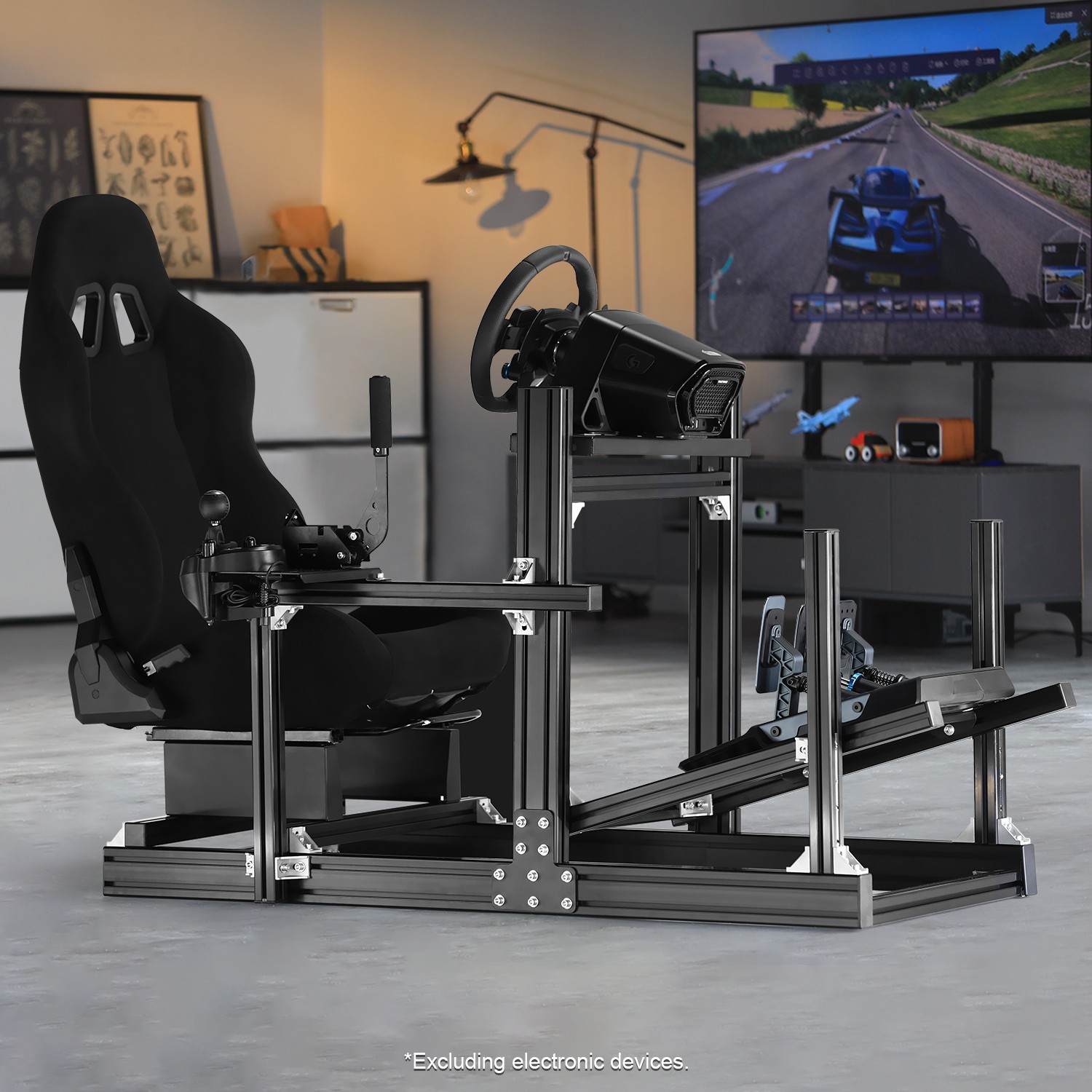
Highlights
- Aluminum profile rigs use 40x80mm or 40x40mm T-slot extrusion; 4080 (40x80) main rails resist direct-drive torque and load-cell brake forces far better than 4040 rails.
- Steel tube cockpits typically use 25-32mm diameter tubing with 1.5-2.0mm wall thickness; thinner walls and bolted joints introduce flex at the wheel deck under high force.
- Formula seating requires a seat back angle of roughly 30-45 degrees from vertical and pedals mounted high and close, unlike GT rigs at 60-70 degrees upright.
- Wheel-deck and pedal-plate adjustability in millimeters (fore-aft, height, tilt) determines whether the rig fits your body and wheelbase, not just the frame material.
Best use cases
- Best fit: direct-drive wheelbase (8-20 Nm) plus load-cell pedals — pick an 4080 aluminum extrusion cockpit with a rigid wheel deck and heel plate.
- Best fit: Formula-style driving position with a dedicated F1 or reclined bucket seat — choose a rig with low seat rails and high, close pedal mounting.
- Wrong fit: belt-driven entry wheel and potentiometer pedals — a steel tube cockpit is sufficient and saves space and cost; skip 8020 overkill.
- Wrong fit: multi-purpose GT and F1 driving — a dedicated F1 cockpit has a fixed low posture; choose an adjustable GT rig with a formula bracket instead.
Buying tips
- Match frame size to wheel torque: 40x80mm main rails for direct-drive wheels above 8 Nm; 40x40mm rails are adequate for belt-driven wheels under 6 Nm.
- Confirm pedal plate thickness of at least 3mm steel or 5mm aluminum; thin plates flex under load-cell braking and ruin brake consistency.
- Verify wheel-deck bolt pattern compatibility: 4x M6 or M8 slots on 8020 extrusion, or pre-drilled patterns for Logitech, Thrustmaster, and Fanatec bases.
- For a true F1 posture, the seat should recline 30-45 degrees and pedals should sit near seat height; measure your leg length to confirm fore-aft pedal travel.
Specs
| Frame Material | Aluminum extrusion vs steel tube |
|---|---|
| Main Rail Size | 40x80mm (4080) vs 40x40mm |
| Seat Recline | 30-45 deg F1 vs 60-70 deg GT |
| Wheel Deck Mount | Slotted 8020 vs pre-drilled |
Related searches
What to check before buying
- Measure your room footprint: an F1 cockpit with seat typically occupies about 130-150cm length and 60-70cm width; confirm floor space before ordering.
- Check your wheelbase and pedal bolt patterns against the rig's deck slots or pre-drilled holes; adapter plates are needed for non-standard bases.
- Confirm seat compatibility: most cockpits include a seat with side or bottom mounts; verify the seat rail width matches your rig's brackets.
- Check floor surface and weight: aluminum rigs with seat weigh roughly 30-45kg; use rubber feet or casters on hard floors to prevent sliding.
FAQ
Data sources: eBay / Amazon listings and product attribute feeds. Updated Nov 28, 2026.
Some links on this page are affiliate links. If you buy after clicking one, we may earn a commission at no extra cost to you. This does not change which products appear here or their order. Affiliate disclosure.