
Photos from current listings. Actual item, color, and included accessories may vary.
737 Flight Simulator Cockpit Buying Guide
A 737 flight simulator cockpit is a hardware ecosystem—yoke or column, throttle quadrant, rudder pedals, and mounting structure—built to replicate Boeing 737 control geometry and switch logic for home or semi-pro training. The core trade-off is between simplified plug-and-play USB bundles and modular, force-feedback-ready architectures that demand separate mounts and calibration. Choose a complete matched set if you want immediate flying; choose modular components with standard mounting patterns if you need upgrade paths and 737-specific fidelity.
Median $270.43
Key takeaways
- 737-style yokes use a column-mounted pitch axis with 6-8 inches of travel; desk-clamp models often reduce throw, so a dedicated cockpit frame preserves full authority.
- Throttle quadrants differ by axis count: 2-lever (throttle/prop) vs 4-lever (throttle/prop/mixture/gear) vs 737-specific 2-throttle + speedbrake + flap detents—match lever count to your aircraft profile.
- Rudder pedals use either potentiometers (budget, 8-bit resolution) or Hall-effect sensors (contactless, 12-bit+); Hall-effect pedals eliminate dead zones and drift over years of use.
At a glance
- Category
- Flight Sim Cockpits, Mounts & VR
- Last updated
- Nov 24, 2026
Current offers
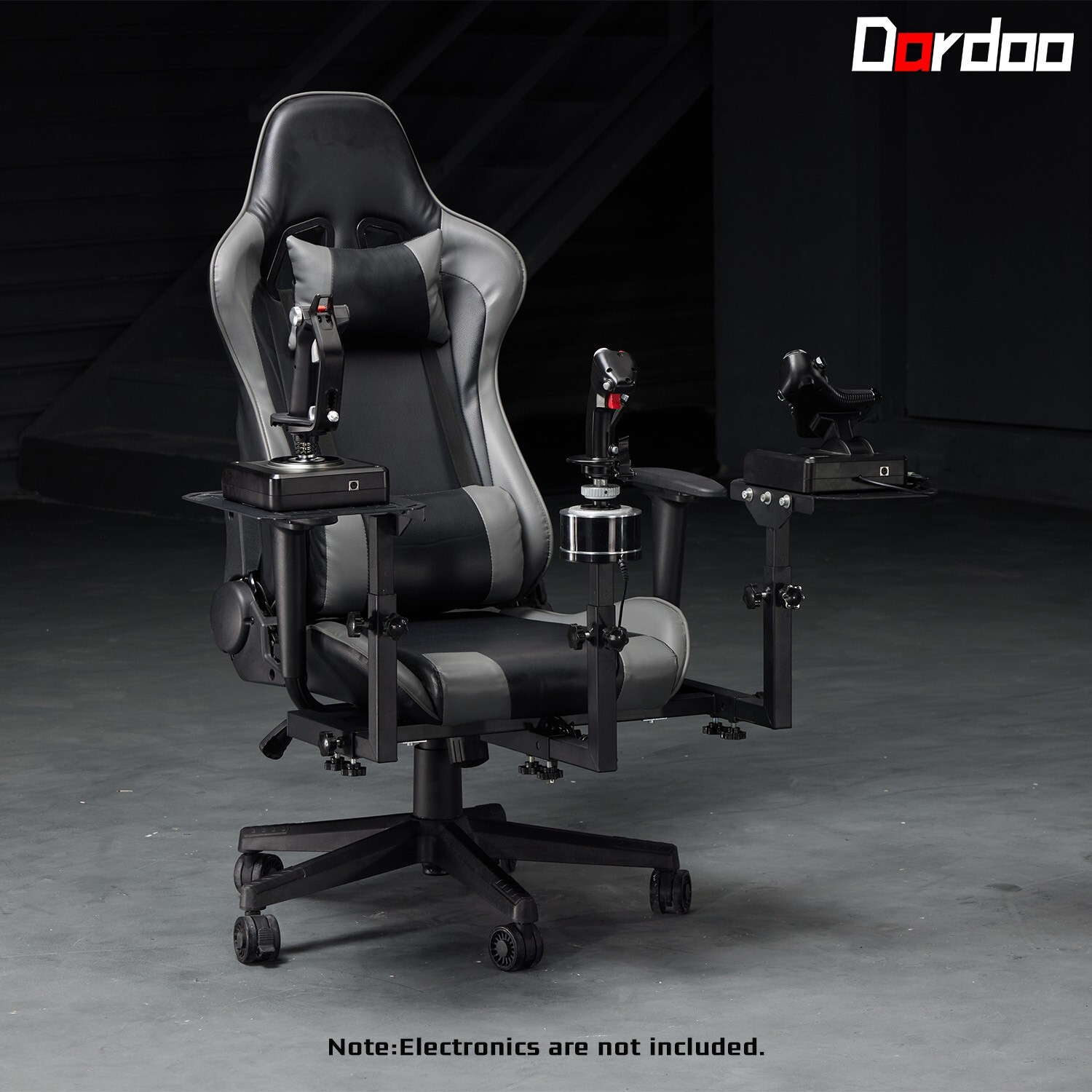 Dardoo Flight Simulator Cockpit Gray Chair Joystick Chair Mount Multifunctional$229.99Last checked Nov 18, 2026View on eBay
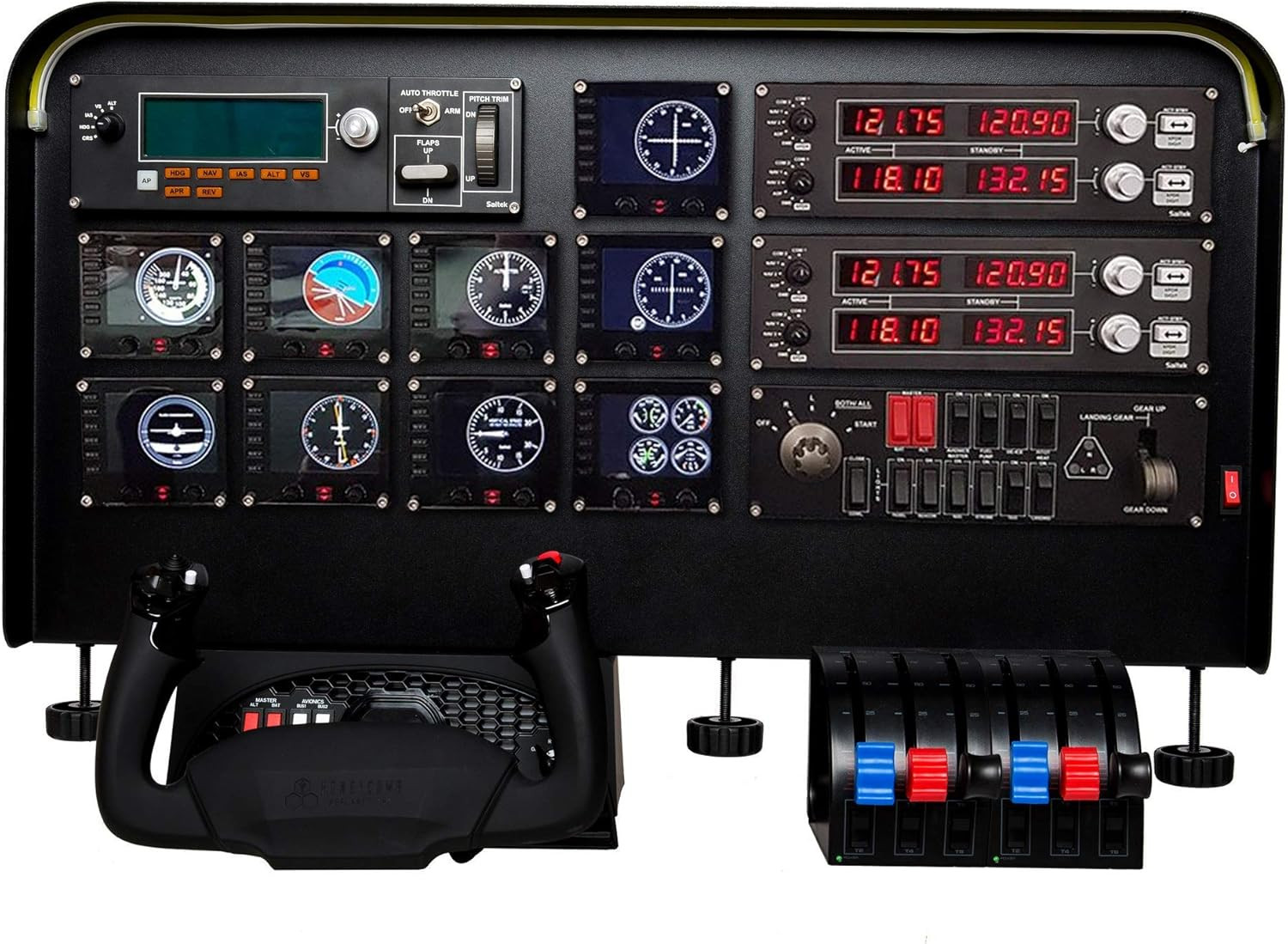 Complete Flight Simulator Cockpit - Compatible with Logitech Saitek Honeycomb$255.86Last checked Nov 18, 2026View on eBay
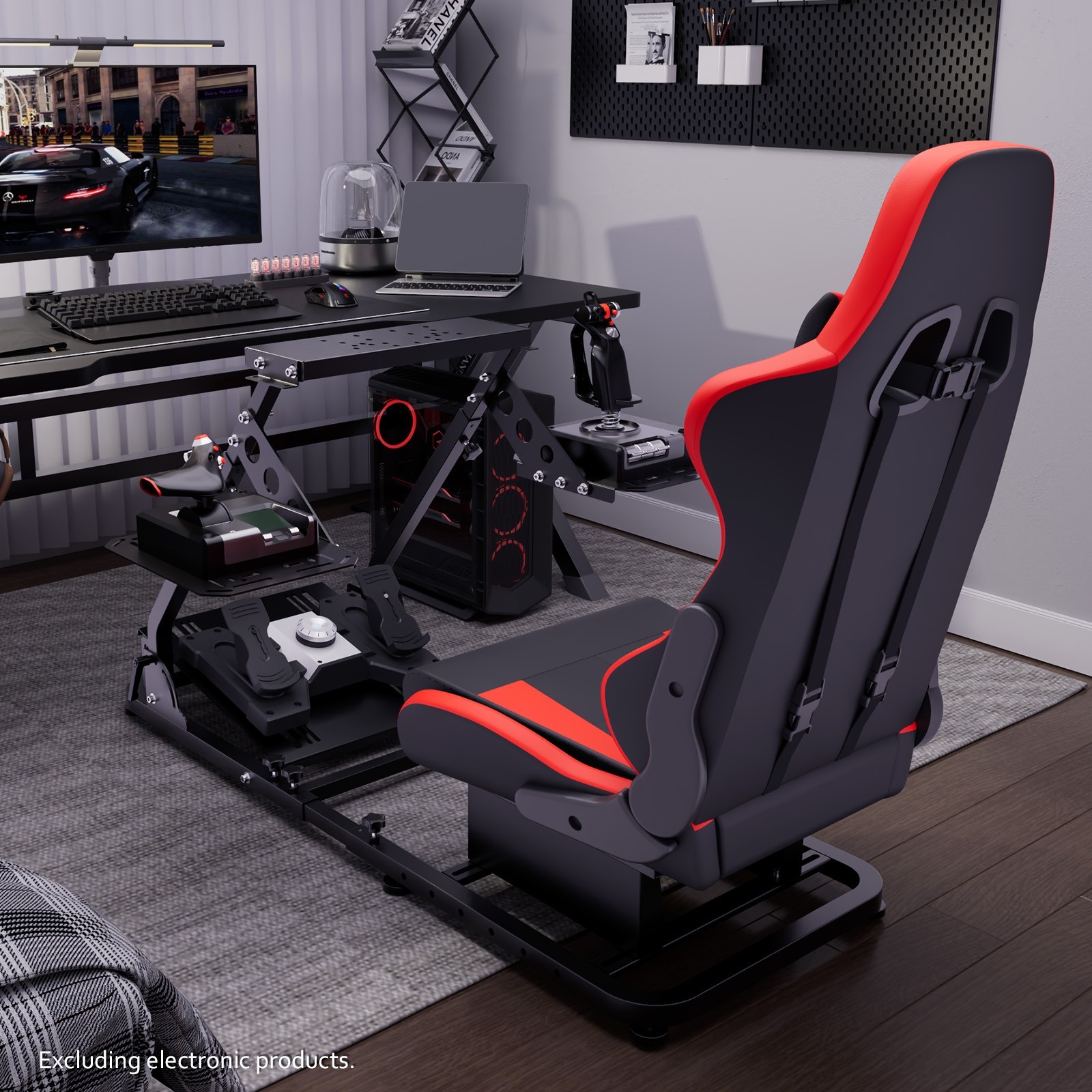 Hottoby Flight Simulator Cockpit with Red Seat Fits Logitech Thrustmaster Saitek$284.99Last checked Nov 18, 2026View on eBay
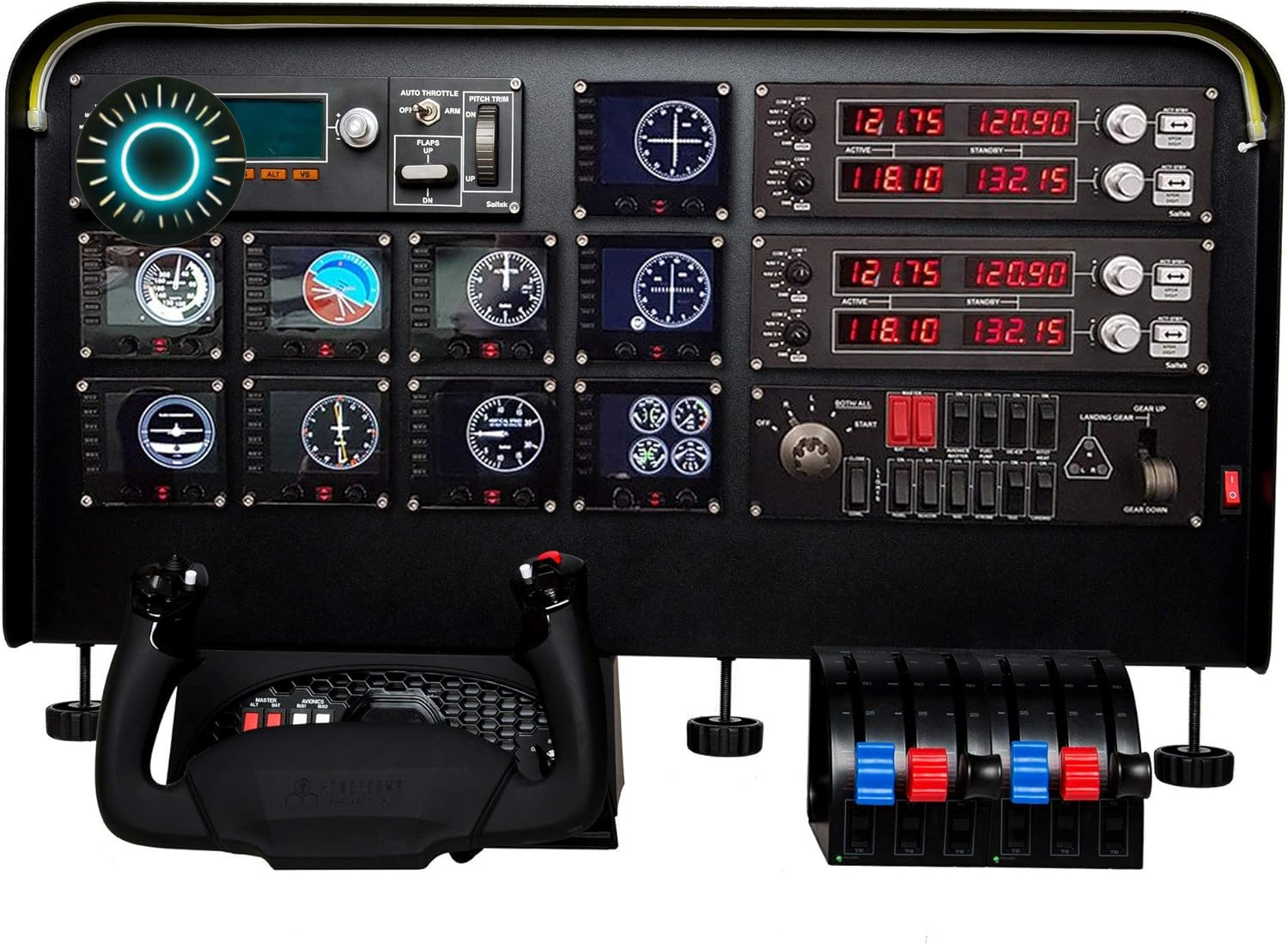 Complete Flight Simulator Cockpit - Compatible with Logitech Saitek Honeycomb$314.60Last checked Nov 18, 2026View on eBay
Highlights
- 737-style yokes use a column-mounted pitch axis with 6-8 inches of travel; desk-clamp models often reduce throw, so a dedicated cockpit frame preserves full authority.
- Throttle quadrants differ by axis count: 2-lever (throttle/prop) vs 4-lever (throttle/prop/mixture/gear) vs 737-specific 2-throttle + speedbrake + flap detents—match lever count to your aircraft profile.
- Rudder pedals use either potentiometers (budget, 8-bit resolution) or Hall-effect sensors (contactless, 12-bit+); Hall-effect pedals eliminate dead zones and drift over years of use.
- Mounting standards matter: 75mm/100mm VESA patterns and 8020 aluminum extrusion rails allow cross-brand compatibility; proprietary clamps lock you into one ecosystem.
Best use cases
- Best fit: airline-procedure training at home—pick a 737-specific yoke with column mount, 4-lever throttle with detents, and Hall-effect pedals bolted to an 8020 frame.
- Wrong fit: casual sightseeing in a living room—skip full cockpit frames and 737-specific switch panels; a desk-clamp yoke plus 2-lever quadrant is smaller and sufficient.
- Best fit: VR-first flying—choose mounts with quick-release plates and low-profile pedals so the headset can track without obstruction; avoid tall column yokes that block room-scale sensors.
- Wrong fit: multi-aircraft simming—skip 737-only replica panels; pick modular USB button boxes and a generic 4-lever quadrant that reconfigures per airframe.
Buying tips
- Measure desk depth before choosing a clamp yoke: most clamps need 2-3 inches of overhang and a flat lip; thick beveled desks require a dedicated stand instead.
- Match throttle lever count to your primary aircraft: 737 needs 2 throttle + speedbrake + flap axes; a 6-lever quadrant adds spoiler and parking brake but costs more desk space.
- Check sensor type on pedals and yoke: Hall-effect or magnetic sensors outlast potentiometers; potentiometer models need periodic cleaning and show spiking after heavy use.
- Confirm USB connection and power: bus-powered devices draw under 500mA; force-feedback yokes and motorized throttles need external 12V or 24V power and a powered USB hub.
Specs
| Yoke Sensor Type | Hall-effect vs potentiometer |
|---|---|
| Throttle Axes | 2 / 4 / 6 levers |
| Pedal Resolution | 8-bit potentiometer vs 12-bit Hall |
| Mount Standard | Desk clamp / 8020 / VESA |
Related searches
What to check before buying
- Measure your desk or frame width and depth; a full 737 yoke column needs at least 24 inches of width and 12 inches of depth clearance.
- Verify floor type and pedal grip: carpet needs hook-and-loop or weighted bases; hard floors need rubber pads to prevent sliding during rudder input.
- Check voltage and plug standard for any motorized or force-feedback unit: confirm 100-240V AC adapter compatibility for your region.
- Confirm companion parts: 737 throttle quadrants often require a separate mounting bracket and USB hub; pedals may need a firm base plate or frame attachment.
FAQ
Data sources: eBay / Amazon listings and product attribute feeds. Updated Nov 24, 2026.
Some links on this page are affiliate links. If you buy after clicking one, we may earn a commission at no extra cost to you. This does not change which products appear here or their order. Affiliate disclosure.