Shopping for projectors & screens starts with a deceptively simple question: do you need the surface that shows the picture, or the hardware that creates it? The VANKYO 100'' Foldable Projector Screen is a portable display surface, while the Hisense PX3-PRO is an ultra-short-throw projector. They are not interchangeable purchases: one helps finish a setup that already has a projector, and the other supplies the projection hardware.
Match the choice to that missing piece before weighing format, connectivity, or placement. That shortcut makes this comparison much clearer.
Quick verdict
Choose the VANKYO when a portable, foldable 16:9 screen is the part your setup lacks. Choose the Hisense when you need a 4K UHD projector with ultra-short-throw projection and listed Bluetooth, HDMI, and USB connectivity. The listed-price spread is $2,392.61, reinforcing that these serve fundamentally different roles.
At a glance
| Product | Listed price | Purchase type |
|---|---|---|
| VANKYO Foldable Projector Screen | USD 7.39 | Manual projection screen |
| Hisense PX3-PRO | USD 2,400.00 | Ultra-short-throw projector |
Where each product wins
VANKYO wins for a portable screen surface
The VANKYO is the clearer fit when you already have projection equipment and want a screen that can move between rooms or accompany an outdoor movie setup. Its listed foldable, portable, anti-crease, and wall-mountable features are directly relevant to that use. The description also mentions peel-and-stick hooks and a storage bag, keeping the purchase focused on convenient screen handling rather than adding another image source.
Hisense wins for projection hardware and connectivity
The Hisense is the choice when the missing component is the projector itself. Its 4K UHD designation, ultra-short-throw format, DLP display technology, and native 3840 x 2160 resolution give the comparison a clear hardware distinction. Bluetooth, HDMI, and USB connectivity add practical connection options, while the description identifies an 80-150-inch screen range and Xbox-oriented design. Those details make it the more relevant fit for large-screen home cinema or gaming projection.
Product notes
VANKYO Foldable Projector Screen
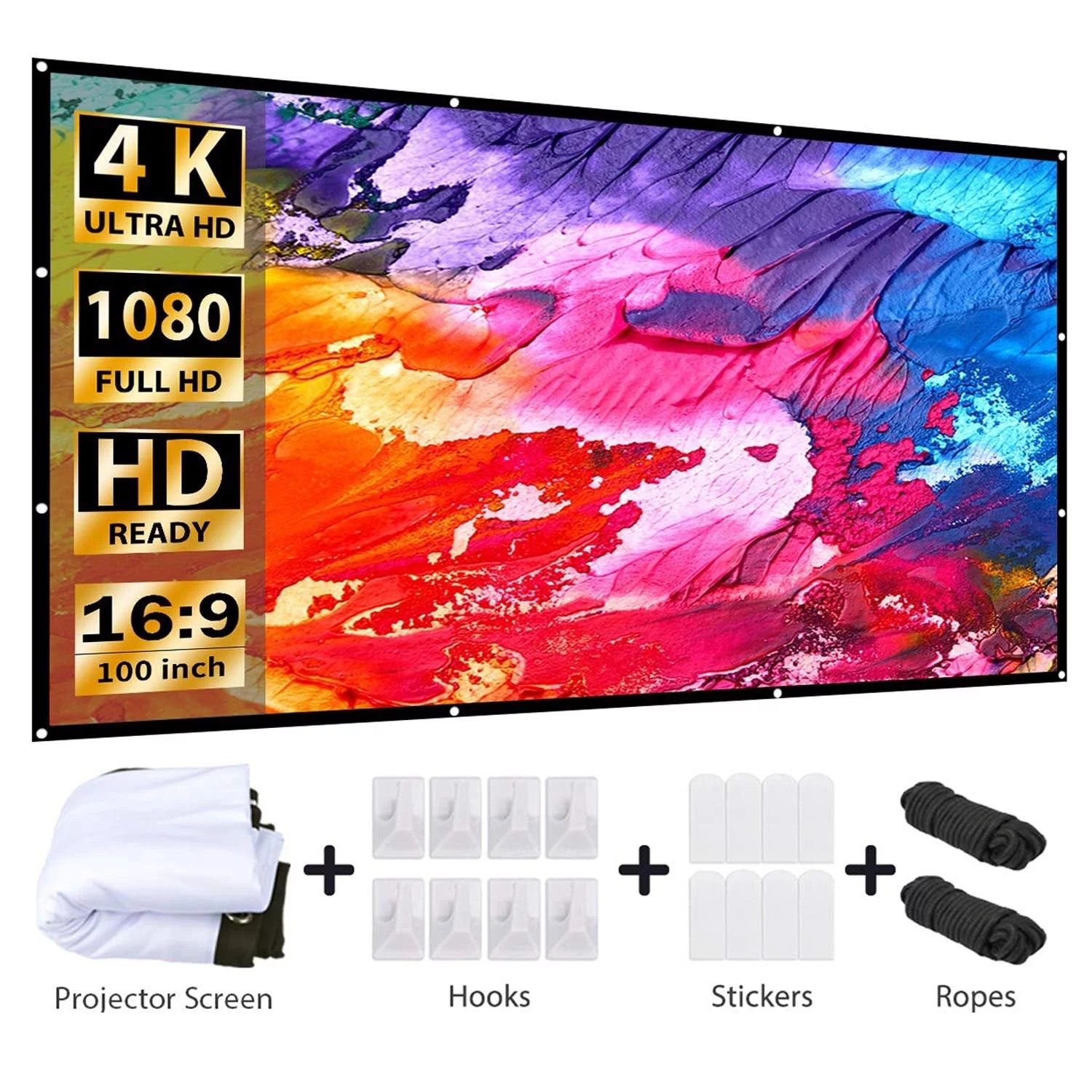
VANKYO makes sense for a shopper who needs a dedicated surface without replacing an existing projector. The listed 16:9 aspect ratio suits widescreen movie framing, and the lightweight foldable design, storage bag, anti-crease feature, and peel-and-stick hooks all support portable use. Wall-mountable functionality adds another setup direction, while the title specifically positions the screen for outdoor home theater and movie use. The limitation is scope: this is a manual screen, not the device that generates the image, so it cannot serve as a standalone projection system. Pick VANKYO when portability, foldability, and a movable viewing surface are the priorities.
Hisense PX3-PRO Projector
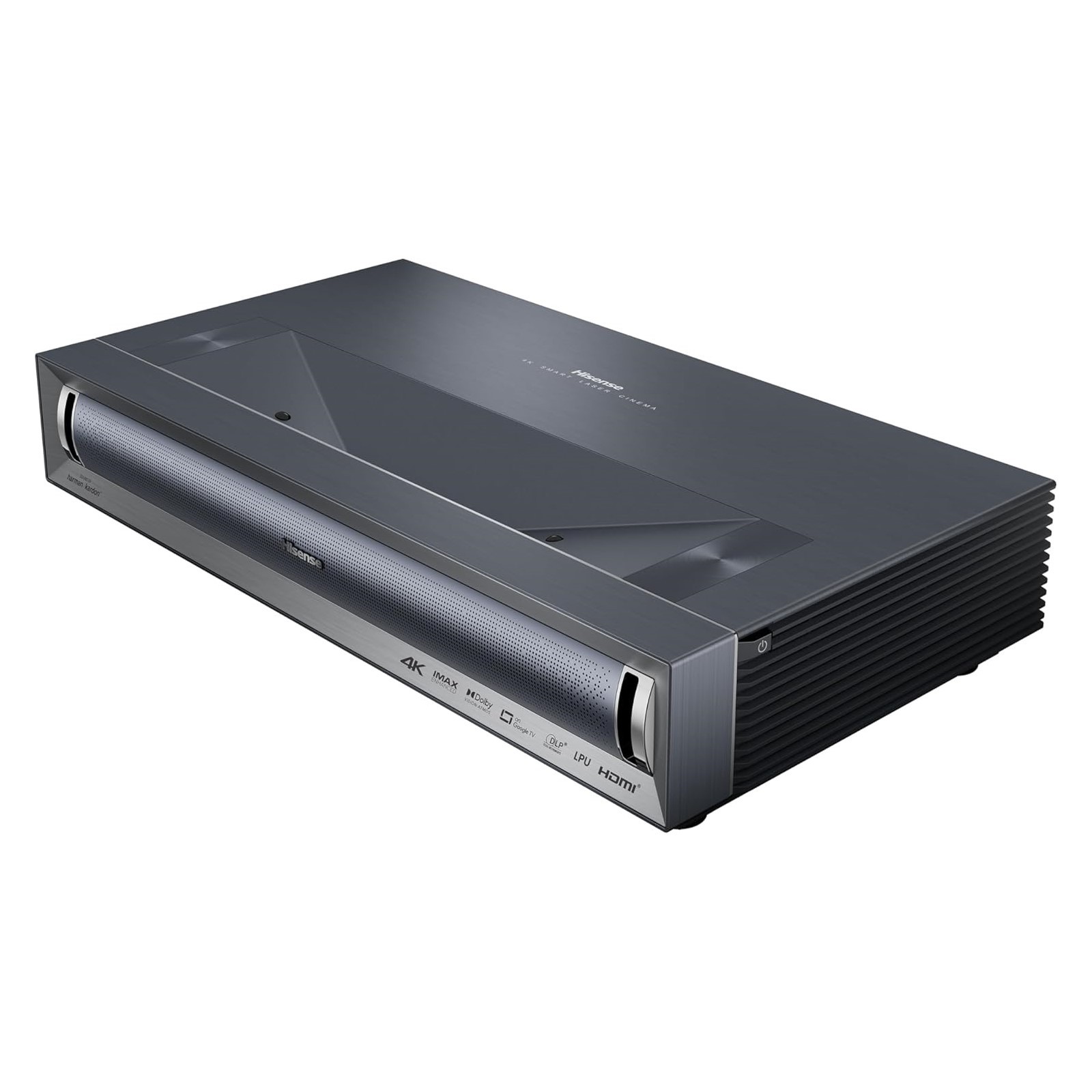
Hisense PX3-PRO suits shoppers looking for the image-generating component of a home theater. The description highlights triple-laser projection, a 4K UHD presentation, an 80-150-inch screen range, and coverage of 110% of the BT. 2020 color gamut. Its ultra-short-throw design is paired with Bluetooth, HDMI, and USB connectivity, and the product is described as designed for Xbox. The main limitation is the listed Certified - Refurbished condition, which matters to anyone specifically seeking an item listed as New. The $2,400 price also makes this a substantial projector purchase rather than a screen-only addition.
Final choice by use case
- You already own a projector and need a movable screen: Choose the VANKYO Foldable Projector Screen for its portable, foldable, wall-mountable design and outdoor movie positioning.
- You need the projector itself: Choose the Hisense PX3-PRO for ultra-short-throw projection, native 3840 x 2160 resolution, and listed Bluetooth, HDMI, and USB connections.
- You want an Xbox-focused projection setup: The Hisense PX3-PRO is the direct match because its description identifies it as designed for Xbox.
- You are comparing a screen purchase with a complete projection component: Treat the VANKYO as the surface choice and the Hisense as the hardware choice; the listed roles are different, so the right pick depends on what your setup is missing.