Choosing smart home electronics for home security starts with a practical fork: do you want to manage access at one entrance, or arrange an alarm system across indoor areas? The Electronic Smart Door Lock APP Fingerprint Card Password Key Home Security Lock is built around keyless door entry, while the Wireless Smart Home Security Alarm System with RFID takes the broader alarm-system route. The better choice depends on the job you need it to do, not simply on which one has more components.
Quick verdict
Choose the Electronic Smart Door Lock when the main goal is controlling access at a door with several entry methods. Choose the Wireless Smart Home Security Alarm System with RFID when the goal is an indoor alarm arrangement rather than changing a door lock. Their roles are distinct: one is for entry control, and the other is for a wireless sensor-and-alarm setup.
At a glance
| Aspect | Electronic Smart Door Lock | Wireless RFID Alarm System |
|---|---|---|
| Listed price | USD 62.99 | USD 79.99 |
| Main format | Electronic door lock | Wireless alarm system |
| Listed specification | Door thickness: 60mm | Indoor only |
| Smart-home control | TTLOCK app | Amazon Alexa and Google Home |
Where each product wins
Electronic Smart Door Lock for entry-focused setups. This is the appropriate format when your decision centers on a single entrance and how people will open that door. It keeps the purchase focused on access control instead of distributing alarm equipment through interior spaces.
Wireless RFID Alarm System for an indoor alarm layout. This format is the stronger match when you are planning coverage at more than one indoor point. An alarm-system approach makes more sense than replacing a lock when central controls and separate detection components are the priority.
Product notes
Electronic Smart Door Lock APP Fingerprint Card Password Key Home Security Lock
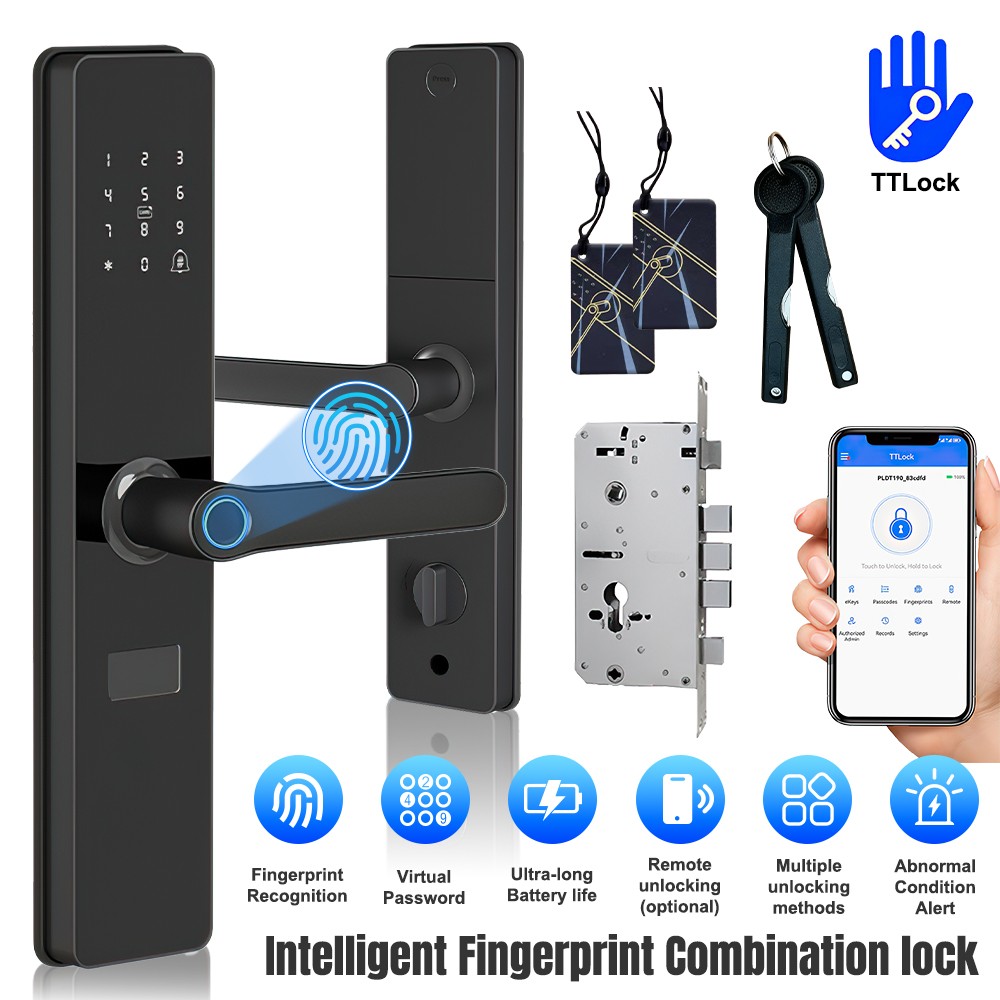
The Electronic Smart Door Lock is the more direct answer to a door-access question. It combines TTLOCK app management with fingerprint, password, IC-card, temporary-password, and mechanical-key entry, allowing different access methods without changing the device's basic role. Local storage and real-time viewing of unlocking records, adjustable volume, and a low-battery reminder add to its control-oriented focus. At USD 62.99, it has the lower listed price. Its limitation is scope: it is a lock for a door rather than an indoor alarm arrangement with multiple separate sensors. Make it the pick for keyless entry management at an entrance, particularly when temporary passwords are useful.
Wireless Smart Home Security Alarm System with RFID
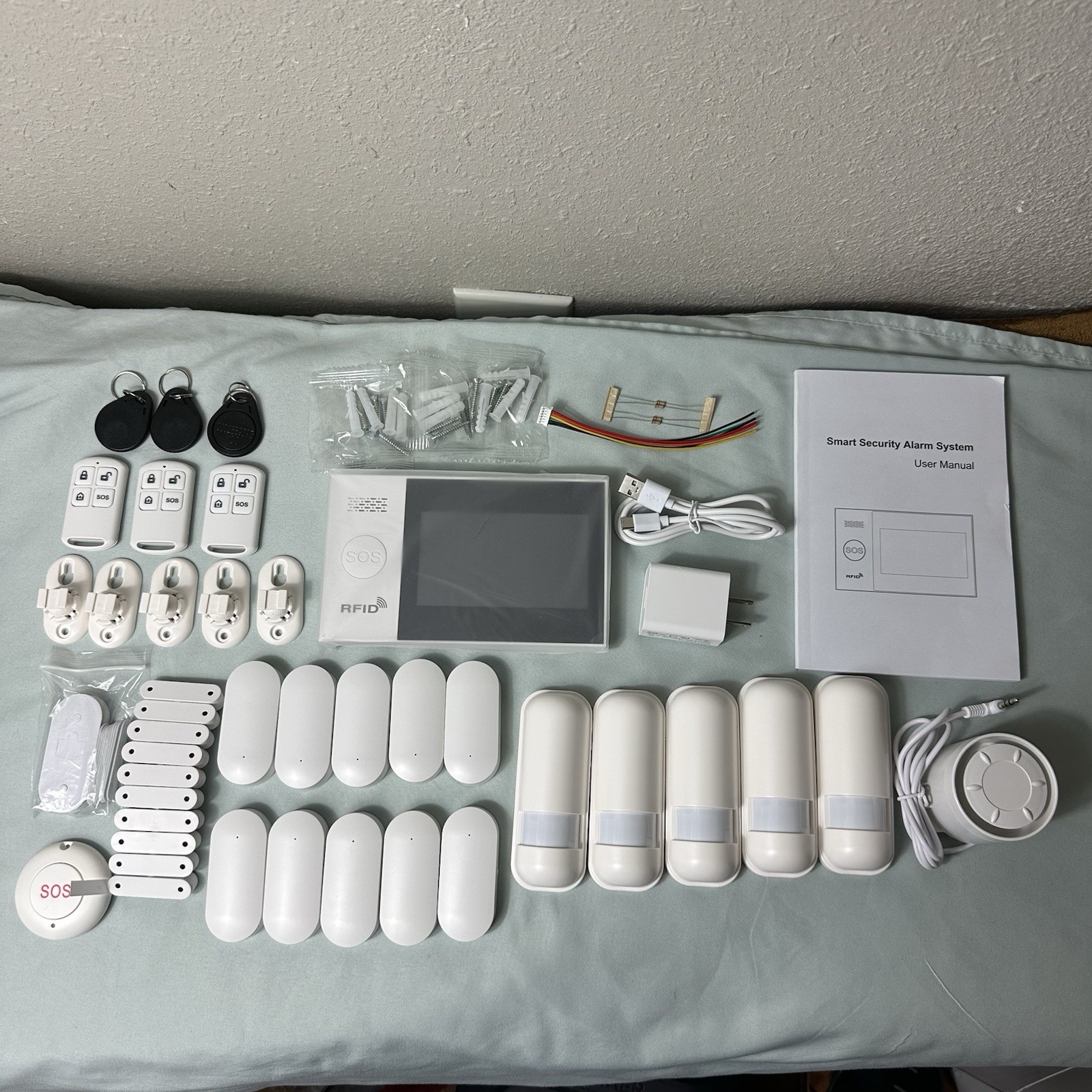
Wireless Smart Home Security Alarm System with RFID is designed around a broader indoor alarm layout rather than replacing a door lock. Its set includes 10 door sensors, 5 infrared sensors, 3 remote controls, and 3 RFID tags, providing components for several monitored locations. Wireless connectivity, keypad control, and Amazon Alexa and Google Home compatibility suit a connected home setup. Its USD 79.99 listed price is USD 17 higher than the door lock. The stated limitation is its indoor-only location, so its role is centered on interior monitoring. Select it when a multi-component alarm system matters more than adding fingerprint or card access to a particular door.
Final choice by use case
Pick the Electronic Smart Door Lock APP Fingerprint Card Password Key Home Security Lock for a dedicated entrance project where app-managed keyless access is central. Pick the Wireless Smart Home Security Alarm System with RFID for an indoor configuration where the included sensors, remotes, and RFID tags are more relevant. The deciding question is simple: one controlled door, or a broader indoor alarm layout.