Choosing the right antenna tuners & SWR meters comes down to a basic question: do you need to measure an antenna system, or manually match it to a ham radio transmitter? The SARK100 and Heathkit SA-2060A serve different roles, so the lower listed price is not the only deciding factor. The SARK100 is an analyzer for SWR and impedance readings; the Heathkit is a manual HF tuner built around physical adjustments and power monitoring.
Quick verdict
Choose the SARK100 Antenna Analyzer Meter when SWR and impedance measurement are the priority. Its 1-60 MHz coverage, configurable measurement steps, compact design, and $74.99 listed price suit a measurement-first setup.
Choose the Heathkit SA-2060A when you specifically need a manual HF antenna tuner with a roller inductor, multiple feed-line connections, and dual forward/reflected-power meters. Its listed price is $250.00, creating a $175.01 gap between the two.
At a glance
| Product | Listed price | Primary role | Notable listed details |
|---|---|---|---|
| SARK100 Antenna Analyzer Meter | $74.99 | SWR and impedance analyzer | 1-60 MHz; configurable 100 Hz, 1 kHz, 10 kHz, and 100 kHz steps |
| Heathkit SA-2060A Roller Inductor Antenna Tuner | $250.00 | Manual HF antenna tuner | Roller inductor; 2KW capacity; dual analog meters |
Where each product wins
- SARK100: Best aligned with antenna checks, SWR readings, and impedance measurement. The compact case and stated carry-and-store design also make it the more convenient format for keeping an analyzer in a bag.
- Heathkit SA-2060A: Better aligned with hands-on HF matching. The roller inductor provides continuous adjustment across HF bands, while the rear panel accepts two coax lines, single wire, and balanced feed lines.
Product notes
SARK100 Antenna Analyzer Meter
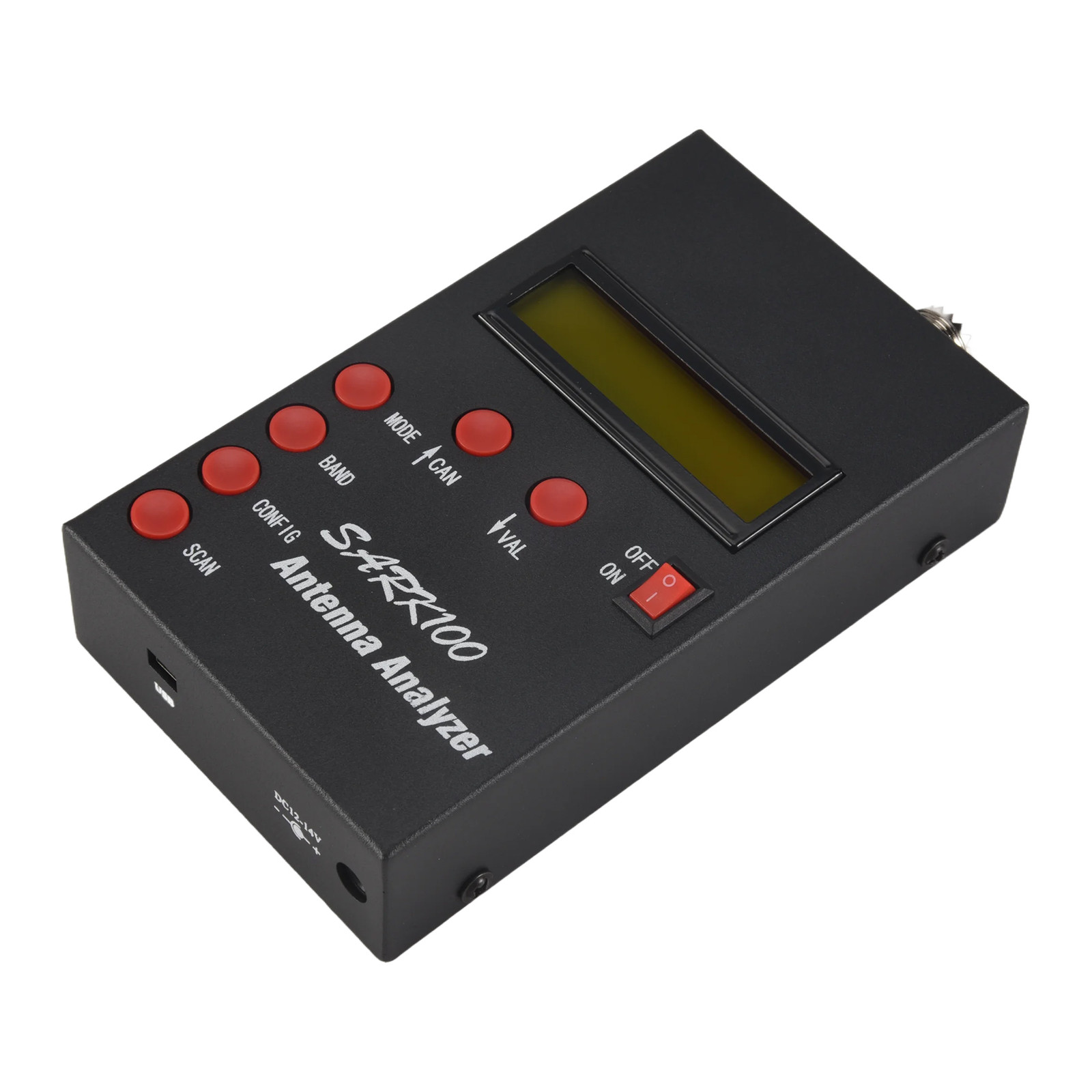
The SARK100 makes the strongest case for shoppers whose main task is measuring an antenna system rather than manually tuning it. Its title specifies 1-60 MHz shortwave coverage, and the description identifies SWR and impedance as measured parameters. Configurable steps from 100 Hz through 100 kHz give the user control over measurement increments, while the compact case is described as easy to carry and store in a bag. At $74.99, it is the lower-priced choice in this comparison. The limitation is its external power requirement: operation calls for DC 12-14V at 500mA through a 2.1mm center-positive jack. Its stated role is an analyzer and meter, so shoppers seeking a roller-inductor matching control will need the other design.
Heathkit SA-2060A Roller Inductor Antenna Tuner
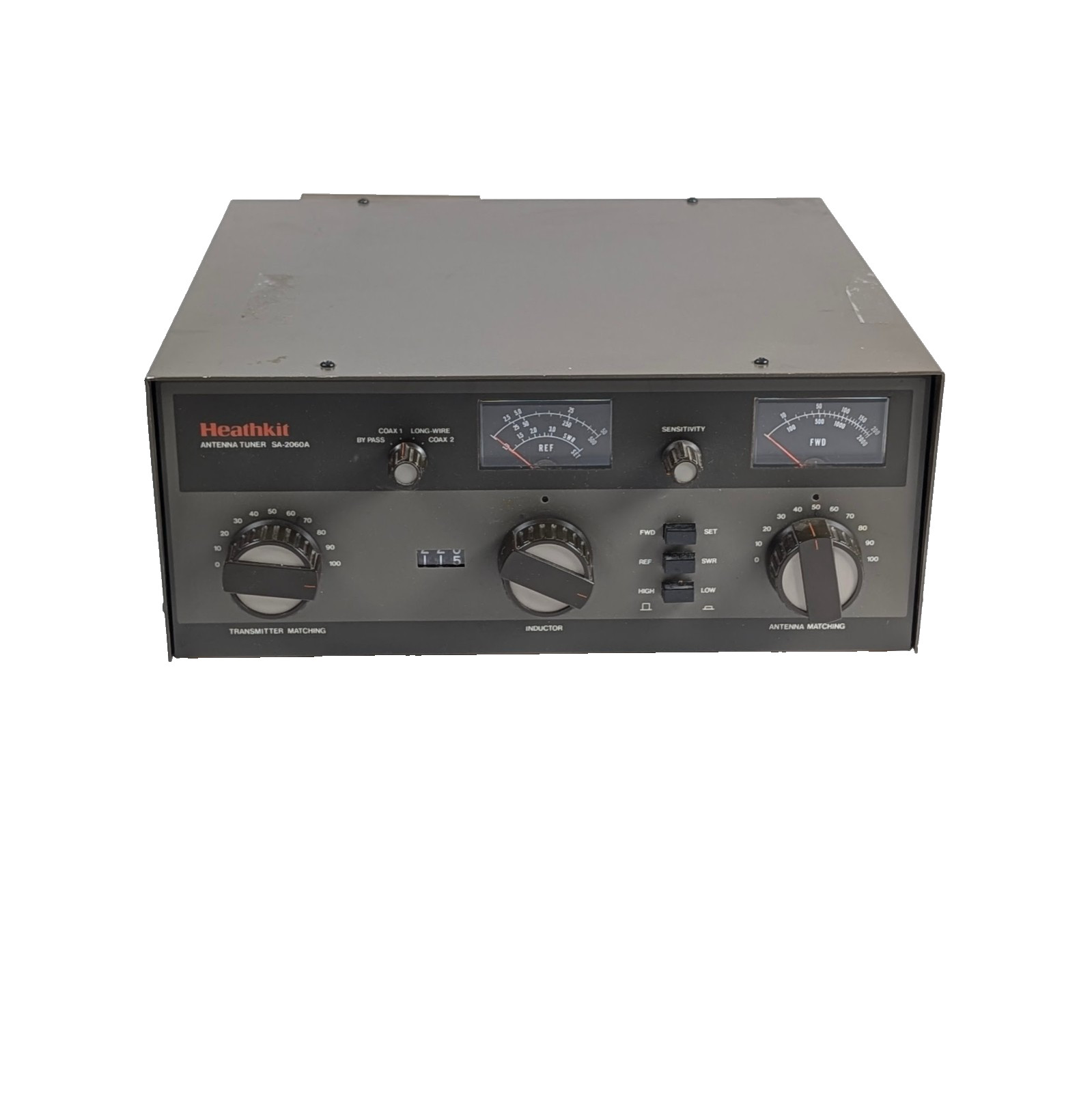
The Heathkit SA-2060A is the more suitable choice for a dedicated manual HF matching setup. Its roller inductor is described as providing continuous adjustments across HF bands, and the rear-panel switching accommodates two coax lines, single wire, and balanced feed lines. Dual analog meters monitor forward and reflected power, giving the front panel a monitoring role in addition to the large rotary tuning controls. The stated 2KW capacity is another concrete reason to choose it when that capacity fits the radio system. The trade-off is equally clear: the unit is listed as used and its type is manual. At $250.00, it also asks for a substantially larger outlay than the SARK100, making its hands-on tuner design the reason to select it rather than its measurement role.
Final choice by use case
For SWR and impedance analysis, choose the SARK100. It directly identifies those measurements, covers 1-60 MHz, and offers configurable frequency steps.
For manual HF antenna matching, choose the Heathkit SA-2060A. The roller inductor, dual meters, and support for coax, single-wire, and balanced feed lines match that use case more directly.
For a ham radio impedance matcher with physical tuning controls, the Heathkit is the clear fit. For a compact antenna analyzer, the SARK100 is the more focused choice. The right pick depends on whether the next task is reading the antenna system or adjusting the match.