Choosing the right receiver for an FPV radios & batteries setup comes down to a practical tradeoff: do you need a receiver centered on straightforward model control, or one with added signal and update features? RadioMaster's ER4 and RP3 V2 share ExpressLRS at 2.4GHz, so the useful decision is feature fit rather than the underlying radio system. ER4 keeps the brief focused, while RP3 V2 offers a longer feature list at a higher listed price.
Quick verdict
ER4 fits a control-output brief and a lower listed price. RP3 V2 fits a signal-and-update brief built around extra receiver hardware. Since the core radio system and frequency are shared, choose based on the attributes that match your model and setup priorities.
Price and feature snapshot
| Comparison | RadioMaster ER4 | RadioMaster RP3 V2 |
|---|---|---|
| Listed price | USD 17.49 | USD 22.49 |
| Radio system | ExpressLRS (ELRS) | ExpressLRS (ELRS) |
| Frequency | 2.4GHz | 2.4GHz |
Where each receiver wins
RadioMaster ER4
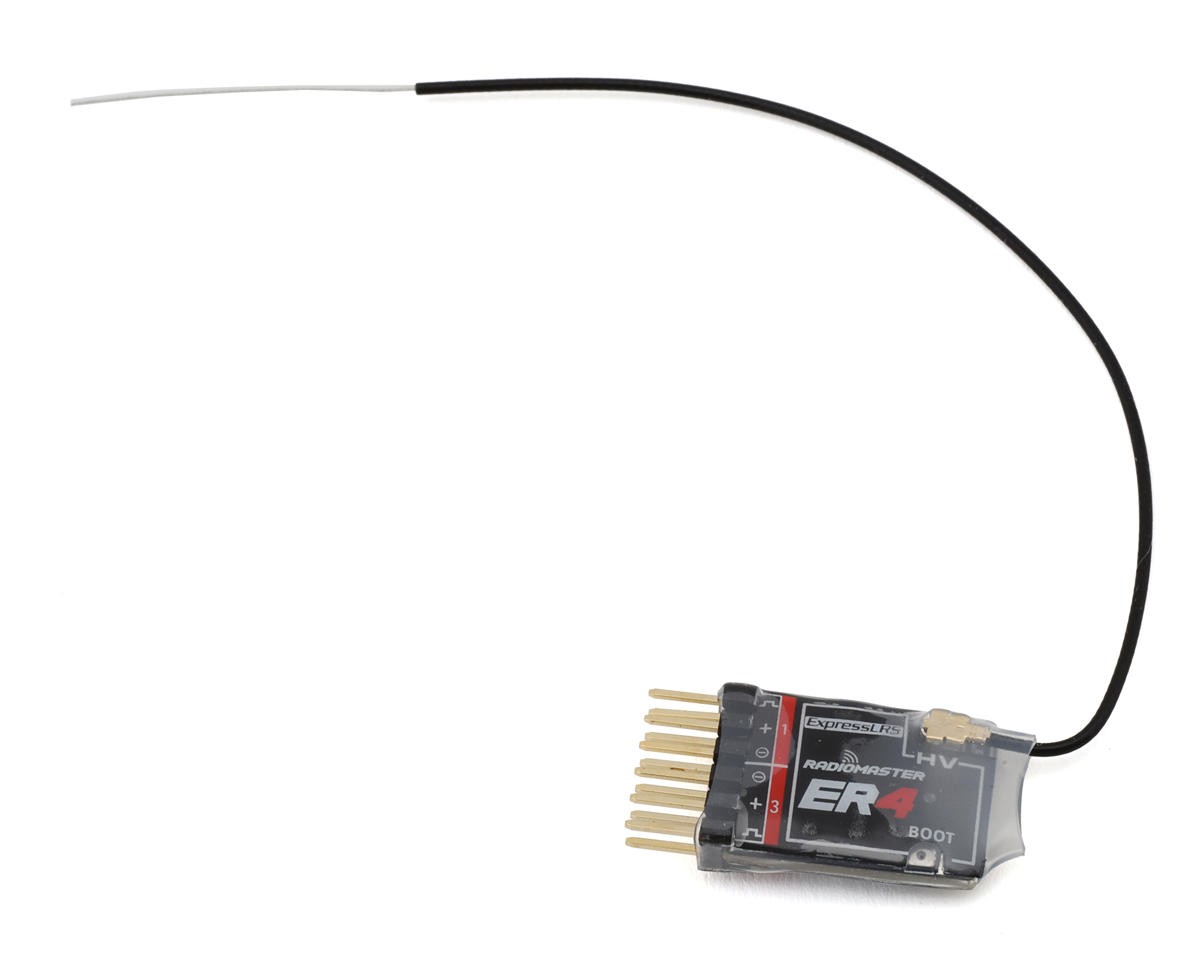
ER4 is the more direct fit for small aircraft, boats, cars, and other models that benefit from a compact receiver with a defined control-channel requirement. Its focus is practical and model-oriented, making it easier to match when the build starts with the number of outputs needed rather than signal-hardware additions. The compact design and flexible configuration also support a straightforward installation brief. The tradeoff is a narrower feature emphasis: shoppers specifically seeking antenna diversity, a built-in TCXO, or WiFi firmware updates are looking toward RP3 V2's stated feature set instead. ER4 wins on clear small-model positioning and a focused control brief, not on an assumed overall performance ranking.
RadioMaster RP3 V2
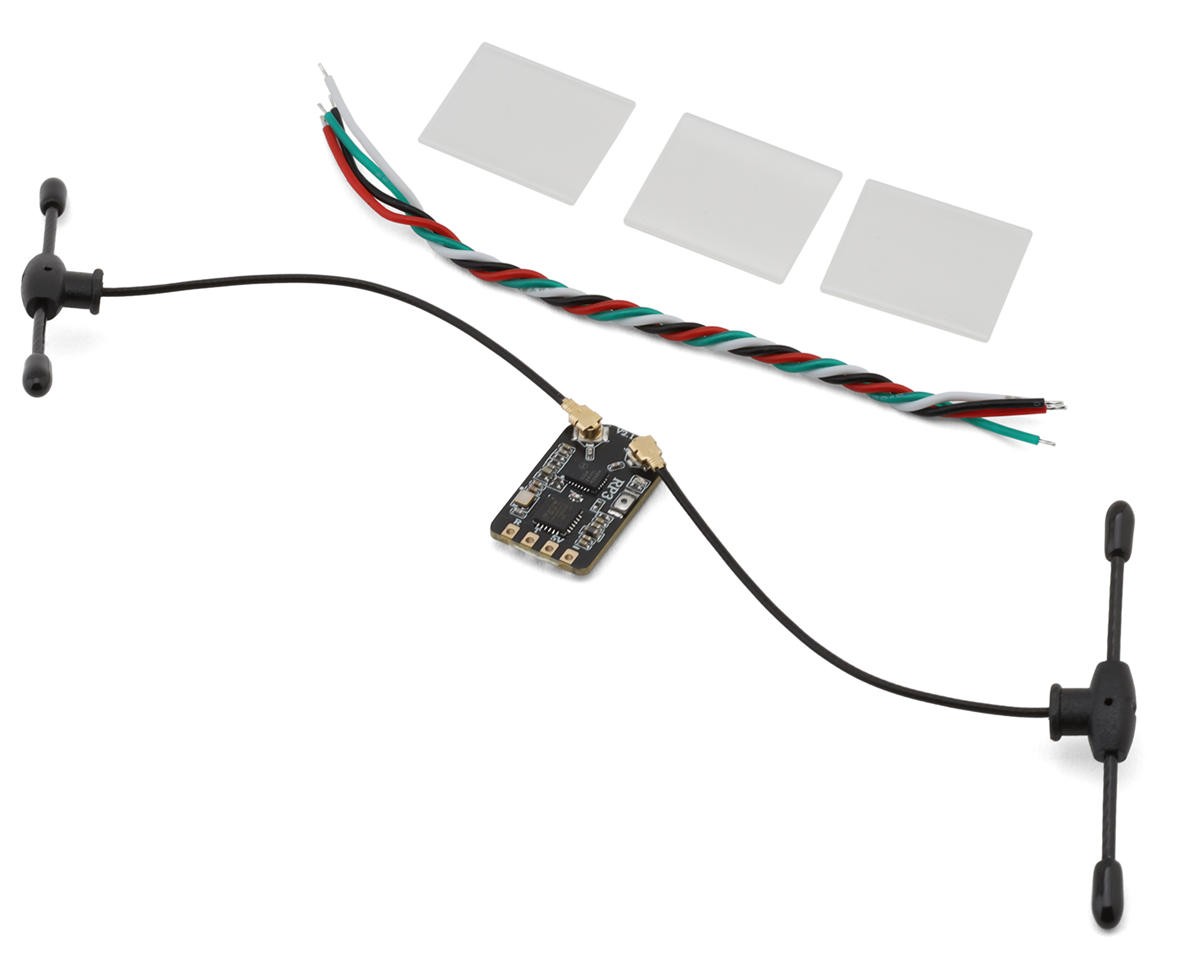
RP3 V2 wins for a feature-led receiver brief. It names antenna diversity for signal stability, a built-in TCXO, LNA for extended receiver range, PA, two antennas, and WiFi updates. Those are concrete reasons to choose it when signal stability, range, or firmware convenience is part of the plan. It also specifies reference points such as a 2.404-2.479 GHz frequency range and 500Hz/F1000Hz maximum receive refresh rate; those numbers should be treated as specifications, not automatic proof of superiority. The tradeoff is that its extra feature set carries a USD 5 price spread over ER4, so the higher amount makes the most sense when one of those named additions is relevant.
Product notes
RadioMaster ER4 4-Channel ELRS Receiver
ER4 earns its place when a compact receiver for small models is the goal. The title's 4-Channel Receiver wording gives a concrete channel-output reference, while flexible configuration and high-speed response add to its control-focused appeal. At USD 17.49, it is the lower-priced choice in this comparison, keeping the decision centered on the stated setup rather than additional receiver hardware. The limitation is fit rather than a defect: a buyer who specifically wants antenna diversity, a built-in TCXO, or WiFi firmware updates has a more direct match in RP3 V2. For small aircraft, boats, cars, and similar models, ER4 is the straightforward pick when its channel layout matches the build.
RadioMaster RP3 V2 ELRS Receiver
RP3 V2 suits a build where update convenience and a receiver's physical signal features matter. Its two-antenna arrangement and WiFi update capability give concrete reasons to choose it, while its compact and versatile positioning keeps it applicable across FPV setups. The limitation is cost: at USD 22.49, RP3 V2 is USD 5 above ER4. That higher amount is easiest to justify when antenna and firmware features are part of the brief; a buyer who simply needs a defined control-channel layout may prefer ER4's 4-Channel Receiver title. RP3 V2 therefore earns the nod for feature-led selection, not from assuming that a larger refresh-rate number automatically means a better result.
Final choice by use case
- Choose RadioMaster ER4 when a compact receiver, small-model positioning, and the lower listed price are the practical tie-breakers.
- Choose RadioMaster RP3 V2 when added signal and update hardware matter more than the price spread.
- For a shared-platform decision, start with the receiver's stated purpose: ER4 is framed around model control, while RP3 V2 is framed around signal stability and configuration.