Choosing an FPV flight controller comes down to a practical fork: do you need a straightforward Acro board with clearly specified connections, or a controller aimed at an FPV freestyle setup with named memory and battery specifications? The Naze32 F3 and SpeedyBee F7 V3 take different approaches. Your firmware plan, wiring needs, frame dimensions, and power setup should decide the winner-not simply the longer product name.
Quick verdict
Pick the Naze32 F3 when the explicit Acro 6DOF designation and Betaflight/Cleanflight naming align with your build. Pick the SpeedyBee F7 V3 when its 500MB flash and 3S-6S Lipo specification are relevant to an FPV freestyle drone. The Naze32 is the more connection-focused choice, while the SpeedyBee is aimed at a more specifically defined freestyle brief.
Comparison at a glance
| Product | Price | Key listed detail | Best fit |
|---|---|---|---|
| Naze32 F3 | USD 24.99 | Acro 6DOF and full cable set | Builds where bundled connections matter |
| SpeedyBee F7 V3 | USD 65.55 | F7 V3 controller with universal and electric compatibility details | FPV freestyle drone builds |
Where each product wins
Where the Naze32 F3 has the edge
The Naze32 gives a builder several concrete planning anchors: a MicroUSB socket, four 4-pin JST-SH sockets, two 8-pin JST-SH sockets, and through-holes for ESC or servo connections. That makes it the clearer choice when wiring arrangement matters as much as the controller itself. The 36x36mm board and 30.5mm mounting-hole measurements also give a precise physical reference before choosing a frame.
Where the SpeedyBee F7 V3 has the edge
SpeedyBee has the clearer fit for an electric FPV freestyle drone. Its compatibility details identify universal compatibility and electric power, while the product wording points specifically toward freestyle use. That combination is useful for a shopper whose project already matches that category. The choice is less compelling when those terms do not describe the build, because the higher price then needs to be justified by a specification that the project will actually use.
Product notes
Naze32 F3
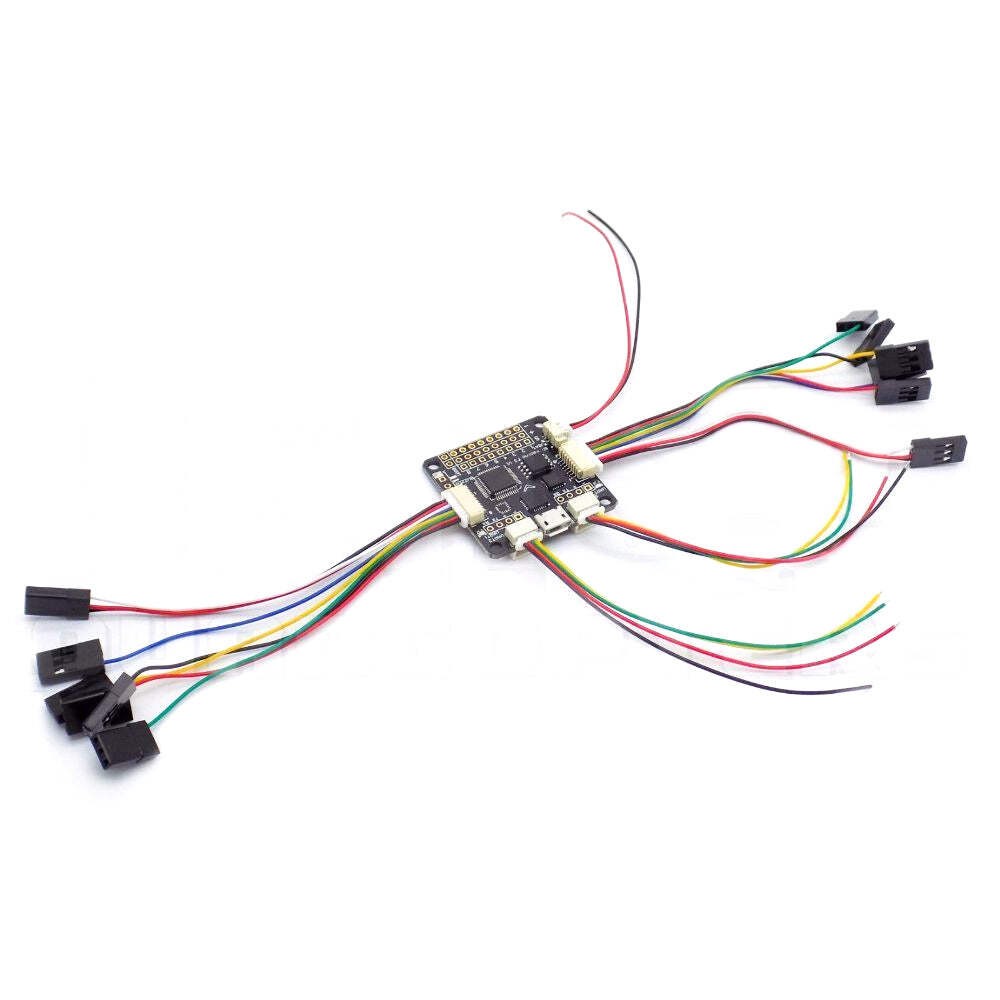
The Naze32 F3 is a sensible match when connection planning is central to the build. A MicroUSB socket, four 4-pin JST-SH sockets, two 8-pin JST-SH sockets, and through-holes for ESC or servo connections give the board a clearly described interface layout. The package also includes a full cable set, which is a concrete reason to choose it for a wiring-led project. Its limitation is physical: the board is specified at 36x36mm with 30.5mm mounting holes, so the frame plan needs to account for that footprint. STM32F3 and MPU6050 hardware are also named, but the deciding question remains whether those dimensions and connections suit the intended build.
SpeedyBee F7 V3
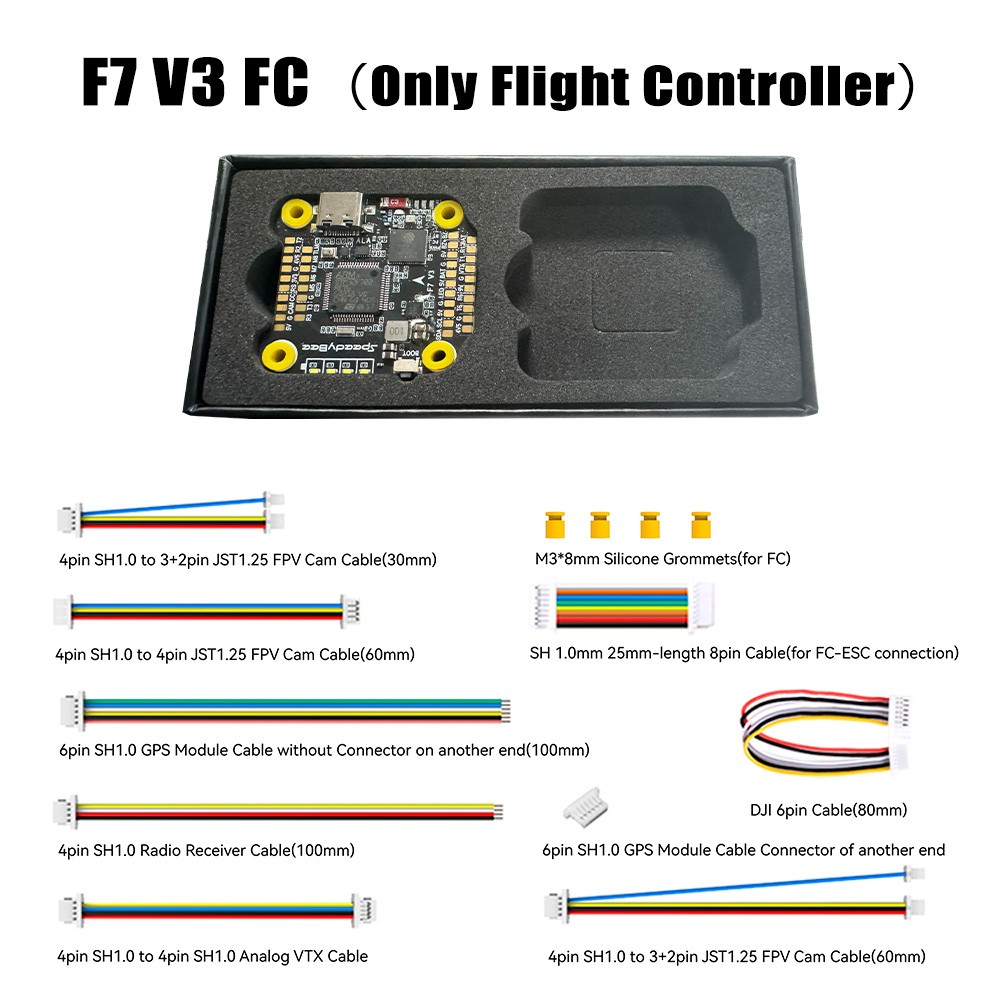
SpeedyBee F7 V3 is aimed at a shopper whose project already calls for an FPV freestyle drone. Its compatibility details identify universal compatibility and electric power, while the product name gives the board a defined F7 V3 designation. The 500MB flash specification is a concrete reason to choose it when that memory capacity is part of the build brief. The limitation is cost: USD 65.55 is $40.56 above the Naze32. That gap matters when the named flash capacity is not relevant to the project. Choose SpeedyBee for specifications that match the craft, rather than treating the F7 label alone as a reason to spend more.
Final choice by use case
- For an Acro 6DOF project centered on Betaflight or Cleanflight: choose the Naze32 F3.
- For an FPV freestyle drone where the 3S-6S Lipo specification matters: choose the SpeedyBee F7 V3.
- For a build planned around clearly described board connections and a bundled cable set: the Naze32 F3 is the more direct match.
- For a project that specifically benefits from the named 500MB flash specification: the SpeedyBee F7 V3 is the better-aligned choice.
Both are defined by different build priorities. Match the controller to the firmware, wiring, frame footprint, and power brief already established for the drone.