Choosing among antenna tuners & SWR meters is less about finding one universal winner than matching the tuner's power, frequency range, connection, and control layout to your radio. The MFJ-949E and Trio Kenwood AT 230 take different approaches: the MFJ emphasizes a manual tuner with several built-in functions, while the Trio centers on a Kenwood-compatible, coaxial desktop setup. If you are comparing antenna tuners & SWR meters for a ham radio shack, here is the practical split.
Quick verdict
MFJ-949E fits shoppers drawn to multiple built-in tuning functions and the lower listed price. Trio Kenwood AT 230 fits shoppers who need Kenwood compatibility, coaxial SO-239 connectivity, and a desktop format. Both list SWR and power measurement, so that shared capability is not the deciding factor.
Side-by-side comparison
| Comparison | MFJ-949E | Trio Kenwood AT 230 |
|---|---|---|
| Listed price | USD 150.00 | USD 189.99 |
| Power shown | 300W | 200W |
| Frequency shown | 1.8-30 MHz | 1.8-29.7 MHz |
| Type or setup | Manual; to fit ham radio transceiver | HF; compatible with Kenwood |
| Measurement | Lighted cross-needle SWR and peak/average wattmeter | SWR meter and power meter |
Where each product wins
MFJ-949E: built-in tuning flexibility
MFJ-949E wins when the tuner needs to accommodate several named antenna arrangements. It covers coax-fed antennas, random or long wires, and balanced lines. A built-in 50-ohm dummy load, eight-position antenna selector, and internal 4:1 balun add useful functions for a varied shack. The manual format is also clear: adjustments are hands-on rather than automatic. Choose the MFJ when those built-in controls and antenna-support details matter more than having a simpler connection brief.
Trio Kenwood AT 230: a defined connection match
Trio Kenwood AT 230 wins when connection fit is central to the setup. It is identified as compatible with Kenwood and uses coaxial SO-239 connectivity, giving shoppers two concrete matching points. Its desktop form factor and 11.3-inch length also help with bench planning. The SWR and power meters cover the same basic measurement role as the MFJ's meter, so the Trio's case rests more on its connection and format than on metering alone.
Product notes
MFJ-949E Deluxe Versa Tuner II
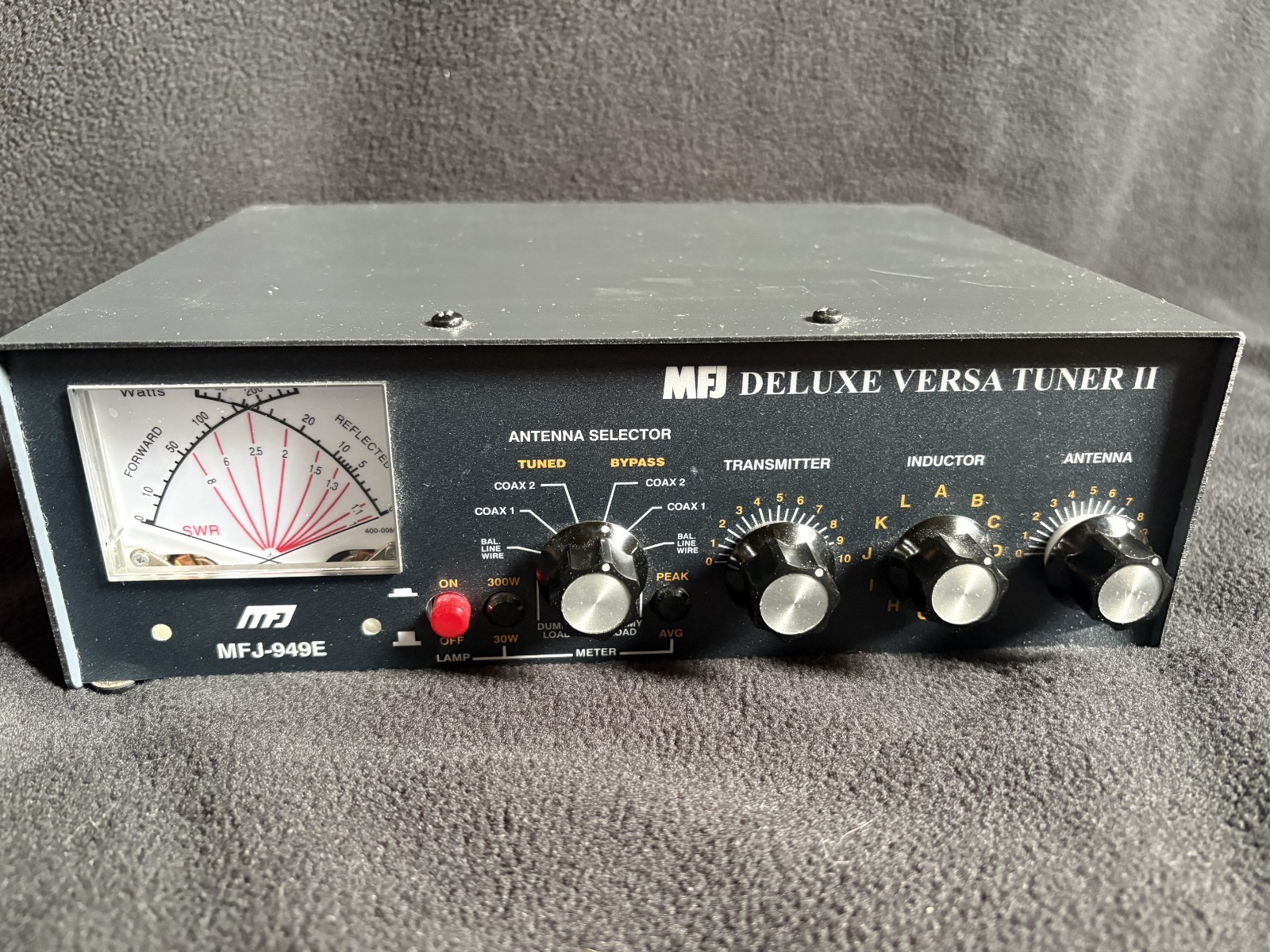
MFJ-949E Deluxe Versa Tuner II is a strong fit for a varied shack. Its support for coax-fed antennas, random or long wires, and balanced lines gives it a concrete reason to choose when antenna arrangements differ. The eight-position selector and internal 4:1 balun add specific hardware details, while the lighted cross-needle SWR and peak/average wattmeter offers 30W and 300W ranges. The limitation is that it is used and manual, so the operator is choosing hands-on adjustment. For shoppers who want several built-in functions in a manual control layout, the MFJ presents a straightforward match.
Trio Kenwood AT 230
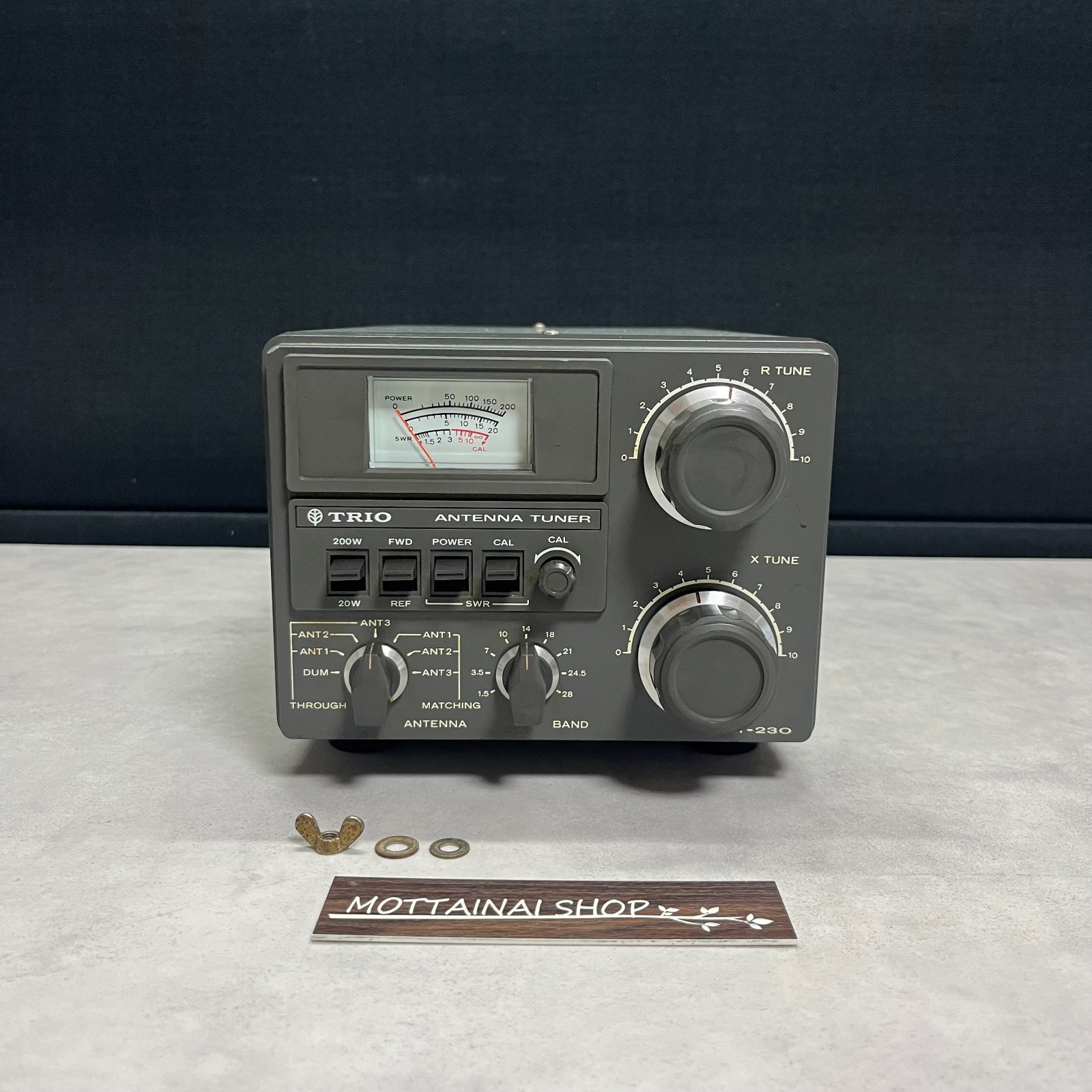
Trio Kenwood AT 230 is a focused choice for a Kenwood-centered station. Kenwood compatibility and coaxial SO-239 connectivity provide concrete fit points, while the product is identified as tested working. The desktop form factor is useful for a bench-based arrangement, and the 11.3-inch length is a practical dimension to account for. Its limitation is the higher listed price, along with the 200W figure specified for the unit. Match that specification to the intended radio setup before choosing it. The Trio makes the most sense when connection fit and the tested-working designation matter more than the price difference.
Final choice by use case
- Choose the MFJ-949E for a price-led purchase or a shack using varied antenna arrangements. Its built-in dummy load, antenna selector, balun, and manual tuning approach give the decision concrete support.
- Choose the Trio Kenwood AT 230 for a Kenwood-centered setup where SO-239 connectivity and desktop placement are the priority.
- For the price decision, the two units are separated by $39.99: USD 150.00 for the MFJ-949E and USD 189.99 for the Trio. Match either unit's stated power figure to your operating requirement rather than treating the number as a quality ranking.