Choosing between antenna tuners & SWR meters comes down to a practical tension: do you want the MFJ-949E's integrated monitoring and antenna-management controls, or the MFJ-986's roller tuning and higher stated power figure? Start with your station's power requirement, then decide whether metering, a dummy load, and antenna selection deserve priority. The MFJ-949E also carries the lower listed price, while both units are listed as used.
Quick verdict
The MFJ-949E Deluxe Versa Tuner II is the clearer choice when built-in SWR and watt measurement, a dummy load, and antenna switching are central to the setup. The MFJ-986 HF Antenna Tuner suits a power-focused brief where a roller dial is also important. Neither is a universal winner: each points to a different operating priority.
At a glance
| Tuner | Listed price | Stated power figure |
|---|---|---|
| MFJ-949E Deluxe Versa Tuner II | $150 | 300 watts |
| MFJ-986 HF Antenna Tuner | $260 | 3 kW |
Where each product wins
- MFJ-949E: For antenna coverage, it is the relevant pick for shoppers who want the explicitly stated 1.8-30 MHz span and support for coax-fed antennas, random or long wires, and balanced lines.
- MFJ-986: For brand flexibility, it is the relevant pick because compatibility with a universal range of brands is listed. That makes the model worth considering when equipment-brand flexibility is a deciding attribute.
Product notes
MFJ-949E Deluxe Versa Tuner II
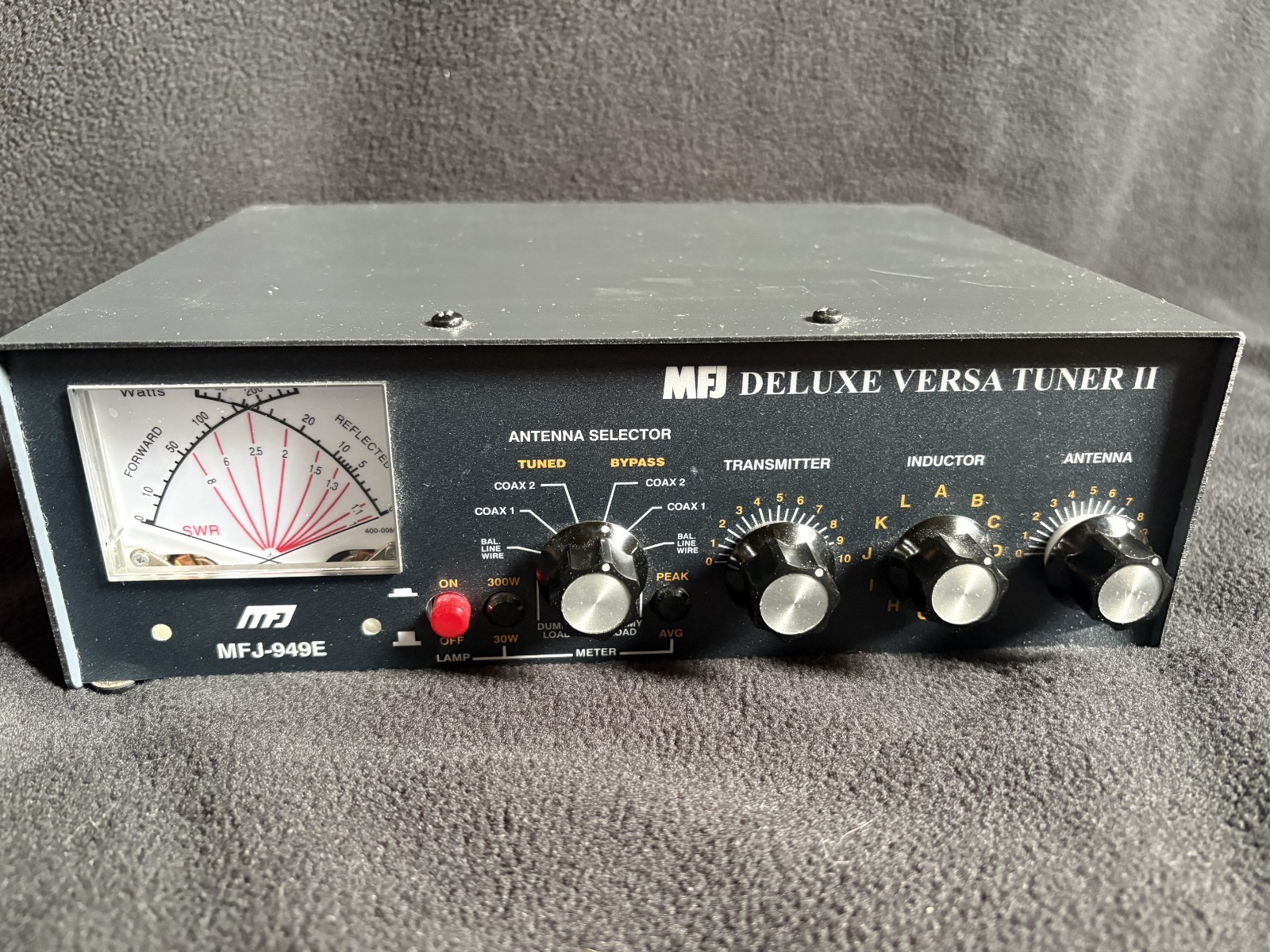
MFJ-949E earns its place when a shopper wants explicit hardware details beyond the basic tuner function. It names a built-in 4:1 balun, 1000V tuning capacitors, and a manual format, along with a wide-matching T-network. Those details give a shack builder concrete configuration points to weigh without relying on a vague performance promise. The limitation is its used condition, which belongs in the buying decision. The model's feature mix makes it a strong match for someone who wants monitoring and antenna-management functions integrated into one manual HF tuner. Pick MFJ-949E when those controls and its stated antenna coverage matter more than choosing around a higher power designation.
MFJ-986 HF Antenna Tuner
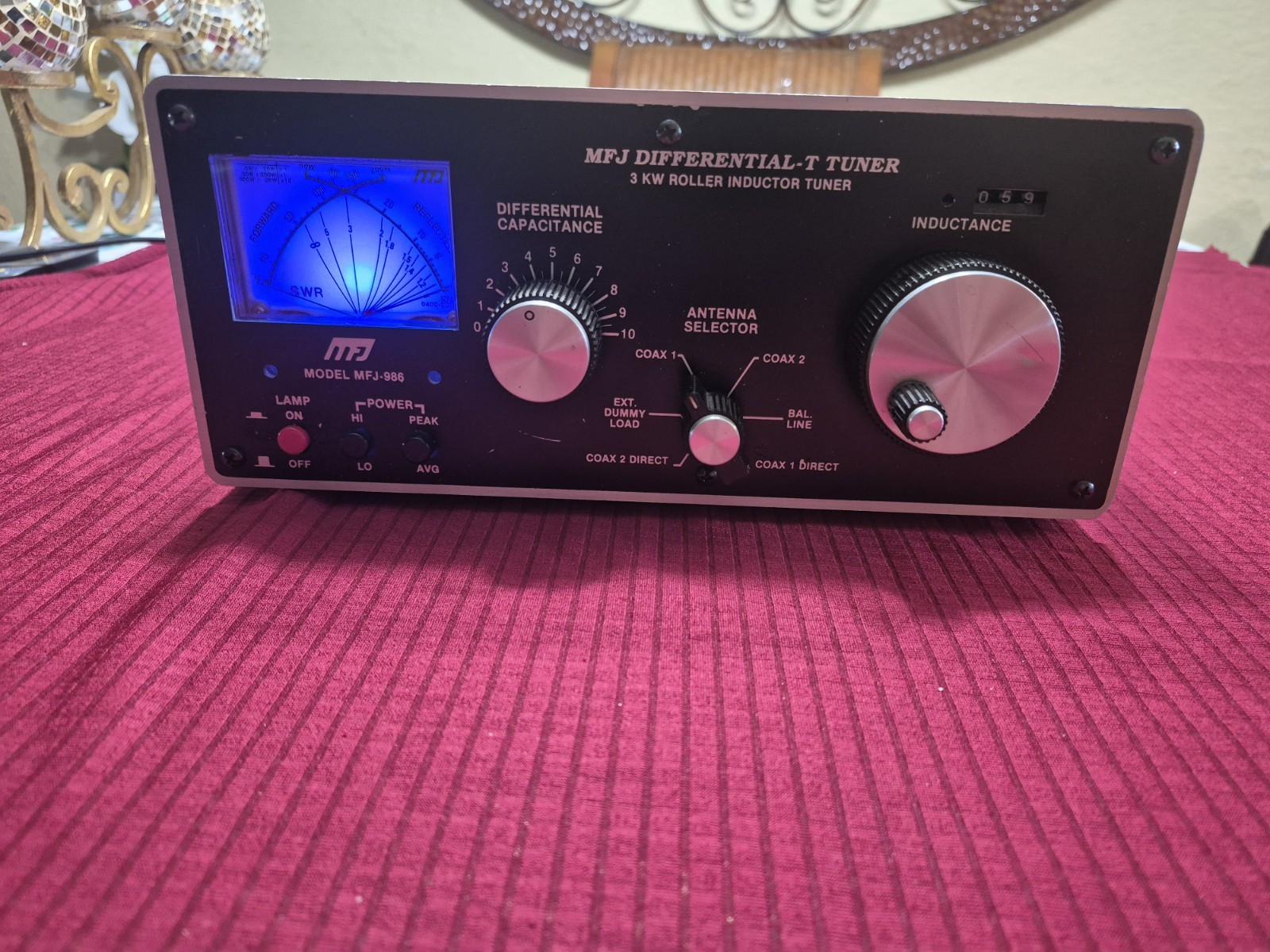
MFJ-986 centers the decision on its roller dial. The tuning control allows precise tuning, giving a concrete reason to choose it when that interface is the priority. Compatibility with a universal range of brands is also listed, adding a clear fit cue for a station where brand flexibility matters. The limitation is its used condition. Its defining choice is therefore the roller-control approach and the way that interface fits the intended station, rather than an assumption that one numeric specification automatically produces better results. Choose MFJ-986 when roller-dial tuning is more important to your workflow than the integrated metering and switching functions associated with MFJ-949E.
Final choice by use case
- For a 300-watt requirement with integrated monitoring: choose MFJ-949E. The stated 300-watt figure and built-in SWR/wattmeter, dummy load, and antenna selector directly match that brief.
- For a setup that calls for the 3 kW figure: choose MFJ-986. Its title and stated capacity provide the concrete reason to select it for that power requirement.
- For broad antenna-type coverage: choose MFJ-949E, whose stated range includes coax-fed antennas, random or long wires, and balanced lines.
The decision is straightforward: MFJ-949E favors an integrated, feature-led manual tuner, while MFJ-986 is the better-defined choice for a roller-control workflow and the higher stated power capacity.