Choosing FPV motors & ESCs means matching the combo to your build rather than simply picking the larger number or lower price. HobbyWing and JMT package different motor and ESC configurations, with a $16.70 spread between them. The right choice depends on whether your setup is built around HobbyWing's named configuration or JMT's more itemized package.
Quick verdict
Choose the HobbyWing XRotor Micro when the 20A ESC and 2205-2300KV brushless motor wording match your planned setup. Choose the JMT FPV Racing Drone Motor ESC Combo when its BLHeli package, CW/CCW motor split, and lower listed price fit your requirements. Neither numeric label should be treated as an automatic performance ranking; match the exact motor, ESC, and voltage requirements first.
At a glance
| Combo | Listed price | Main configuration | Best match |
|---|---|---|---|
| HobbyWing XRotor Micro | USD 79.95 | 20A ESC; brushless motor; 2205-2300KV | Builds specifying the XRotor Micro combination |
| JMT FPV Racing Drone Motor ESC Combo | USD 63.25 | BLHeli 12A ESCs; 1806 2400KV motors; 2-3S LiPo | Builds specifying the itemized JMT package |
Where each product wins
HobbyWing wins for a clearly named XRotor Micro format. Its title directly pairs an ESC with a brushless motor and identifies the 20A ESC and 2205-2300KV motor configuration. That makes it the more direct match when those terms already appear in your build plan.
JMT wins for package detail and the lower listed price. Its description spells out four BLHeli 12A brushless ESCs, four 1806 motors, and separate CW and CCW motor quantities. That detail is useful when you need to compare the complete component group rather than a single combo label.
Product notes
HobbyWing XRotor Micro Combo
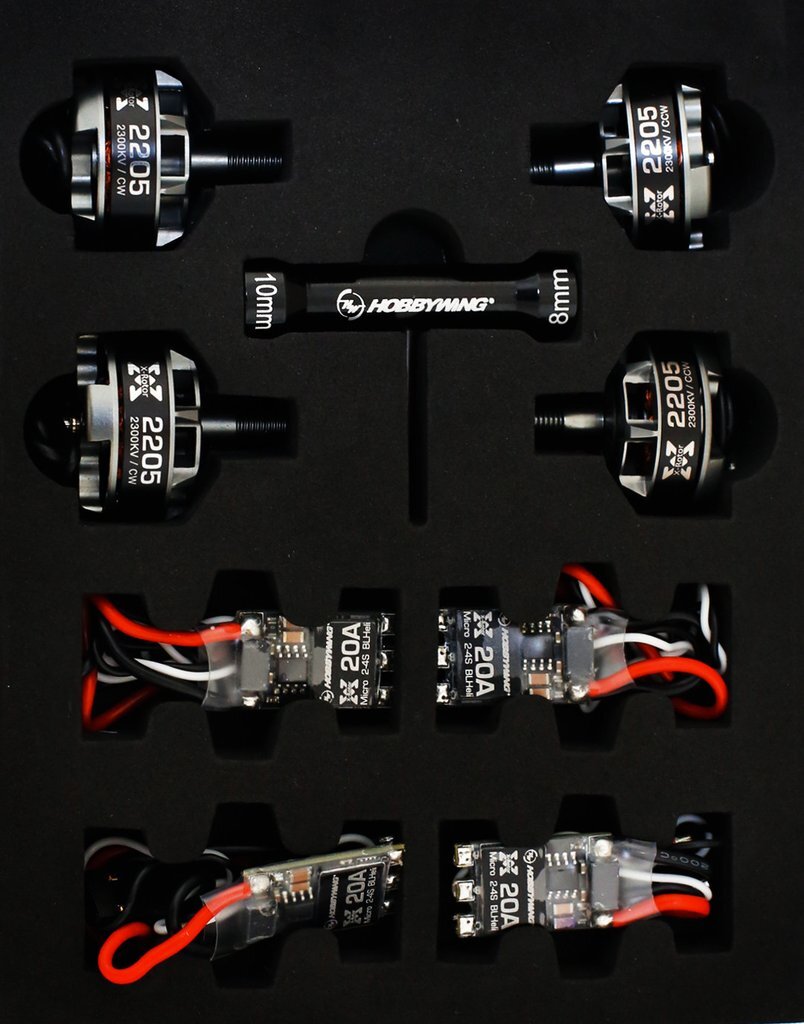
The HobbyWing XRotor Micro combo suits a buyer whose build is centered on an electric, brushless setup and the xRotor model designation. The title also gives a specific 2205-2300KV motor description, which makes the configuration easy to compare with a planned parts list. A concrete limitation is the higher listed price of the two choices, with a $16.70 gap separating it from JMT. HobbyWing's title presents the combo as a concise ESC-and-motor pairing, while JMT spells out its component count and wiring direction. Choose HobbyWing when the XRotor Micro name and its stated 20A ESC configuration align with your plan; do not choose it solely because its numerical labels differ from JMT's.
JMT FPV Racing Drone Motor ESC Combo
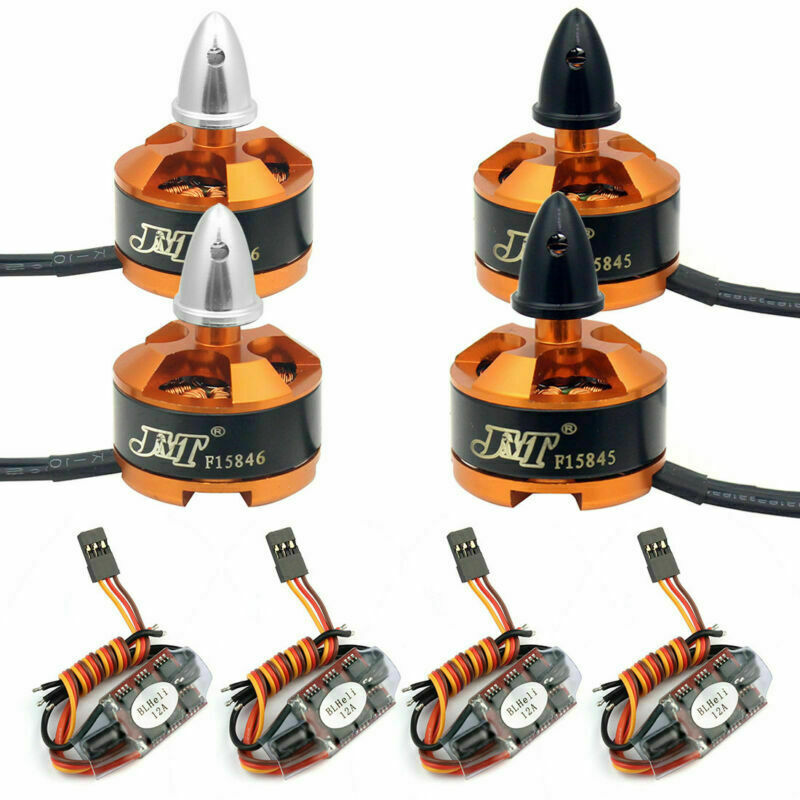
JMT is the better fit when the package contents need to be explicit. The combo specifies four BLHeli 12A brushless ESCs, two silver CCW 1806 motors, and two black CW 1806 motors. It also states a 5V 1A BEC, BLHeli 14 firmware, 2-3S LiPo input, 12A continuous current, and 15A instantaneous current. Those details create a concrete checklist for a build designed around those requirements. The limitation is that its electrical boundaries are specific: a setup calling for different voltage or current requirements should not be assumed to match. Its 2400KV motor wording also differs from HobbyWing's 2205-2300KV description, so compare the requested specification rather than treating either number as inherently better.
Final choice by use case
- Choose HobbyWing XRotor Micro for a build that specifically calls for its XRotor Micro title, electric brushless pairing, and 20A ESC configuration.
- Choose JMT for a build that calls for four BLHeli ESCs, four 1806 motors with CW/CCW directions, and 2-3S LiPo input.
- Choose by price when both configurations fit: JMT is listed at USD 63.25 versus USD 79.95 for HobbyWing, a $16.70 difference.
The safest decision is to match the complete motor-and-ESC requirements first, then use the price spread as the tie-breaker.