Choosing an FPV video setup is less about picking the biggest number and more about matching the hardware you actually need: a standalone 5.8GHz receiver or a paired transmitter-and-receiver kit on 1.2GHz. For FPV video systems & goggles, the practical difference is what comes in the box, how each unit is powered, and whether you are building around receiving only or sending and receiving. Here is the short route to the right choice.
Quick verdict
At $14.99, the FPV RC 305 is the direct pick for a receiver-only build. At $50, the FPV 1.2GHz 1.5W kit is aimed at shoppers who need both sides of a wireless audio/video link in one package. The absolute price spread is $35.01, so the decision should start with the required setup rather than transmitter wattage alone.
Listed-price and spec snapshot
| Product | Listed price | Key distinction |
|---|---|---|
| FPV RC 305 | USD 14.99 | 5.8GHz, 8-channel wireless audio/video receiver |
| FPV 1.2GHz 1.5W kit | USD 50.00 | Transmitter and receiver; 1.2G-1.3G transmitter with 8 transmitter channels and 12 receiver channels |
Where each product wins
FPV RC 305
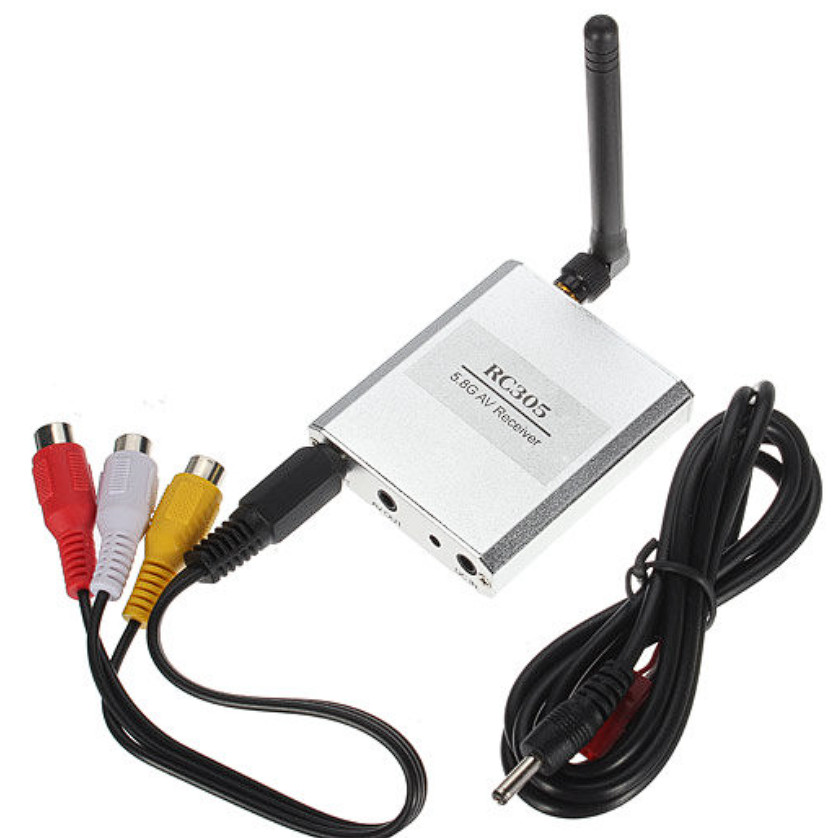
The RC 305 wins when a receiving-focused build needs the listed NTSC/PAL format and 6.5V-15V DC input. Those are useful match points for equipment already organized around those video formats or power levels. The included stock dipole whip antenna and power-in harness also give the package a clear receiving-side role. Its stated 500m open-area distance is a raw range specification, not a reason to assume identical results in every location.
FPV 1.2GHz 1.5W kit
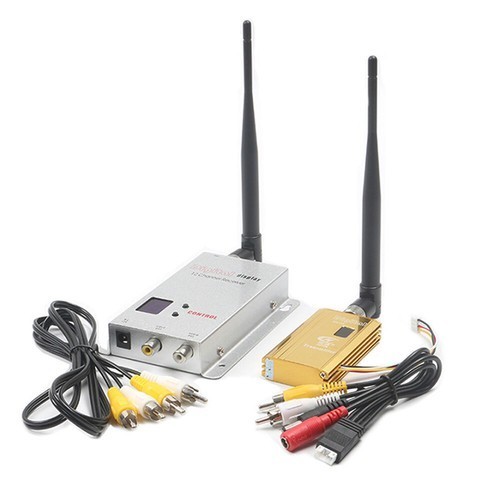
The 1.2GHz kit wins when the purchase needs both ends of the link. It includes a transmitter, receiver, and DC adapter, while its audio and video signals are described as transmitting synchronously. The stated 500-1000m transmitting range provides another concrete comparison point. The kit is therefore the more relevant choice for a two-unit FPV RC drone setup, while the RC 305 is organized around the receiver role alone.
Product notes
FPV RC 305
The FPV RC 305 is a sensible fit when the receiving side is the part you want to add. Its roughly 43g weight with antenna and 61 × 52 × 13mm dimensions give a concrete compactness cue, while the included stock dipole whip antenna and power-in harness cover two practical pieces in the box. The dual NTSC/PAL video format is another reason to choose it for a setup built around those formats. The limitation is its role: the title and type identify a receiver, not a paired transmitter-and-receiver kit. That makes it less suitable when the goal is to obtain both ends of the link in one purchase.
FPV 1.2GHz 1.5W FPV kit
The FPV 1.2GHz 1.5W kit earns its place when a complete wireless connection is more useful than a standalone receiving component. The package includes a transmitter, receiver, antenna, Tx cable, and DC 1.25A adapter, giving the buyer several link components together. Its transmitter also carries a stated 500-1000m range for FPV RC drone use. The concrete limitation is power planning: the transmitter working voltage is specified as DC12V, so the setup needs to be organized around that requirement. Choose it when getting both wireless units and the adapter together matters more than selecting a receiver alone.
Final choice by use case
- Choose the FPV RC 305 when the job is adding a standalone receiving unit and the $35.01 absolute price spread matters to the purchase.
- Choose the FPV 1.2GHz 1.5W kit when the use case requires a transmitter and receiver together, plus the included DC adapter.
- If the setup is still being defined, decide by architecture first: one receiving unit points to the RC 305, while a two-ended wireless audio/video link points to the 1.2GHz kit.
The cleanest verdict is simple: RC 305 for a focused receiver purchase; the 1.2GHz 1.5W kit for a paired FPV RC drone link. The deciding difference is receiver-only versus transmitter-and-receiver, not a claim that one listed power figure is automatically better.