Choosing among FPV video systems & goggles starts with one practical question: do you need a receiver for an existing analog setup, or a complete chain that also handles the camera, transmitter, and viewing hardware? The FPV RC 305 is aimed at the first job, with a compact 5.8GHz design, eight channels, and analog audio/video support.
Quick verdict
The FPV RC 305 makes the most sense for shoppers who need a standalone analog receiver at a listed price of USD 14.99. Its 5.8GHz frequency range, NTSC/PAL video support, and included dipole whip antenna cover the core requirements for receiving an analog FPV feed. The main limitation is its role: it is not an all-in-one FPV system, so it does not provide the camera, video transmitter, or goggles functions needed for a complete setup.
FPV RC 305 5.8GHz 200mW 8-channel wireless audio/video receiver
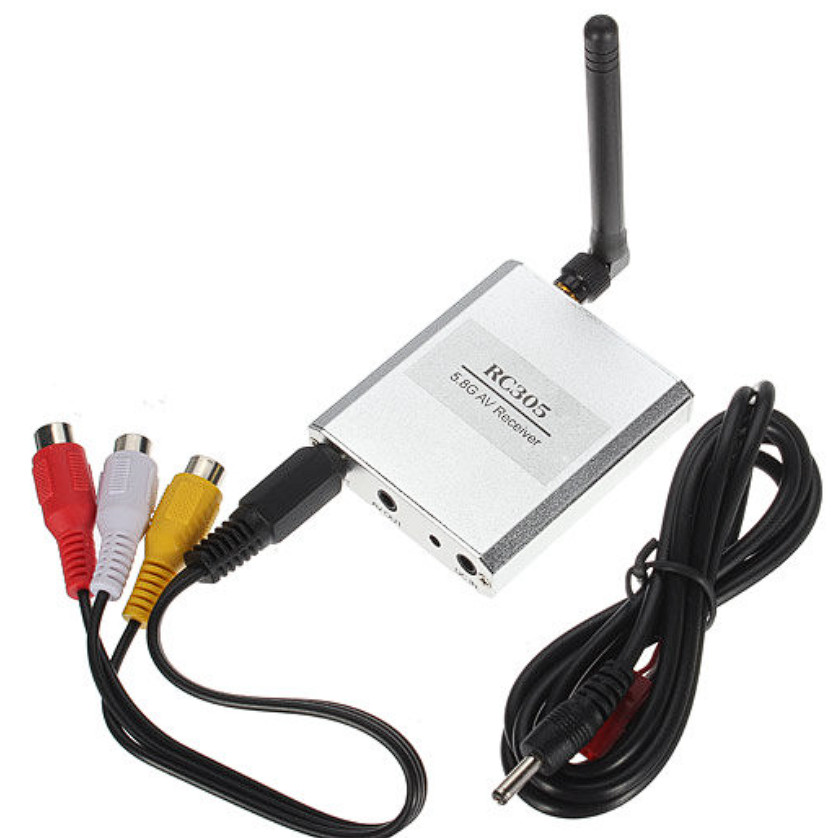
The strongest reason to choose the FPV RC 305 is its straightforward analog focus. Channel selection is handled through an eight-channel switch or button, while the listed frequency range runs from 5645MHz to 5945MHz. That gives a shopper a clear fit when an existing analog FPV arrangement needs a compatible receiving component rather than a digital FPV system.
Its listed open-area distance is 500m, and the receiver is described as suitable for small to medium-range quadcopters and planes. The package includes the RC-305 receiver, a stock dipole whip antenna, and a power harness. NTSC and PAL support also gives it a defined place in setups using either listed video format.
The trade-off is that the RC 305 remains a component, not a full viewing solution. Its 6.5V to 15V DC power requirement, corresponding to 2S to 4S LiPo input, is another setup consideration. The antenna connection is listed as RP-SMA / SMA, so the connector detail matters when pairing it with an antenna arrangement. At roughly 43g with the antenna and measuring 61mm by 52mm by 13mm, it also occupies dedicated space rather than functioning as a tiny bare-board receiver.
Who it suits
This receiver is a sensible match for an analog FPV build involving a quadcopter or plane, especially when eight-channel selection and NTSC/PAL support align with the rest of the setup. The USD 14.99 price also keeps the purchase narrowly focused on the receiving component instead of bundling unrelated hardware.
It is less suitable for someone starting from zero and expecting one purchase to provide a camera feed, transmission hardware, and goggles. The RC 305's defined purpose is receiving wireless analog audio/video, so the rest of the FPV chain still needs to be addressed separately.
Meaningful trade-offs
The RC 305 offers useful flexibility within analog FPV: eight selectable channels, a 5.8GHz range, dual video-format support, and a stated 500m open-area distance. Those details are concrete advantages for a matching analog setup, but they do not turn the receiver into a digital system or establish performance beyond the listed conditions.
Bottom line
Choose the FPV RC 305 when the goal is a compact, standalone 5.8GHz analog receiver with a clear eight-channel layout and a USD 14.99 listed price. Pass on it for a complete FPV video package, since its function is limited to the receiving side of the setup.