With projectors & screens, the hard choice is whether you need broad connections for a mixed room or a more defined desktop setup. The Epson PowerLite 475W and Epson PowerLite 685W are both ultra-short-throw options, but their listed details point to different buyers. Here is the useful split: choose around input flexibility, or choose around the hardware and accessories that match your placement.
Quick verdict
The Epson PowerLite 475W is the fit for shoppers who prioritize a broad connection profile. The Epson PowerLite 685W is the fit for shoppers who prefer a defined desktop setup, a listed new lamp, and a 3,500-lumen specification. Both are ultra-short-throw Epson projectors with 16:10 listed aspect ratios, so the decision turns on surrounding setup details rather than projection category. If the room has varied equipment, lean 475W; if the desktop hardware profile is the priority, lean 685W.
At a glance
| Decision point | Epson PowerLite 475W | Epson PowerLite 685W |
|---|---|---|
| Listed price | USD 147.90 | USD 174.97 |
| Listed condition | Very Good - Refurbished | Used |
| Aspect ratio | 16:10 | 16:10 |
| Throw description | Ultra short throw | Ultra-short Throw |
Where each product wins
Where the Epson PowerLite 475W wins
Its clearest edge is input flexibility: HDMI Standard, USB, VGA/SVGA, composite RCA, RJ-45, RS232, and S-Video are listed. It also names Android, iOS/Mac, Linux, and Windows among compatible operating systems. Built-in speakers, ceiling projection, color correction, closed captioning, and Crestron RoomView add a presentation-oriented feature mix. That profile aligns with the stated classroom, office, and interactive-presentation uses.
Where the Epson PowerLite 685W wins
The 685W is the more specifically described desktop option. Its fixed focal-length lens, manual focus, and no-lens-shift specification give shoppers concrete setup parameters, while the named remote and power cord make the accessory package easy to understand. The listed 3,500-lumen figure is another point to weigh, but the number alone does not establish a universal performance winner. Choose this side when those setup specifics matter more than a broad-input configuration.
Product notes
Epson PowerLite 475W
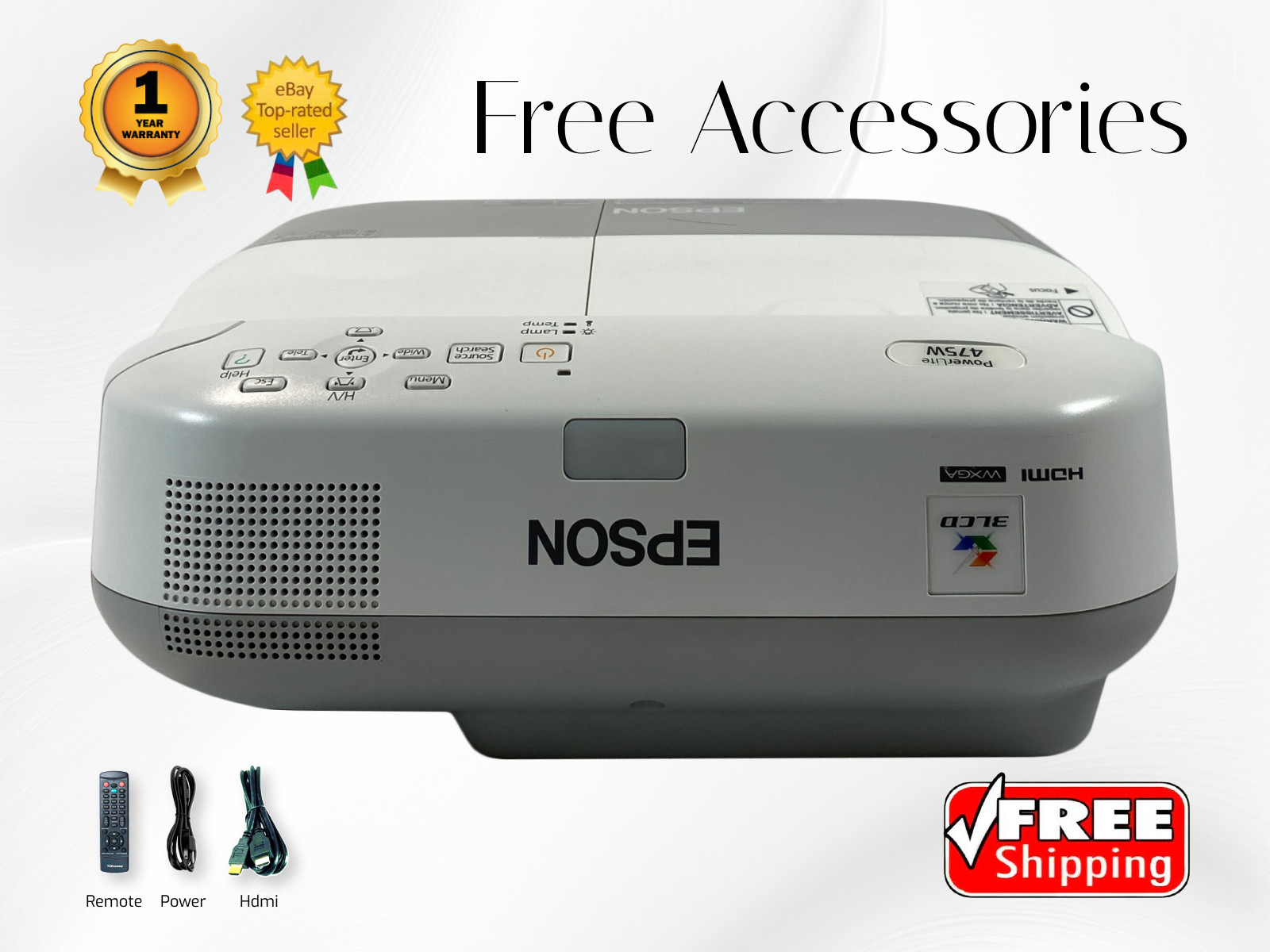
The Epson PowerLite 475W makes sense for shoppers who want presentation features built into the unit. Built-in speakers, ceiling projection, color correction, closed captioning, and Crestron RoomView provide a concrete reason to choose it for classroom, office, or interactive-presentation use. Its limitation is the listed Very Good - Refurbished condition, plus the projector-lamp warning that lamps contain mercury. Those two qualifications keep the 475W's practical appeal tied to a buyer who is comfortable with its stated condition and lamp warning.
Epson PowerLite 685W
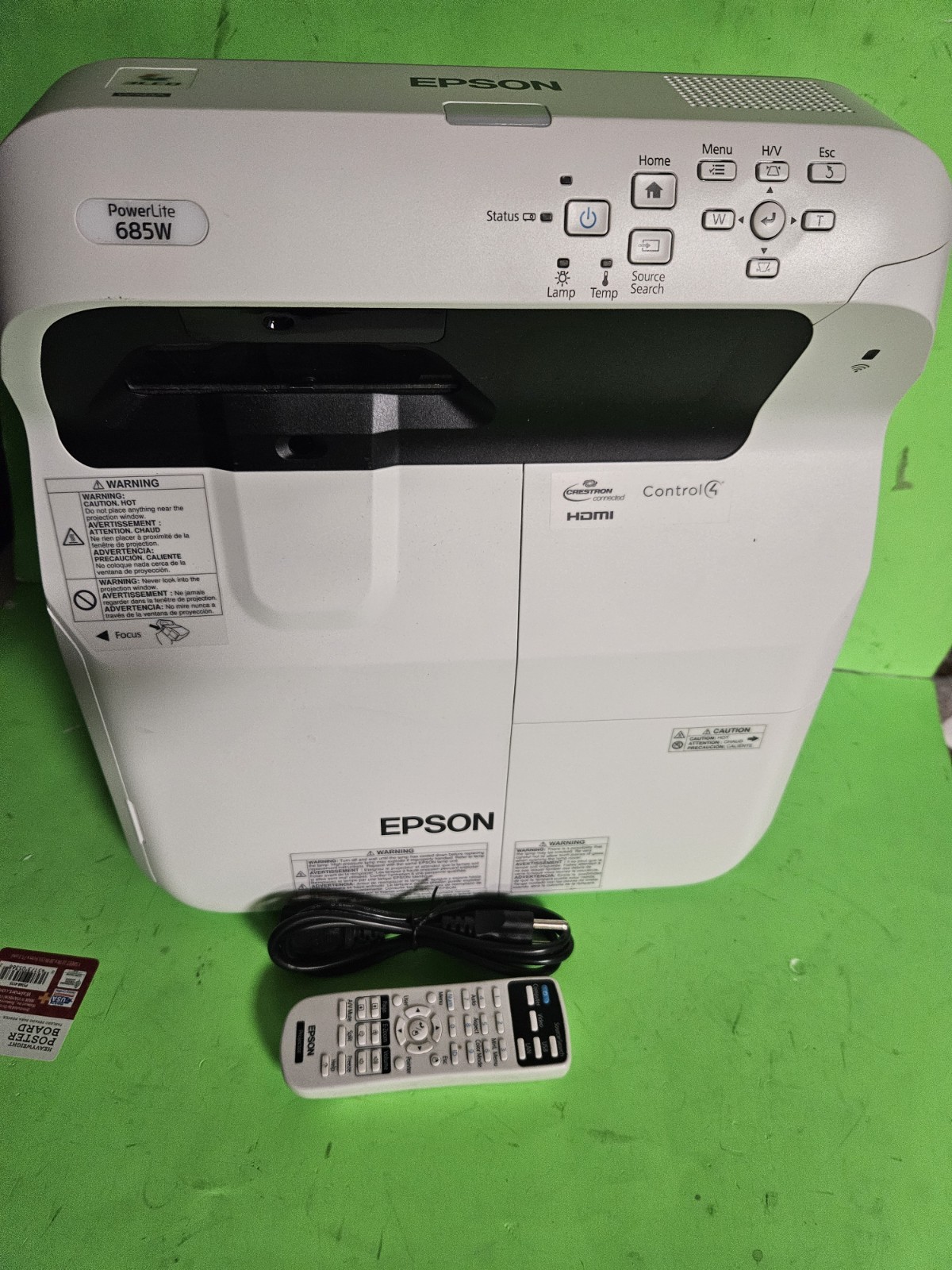
The Epson PowerLite 685W suits buyers who place more weight on the included accessory details. The description names a remote, power cord, and Epson new lamp, while also specifying 10-bit color processing and video modes including 720p, 1080i, and 1080p/60. Those details give it a concrete reason to choose when the equipment list matches the room. Its limitation is the listed Used condition, with a mark or two on the case. The lamp detail and projector condition should be considered separately, so the included new lamp does not erase the used-unit description.
Final choice by use case
- For classroom or office presentations: choose the Epson PowerLite 475W when its presentation functions and broad input profile fit the room.
- For a planned fixed-lens setup: choose the Epson PowerLite 685W if manual focus and no lens shift suit how you will place it.
- For the lower listed price: choose the Epson PowerLite 475W at USD 147.90. The Epson PowerLite 685W is USD 174.97, a $27.07 spread. Choose the 685W instead when its particular setup details justify that added amount.