Choosing FPV motors & ESCs often means choosing between a focused motor specification and a package that bundles motor hardware with ESCs. The right answer depends less on a headline KV number than on what your build actually needs: a particular motor format, a defined electrical envelope, or a set of motor and ESC components. BSC and JMT approach that decision from different angles, so a direct comparison is more useful than treating them as equivalent purchases.
Quick verdict
Choose BSC when the motor specification itself is the priority and the listed USD 24.00 price fits the brief. Choose JMT when the racing-oriented motor-and-ESC package named in its title is the goal, at USD 66.21. The USD 42.21 listed-price spread is tied to those different purchase scopes, so the better choice is the one that matches the hardware you intend to source.
Compact comparison
| Point | BSC 2807.5 FPV Drone Motor | JMT FPV Racing Drone Motor ESC Combo |
|---|---|---|
| Listed price | USD 24.00 | USD 66.21 |
| Product format | 2807.5 FPV drone motor | FPV racing drone motor ESC combo |
| KV shown | 1750KV option | 2400KV motor |
Where each product wins
BSC wins for a narrowly specified motor brief. Its 1750KV option is the relevant identifier when that is the configuration your build calls for, and the 2807.5 wording gives the motor choice a clear format.
JMT wins for a bundle-oriented racing brief. The phrase "FPV Racing Drone Motor ESC Combo" makes its intended purchase scope clear, while the description adds a defined ESC and motor configuration rather than presenting only a motor specification.
Product notes
BSC 2807.5 FPV Drone Motor
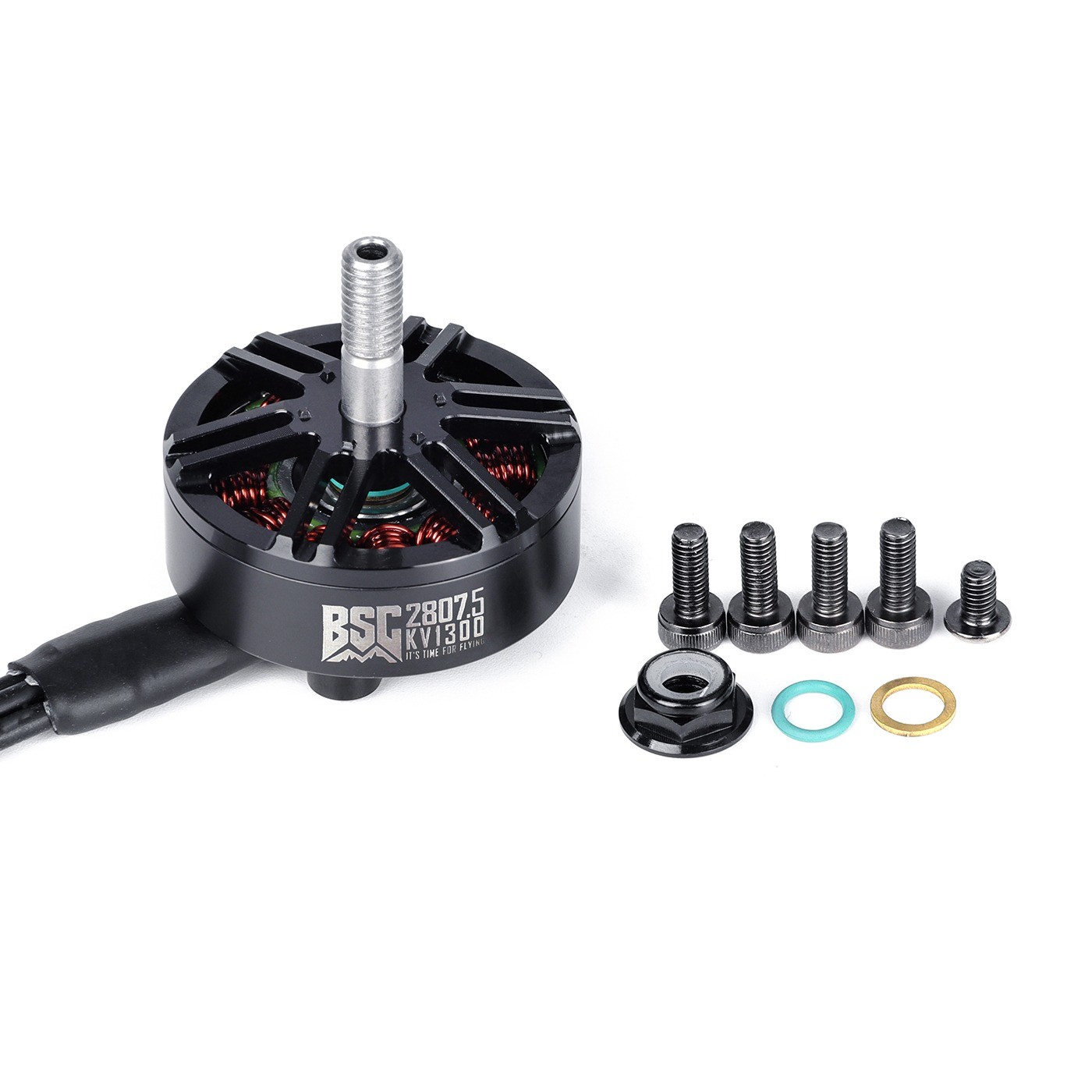
The BSC suits a shopper who already knows the physical details desired from an FPV drone motor. Its description calls out a 5 mm shaft diameter, an M5 propeller-mounting nut, and a 250 mm cable, giving the selection concrete connection and cable-length reference points. It also identifies 12N14P construction and a 33.6 × 36.4 mm motor size. The limitation is that the specification is tightly defined around those physical numbers: a build organized around different shaft, nut, cable, or size requirements would need a different match. BSC is therefore most useful when the motor brief is already precise, not when the main goal is sourcing a bundled electronics package.
JMT FPV Racing Drone Motor ESC Combo
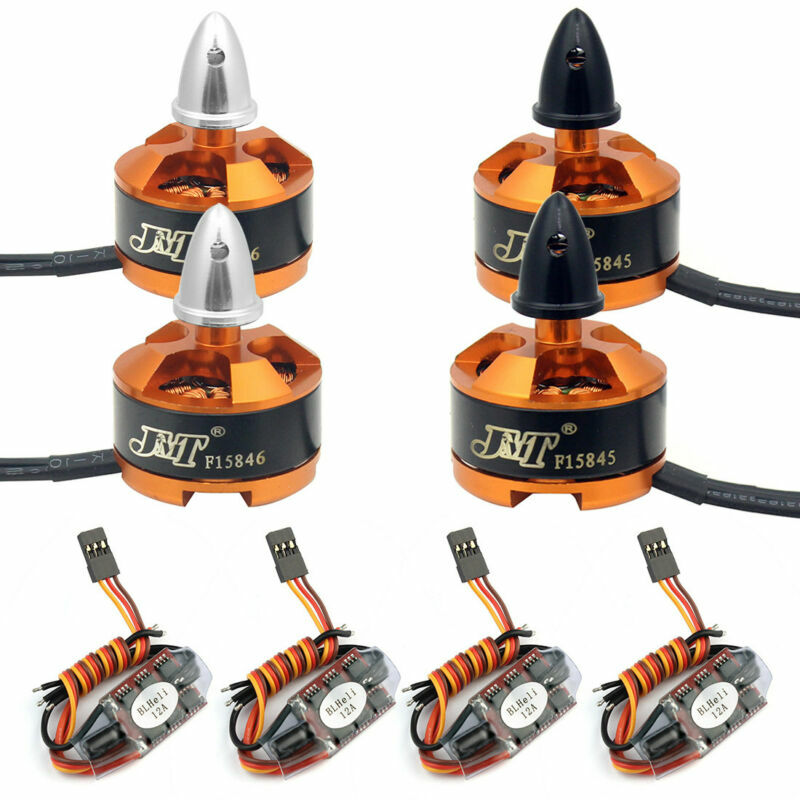
JMT suits a shopper who wants the electronics and motors described as one racing package. The description names four BLHeli 12A brushless ESCs and four 1806 brushless motors: two silver CCW units and two black CW units. It further specifies a 5V 1A BEC output and BLHeli 14.2 firmware, details that make the bundle's intended configuration easy to identify. The limitation is the stated electrical envelope: 2-3S LiPo input and 12A continuous ESC current. Those parameters narrow the decision to builds whose planned requirements align with that envelope, so JMT is not the casual pick for a shopper seeking only a motor. Its usefulness comes from the defined package, not from the KV number alone.
Final choice by use case
- Choose BSC when the build brief is anchored to the 5 mm shaft diameter and M5 propeller-mounting nut described for the motor.
- Choose JMT when the planned setup aligns with its stated 2-3S LiPo input and 12A continuous ESC current, and the bundle scope is useful.
That creates a clean split: BSC is the specification-led choice for a focused motor purchase, while JMT is the package-led choice for a racing-oriented motor-and-ESC setup.